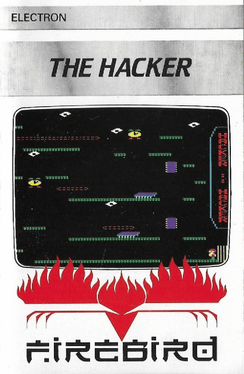
In this combination racing game and maze game, you have to maneuver your race car around the track, clearing the dots from all five lanes. The catch is, there's another car (controlled by the computer) driving around the track, in the opposite direction, bent on stopping you. You have to be quick with the lane changes, or the computer car will crash into you. You start with three cars, and can gain extra cars by clearing all the dots from the track. But watch out! The computer adds an an additional opponent on the third round, and another every second round after that!
In Kickman, you are a unicycle riding clown! Your job? Catch all the balloons on your head, without dropping any. Kickman was originally released as simply "Kick." Later versions of the game came with a "Kickman" marquee, presumably in an attempt to capitalize on the popularity of Pac-Man, who appeared in the game.
Chess was written in March, 1980 and converted to IBM PC in December, 1981. This is probably the very first chess game running in MS-DOS.
Taking it's age into account, it's no surprise that the game features only text-mode graphics. The chess board and the pieces are drawn using ASCII characters. For the same reason, it's also no surprise that the user input is based just on keyboard commands.
In Chess there is no multiplayer mode - you play only against the computer. As usual, in this kind of game, you can select the A.I.'s skill level. The game offers 24 difficulty levels.
3D Monster Maze is a computer game developed from an idea by J.K.Greye and programmed by Malcolm Evans in 1981 for the Sinclair ZX81 platform with the 16 KB memory expansion. The game was initially released by J. K. Greye Software in early 1982 and re-released later the same year by Evans' own startup, New Generation Software. Rendered using low-resolution character block "graphics", it was one of the first 3D games for a home computer, and the first game incorporating typical elements of the genre that would later be termed survival horror.
3D Monster Maze puts the player in a maze with one exit and a hostile monster, the Tyrannosaurus rex. There, the player must traverse the maze, from the first-person perspective, and escape through the exit without being eaten.
Polybius is a very-likely fictitious 1981 arcade game, allegedly published by the shadowy Sinneslöschen corporation and given a limited release in the suburbs of Portland, Oregon. It originated as an urban legend that dates back to February, 2000.
"Galaxy II has all the excitement of the most sophisticated arcade games. And, it features four unique phases of action in one full cycle of play. In "phase one", you must destroy a squadron of fighters that attack in two different patterns-a zigzag and a backward -forward motion. In "phase two", another squadron attacks, this time in a circular formation.
In "phase three", the enemy command ships are vulnerable but watch out for their barrage of missiles ! Knock out all three command ships and the scoreboard gives you a "GOOD" rating.
Now you are challenged to complete a difficult docking maneuver. Your earth ship launches a space shuttle and the countdown begins. The faster you succeed in docking, the more points you will score. And, if all 5 of your earth ships have not been eliminated, you may continue to play.
If you are very skillful, you can score up to 10,000 points. And, to add to the challenge and fun, there are four skill levels from which to choose. Before playing, read on for complete directions." -
600 is a maze game where the player is a turtle trying to bring baby turtles, called 'kidturtles' to their homes while avoiding beetles. Scattered throughout the maze are boxes with question marks on them. When the player walks over a question mark, a baby turtle will crawl onto the main turtle's back, a house will appear at a random location on the map, and the player will have to bring the baby turtle to its house while avoiding beetles.
Other times, beetles will come out of the boxes, which the player will have to quickly run away from. The player's only offensive move is the ability to drop "smart bombs" to temporarily stun the beetles. The player's smart bombs can be refilled by grabbing the smart bombs in the middle of the maze. However, unlike actual smart bombs, the player's bombs do not move and stay in a single place until a beetle runs over it.
You have eight floors to deal with the beetles, then you'll go to the roof to get your baby turtles, after you go get them, you walk home with the rest of the b
Scattered throughout the maze are boxes with question marks on them. When the player walks over a question mark, a baby turtle crawls onto the main turtle's back, a house will appear at a random location on the map, and the player will have to bring the baby turtle to its house while avoiding beetles. Other times, however, beetles will come out of the boxes, which the player will have to quickly run away from.
The player's only offensive move is the ability to drop bombs (which behave more like mines) to temporarily stun the beetles. Additional bombs can be picked up in the middle of the maze. Each maze represents a floor of the building. After eight floors, there's a cutscene showing the baby turtles following their rescuer out of the building, and gameplay begins again on the ground floor.
Player controls a paintbrush to paint paths within a maze. The player is harassed by two fish which can be temporarily destroyed by running them over with a one of two paint rollers located near the maze center. A critter occasionally emerges to leave footprints on painted areas which must then be repainted.
The player controls a ship that can rotate to the left and right and thrust forward, similar to the better known Asteroids, and like that game the player also has a "hail mary" device, hyperspace. In the center of the screen is the sun, which pulls objects into it, in a fashion similar to Spacewar!. The screen wraps at the edges.
Waves of enemy spaceships appear in groups of up to eight. There are seven different types of ships, growing smaller to make them harder to hit. Each "phase" of the gameplay completes when each of the seven waves is destroyed. The spaceships are a collision hazard and normally fly around the screen randomly. As the game progresses, they become more likely to attempt to ram the player directly. At higher levels, the ships gain weapons and attempt to shoot the player.
The player's ship is armed with two weapons, a cannon and a "nuke". The cannon fires a single shot in the direction your ship is pointed, and the game allows up to four shots on screen at once. The nuke destroys all ships in
The adventure begins in the Barrow from "Zork I" armed only with the trusty brass lantern and sword of elvish antiquity. The purpose of the game is not initially clear.
Like its predecessor, Zork II is essentially a treasure hunt. Unlike the previous game, the ten treasures are tied together by a crude plot. Finding the treasures does not end the game, nor are all the treasures needed to finish the game. Instead, the adventurer must figure out a way to use the treasures in order to reach the game's finale.
Frisky Tom is a 1981 arcade game by Nichibutsu. The object of the game is to provide enough water for a shower by crawling along a network of plumbing pipes and picking up/replacing loose pieces. Various types of mice are the game's antagonists, trying to thwart Tom in different ways: knocking pipes loose to disrupt the water flow, jumping down to fall on him, or setting a bomb to blow up the entire plumbing arrangement.
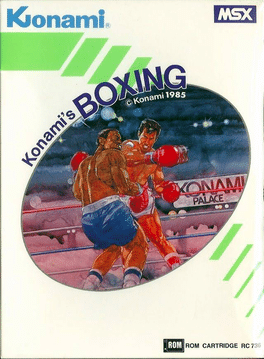
Boxing shows a top-down view of two boxers, one white and one black. When close enough, a boxer can hit his opponent with a punch (executed by pressing the fire button on the Atari joystick). This causes his opponent to reel back slightly. Long punches score one point, while closer punches (power punches, from the manual) score two. There are no knockdowns or rounds. A match is completed either when one player lands 100 punches (a "knockout") or two minutes have elapsed (a "decision"). In the case of a decision, the player with the most landed punches is the winner. Ties are possible.
While the gameplay is simple, there are subtleties, such as getting an opponent on the "ropes" and "juggling" him back and forth between alternate punches.
Space Armada is a clone of the game Space Invaders. Rows of bomb dropping aliens are invading your home planet, and you need to protect it! You control a laser gun at the bottom of the screen; your goal is to earn as many points as possible by destroying the waves of attacking aliens at the top of the screen. The aliens march steadily downward, and if they reach the ground or you run out of laser guns, the game is over. When all aliens in a wave are destroyed, you move on to the next, more challenging round. From time to time, a flying saucer will pass by at the top of the screen which can be shot for bonus points.
The contest is on! Create a maze to corner your opponents...before you are cornered yourself. Split-second reflexes keep your trail in motion -- while blocking your opponent and/or the computer in a trap from which there is no escape. Or direct a hungry serpent after your opponent, and bite his tail off before he bites yours. It's a twisting tangle which only the swift survive. 16 game variations put you in control.
Trap Games (12 variations) -- To keep your trail moving without colliding -- and to block your opponents' trails so that they are forced into collisions. Trails that collide with others, with the edge of the picture, with obstacles or themselves are eliminated.
Bite Games (4 variations) -- To make contact between the head of your serpent and the tail of your opponent's serpent, "biting" off one link with each contact. The winner is the surviving serpent.
In Astrosmash you control a laser canon at the bottom of the screen; your goal is to earn as many points as possible by destroying the various incoming meteors, bombs, and other objects. Points are earned for destroying objects, while points are lost for letting them get past you. Meteors are the most common item you need to defend yourself against. They come in various sizes and colors, and some even split into two smaller meteors when shot.
Mixed in with the meteors are white spinning bombs. While letting a meteor get past you will only lower your score, you have to shoot the spinners. If one gets past, you will lose a life. On the more difficult levels, ufo's and guided missiles will also appear occasionally and attempt to destroy your canon.
Fourth game for the Epoch Cassette Vision. A collection of 12 games, including 4 which use the light gun peripheral released especially for this game. Surprisingly, the game contains three other shooting game (Shooting I, II and III) which do not use the light gun.
The games are as follows:
1. Tennis
2. Volley Ball
3. Practice
4. Soccer
5. Squash
6. Shooting I
7. Shooting II
8. Shooting III
9. Gun I
10. Gun II
11. Gun III
12. Gun IV
There are two Game & Watch games called Mickey Mouse. In this one, which is part of the Panorama series, Mickey has to juggle while balancing on top of a ball. Mickey can lose a life by catching a fire stick instead of a juggling stick or missing catching the juggling stick completely.
Egg is a Game & Watch video game released in 1981. The game was similar to the previously released Mickey Mouse game, though due to copyright issues which prevented them from using the brand in some countries, they replaced Mickey Mouse with a wolf, though the gameplay remains essentially the same. The countries where Mickey Mouse was replaced by Egg include some Asian countries and Australia. In the Soviet Union there were the wolf and the hare from Soviet animated TV series Nu, Pogodi!. Egg was never released in Japan. Within the box were LR43 batteries, a caution leaflet, and battery stickers. The game sold an estimated 250,000 units worldwide. The game's model number is EG-26.
Interestingly, Egg was included in the Game Boy Color video game Game & Watch Gallery 3 in 1999.