New Games - Page 12451

Memory
1981
Starship Enterprise
1981
Circledrive
1981
UFO Shooting
1981
Solitaire
1981
Raster
1981
Labyrinth
1981
Destroyer
1981
Fantasy
1981
Fantasy
1981
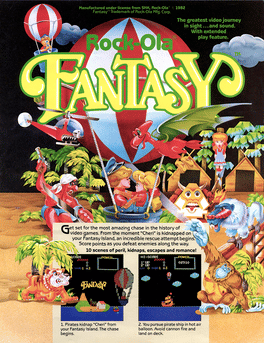
Fantasy is a simple 2D arcade game. The main hero must rescue his girlfriend as she was kidnapped by pirates. After the rescue, other hijackers appear all the time - the hero is busy non-stop. Each level is different - ballooning, pirate ship, jungles, a village full of savages ...There are no buttons to interact with - only the joystick. Most of the time, the hero must avoid the enemies - but sometimes (for example in the village), he can automatically use a sword.Round-Up
1981
005
1981
005
1981
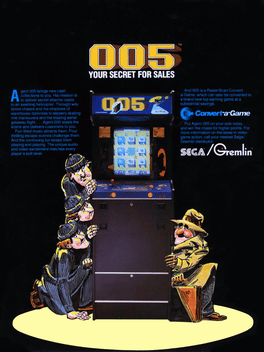
005 is a 1981 arcade game by Sega, in which the player's mission is to take a briefcase of secret documents to a waiting helicopter. It is one of the first examples of a stealth game. The player controls a spy who must avoid the enemies as he makes his way through buildings and warehouses, where he will have to dodge the enemies' flashlights and use boxes as hiding spots.Sabotage
1981
Sabotage
1981
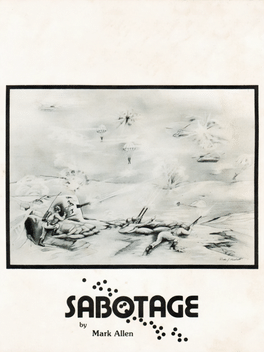
You are in control of a stationary gun turrent at the bottom of the screen. Planes drop bombs and paratroopers jump out of helicopters which you have to shoot. Every hit gains you points - every shot you fire looses you points. You have lost if a bomb destroys your turrent, a paratrooper lands directly on your turrent or four paratroopers land at any side of your turrent. In that case they are able to build a human pyramid to infiltrate your turrent and blow it up.Tempest
1981
Tempest
1981
star 5.8Tempest is a 1981 arcade game by Atari Inc., designed and programmed by Dave Theurer. It takes place on a three-dimensional surface, sometimes wrapped into a tube, which is viewed from one end and is divided into a dozen or more segments or lanes. The player controls a claw-shaped spaceship (named Blaster) that crawls along the near edge of the playfield, moving from segment to segment. Tempest was one of the first games to use Atari's Color-QuadraScan vector display technology. It was also the first game to allow the player to choose their starting level (a system Atari dubbed "SkillStep"). This feature increases the maximum starting level depending on the player's performance in the previous game, essentially allowing the player to continue. An official port was released for the Atari ST. An official port that bears the Atari logo was released by Superior Software for the BBC Micro and Acorn Electron in 1985, and another by Electric Dreams for the ZX Spectrum and Amstrad CPC in 1987. Versions for the Atari 2600Qix
1981
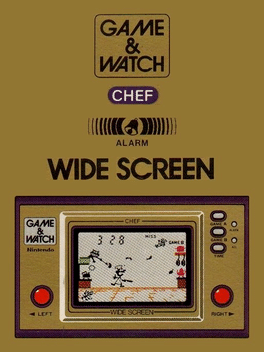
Chef
1981
Chef
1981
Game and Watch game from the Wide Screen series that was re-released as a Nintendo DSi Virtual console game.18 Holes Pro Golf
1981
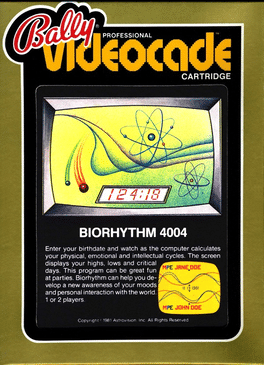
Biorhythm
1981
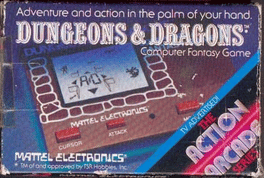
Dungeons & Dragons Computer Fantasy Game
1981
The Dungeons & Dragons Computer Fantasy Game is a handheld electronic game released by Mattel in 1981.Warp & Warp
1981
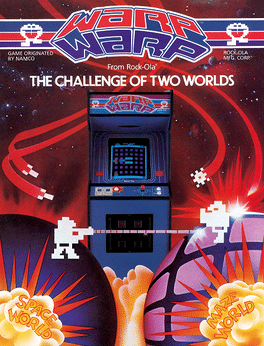
Warp & Warp
1981
You control a monster fighter. A warp zone is set in the middle of the screen. Warp to the next level when flashing