New Games - Page 12453

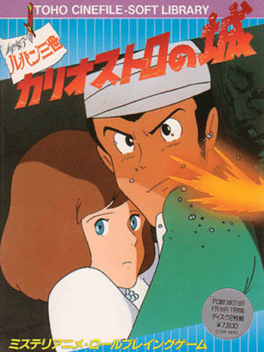
Lupin the Third: Cagliostro no Shiro
1985
A video game adaption of Hayao Miyazaki's Lupin III anime film of the same name. Released for NEC PC-88, Sharp X1, and FM 7.Chain Shot
1985
Shao-Lin's Road
1985
Shao-Lin's Road
1985
Shao-Lin's Road is a kung-fu platformer in which the player must kick to victory! GUTS!TwinBee
1985
TwinBee
1985
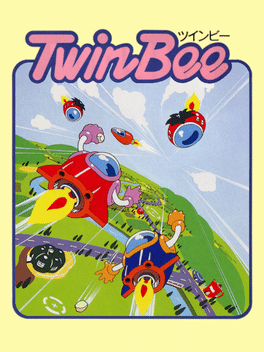
Arcade PlayStation 4 PC (Microsoft Windows) PlayStation Portable Xbox 360 Xbox One Nintendo DS Nintendo Switchstar 6.3TwinBee is a cartoon-themed vertical-scrolling shoot 'em up game. It was the very first game to run on Konami's Bubble System hardware. TwinBee was later re-released on PSP as part of TwinBee Portable collection, DS as part of Konami Classics Series: Arcade Hits, PC and Xbox 360 through Game Room service, and PlayStation 4, Nintendo Switch, Xbox One and PC as part of Arcade Classics Anniversary Collection.The Koukou Yakyuu
1985
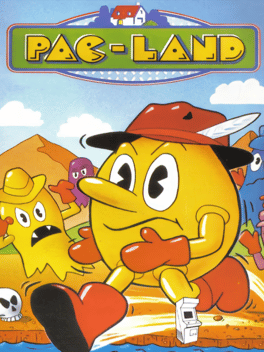
Pac-Land
1985
Daidassou
1985
Daidassou
1985
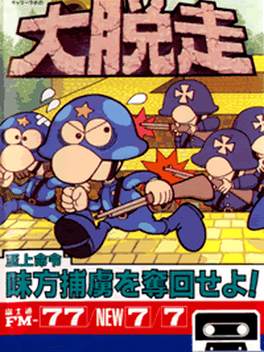
In this super-deformed sendup of WWII action tales, you're an Allied soldier infiltrating Axis prison castles to rescue your squaddies. Sneak and shoot your way through each level to releases your friends from their cells and then escape. You're armed with a pistol and limited ammo, facing a variety of Nazi-like guards patrolling the alleys and quarters you must also traverse. Disable these enemies, steal jail keys from them, and finish your prison break without a hitch!Vs. Hogan's Alley
1985
Vs. Hogan's Alley
1985
Vs. Hogan's Alley is a Nintendo VS. System (Arcade) port of Hogan's Alley (NES).Konami GT
1985
Konami GT
1985
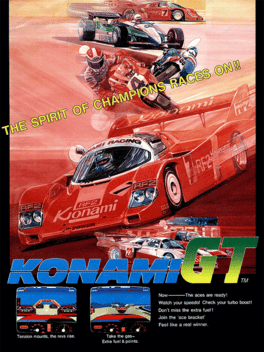
Konami GT, originally known as Konami RF2 - Red Fighter, is a 1985 racing video game developed and released by Konami, using their GX400 arcade architecture. The player drives a sports car which must reach various checkpoints without running out of fuel. A turbo mode (activated by the gear shift) increases the car's speed but uses more fuel and puts the player at a higher risk of hitting an obstacle. Fuel power-ups can be found on the road which the player must pick up to make it to the final checkpoint. The original title RF2 is a reference to Konami's 1984 arcade game Road Fighter, and thus this may be considered an unofficial sequel. RF2 was a commercial success in Japanese arcades. The series was followed in 1996 by official sequel Midnight Run - Road Fighter 2. Konami GT was made available on Microsoft's Game Room service for its Xbox 360 console and for Windows-based PCs on October 6, 2010.Ice Palace
1985
Ice Palace
1985
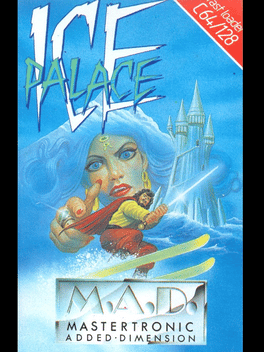
You are on a quest to retrieve your dead Father's crown to help you destroy the evil Ice Queen and remove eternal darkness from your land. You must navigate around her Ice Palace to find the seven pieces of the crown over seven levels to succeed in your quest using objects to solve puzzles. The game is an arcade adventure and contains two screens, the Action Screen or the Adventure Screen. The Action Screen is viewed from above showing a part of the level on the screen. Each level is made up of Hexagon shaped rooms with various objects inside to help or hinder you in your quest. There are six types of rooms and these are empty, a lake which cannot be crossed, a sword which contains various items, a fire which replenishes your firestick, ice which is difficult to cross and a black moline which cannot be entered. Each room has has various entrances and each room can be rotated to align entrances. As you explore the Palace there are various waves of creatures which when touched moves a gauge from good to evil and wheMama Llama
1985
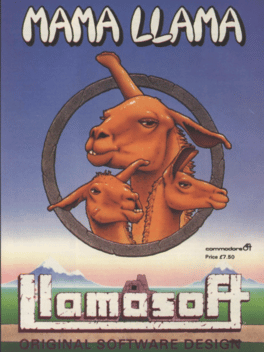
Mama Llama
1985
With the aid of a flying 'killdroid', players attempt to protect a family of llamas from aliens.Actman
1985
Talisman
1985
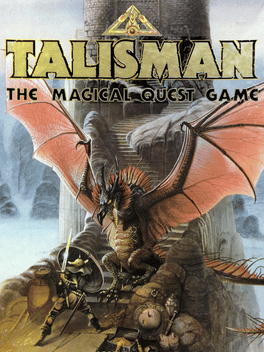
Talisman
1985
Talisman is a fantasy RPG adventure game based on the classic board game of the same name.Ring Quest
1985
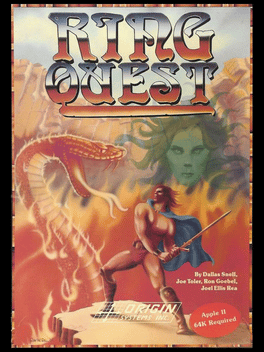
Ring Quest
1985
Ring Quest is the sequel to 1983's The Quest, both published by Penguin Software (later Polarware). The player, as the bearer of the Ring of Order, must evade the sorceress Lisa, who is possessed by the Ring of Chaos, until you can free her. An early fantasy text adventure by Dallas Snell.Paul McCartney's Give My Regards to Broad Street
1985
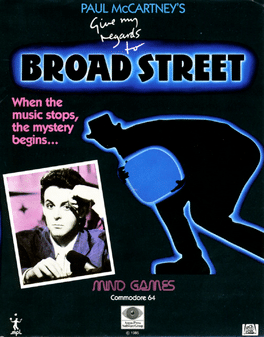
You are ex-Beatle Paul McCartney and your master tape of your new solo album has been accidentally erased. All tracks coukd be recovered except the first one. You must find seven members of your band in order to recover the missing track.G.I. Joe: A Real American Hero
1985
star 5.9Yo Joe! COBRA is up to its slimy tricks once again. They are planning world domination through mass terrorism. The team forces must unite to advance and stop the menace of COBRA in G.I. Joe. the new video game adventure from Konami! Team G.I. Joe members Duke, Road Block, Snake-Eyes, and Scarlett have their work cut out for them. They have been individually trained in specialized military areas. Snake-Eyes is a mystical martial arts master, most dangerous when he is unarmed and cornered. Road Block is a heavy machine gunner who is also adept at hand-no-hand combat. Scarlett, whose strength is military intelligence, is no wimp when it comes to kicking butt. Duke, trained in close range fighting, is looked upon as the guidance counselor. big brother. and offensive coach to the G.I. Joe unit. Together they get tough on the ruthless Cobra Commander and his sleazy Cobra Vipers and Toxo-Vipers. After attacking big cities, COBRA begins to spread mass destruction and chaos. G.I. Joe must destroy the chemical plant to ridMindwheel
1985
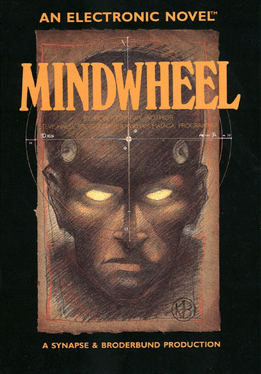
Mindwheel
1985
An electronic novel where the protagonist must dive into the minds of four deceased powerful figures in order to save the world from destruction.Everyone's a Wally
1985
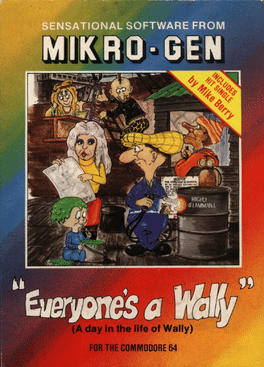
Everyone's a Wally
1985
Everyone's a Wally was the first arcade adventure game to feature multiple playable characters - a revolutionary feature at the time. Players began in control of Wally (a builder and handyman), but could switch to Wilma (his wife), and their friends Tom (a punk mechanic), Dick (a plumber) and Harry (a hippie electrician) - these last three names drawn from the placeholder phrase Tom, Dick and Harry. Herbert (their baby son) also appeared in the game as a mobile hazard NPC. The player cannot freely change character; the player begins in control of Wally and in order to switch must be on the same screen as the desired character. Those not being controlled by the player wander randomly around the map controlled by extremely simple AI - another feature that at the time had never been seen before. Lives and health (called "endurance") were tracked independently for each character, but the game ended if any character died. The aim of the game is to complete a day's worth of work for each character; each character has aStar Wars: The Empire Strikes Back
1985
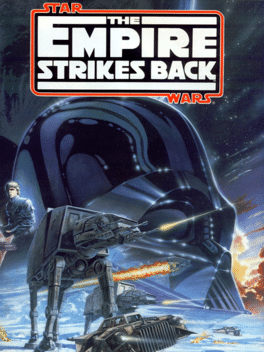
star 6.1Now transform your Star Wars games into a new adventure. The action is intensified in this conversion kit for your original Star Wars cabinet from Atari. Take the battle to the frozen planet of Hoth as Luke and his rebel squadron takes down the Empire's ambush assault!Dig Dug II: Trouble in Paradise
1985
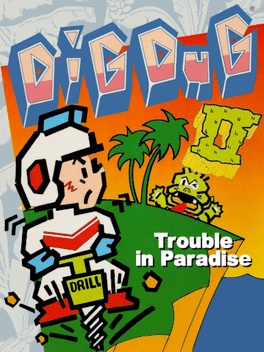
star 6.7DIG DUG has decided to chill out from the pressures of the real world by taking a long overdue vacation on a beautiful Caribbean island. "At last," he thinks to himself, "sun, sand, surf, and no more hassles from those miserable pests Pooka and Fygar!" Lying in a hammock between the graceful palm trees, he drifts off into a blissful dream of beautiful bikini clad native girls catering to his every wish. But just when he thinks he's got it made in the shade, along come his troublesome enemies to turn his peaceful paradise into a tropical nightmare. Help DIG DUG rid the island of these irritating intruders and bring tranquility back to his vacation by the sea!