New Games - Page 12447

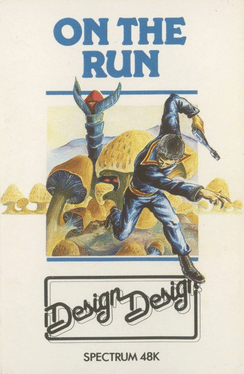
On the Run
1985
On the Run
1985
You play as Rick Swift who has to find six flasks with chemicals on a maze-like planet infested with mutations.Tropical Fish
1985
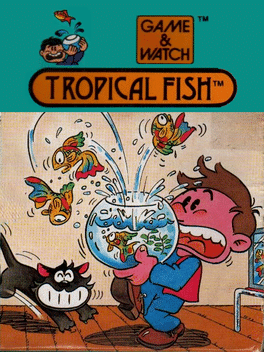
Tropical Fish
1985
Tropical Fish is a rare New Wide Screen Game & Watch video game released in 1985. The game was never released in Japan. The model number for Tropical Fish is TF-104. In the game, you'll merge fish from an aquarium into another aquarium via a fishbowl. Overall, the gameplay is very similar to Fire, though perhaps slightly improved. Tropical Fish has also appeared as an unlockable museum game in Game & Watch Gallery 4, albeit in Classic only.Ghosts 'n Goblins
1985
Ghosts 'n Goblins
1985
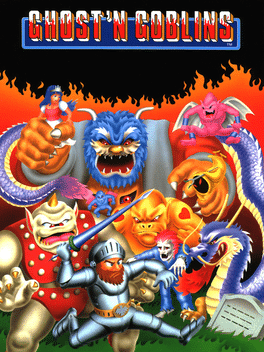
star 8.2Ghosts 'n Goblins is a platform game where the player controls a knight, named Sir Arthur, who must defeat zombies, ogres, demons, cyclops, dragons and other monsters in order to rescue Princess Prin Prin, who has been kidnapped by Satan, king of Demon World. Along the way the player can pick up new weapons, bonuses and extra suits of armor that can help in this task. The game is often considered very difficult by arcade standards and is commonly regarded as one of the most difficult games ever released. The game is considered by Gametrailers.com to be the world's second most difficult game ever made. The player can only be hit twice before losing a life (the first hit takes away Arthur's armor, and the player must continue on in his underwear until completing the level, or finding replacement armor). If the player loses a life, he is returned to the start of the level, or the halfway point if he has managed to get that far. Furthermore, each life can only last a certain length of time (generally around three minuMy Hero
1985
My Hero
1985
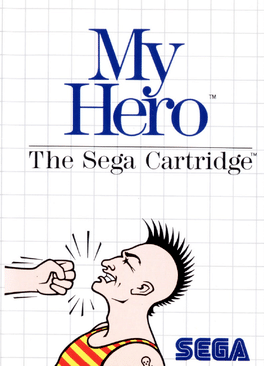
star 4.9My Hero (Seishun Scandal in Japan) is a Sega video game released via arcade in 1985 and was later ported to the Sega Master System in 1986. The gameplay takes the form of a simple side-scrolling beat 'em up fighting game, which was seen as being frustratingly difficult at several points in the game.Mech Brigade
1985
Mech Brigade
1985
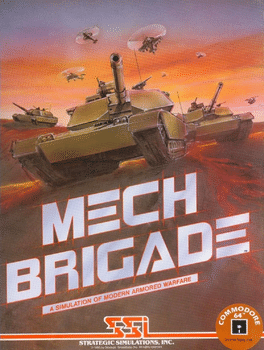
Turn-based tactical war simulation which simulates a war between the NATO and the Soviet Union.Hyper Sports
1985
Hyper Sports
1985
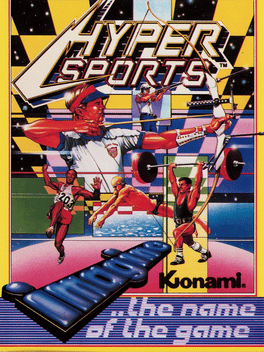
Six tough events await in this joystick-waggling successor to Track &Field. The full sequence of events is - swimming, skeet shooting, gymnastics, archery, triple jumping and weightlifting. You must complete each event in order to be allowed onto the next one. Swimming involves moving left and right as fast as possible, while pressing fire when a breath is required. Skeet shooting and archery both come down to timing - though elevation and wind factors affect the latter. Gymnastics involves timing a succession of presses to ensure that the jump is long and the landing graceful. The triple jump involves one press for each part of the jump, whereas the weightlifting involves merely brute strength. If the player wants to go to the next event or round, they will have to qualify by beating increasingly difficult maximum times or minimum targets.Rush'n Attack
1985
Rush'n Attack
1985
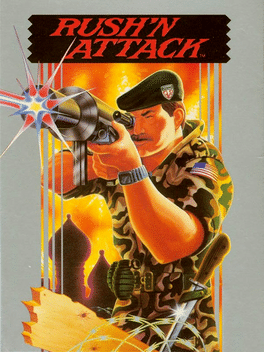
Arcade BBC Microcomputer System Atari 8-bit Commodore C64/128/MAX ZX Spectrum Commodore 16 DOS Xbox 360 Amstrad CPC MSXstar 6.5A run & gun shooter by Konami, also known by the title Green Beret, in which the player takes the role of a soldier infiltrating a military base.Batten Tanuki no Daibouken
1985
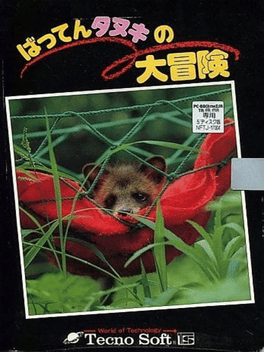
Once upon a time, there was a village where only animals lived. One day, the Count Wolf came to this village, cast a spell on the animals, and took them all to the wolf castle. The only one who survived was an old lady rabbit who was sick. At that time, a Tanuki came to this village. When he heard about the situation from the old rabbit, he bravely went to the wolf castle to save the villagers from the magic alone, even though he was training in kung fu.Gimme a Break
1985
Gimme a Break
1985
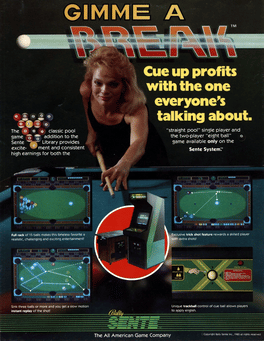
Gimme a Break is a cue sports arcade game which was released by Bally and Sente in 1985; it was the first of the second batch of games to run on that company's SAC-I hardware, and the player must use a singular button to position the cue ball, with a trackball to control it during each shot. In a two-player game, one player must aim for the solid-coloured balls (1 to 7), while the other must aim for the white ones with a coloured stripe across them (9 to 15) - and in a one-player game there will also be bonus rounds where the player must pot bonus balls to earn extra shots. If players should pot three or more balls, with a single shot, they'll get treated to a slow-motion "action replay" of it; it is also worth noting that if a certain dip switch is set to "on", this game will show pictures of children who were missing at the time in its attract mode (and this also applies to that other Bally/Sente game for 1985, Mini Golf).The Fairyland Story
1985
The Fairyland Story
1985
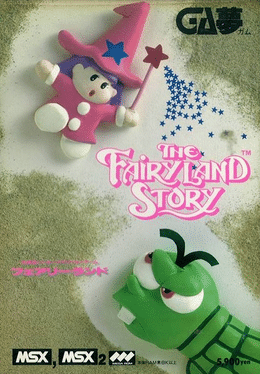
The Fairyland Story is a arcade platform game released by Taito in July 1985. The game was ported to the MSX and X68000 computers, and later was included in Taito Memories and Taito Legends 2 for the PlayStation 2 for the Xbox and the PC.Shoot Out
1985
Shoot Out
1985
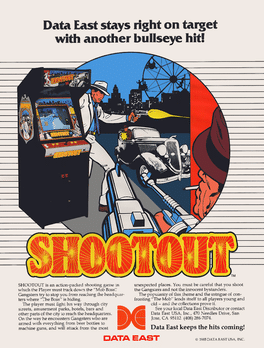
Player controls with two buttons and an 8-way joystick. One button shoots the gun, the other allows the player to jump enemy bullets and other attacks. The 8-way joystick is used to specify the direction of movement, pointing down to crouch and the different up directions to indicate angle of the shot. At the start of the game, player must practice in the target practice room, then play through the next 7 stages to beat the game; however, the game will loop after the 7th stage is completed. In stages 1 thru 8, the object is to shoot a certain number of criminals and avoid shooting civilians. If the player is hit by an enemy or if the player shoots a civilian, the player will lose a life. When all lives are lost, the game ends. Besides criminals and civilians, some objects in the backgrounds of the seven stages can be shot to earn extra points, such as amusement park rides and signs.Thing on a Spring
1985
Thing on a Spring
1985
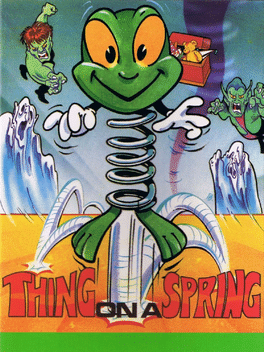
The evil Goblin has used his magical abilities to ensnare all the toys in the neighborhood to go into his underground lair. Thing bounces to the rescue, and resolves to retrieve them from his 4 storey underground lair. To do this he must collect 9 pieces of a jigsaw puzzle on each floor. Needless to say, Goblin has not made things easy - a myriad of traps await our intrepid hero. There are traps all over, some crucial areas are guarded by switches, and the last of these switches locks the level-ending lift.Wilderness: A Survival Adventure
1985
A surprisingly complex survival simulator for its time, this game requires the player to manage their own food, shelter, and health in order to escape the wilderness alive.Glass
1985
Glass
1985
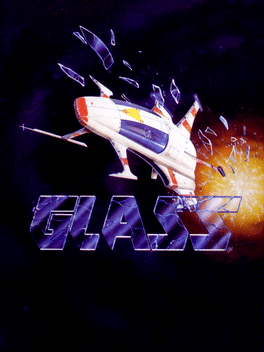
Glass is a 3D arcade shooter where the player controls a starfighter simulator and has to clear 14 levels of action to achieve Game Lord status.Hang-On
1985
Hang-On
1985
star 6.9Hang-On is an arcade game designed by Yu Suzuki and released by Sega in 1985. In the game, the player controls a motorcycle against time and other computer-controlled bikes. It was one of the first arcade games to use 16-bit graphics and Sega's "Super Scaler" technology that allowed pseudo-3D sprite-scaling at high frame rates. It also introduced a motion-controlled arcade cabinet, where the player's body movement on a large motorbike-shaped cabinet corresponds with the player character's movements on screen, inspiring arcade games that followed and anticipating the modern motion control trend.City Connection
1985
City Connection
1985
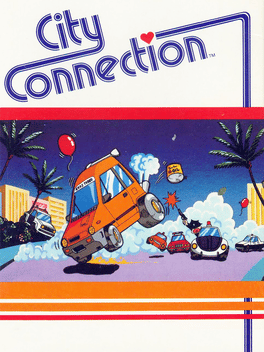
star 5.4City Connection is a 1-2 player comedic racing adventure platform game in which you control a car that can never be stopped. The object of the game is to drive through a series of cities and paint every part of the roads in each city as proof of your visit to that city. City Connection was remarkable for its time in that each location had its own background and music which was a variation on the main theme of the game. There are twelve locations: Manhattan, the Grand Canyon, Easter Island, Paris, Neuschwanstein Castle, London, Sydney, Egyptian temples, and cities in India, Holland, China and Japan.Elevator Action
1985
Nodes of Yesod
1985
Nodes of Yesod
1985
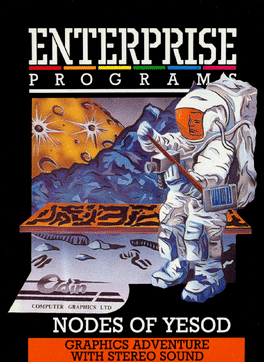
star 9Strange signals are coming from the moon and Charlemagne Fotheringham-Grunes (or Charlie for short), member of the International Commission for Universal Problem Solving (I.C.U.P.S.) is sent to investigate. It turns out that the source of the signals is a strange monolith. The aim of the game is to destroy this monolith. Nodes of Yesod is an Arcade Adventure seen from a side-scrolling perspective. Charlie can jump and, after finding it first, use a device called mole. After pressing up on on the joystick, Charlie stands still and the player gains control over the mole that can be used to attack enemies. However, not all enemies can be harmed by the mole. Another useful device is the burrowing chum that can be used to dig through certain walls. Before Charlie can reach the monolith, he has to explore the many caverns of the moon and find eight keys or alchiems. Every now and then a red spaceman will show up, and touching him will cause Charlie to loose one of his keys.The Captive
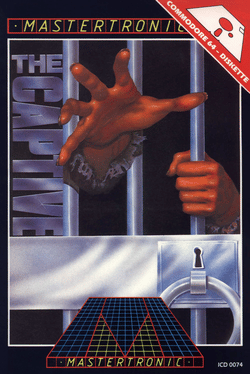
1985
Hyper Olympic
1985
Hyper Olympic
1985
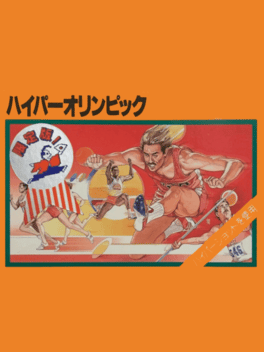
The original Famicom version of Track & Field is very different from the version released internationally. It has less events and is programmed to use special controllers in a way to simulate the arcade game.