New Games - Page 12611

Street Fighter Alpha 2
1996
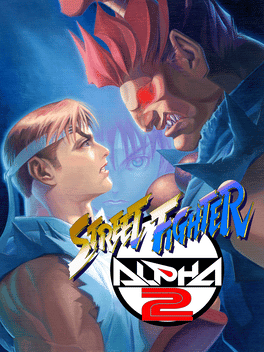
The SNES port of Street Fighter Alpha 2 had to lower the quality of graphics and audio because of the power of the machine. This version also have loading times when entering matches while sounds are loaded onto the sound chip. Unlike the PlayStation and Saturn versions, the only secret characters available to the player are the classic-style Chun-Li and Shin Akuma.Schoolhouse Rock!: Math Rock
1996
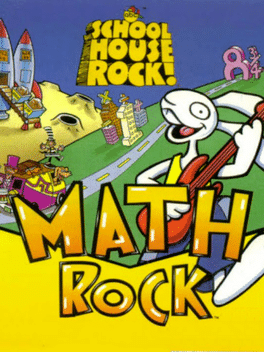
Lucky Seven Sampson has a problem. He needs a band. The inhabitants of Funky Numberland might be able to help, but they all have their own problems to solve if they are going to join Lucky Seven's band. So, he needs your help. If you can help his friends, they can join his band.BS Yoshi no Panepon
1996
BS Yoshi no Panepon
1996
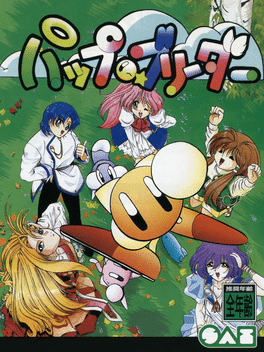
Panel de Pon is a puzzle videogame originally released for the Super Famicom, starring Lip and her fairy friends. The game was later localized as Tetris Attack, starring Yoshi and other characters from Super Mario World 2: Yoshi's Island. The game had an official Tetris license, although it didn't have anything to do with Tetris, being only a marketing strategy to release it under a famous franchise as a way to attract more attention. The game was later relocalized for the Japanese audience, released only as a digital download via the Satellaview peripheral. The only difference that this version has, aside from the language translation, is the absence of anything related to the Tetris franchise.BS Marvelous: Camp Arnold
1996
BS Marvelous: Time Athletics is a Downloadable 4-part Soundlink game for the Satellaview that ran between January 1, 1996 and January 31, 1996. The game was broadcast in as a rerun in April, 1996. A sequel to BS Marvelous: Time Athletics entitled BS Marvelous: Camp Arnold was released in November, 1996 as a direct prequel to Marvelous: Mōhitotsu no Takarajima which was not broadcast via Satellaview but instead released in hard copy as a SFC cartridge.Nickelodeon 3D Movie Maker
1996
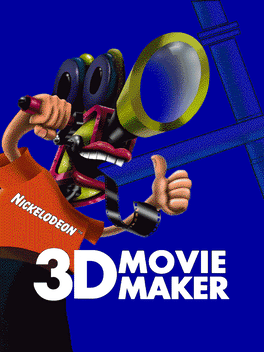
A customized version of Microsoft 3D Movie Maker that includes settings and characters from various Nickelodeon TV Shows.Vermin Kids
1996
Casper
1996
Casper
1996
This game was developed by Bonsai Entertainment and released by Natsume. Each of the levels consist of four main mini games, which the player can do in any order, and two final mini games that only appear at the end of the game. However, three of the main mini games are the same every level, with their only difference being a slightly increased difficulty level. The main goal of these games are to make it to the end with as much ooze as possible (ooze being fuel for the Lazarus and is much like points).The Darkest Night
1996
The Darkest Night
1996
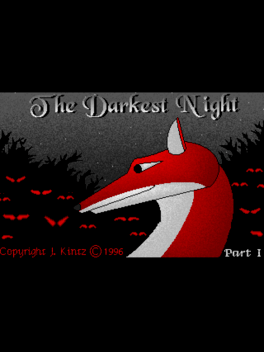
The Darkest Night is a graphical adventure game with a horror theme, set in the land of 'Tilorm'. The protagonist is a young anthropomorphic fox called 'Rolan', who is lost in a forest after an evening of heavy drinking with his friends, celebrating Hallows Eve. While sleeping it off in the woods, he is awakened by a tattered and bloody yelling man, who comes running up to you, collapsing but managing to tell you of an evil cult trying to release the Demon Yaxagiraw tonight, a netherworld being who was imprisoned in an old Abbey hundreds of years ago, but who could be released again during Hallows night, when the souls of the damned are close to our dimension. Having delivered his warning, the man dies and leaves you to prevent the cultists from achieving their goal.Pup Breeder
1996
Jockey Zero
1996
Jockey Zero
1996
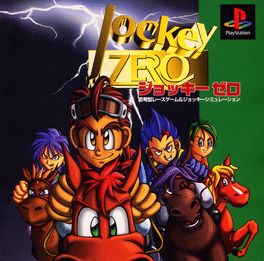
Jockey Zero is a cartoon-style derby horse-racing game with a focus on direct control in the races. The player is cast as a young boy who dreams of winning the Japan Derby with a horse raised by his father, and who has the curious ability to converse with horses. Unlike most derby games, the focus is entirely on the racing and story, with virtually no simulation or training elements present. The player controls the jockey directly during races, and visual novel-style sequences tell the story between races. There are six different tracks to race on, and over 50 story events that can occur.The Fennels Figure Math
1996
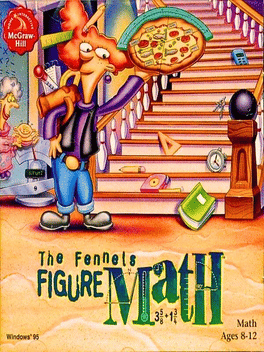
The Fennels Figure Math is an educational adventure game with a quirky and surreal setting. You play as Baxter, who, alongside his lazy cousin Frizzie, must collect five food items for a party in their eccentric Great-Great-Great Grandfather's bizarre house. From ice sculptures in the North Pole Room to alien-infested trailers, you'll solve math-based puzzles to progress. The game combines whimsical storytelling with educational challenges, making math fun and engaging.JetPilot
1996
JetPilot
1996
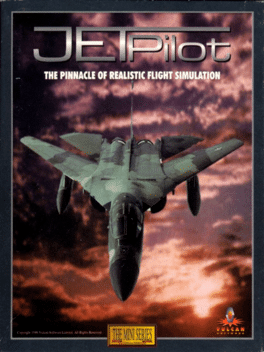
JetPilot features the Lockheed F-104 and the English Electric Lightning. Take to the skies in this incredibly realistic 3d flight simulator, whether you are a novice pilot or an experienced enthusiast this title will satisfy your craving for reality. The control methods are as simple or as complicated as you like, either way they perform within 10% of the real thing. As well as practice and situation flying you will also be required to successfully complete some 20 qualification missions where a high level of concentration and situation awareness is required to successfully intercept targets from Scotland to the Mediterranean.The Vampire Diaries
1996
The Vampire Diaries
1996
Based on several L. J. Smith books of the 1990s, The Vampire Diaries is a suspenseful mystery adventure about a town infested with vampires and one teen's efforts to find them. Featuring real actors and actresses in full motion video and a point and click interface, the game ships on 3 CD-ROM discs.Cheesy
1996
Cheesy
1996
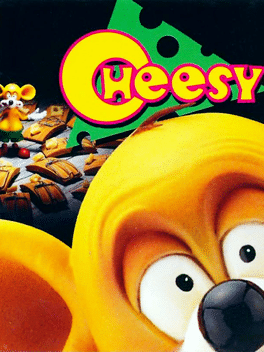
Cheesy the mouse (and the star of the game) has been captured by a mad scientist for his genetic experiments. However, mohawked aliens attack the castle and in the commotion cheesy escapes. He has to navigate through 24 levels of mutated creatures, fight huge spiders, balance a mine cart through derelict tracks and escape flames inside a burning chimney.X2
1996
X2
1996
X2, sometimes known as Project X-2 or X2 - No relief is a simple arcade-style side scrolling shoot 'em up released during the Team17-Ocean collaboration era of video games that created the Worms series. It is the sequel to the Amiga 16-bit shooter Project-X. Unlike its predecessor, the game was a console exclusive. A Sega Saturn version of the game was scrapped during development.AH-64D Longbow: Flash Point Korea
1996
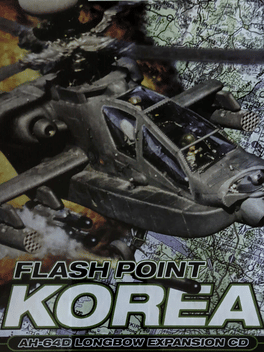
Flash Point Korea is an expansion pack (mission disc) for AH-64D Longbow featuring combat in Korea.Tempest X3
1996
Tempest X3
1996
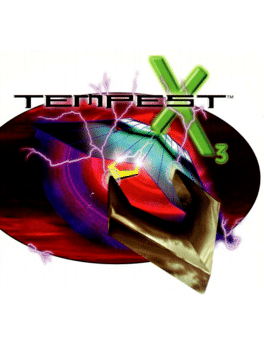
star 8In Tempest X3 you control a claw that perches and crawls around the outer edge of a series of geometrically shaped, tube-like constructs, shooting down or out into the nebulous void of outer space. From the core of this void, fuseballs, rockets, pulsars, tankers and other hazardous aliens and alien artifacts move toward your ship. Once you clear a screen, you fly into the void and onto the next level. Watch out for spikes as you advance.