New Games - Page 12402

Romancia: Dragon Slayer Jr.
1986
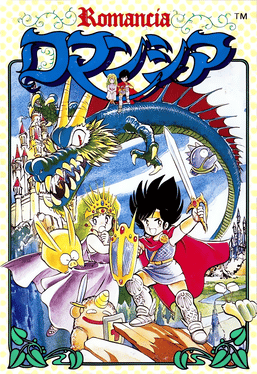
This game exists in two editions, one for the MSX1 and one for the MSX2 with better graphics. In Romancia: Dragon Slayer Jr., you are a young warrior whom the king sends on a mission to rescue a lost princess. You must leave the town and enter the dreadful monster-infested catacombs in order to complete your quest. The game is a departure from Dragon Slayer RPG-oriented gameplay style. It tends more towards medieval-themed platformer action. The hero has hit points, can buy items and weapons, use magic, and stay in inns to recover health. However, instead of receiving experience points and becoming stronger, you simply must attack quicker (by bumping into your opponent on platform levels) and jump higher.Winter Events
1986
Winter Events
1986
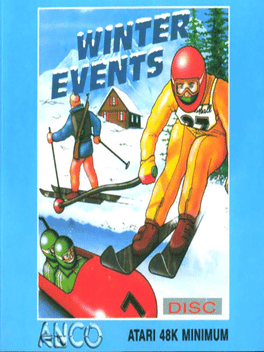
Winter Events is a multi-sport event game heavily influenced by the classic Winter Games. The game allows you and three other friends to select a country before competing in six Olympic events which are Biathlon, Slalom Skiing, Ski Jumping, Speed Skating, Bobsleigh and Downhill Skiing (Downhill Skiing not on Atari 8-Bit).UFO Robo Dangar
1986
UFO Robo Dangar
1986
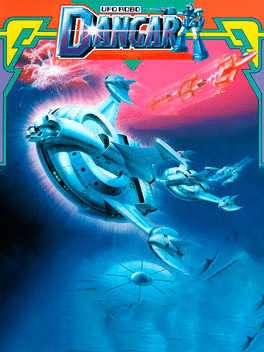
UFO Robo Dangar is a 1986 arcade game released by Nichibutsu. It is a game in the Moon Cresta series, which includes Terra Cresta and Terra Force. The game is inspired by the anime series UFO Robo Grendizer and Danguard Ace.The Genji and the Heike Clans
1986
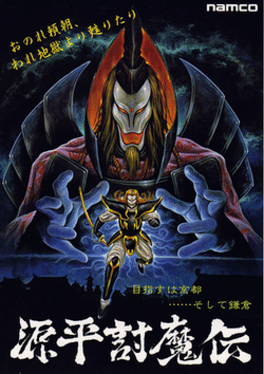
The Genji and the Heike Clans (Genpei Touma-den) is a side-scrolling hack and slash platform game. The player controls Taira no Kagekiyo, a samurai who was killed in the Battle of Dan-no-ura during the Genpei War. Kagekiyo was resurrected to defeat his enemy Minamoto no Yoritomo and the heads of his clan, Minamoto no Yoshitsune and Saito Musashibo Benkei. The game offers three types of action: Small Mode (standard), Big Mode (standard, but with large characters and usually boss fights) and Plain Mode (viewed from an overhead perspective). The game received a localization when released in Namco Museum.Guerrilla War
1986
Guerrilla War
1986
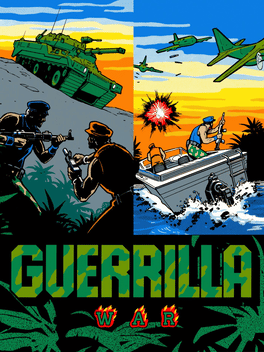
star 6.9Guerrilla War is an overhead run and gun game produced by SNK. Originally released for arcades in 1987 as a coin-operated arcade game, Guerrilla War followed the adventures of two unnamed rebel commandos (Che Guevara and Fidel Castro in the Japanese version) as they raid an unnamed Caribbean Island in order to free it from the rule of an unnamed tyrannical dictator. Along the way the players vanquish hordes of unnamed enemy soldiers while attempting to rescue hostages (with large score deductions for any hostages killed in the crossfire), collecting weapons from troopers and operating tanks.Top Gunner
1986
Top Gunner
1986
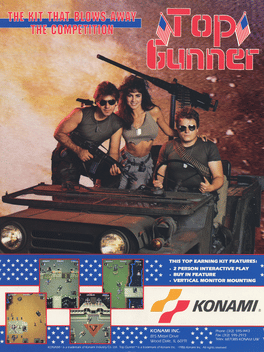
star 7.9Overhead run'n gun-style shoot-'em-up. You play as jeep driver and gunner rescuing POWs. More commonly known as Jackal outside the US.Shanghai
1986
Shanghai
1986
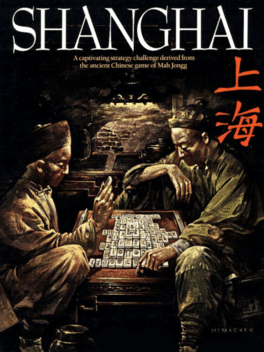
Arcade PC-9800 Series Sharp X68000 PC-8800 Series Commodore C64/128/MAX Atari Lynx Atari ST/STE TurboGrafx-16/PC Engine Amiga Family Computer MSX2 Nintendo Entertainment System Sega Master System/Mark IIIstar 8.4Shanghai is a computerized version of mahjong solitaire. After winning a game, the tiles reveal the three-dimensional blinking eye of a dragon behind the game screen. The Macintosh and Sega Master System version shows an animated dragon spitting fire.Gunship
1986
Gunship
1986
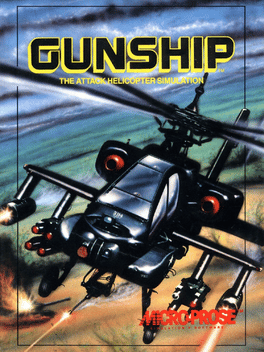
PC-9800 Series Sharp X68000 PC-8800 Series Commodore C64/128/MAX ZX Spectrum Atari ST/STE DOS FM Towns Amiga MSX2 Amstrad CPCstar 6.9After selection of region, style, and enemies, the pilot is assigned a primary mission and a secondary mission. These could include such objectives as "Destroy enemy headquarters" or "Support friendly troops" (i.e. destroy targets near friendly forces). The latter would be an easier mission, because the battle would be fought closer to friendly lines.King's Quest III: To Heir is Human
1986
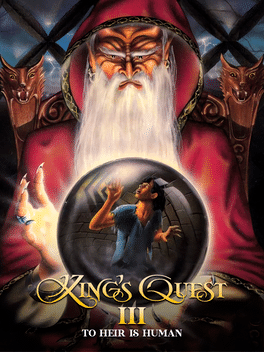
star 6.9King's Quest III: To Heir is Human is an adventure game in the King's Quest series. Players control Gwydion, a young slave to the evil wizard Manannan in the land of Llewdor. The game follows Gwydion's journey as he learns magic, escapes his captor, and discovers his true identity as the lost prince of Daventry. Players must solve puzzles, avoid the wizard's watchful eye, and navigate various dangers to complete their quest. The game expands on the series' fantasy setting, introducing new locations and characters while maintaining the puzzle-solving and exploration elements that define the King's Quest franchise. As the third installment in the series, King's Quest III continues the story of the royal family of Daventry, connecting to the broader narrative of the King's Quest saga.Space Quest: The Sarien Encounter
1986
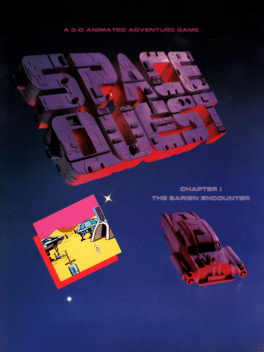
star 7.5He's out to clean up the universe... ...But he doesn't do windows. Strap into your computer station and prepare for blast-off. If the thrilling graphics don't blow you off your chair, the laughs will have you rolling on the floor. If you can help Roger Wilco he could use it. Hey, wake up! Roger Wilco's the chief sanitation engineer (a.k.a. Janitor) on the starship Arcada. His mission: to scrub dirty decks... to replace burned-out lightbulbs... to boldly go where no man has swept the floor! But while he was napping in the broom closet, his starship was hijacked by the Sarien Stormtroopers. Now the top-secret Star Generator's been stolen. And if Roger doesn't get it back, the universe as we know it is toast! Kaboom! The Two Guys from Andromeda often travel the cosmos under the aliases of Scott Murphy and Mark Crowe. They're best known for their award-winning Space Quest series and their frequent sightings with Elvis.Stunt Copter
1986
Commando
1986
Dragon Ball: Dragon Daihikyou
1986
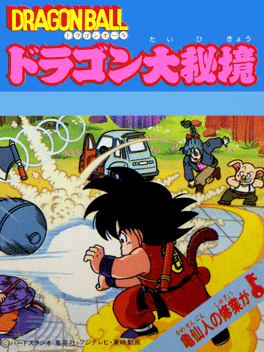
star 4.9Dragon Ball: Dragon Daihikyou is the first Dragon Ball console video game ever released. It was developed and released by Epoch in September 27, 1986, for the Super Cassette Vision console, making it the only Dragon Ball game not produced or distributed by Bandai or the subsequent Namco Bandai.I Am a Teacher: Teami no Kiso
1986
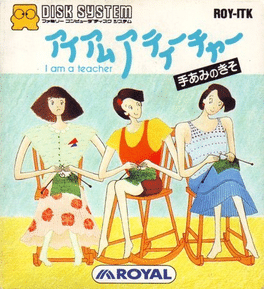
An instructional program for learning how to knit by hand for the Famicom Disk System. It was developed by Royal Kougyou and follows their earlier educational software I Am a Teacher: Super Mario no Sweater. I Am a Teacher: Teami no Kiso (roughly "I Am a Teacher: The Basics of Hand-Knitting") is an instructional tool to help would-be knitters create their own garments. The user can input the amount, length and type of wool they have and the size and type of the item of clothing they wish to create and the program will put together a guide to help them achieve this goal. The user can save their progress at any time and pick up from where they left off. Unlike Super Mario no Sweater, its predecessor in the I Am A Teacher series, there are no Nintendo characters present in Teami no Kiso. Rather, Teami no Kiso is a guide for teaching the fundamentals of knitting to novices, with Super Mario no Sweater intended for those who already have some experience who wish to try new Mario-themed designs. As with Super Mario noCastlevania
1986
Castlevania
1986
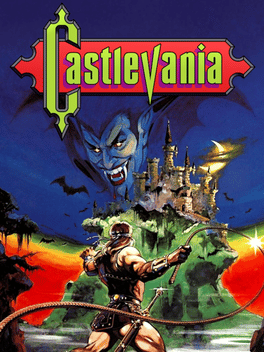
Family Computer Disk System Arcade Nintendo 3DS Wii Family Computer Wii U Nintendo Entertainment Systemstar 7.8Step into the shadows of the deadliest dwelling on earth. You've arrived at Castlevania, and you're here on business: To destroy forever the Curse of the Evil Count. Unfortunately, everybody's home this evening. Bats, ghosts, every kind of creature you can imagine. You'll find 'em all over the place, if they don't find you first. Because you've got to get through six monstrous floors before you even meet up with the Master of the House. Your Magic Whip will help, and you'll probably find a weapons or two along the way. But once you make it to the tower, you can count on a Duel to the Death. The Count has waited 100 years for a rematch.Space Hunter
1986
Space Hunter
1986
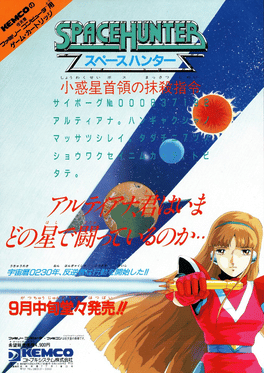
Space Hunter is a Japan-exclusive video game that was released in 1986 for the Family Computer. The game was published by Kemco; which was then known as Kotobuki System. The plot apparently revolves around a robotic revolt led by a robot named De Gaulle. It is the year 2199 AD. By the explosions of global nuclear war, society has broken up into nine small expulsions, one of them disappeared and Venus collided with another celestial object. Humanity only slightly survived. Its thread of life barely connected to a body; which was rebuilt into a cyborg. The heroine is named Al Tiana and is also apparently a robot who does not support the rebellion. She is out to prove her loyalty to the humans.OutRun
1986
OutRun
1986
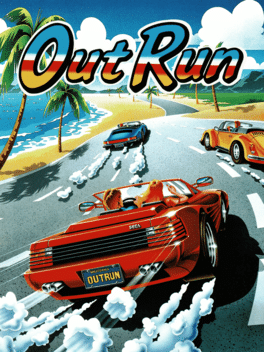
star 7.1OutRun is a racing game originating in the arcades. The player can race across varied terrain in a readily available Ferrari, complete with a female passenger, over a series of short tracks. Gameplay is viewed form just above and behind the car. The roads are full of sharp bends and hazards, contact with which can cause the car to roll and lose the player's time. On each section of track there is a fork in the road, allowing the player to choose which direction he or she wishes to go in. The player has to to complete five track sections in total, out of the fifteen in the game.Ghostbusters
1986
Ghostbusters
1986
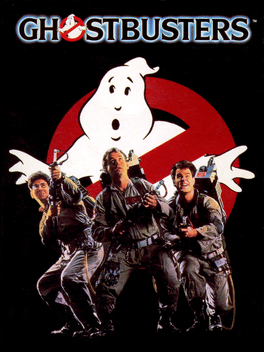
Ghostbusters is an action game that features an overhead-view and a side-view. From Ghostbusters HQ, the player must monitor a map of midtown Manhattan for "ghost alarms", as well as for casual, roaming spirits, and plot a route to the alarmed area. Once the route is plotted, the player then controls the purchased Ghostmobile as it drives through traffic. Here, the player is able to capture casual ghosts on the way if they are en route. When the haunted location is reached, the game switches to a side-view. Two of the Ghostbusters will take position, activate their proton beams, and toss a trap to the ground. The player must then use the two Ghostbusters to attempt to lead the ghost(s) over the placed trap. Once activated, the trap springs to capture any ghosts directly above it. A successful capture will earn the player money, which can then be used to purchase new Ghostbusters vehicles and new modifications for it. An unsuccessful capture will see the ghost fly away (after nastily sliming one of the Ghostbusters)Super Xevious: Gamp no Nazo
1986
In Super Xevious: Gamp no Nazo the player controls a spaceship named the Solvalou in its mission to destroy a powerful supercomputer named GAMP, which took over Earth during an ice age. Gamp no Nazo features a heavy focus on puzzle-solving, with each of the game's 21 levels posing a puzzle that must be solved to progress.Koneko Monogatari: The Adventures of Chatran
1986
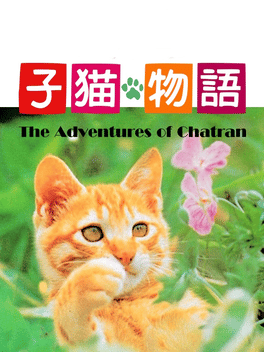
The story of two animals and their adventures. Chatran, the cat, and Pocky, the dog, are two animals who grew up together on the same farm. One day, the two are separated and begin a journey to find each other. The adventurous, and often perilous quest finds the two animals traveling across mountains, plains, and snow-covered lands searching for one another.