New Games - Page 12994

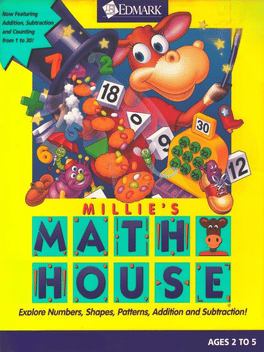
Millie's Math House
1992
Millie's Math House
1992
An educational game created by the Edmark Corporation targeted at younger audiences.Spy vs. Spy: Operation - Booby Trap
1992
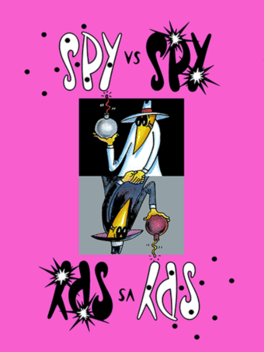
star 7Players take on the role of a spy in white (or black), and go on a mission to go to four different locations and collect 4 items: a CD, passport, key and a sum of cash (and a brief-case to contain these things). But there's a snatch, another spy is also on the same mission. Players have to sweep him out of their way and collect the items before he does!Magic Kid Goo Goo
1992
Magic Kid Goo Goo
1992
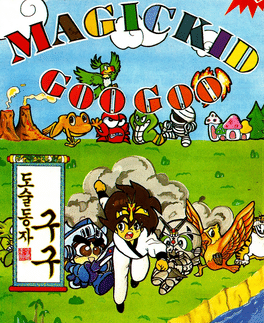
If you like Korean Famicom games, this one should be right up your alley. It's made by some of the guys who went on to form Open Corp (the team that made Buzz & Waldog), and that game's DNA is really obviously present in this one - those same sound effects ripped off from Tiny Toon Adventures, a similar aesthetic, etc. In a lot of ways this game is simpler, but in many others it's actually a way more ambitious game, complete with a shop system, minigames, lots of character upgrades, etc. The ROM size is even twice that of Buzz & Waldog!Crash 'n' the Boys: Street Challenge
1992
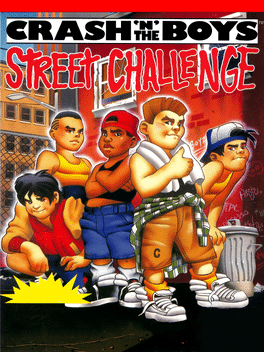
star 7Theodore "Todd" Thornley IV has had enough. After being humiliated once again by his rival, Jeff "Crash" Cooney and his blue-collar buddies from Southside High School at the All-City Track Meet, he has decided to issue a challenge to Crash. Inviting two of the other elite high schools to participate in the challenge, plus an additional team sponsored by his wealthy father, Todd has seemingly stacked the deck against Crash and his boys. The game has four different teams to choose from, as well as a fifth computer-controlled team. Each team have five members each with their own strengths and weaknesses, making some better suited to certain events than others. Before each event, players have the opportunity to go shopping in the mall to buy power-ups for their characters. These items are paid for through the various medals that each team achieve as they progress through the challenge, but since the winner of the challenge is the team that collects the most medals overall, players must be fairly judicious in how much tStanley: The Search for Dr. Livingston
1992
DANGER Danger lurks behind every turn and every tree as you seek out the ancient temple of wisdom, the legendary lost temple of "Am-Zutuk" while hot on the trail of the absent-minded Dr. Livingston deep in the heart of the mysterious Congo jungle. ADVENTURE Adventure overtakes you as you battle under mountain and over hill against cunning natives, giant spiders and psychedelic specters. Discover hidden items and maps; recover lost ancient weapons and armor. EXPLORE Explore dark mysterious caverns and brave hundreds of levels of uncharted wilderness as you risk your life for fame, wisdom and adventure. Hurry, find the lost Dr. Livingston and the mysterious temple. Who knows, your exploits may someday be famous. Dr. Livingston I presume? Special password feature included!Tecmo Cup Soccer Game
1992
Tecmo Cup is a soccer simulator combined with RPG elements. As the game progress, Robin and his teammates will get better. The matches themselves consist of numerous choices what to do at each moment. If you are attacking, you have options to pass, shoot or to dribble. And when you are defending, you can either tackle, cut pass/shoot, or mark the opposition player with ball. The game is a port and rebranding of the Famicom game Captain Tsubasa.Puyo Puyo
1992
Puyo Puyo
1992
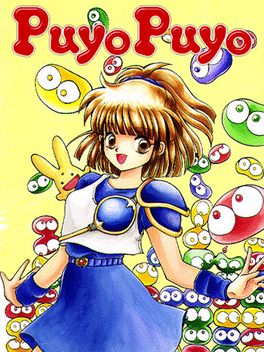
Arcade PC-9800 Series Super Nintendo Entertainment System Sega Mega Drive/Genesis Sega Game Gear PC (Microsoft Windows) FM Towns Super Famicomstar 6.5Puyo Puyo (1992) is an enhanced version of the 1991 MSX2 and Famicom Disk System game of the same name. The game was developed for the Sega System C-2 arcade hardware and ported to a variety of consoles. Puyo Puyo is a puzzle game in which the player matches four or more "Puyo" of the same color together. This game is the precursor to an identically-titled arcade release. Puyo Puyo contains three modes: Endless, Mission, and Verses. In Endless Mode, players match Puyo until the top of their well is filled. If the player chooses, either a giant 2x2 green Puyo or Carbucle will periodically help the player clear space on their board. Mission mode gives the player several challenges to complete, such as clearing a set amount of Puyo or clearing all Puyo of a certain color. Verses mode allows players to battle each other.Spider-Man: Return of the Sinister Six
1992
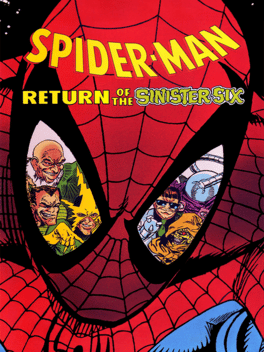
star 6.1Spider-Man: Return of the Sinister Six is a side-scrolling game which puts you in the role of Spidey throughout six levels against Electro, Sandman, Mysterio, Vulture, Hobgoblin and Doctor Octopus respectively. Some puzzle solving (like finding a key) is necessary to beat some levels. Spidey can duck jump, climb walls, punch, shoot webs to swing (by pressing punch and jump together) and perform a jump kick (by pressing the punch button twice). Collecting web cartridges allows Spidey to shoot limited web projectiles. Although hard to die, Spidey has only one life, there are no items to recharge life (but killing some guys will do so) and only one continue.Barbie: Game Girl
1992
Barbie: Game Girl
1992
star 5.7Unlike most Barbie games, this game is a standard platform game rather than a simulation of the life of a female fashion model. Barbie must find an outfit for her date with Ken. The environment features a shopping mall level, an underwater level, and other worlds to explore. The game is also centered around collecting gems and pearls to fend off opponents. Enemies in the game include the usual sharks found in underwater levels in addition to jellyfish. Moving cubes of sugar must also be defeated in the game. The bonus rounds of the game are essentially a Concentration-type game where matching identical cards lead to extra points for the player.Battle Clash
1992
Battle Clash
1992
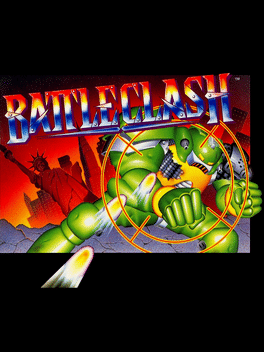
star 6Battle Clash is a game that uses the Super Scope light gun peripheral. In this game, you fight in a futuristic version of the world as a warrior named Michael Anderson, who takes part in a competition simply known as the "Battle Game". Contestants in the Battle Game fight using mobile Standing Tanks (or STs for short), that come with a variety of weapon systems and forms.Space Megaforce
1992
Space Megaforce
1992
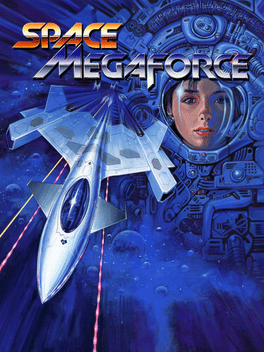
star 7.7Taking the role of a lone starfighter pilot, you are tasked with destroying an evil alien armada in standard 2D shooter fashion. And while you may be alone, you certainly won't be underpowered, with eight different types of weapons, each having six power-up levels for a grand total of 48 firing modes (not counting bomb power-ups) Space Megaforce boasts one of the largest arsenals in 2D shooter history. Gameplay is single-player only with 3 difficulty levels. Also included is a short campaign with different levels that plays mostly like a "survival" mode with the objective being to outlast the time limit and rack the most points. This international release of Super Aleste features a different story compared to its Japanese counterpart.Final Star Force
1992
Final Star Force
1992
The gameplay of Final Star Force goes back to the formula of the original Star Force, but with updated graphics and some extra power-ups. Other things that have been changed from the original are the style of the title screen's logo, the background, and some enemies. Players control the two space fighter ships Blue Nova and Red Nova. There are three different power-ups to choose from called "Pulsators". Each name of a Pulsator has a letter at the beginning of it (e.g. A-Pulsator, B-Pulsator, C-Pulsator). The power-up system is similar to the one seen in the 1990 Raiden arcade game. Unlike other games that requires players to obtain powerups to enhance their ships, the power meter itself charges up automatically to increase their fighters' power.Bakuretsu Breaker
1992
Bakuretsu Breaker
1992
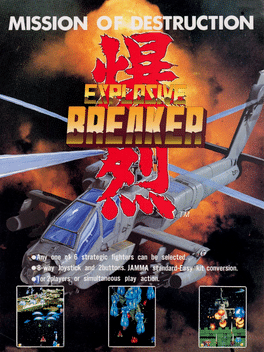
A vertical scrolling shoot'em up. Bakuretsu Breaker is an Action game, developed and published by Kaneko, which was released in 1992.Blandia
1992
Blandia
1992
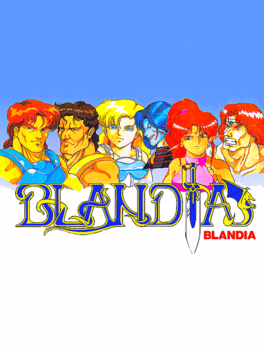
Blandia (ブランディア Burandia?) is a 1992 one-on-one, weapon-based fighting arcade game developed and published by Allumer. It is the sequel to the 1986 arcade game, Gladiator. Along with Strata's Time Killers, Blandia is one of the earliest weapon-based fighting games modeled after its competitor Capcom's 1991 arcade hit Street Fighter II, but later became overshadowed by the success of SNK's 1993 weapon-based fighting game, Samurai Shodown.Desert Breaker
1992
Desert Breaker
1992
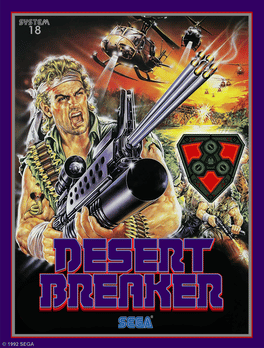
Desert Breaker is an overhead run-and-gun, a sort of game which often falls into the genre of vertical shoot-em-ups. However, they differ from conventional shooters in that they allow you to go at your own pace and shoot in multiple directions instead of always moving and firing north.Block Carnival
1992
Block Carnival
1992
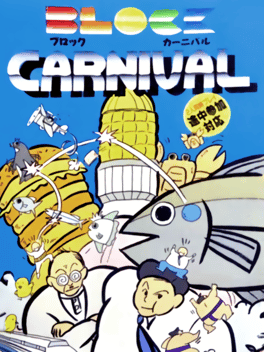
An Arkanoid-like block breaking game. A ball and paddle game from Visco Games for one or two players (simultaneously). Evil alien entities in the shape of food such as cake, hot dogs, and sushi have invaded earth. It's your job to stop them.Super Batter Up
1992
Super Batter Up
1992
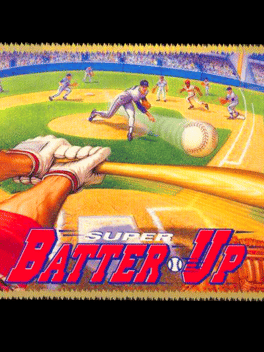
Super Batter Up is a baseball game with both a 1 and 2 player mode plus a league mode. The game carries the MLBPA license, but not an MLB license, so it only features all the players from the 1991 season playing for a team in a city that they really play for. Players get to play in either a dome, modern, or traditional stadium each with their own unique characteristics.Galactic Warrior Rats
1992
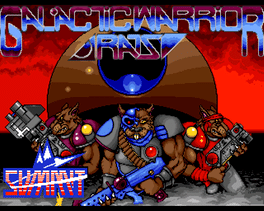
Einstein, Newton and Darwin are the Galactic Warrior Rats, mutant hybrids who come under your control in this top-down multi-directional shooter. Their plan is to save the badly polluted planet Smeaton Five by destroying its robotic defences and the computer primed to explode it. Many enemies must be shot down along the way, but most release credits when shot – wait a few seconds for these to appear. You have three lives, with each rat representing a life, which means that all upgrades are lost when you lose a life, and each rat’s protective biosphere has the ability to withstand a few shots. Before heading into the action, you can spend your initial 500 credits on upgrades and weaponry. Your movement features a degree of inertia, making it harder to stop short of a position.Crazy Sue goes on
1992
Math Rescue
1992
Math Rescue
1992
star 7A bone-chilling crisis has struck the world! Reports are pouring in from all corners of the globe: Missing numbers! Drivers on streets are in dangerous peril because the speed limit signs have gone blank! On Wall Street, stockbrokers are throwing up their hands in despair. The Dow Jones isn't down, and it isn't up - it's gone! You start to call your best friend, but the buttons on your phone are blank!