Most Popular Games - Page 475

Runes of Magic
2009
Runes of Magic
2009
star 5.4Runes of Magic (RoM) is a massively multiplayer online role-playing game (MMORPG) developed by the Taiwanese developer Runewaker Entertainment and adapted for the English and German-speaking market by German company Frogster Interactive. Frogster has also opened servers for France, Spain, Poland, Italy, and Australia as well as servers dedicated to the European Union. After going through an open beta phase, the game was launched on March 19, 2009 and Chapter II – The Elven Prophecy was launched on September 15, 2009. The next chapter, Chapter III – The Elder Kingdoms, started April 22, 2010, however all of Chapter III did not become available until August 11, 2010. Chapter IV - Lands of Despair, was released June 16, 2011. The latest Chapter, Chapter V - Fires of Shadowforge, was released on June 12, 2012. The game client is free to download, and no monthly subscription fee is required because the service is funded by real money transactions (RMT) in the Runes of Magic Item Shop.Disaster Report 4: Summer Memories
2018
star 6.5In the shadow of a massive earthquake, you must brave a destroyed city where your choices will determine who survives.Heavy Rain: The Taxidermist
2010
star 5Heavy Rain: The Taxidermist is a prequel to Heavy Rain and offers about 15 minutes in gameplay with 5 different endings. It was offered as paid downloadable content for the regular version of the game and in the special edition a voucher was provided to download it for free. Gameplay is similar to Heavy Rain, but with a focus on quick pacing and split-second decisions that influence the events. The largest part is centered around investigating the house and dealing with the return of the resident. After completing the part, the player is offered to play again from certain checkpoints to discover the other endings.Driveclub Bikes
2015
Driveclub Bikes
2015
star 7.5Whether you're a seasoned DRIVECLUB pro or a newcomer to racing for a Club, get ready for the burning tyres, break-neck speed and raw power of the world's most incredible superbikes.Blue Max
1983
Blue Max
1983
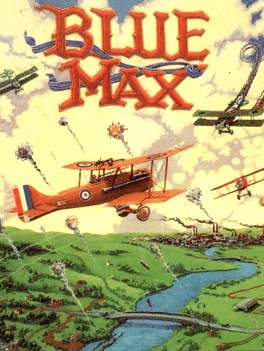
star 6Blue Max is a video game developed and published by Synapse Software, originally released for the Commodore 64 and Atari 8-bit computers in 1983. In 1984 it was ported to the ZX Spectrum by U.S. Gold. in 1987 Atari Corp. published it in cartridge form for the then-new Atari XEGS. The player controls a Sopwith Camel biplane during World War I, attempting to shoot down enemy planes and bomb targets on the diagonally scrolling terrain. It has strong similarities to the arcade game Zaxxon. The game is named after the medal Pour le Mérite, informally known as Blue Max. Its theme song is "Rule, Britannia!". In 1984, Synapse released a sequel called Blue Max 2001 with a futuristic sci-fi setting, but otherwise similar in style to the original game.Granblue Fantasy
2014
Granblue Fantasy
2014
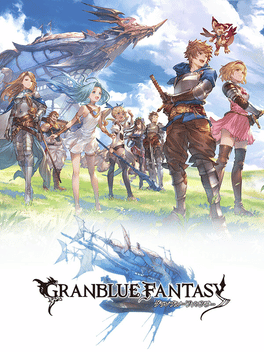
star 7.2Granblue Fantasy is a Japanese role-playing video game. The game plays as a traditional Japanese role-playing video game with turn-based battles. The game also contains summons and a class system that alters the main character's move-set and growth. Characters gain levels and abilities by accruing experience; summons and weapons equipped also confer characters with bonuses on attack power and HP. The characters themselves are gained either via quests (the main story quests or special event quests) or by using in-game currency to receive random crystal fragments, which may contain special weapons that add specific characters to the party. Characters, summons, and weapons are ranked (from best to worst) as SSR, SR, R, or N; each is also of type wind, water, fire, earth, light, or darkness. Voice actors provide voices for all of the characters in battle, and for much of the main and event storylines.Vainglory
2014
Vainglory
2014
star 6.9Outplay real opponents in this deep, uncompromising real-time MOBA. Fight with lightning-fast controls using powerful heroes. Destroy the enemy Vain crystal and claim glory! Watch the preview video now to see real gameplay of 3-vs-3 multiplayer battles.Toobin'
1988
Toobin'
1988
Arcade Game Boy Color Commodore C64/128/MAX ZX Spectrum Atari ST/STE DOS Amiga Amstrad CPC Nintendo Entertainment System MSXstar 5.1Toobin' involves Biff and Jet racing their way down the rapids of a river, riding on tires. You rotate your tyre left or right, and drift as the current sends you, making sure to avoid the banks of the river, and the dividing lines in the middle. Hazards include crocodiles, stray logs and branches, and fishermen - you are armed with a limited supply of tin cans to take care of these. There are gates to slide through on the way down - these give you a points bonus. Each level has a strict time limit to adhere to, although there's a kickin' party at the end if you succeed.T2: The Arcade Game
1991
T2: The Arcade Game
1991
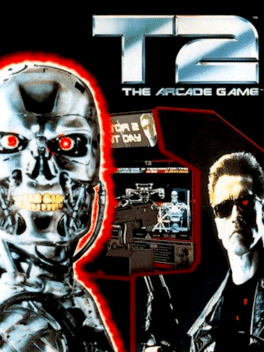
star 8.5As the title states, this is the home conversion of the arcade rail-shooter based on the film Terminator 2: Judgement Day. Up to two players shoot through future and present levels as robotic killers reprogrammed to serve the human resistance. Both players wield a machine gun with infinite ammo that lowers its firing rate (overheats) as it is continuously fired. A secondary weapon (missile launchers in the future, shotguns in the present) has limited ammo but deals heavy damage. Powerups inside the game world include secondary weapon ammo and coolant for the machine guns, and are shot to be collected. T2: The Arcade Game features seven levels based on specific scenes or general concepts in the film. The first four levels act as a prelude, as the player guns down waves of metal Terminators across a post-apocalyptic Battlefield, a besieged Human Hideout, and through the security checkpoints of the enemy supercomputer SkyNet. After destroying the computer, players travel back in time to protect John and Sarah ConnorTrain Valley
2015
Train Valley
2015
star 7.2Build railways, manage traffic and stay accident-free! Play in Europe, America, Japan and USSR in the period from 1830 to 2020. Complete the story mode from the Gold Rush of 1849 to the first manned spaceflight, and then explore the random mode. Management. Construction. Trains. Welcome to Train Valley!Rambo III
1988
Rambo III
1988
star 6.9Rambo III is a series of video games based on the film of the same name. Like in the film, their main plots center on former Vietnam-era Green Beret John Rambo being recalled up to duty one last time to rescue his former commander, Colonel Sam Trautman, who was captured during a covert operation mission in Soviet Union-controlled Afghanistan. The console versions are developed and published by Sega, the PC DOS version was developed by Ocean and published by Taito and Ocean developed and published the rest (Atari ST, Amiga, Spectrum, C64, Amstrad). Taito also released an arcade game based on the film.Nancy Drew: Curse of Blackmoor Manor
2004
star 7.9Nancy Drew: Curse of Blackmoor Manor is a first-person perspective, point-and-click adventure game. The player is Nancy Drew and has to solve a mystery. Explore rich environments for clues, interrogate suspects, and solve puzzles and mini-games.RoadBlasters
1987
RoadBlasters
1987
Arcade Commodore C64/128/MAX ZX Spectrum Atari Lynx Sega Mega Drive/Genesis Atari ST/STE Amiga Amstrad CPC Nintendo Entertainment Systemstar 6.8The objective of the game is to complete all 50 rallies without running out of fuel. There is no limit to how many vehicles a player can receive to complete a rally, as long as they have fuel. However, the destruction of the vehicle will subtract a small amount from the player's fuel tank. In the arcade, Genesis and Lynx versions, players could start the game at a higher rally, with additional opportunities to jump several levels from time to time. Players can continue their game from where they left off; however, the player has only one chance to complete the 50th and final rally. For completing the final rally the player gets one million points as a bonus. Players can get fuel in four ways: green globes, red globes, a checkpoint, and the rally point.Fate/Hollow Ataraxia
2014
Fate/Hollow Ataraxia
2014
star 9.6Fate/Hollow Ataraxia is a Japanese visual novel game and the sequel to Fate/Stay Night. The word ataraxia in the title is a Greek term for tranquility, giving the title the combined meaning of "empty (or false) tranquility". The plot of Fate/Hollow Ataraxia is based half a year after the events of Fate/Stay Night. Like its preceding counterpart, the story is set in Fuyuki City. Bazett Fraga McRemitz, a member of the Mages' Association and a master in the Fifth Holy Grail War, wakes on the fourth day of the Fifth Holy Grail War with a new servant, Avenger, and no memory of what happened to her beforehand. She and the Avenger set off to fight and win the Holy Grail War.Gorf
1981
Gorf
1981
Commodore VIC-20 ColecoVision Arcade BBC Microcomputer System Atari 2600 Commodore C64/128/MAX Atari Jaguarstar 6.9Gorf actually consists in the Arcade version of five different types of space shooters. The first one ist basically is a Space Invaders clone. In the second one a formation of space ships is hovering at the top of the screen while single space ships will disengage from the formation and dive down at you. The third variant is a Glaxian clone and only available in the Arcade version. In the fourth mini-game the enemy will come out of a circular hyperspace field and attack you. After having destroyed four of your attackers the game proceeds to the fifth game stage. Here a huge mothership is dropping bombs at you from the top of the screen. You defeat the mothership with a well placed projectile hitting it between its two major sections. After that the game starts from the gebinning on a higher difficulty level.Indiana Jones and the Temple of Doom
1985
star 5As Indy, the player must complete several cycles of the following three types of levels: 1.Mine level: Whip your way through a mine in order to free children that are held captive. Use your whip to swing across chasms, climb ladders, ride along conveyor belts and defend yourself against attacks from Thuggee guards, bats, snakes and the fireball-throwing Mola ram. Escape with the mine cart after you've freed all children. 2.Mine cart level: Pick the right route through a network of tracks while riding in a mine cart. Avoid potholes, broken tracks & guards in carts and safely reach the end of the track. 3.Temple level: Make your way to the altar and grab the Sankara stone while Mola Ram, bats and Thuggee guards attack you. Watch out for that lava.The Hitchhiker's Guide to the Galaxy
1984
Atari 8-bit Web browser Commodore C64/128/MAX TRS-80 Color Computer Atari ST/STE Commodore 16 Mac DOS Tatung Einstein Amiga Apple II TRS-80 Amstrad CPC Commodore Plus/4 Amstrad PCW Texas Instruments TI-99star 6.9The Hitchhiker’s Guide to the Galaxy is a classic Interactive Fiction game. Though divergent from the source material, the main characters, locations, and concepts are here. Unlike the book, death can come quickly if Arthur fails to observe his surroundings, collect inventory, talk to people, and consult the Guide. Don't panic!3-D Tic-Tac-Toe
1979
3-D Tic-Tac-Toe
1979
star 5The game is similar to the traditional game of tic-tac-toe, but is played on four 4×4 grids stacked vertically; it is basically a computerized version of the board game Qubic using traditional tic-tac-toe notation and layout. To win, a player must place four of their symbols on four squares that line up vertically, horizontally, or diagonally, on a single grid, or spaced evenly over all four grids. This creates a total of 76 possible ways to win, in comparison to eight possible ways to win on a standard 3×3 board. The game has nine variations: it can be played by two players against each other, or one player can play against a built-in AI on one of eight different difficulty settings. The game uses the standard joystick controller.Hatsune Miku: Project Diva F
2012
star 7.4Hatsune Miku: Project DIVA F is a rhythm game and the fifth entry in the Hatsune Miku: Project DIVA series, built around songs performed by Vocaloid singing synthesizer software, most notably the virtual singer Hatsune Miku. Players press timed button prompts in sync with the music, with this entry adding a new Star symbol performed by rubbing the touch screen or flicking the analog stick. It was developed at the same time for PlayStation Vita and PlayStation 3 and includes customization features such as an edit mode and a room for interacting with the characters. It holds particular significance as the first game in the Project DIVA series to be released in the West.