New Games - Page 13290

Ghouls 'n Ghosts
1988
Ghouls 'n Ghosts
1988
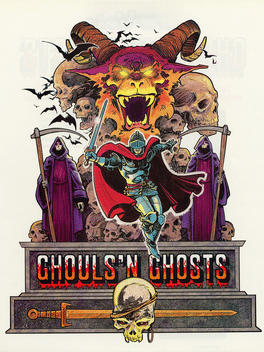
star 8The gameplay for Ghouls 'n Ghosts is similar to that of Ghosts 'n Goblins. The player controls the knight Arthur, who must advance through a series of eerie levels and defeat a number of undead and demonic creatures in his quest to restore the souls stolen by Lucifer (Loki in the English-language Mega Drive and Sega Master System versions), including the soul of his lover, Princess Prin Prin. Along the way, Arthur can pick up a variety of weapons and armor to help him in his quest. While the core gameplay remains the same as its predecessor, the game now allows Arthur to fire directly upward and directly downward while in mid air. By jumping in certain spots, players can cause a treasure chest to erupt from the ground. By firing his weapon at the chest, players may uncover new weapons, gold armor or an evil magician that changes Arthur into an elderly man or a helpless duck. The gold armor allows players to charge up the weapon to release a powerful magical attack. Each weapon has its own special attack. There arKaettekita Mario Bros.
1988
Kaettekita Mario Bros. is an updated version of Mario Bros. that was released only in Japan. It had several new features including new levels and the option to save high scores. Excluding ports, this is the last Mario Famicom game. It was co-published by Nagatanien, a food company, and contains in-game advertising.Chuugoku Senseijutsu
1988
Chuugoku Senseijutsu
1988
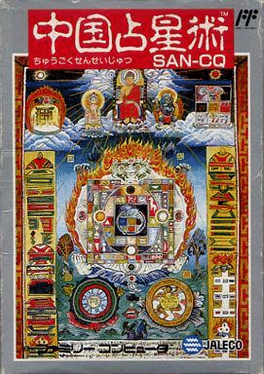
A fortune-telling simulator for the NES developed by Sanritsu and Aicom and published by Jaleco. A fortune-telling game that uses Eastern mysticism to prognosticate on the player's future, based on their year of birth. Though fortune-telling devices weren't unheard of, this was the first NES "game" to provide such a service. It would, however, be followed almost immediately with Induction Produce's '89 Dennou Kyuusei Uranai; another fortune-telling interactive simulator. The player can choose to receive their fortune in distinct areas of their lives, including romantic prospects, the best time to marry their partner and the outcome of their future business dealings. Due to the minimal impact and relative obscurity of Eastern horoscopes in the west, the game was never released outside of Japan, though the US would eventually receive their own equivalent with Taboo: The Sixth Sense.Snatcher
1988
Snatcher
1988
Snatcher is a cyberpunk-themed graphic adventure game directed and written by Hideo Kojima and produced by Konami. The setting and story of Snatcher is heavily influenced by cyberpunk and science-fiction media, taking place in a large futuristic dystopian city. The story revolves around an investigator named Gillian Seed assigned to investigate a breed of bioroids known as "snatchers", who are killing humans and taking their place in society. The game is set in a primarily first person perspective and uses a menu-based interface that allows the protagonist to interact with his environment. The player can choose to "Look", "Investigate", "Talk", "Ask" and "Move" (in addition to other options) to acquire key items or receive vital information from other characters. The player can analyze items in Gillian's belongings or show it to other characters. During key points of the game's story, the player must pass shooting sequences to defend Gillian from assailants. These shooting segments use a 3x3 grid which the player cTakeshi no Sengoku Fuuunko
1988
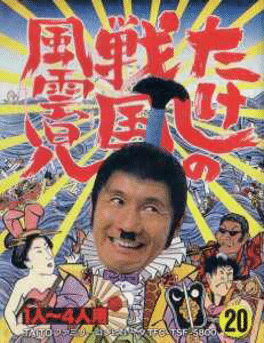
A Sengoku period board game simulation starring Beat Takeshi. Takeshi no Sengoku Fuuunko is a board game simulation starring Japanese comedian-turned-actor "Beat" Takeshi Kitano. Similar to the Game of Life, players move around a board earning money and occasionally encountering events such as a minigame - in which the player can increase their wealth should they succeed - or a penalty. The game has a Sengoku era theme running throughout, from its samurai characters to the tattooed gambler that rolls a dice for determining how many places a player can move around the board that turn. Beat Takeshi appears frequently while the game is being played dressed in traditional Sengoku era clothing. The game is presumably in reference to the TV show Takeshi's Castle, which also starred Beat Takeshi and had a Sengoku era theme.Mario Bros.
1988
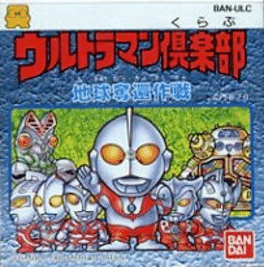
Ultraman Club: Chikyuu Dakkan Sakusen
1988
Bandai published this Ultraman-themed RPG for the Famicom Disk System in 1988. It was not released outside of Japan. Ultraman Club: Chikyuu Dakkan Sakusen ("Earth Protection Strategy" roughly) is a Bandai licensed game and the third Famicom Disk System game to be based on the Ultraman tokusatsu/kaiju TV show. The concept behind the "Ultraman Club" was to consolidate all the different variants of Ultraman from his many appearances in the different shows and have the player control a party of them. Unlike the two prior games, which were more action-oriented, this game is a turn-based RPG similar to Final Fantasy. Players could also select each scenario from the title screen, choosing to play them in whichever order they wished - this type of freeform non-linear RPG model would appear later in Dragon Quest IV, though of course it had been common practice in Capcom's Mega Man series long before Ultraman Club's release.Alantia: Legend of Blue Star
1988
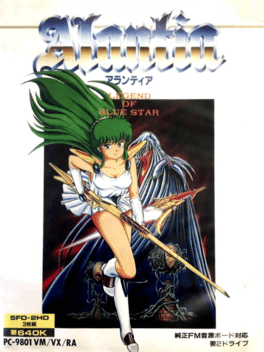
Princess Erina must save her kingdom from The Dark Lord Ezikiel in this third-person rail shooter for Japanese NEC computers.Big Challenge! Dogfight Spirit
1988
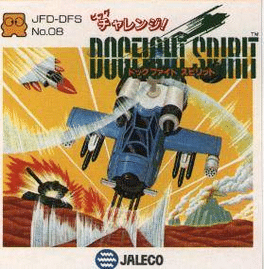
The player controls a blue helicopter fighting against waves of enemy vehicles and ground turrets. Each mission takes the helicopter to a different part of the worldGyruss
1988
Tetris
1988
Tetris
1988
Tetris
1988
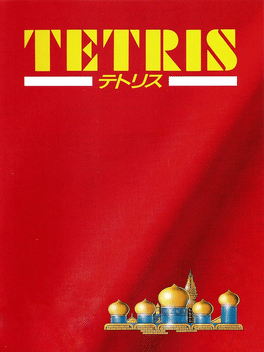
Tetris, developed by Bullet-Proof Software, was the first licensed Tetris game to be released commercially in Japan. It was released on most of the common home computers from the era.Sadakichi Seven: Hideyoshi no Ougon
1988
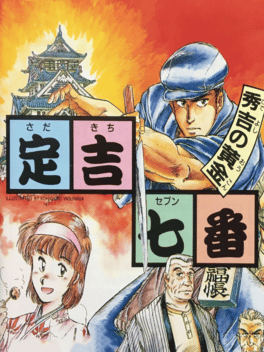
A comedic espionage-themed adventure game for the PC Engine, published by Hudson.Family Quiz 4-nin wa Rival
1988
Family Quiz 4-nin wa Rival (ファミリークイズ 4人はライバル? lit. Family Quiz 4 Man Rivalry) is a Japanese trivia game devloped by Athena for the Famicom, and published in Japan in November of 1988. This game was Athena's first console release. With a focus on family play, the game allows for four players to compete simultaneously. The goal is to beat the other opponents in four mini-games, each requiring that the player answer some Japanese trivia questions in order to proceed. The four mini-games are based on a game show, a board-game, the game of Othello, and a memory match game. In the game show, the only version that allows for just one player, answering questions correctly raises that player's podium towards a balloon. The other versions require at least two players, and turns may only be taken after players have answered a trivia question correctly.Target Plus
1988
Target Plus
1988
Target Plus requires the Gun Stick accessory, a light gun. The game consists of two parts that can be played independently, all related to shooting ranges. In the first part, you will have to shoot flying plates, and in the second part of the game your goal will be to protect a cooked chicken from being relentlessly attacked by spiders or wasps.Cosmos Club
1988
Cosmos Club
1988
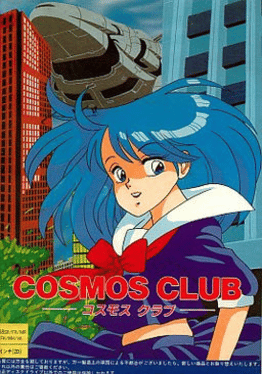
Main character is a freshman student who gets to enter a student dormitory "Cosmos club" full of girls. He is secretly in love with one of the girls and seeks her attention.Saiyuuki World
1988
Saiyuuki World
1988
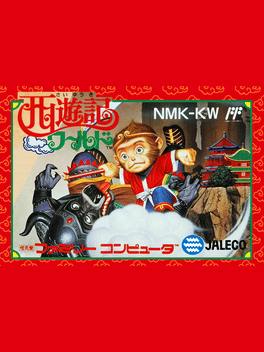
Saiyuuki World is an action game based on Wonder Boy in Monster Land but modified with content from the classic Chinese novel Journey to the West.Gambler Jiko Chuushinha
1988
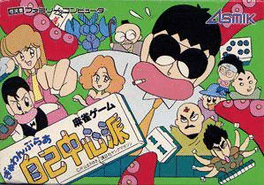
A Mahjong game based on a manga license, published by Asmik for the NES and MSX in Japan only.Touhou Kenbun Roku
1988
Touhou Kenbun Roku
1988
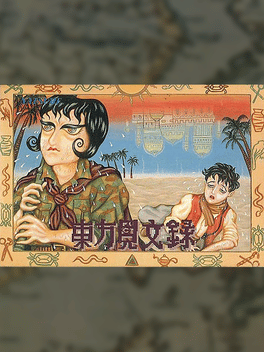
A sci-fi/comedy NES adventure game developed and published by Natsume in Japan only. Touhou Kenbun Roku ("The Travels of Marco Polo") is an adventure game that uses the then-ubiquitous NES adventure game system of having a series of menu commands with which to interact with the world. As a text-heavy Japanese adventure game, some fluency with the language is required in order to play it. The game depicts a troublemaker sent from the future back to 1275, when Marco Polo was in the midst of his explorations.