New Games - Page 13287

Tetris
1988
Tetris
1988
Tetris for Famicom is a port of the Japanese home computer version. Originally published under an incorrect licence, the game led to Henk Rogers's purchase of the Tetris licence on multiple platforms, which later led directly to further Nintendo releases. It is infamous for its control scheme, which mapped down to rotate, and A to hard drop, the opposite of most later versions which have down for drop and A for rotate. On October 1st, 2018 the game was re-released as part of the AtGames Legends Flashback. It has an updated copyright screen and remapped controls (up/B for rotate, down/A/C for hard drop). On November 1st, 2019, it was re-released on the updated Legends Flashback, Legends Ultimate Arcade, and the Adventure Flashback Blast!.Hoops
1988
Hoops
1988
Gym rats, beware! HOOPS takes you out to the asphault, where basketball is a half-court game of fast hands, faster moves and slam-jam-thank-you-Sam dunks! The legends of the Playground are all here: Mr. Doc, Jammer, Legs, Bomber, Wiz, eight players in all. You can pit them one-on-one or two-on-two. You pick the court - Eastern or Western - and you pick the rules, too. You can play against the computer or one other player. Or you can even team up with another player against the computer. You can block shots, make steals, pass off or go strong to the hoop - in fact, you control just about everything in this ultra-realistic rendition of the playground game. Except, of course, the final score. But win or lose, you know you've been in a game after you've played a game of HOOPS!Ultima I
1988
Family Trainer: Fuuun! Takeshi-jou 2
1988
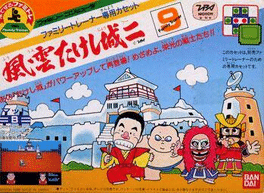
The sequel to Family Trainer: Totsugeki! Fuuun Takeshi-jou and the ninth game to be made for the NES Power Pad/Family Trainer by Bandai and Human Entertainment. Like its predecessor, it is based on Japanese TV show Takeshi's Castle.Fantasy Zone II: Opa-Opa no Namida
1988
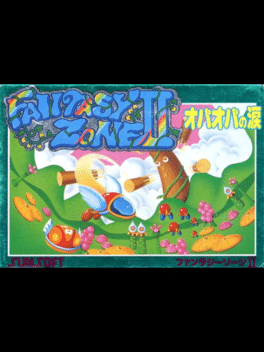
Opa-Opa is at it again in this zany return to his original homeland some ten years later. Welcome to Fantasy Zone II where perils are great and rewards even greater. During your visit you'll discover that peace is at stake once again and those who threaten it are more cunning and wicked than before. So beware, the evil Blackhearts are near and they're not alone. Scores of unusual and seemingly innocent creatures will enthusiastically approach you. But don't be fooled. They're not here to help. They're henchmen for the dark powers of the Blackhearts. And they'll sabotage every chance you've got to protect the warp gates from total ruin. So fight valiantly, because just when you think you've made it, the Blackhearts will be waiting.Pro Yakyuu Family Stadium '88: Nendo-ban
1988
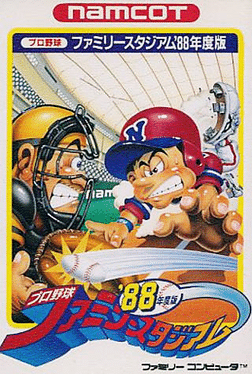
Pro Yakyuu Family Stadium '88 is the third in Namco's Pro Yakyuu Family Stadium series. As with its immediate predecessor, Pro Yakyuu Family Stadium '87, it is a slightly revamped version of the original with updated rosters. As with EA Sports's present-day practice, Namco released these games annually with little to distinguish each new iteration. Most notable of the smattering of minor new additions is allowing the player to choose their venue from four options, ranging from a fully-packed stadium to a park. Though this is the second sequel to Pro Yakyuu Family Stadium, which was released in the US by Tengen as R.B.I. Baseball, Pro Yakyuu Family Stadium '88 is not to be confused with R.B.I. Baseball 3. Though the first R.B.I. Baseball was a direct localization, subsequent R.B.I. Baseball games were created in the US and are entirely independent from Namco's series.Laydock 2: Last Attack
1988
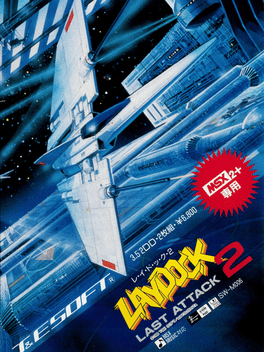
Sequel to the successful shoot 'em up Laydock. Again two jet fighters go on a joint mission, each space ship managed and controlled by a different player. The ships can be docked side-by-side or end-to-end for greater fire and fighting power. When docked one player is the pilot and the other is the weapons officer. But this game can also be played by a single player. When you progress in the game you can select more advance weapons systems to fight the over 50 different enemy characters. Compared with its predecessor there is not much changed only better graphics, more detailed backgrounds and inter level animations.Kaijuu Monogatari
1988
Kaijuu Monogatari
1988
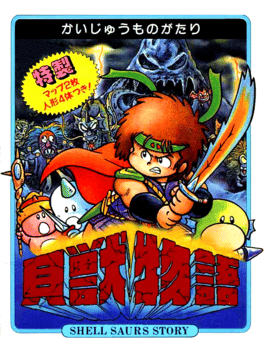
Kaijū Monogatari is a role-playing video game developed by Birthday and published by Namco for Famicom, in November 1988 in Japan.Pachinko GP
1988
Pachinko GP
1988
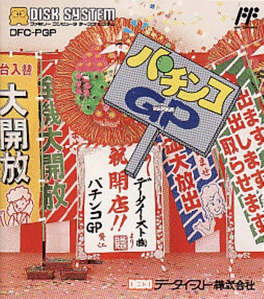
A pachinko simulator for the Famicom Disk System. It was published by Data East in Japan only. Pachinko GP (or Pachinko Grand Prix) is a Pachinko simulator from Data East for the Famicom Disk System. The goal is to play Pachinko in various machines found in Pachinko parlors across Japan, attempting to reach a Pachinko ball target (the total grows each time the player successfully fires a ball into a point-scoring zone) before a time limit expires before they move onto the next machine.Sadakichi Seven
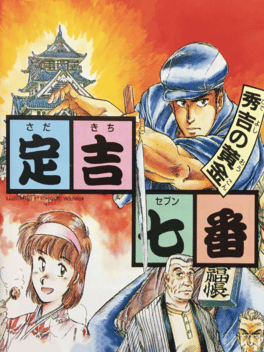
1988
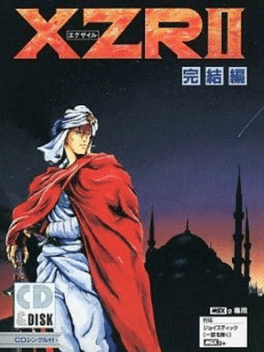
XZR II: Kanketsu-hen
1988
XZR II: Kanketsu-hen
1988
XZR II depicts the further adventures of Sadler after the events of the previous game. Now living in the time of the Christian Crusades, Sadler makes an attempt to unite the world under one God and achieve world peace. Exile is a remake of XZR II which rewrites most of the story.Top Rider
1988
Top Rider
1988
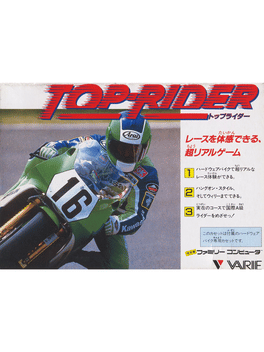
A motorcycle driving game developed by Human and published by Varie for the NES. It was released in Japan only at the end of 1988.Final Fantasy II
1988
Final Fantasy II
1988
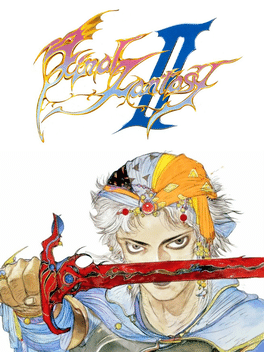
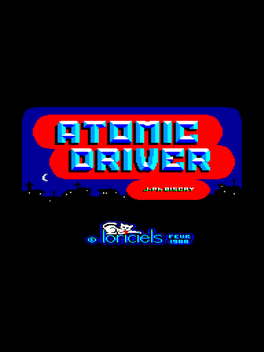
star 5.5Final Fantasy II is the second installment in the Final Fantasy series, developed and published by Squaresoft. It was directed by Hironobu Sakaguchi, with Yoshitaka Amano designing the characters and Nobuo Uematsu composing the score. It was notable for being one of the first story-intensive RPGs released for console systems, and introducing many series staples, including chocobos and a character named Cid. Its story is unrelated to the original FINAL FANTASY, and its gameplay is a major departure from the previous title for eliminating the traditional experience-based progression system.Atomic Driver
1988
The Triathron
1988
The Triathron
1988
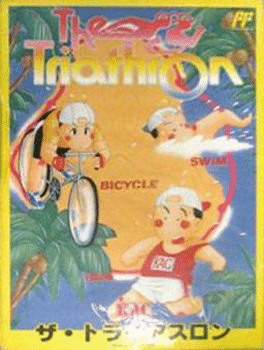
The Triathron allows players to compete in the three consecutive events of the triathlon: Swimming, Cycling and Running. In each stage of the race, the player must mash the B button, similar to Track & Field, in order to reach the end of each course before their opponents. After winning a triathlon, the player can invest some points into their chosen competitor's stats and move onto the next.Kyuukyoku Harikiri Stadium '88 Senshuu Shin Data
1988
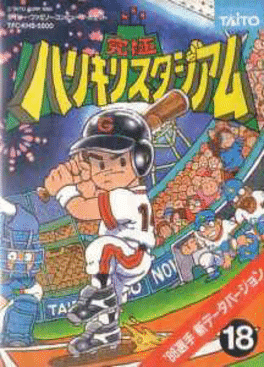
Kyuukyoku Harikiri Stadium '88 Senshuu Shin Data (Ultimate Harikiri Stadium '88 Players Updated Data Version) is a baseball game developed by Taito Corporation for the Famicom and NES. It is an updated version of Taito's original Kyuukyoku Harikiri Stadium. Like its predecessor, it is a straightforward baseball simulation game for the Famicom which was never released outside of Japan. Besides a roster update and a few graphical improvements there is little difference between this and the previous game in the series. This process of having minor incremental improvements between annual releases would eventually become common practice in console sports games.Revolty-II
1988
Revolty-II
1988
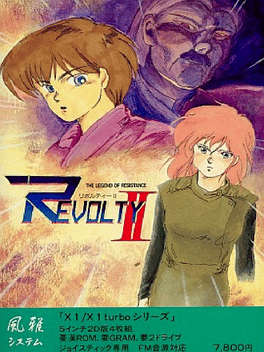
After 250 years of stable government, a military coup led by the Snukla star system's chief of military staff, General Bernelli, forces a junta upon the planets' peoples. A resistance group soon springs into action, sabotaging the new government's actions with less and less success. They soon resort to a desperate plan: capture three minimally guarded fighter space-jets and use them against Bernelli's regime. After hijacking the vehicles and learning that the enemy kidnapped his partner Cherni, Tragi mans his ship and sets out to rescue her and Snukla from this tyranny. Revolty-II was Fuga System's debut game, a vertical arcade shooter using the Sharp X1's spriting hardware and optimized software scrolling. You fly through several stages of increasingly varied and challenging enemy waves, obstacles, and boss fights. Collect the best power-ups, achieve high scores, and blast your way through this story-packed sci-fi adventure!Samurai Sword
1988
Samurai Sword
1988
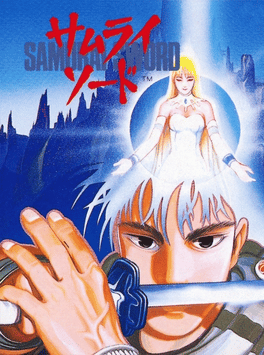
"When the dark priest Soron threatened to engulf the world in shadow, heroes and wizards alike rose against him. All were defeated. But a lone warrior still stands..." You play the role of a samurai that must destroy the forces of Soron. You find, however, that you cannot defeat him alone, so you must find a light mage who will aid you on your quest, and most importantly, the sacred weapon known as the Samurai Sword.'89 Dennou Kyuusei Uranai
1988
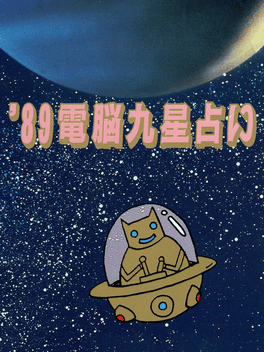
'89 Dennou Kyuusei Uranai is one of those horoscope sims that used to be very popular in Japan in the early days of home consoles. They still exist today, but they tend to be extended to more interactive dating sims rather than just walls of text to read. This game being released in December 1988 and namely so, it was designed to predict your fortune for the upcoming year 1989. This makes attempting to play it already kind of useless once the year had passed. Therefore one can only look back at what the computer predicted for you back in 1989.