New Games - Page 12762

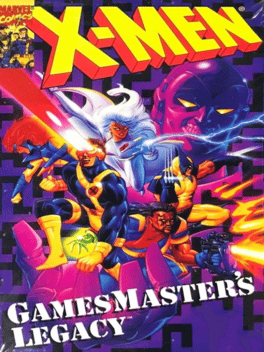
X-Men: Gamesmaster's Legacy
1995
X-Men: Gamesmaster's Legacy is an action game released in 1995 on the Game Gear. The game starts off with Cyclops and Storm as playable X-Men, although Wolverine, Gambit, Rogue, Bishop, Jean Grey, and Cable can be later unlocked. It is loosely based on the "Upstarts" and "X-Cutioner's Song" storylines that took place in the comics. It is the sequel to the original X-Men Game Gear game.Ristar
1995
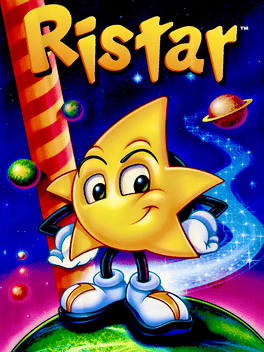
Ristar
1995
star 7Ristar is a platform game developed and published by Sega for the Sega Genesis in 1995. A Sega Game Gear game, of the same name and genre, Ristar, was also released, which shared similar themes while possessing different level design and gameplay mechanics. The game stars an anthropomorphic cartoon star who uses his hands and long, stretchable arms to both move and combat enemies. Reception for the game has been generally positive, but the game's initial release was overshadowed due to the imminent ending of the Genesis's lifecycle and the succession of the Sega Saturn and other fifth generation video game consoles. While never receiving any sequels, Sega has re-released the game a number of times digitally and on Sega-themed compilations, and has occasionally given Ristar himself cameos in other Sega properties.Wrestling Universe: Fire Pro Joshi Dome Choujo Taisen - Zenjo vs JWP
1995
This all-female wrestling game is an Arcade CD release for the PC Engine.Oregon Trail II
1995
Oregon Trail II
1995
star 6.9Oregon Trail II is an educational video game and a revised version of the original 'The Oregon Trail'. It was redesigned with the help of American Studies PhD Wayne Studer. In contrast to the original version of the game, Oregon Trail II made an effort to include greater roles for women and racial minorities.Wrestling Universe: Fire Pro Women - Dome Super Female Big Battle: All Japan Women VS J.W.P.
1995
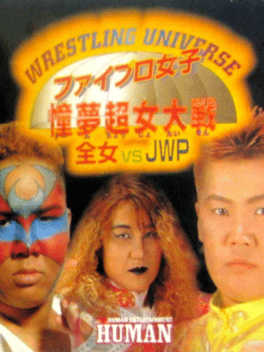
The continuation of the Fire Pro series, with the official license of All Japan Women Wrestling and JPW in an all female roster. New special moves and modes are available.Spider-Man
1995
Spider-Man
1995
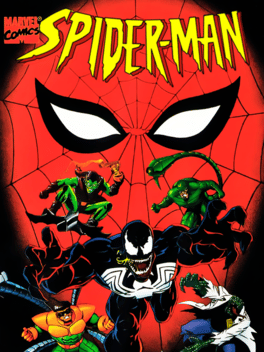
star 6.9Spider-Man's past comes back to haunt him when more maniacal madmen than you can count on two webbed hands bust out of prison and team up to settle the score against him! Only your Spider-Sense, wall-climbing ability, web-swinging maneuvers and a little help from the Fantastic Four can even the odds! The hunt is on... but who's the prey?Dennis Miller: That's Geek to Me
1995
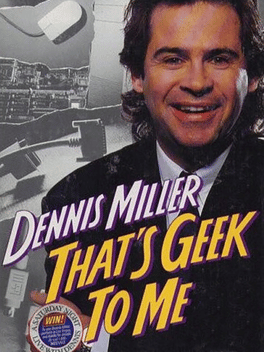
Multimedia CD-ROM glossary of computer-related terms ("ASCII", "E-mail", "Cross-platform" etc.) with both a serious explanation spoken by an animated "geek" character, and digitized video clips of Dennis Miller giving his own humorous definition of the same term.Kisou Shinden: Gen-Kaiser
1995
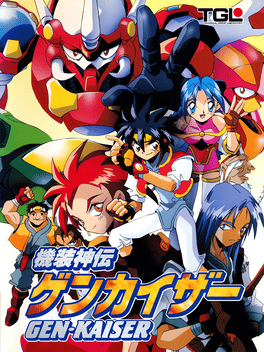
A scientist named Zen Shiratori was investigating the ruins of an ancient Mayan temple, convinced that the proof of the existence of a parallel world lies there. He found a strange glowing orb, which was later accidentally discover by his fourteen-year-old son Gen, who was rummaging through Dad's collection. As a result, Gen was indeed teleported into a parallel world. There, he meets a young girl named Rinna, who tells him that he is, in fact, "Gen-Kaiser", the much-expected savior of their world. Piloting giant combat robots, the two must protect the innocents of that world and defeat evil. Kisō Shinden: Gen-Kaiser is a turn-based strategy/RPG hybrid (what is commonly called in Japan a "tactical RPG"). There is overworld navigation, and the player can also visit and explore cities; however, these features are rather rudimentary, and hostile areas cannot be explored in real time and are presented as large-scale strategic battles. The characters move in turns over the top-down battlefield and attack when enemiesKidou Senshi Gundam: Cross Dimension 0079
1995
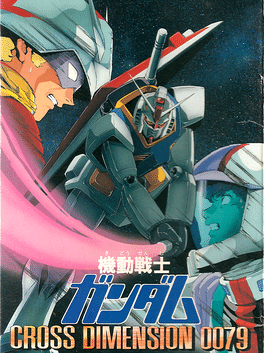
An isometric strategy game published by Bandai in 1995, it depicts events from the early Mobile Suit Gundam fiction from the perspective of Amuro Ray before switching to a secondary set of characters midway through.The Shinri Game 2: Magical Trip
1995
The second in a series of quiz games that probe the player's sense of identity and morality.Jammes
1995
Jammes
1995
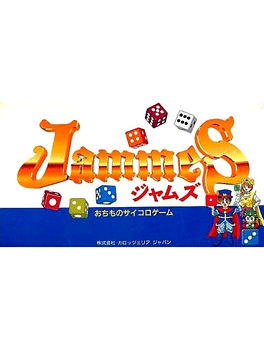
Jammes is a puzzle game for the Super Famicom that is a variant of the "falling blocks" sub-genre popularized by games such as Tetris and Columns. It was exclusive to the Super Famicom. The game features a story mode with increasingly difficult opponents - it also has a tutorial for its obtuse mechanics - as well as a free mode where the player tries to survive as long as possible and a versus mode for multiple human players. In the single-player modes, the player can choose between a male or female avatar. The goal of the game is take a pair of falling dice, each with a specific color and number attached to them, and drop them into a grid with other fallen dice. If a die is on a line horizontally, vertically or diagonally with another die of the same color, both those dice and every die in-between will drop by one in value. Once a die has reached "1" and is involved in another combo, it disappears. Dice on top fall in the gaps left behind, potentially creating chain reactions. There are also power-ups that willSaibara Rieko no Mahjong Hourouki
1995
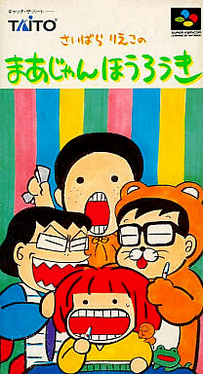
Saibara Rieko no Mahjong Hourouki is a Miscellaneous game, developed by Natsume and published by Taito Corporation, which was released in Japan in 1995.Iron Commando
1995
Iron Commando
1995
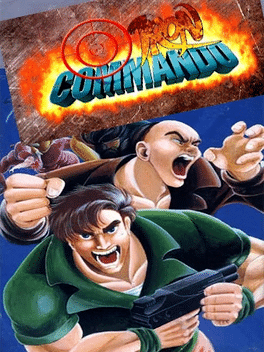
Take control of either Jake, a soldier, or Chang Li, a martial arts master, in your quest to stop G.H.O.S.T.SimCity 2000: Special Edition
1995
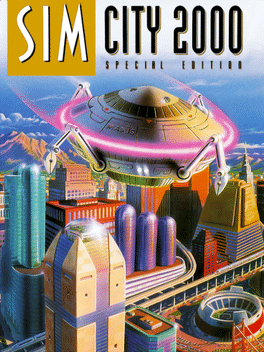
star 7.6The ultimate city simulator. You design, build and customise any city you can imagine, and Sim City 2000 SE will bring it and its resident Sims to life. Includes the Urban Renewal Kit and Scenarios Vol. 1--all on one CD-ROM.Eternal Champions: Challenge from the Dark Side
1995
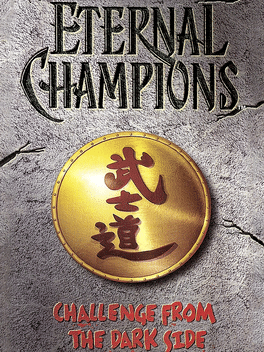
From various time periods of past, present and future, nine fighters killed in an unjust manner find themselves given a second chance for life. An alien being, known only as the Eternal Champion, brings back the fighters into a competition for one reason: to find one among them worthy of being resurrected, giving them a chance to avert their death and tip the balance between good and evil. The fighters range from different eras of Earth's History: Larcen, the cat burglar. Jetta, the circus acrobat. Blade, the futuristic bounty hunter. Midknight, the vampiric bio-chemist. Rax, the cyborg. Shadow, the corporate assassin. Slash, the neanderthal. Trident, a Atlantean warrior. And Xavier, a warlock and alchemist.Themm: Harukanaru Meikyuu
1995
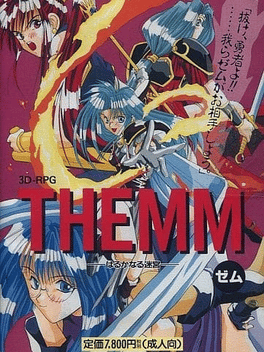
Long time ago, human beings believed in gods. But time has passed, and the humans stopped worshipping them. The gods got angry. The world plunged into chaos. Demons who looked like pretty girls have appeared, driving people insane. Five kings have sent brave heroes to find a magical stone that alone could restore peace to the world. One of these heroes is Lucido. Aided by a simple village girl, he bravely descends into a dungeon full of seductive monsters - but he should beware of the competition...Zhadnost: The People's Party
1995
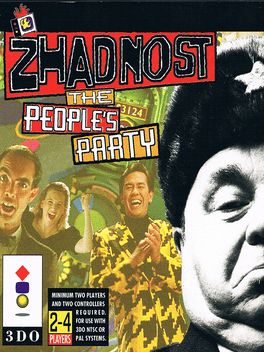
Welcome to Zhadnost, the "most popular game on Bizzarnian state run television"! Bizzarnia, a small communist nation has kidnapped contestants for this its favourite game show and is playing them against each other to compete for their freedom. In this party game for two to four people you will be in near constant action. You will play mini-games with such names as Propaganda, and Eye Spy. Try to force your opponents into harder games and uncover secrets about their characters. All characters are live action including the host.Jigsaw World
1995
Super Fire Pro Wrestling: Queen's Special
1995
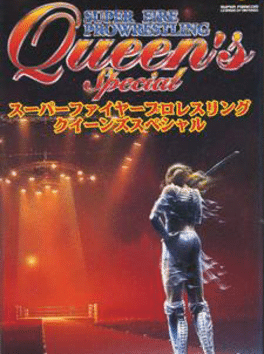
Super Fire Pro Wrestling: Queen's Special is based on All Japan Women's Pro-Wrestling. Every wrestler has three different variations of moves that work at different times; grappling only become available to the player after using the strongest move to weaken the opponent. Creating up to 16 customized wrestlers is a possibility; with a generous display of wardrobe options. The referee has the ability to be knocked out. He cannot do pinfalls or count out opponents who are outside the ring while unconscious. Like in actual wrestling, rope breaks can be ordered by the referee. This game features genuine female professional wrestlers from All Japan Women's Pro-Wrestling; unlike the non-Joshi Fire Pro games which featured carbon copies with false names. Bull Nakano and Akira Hokuto can be unlocked for completing the challenge mode. While lacking in a proper story line, players can choose from a variety of gimmick matches.Houkago in Beppin Jogakuin
1995
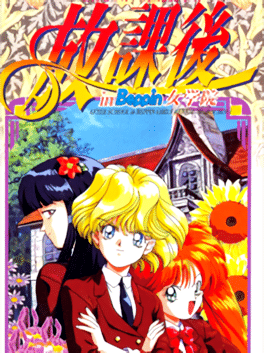
Houkago in Beppin Jogakuin is a Strategy game, developed by Access and published by Imagineer, which was released in Japan in 1995. The purpose of this game is to choose one of the three high school girls to become a top-notch special spy. Let's manage the schedule, paying attention to the suspension of school.