New Games - Page 12492

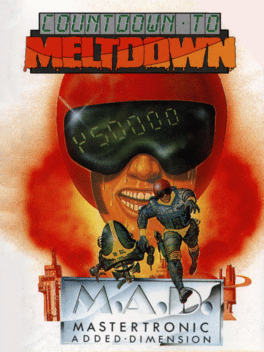
Countdown to Meltdown
1984
You control eight different droids (each one having a special ability). Your task is to find the central core room of a nuclear power plant in which a huge explosion has caused large casualties.Combat Lynx
1984
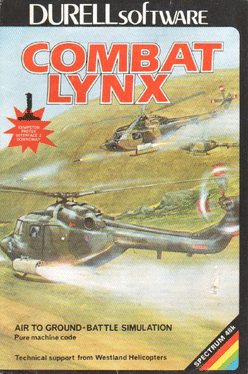
Combat Lynx
1984
This is probably the most comprehensive 'real-time' battle simulation program ever written for a home computer. It can be played on a simple level as a 'shoot-them-up' game, or a more stealthy player can make use of the intelligence map to locate and destroy selected targets. The most skilled players will be able to protect their bases with mines, support forward bases under attack with air cover and fresh troops, and also intercept and destroy enemy vehicles (land and air) while in flight between bases. A game could last five seconds or five hours depending on the dexterity and tactical skill of the player.Questprobe featuring The Hulk
1984
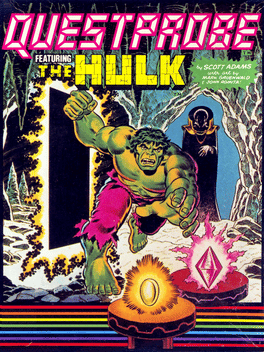
BBC Microcomputer System Atari 8-bit Dragon 32/64 Commodore C64/128/MAX ZX Spectrum Acorn Electron Commodore 16 DOS Apple II Commodore Plus/4star 3Questprobe featuring The Hulk is a graphic adventure video game. It is the first entry in Questprobe, an intended series of graphic adventure games that only released three instalments before the developer's bankruptcy. The game's narrative follows the Marvel superhero Hulk and his human alter-ego Bruce Banner (in their first video game appearance), who must explore the mysterious lair of the Chief Examiner.Do! Run Run
1984
Do! Run Run
1984
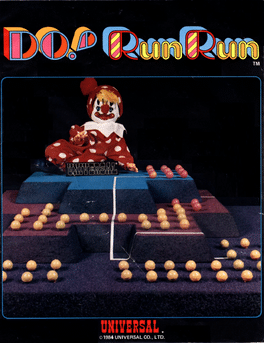
Do! Run Run known as Super Pierrot in Japan, is the fourth and final incarnation of Mr. Do!, the Universal video game mascot. Returning to his Mr. Do! roots, the clown has a bouncing powerball with which to hurl at monsters. What makes this game novel is that instead of burrowing through the ground to get at cherries, Mr. Do runs along the playfield picking up dots, and leaving a line behind him, which the player is encouraged to create closed off sections with, which turn any dots left behind into cherries. Gone are the giant apples to crush foes, but the multi-tier stage design has two precariously balanced log traps, which can be rolled downslope if either pushed from above or closely approached from the propped up stick side. The resulting game is somewhat of a cross between Mr. Do!, Congo Bongo, Pac-Man, and Qix. The title is a reference to the song Da Doo Ron Ron.Suspect
1984
Suspect
1984
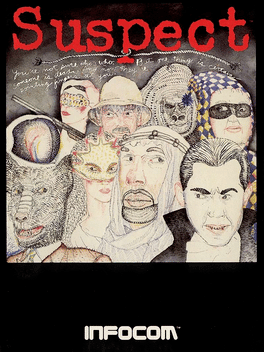
Atari 8-bit Commodore C64/128/MAX Atari ST/STE Commodore 16 Mac DOS Amiga Apple II Amstrad CPC Commodore Plus/4 Amstrad PCW Texas Instruments TI-99Suspect is an interactive fiction computer game designed by Dave Lebling and published by Infocom in 1984. It is the last murder mystery Infocom released, bringing an end to a popular genre of titles such as Deadline and The Witness. Like most Infocom titles, it was written in highly portable ZIL and made available for an array of popular computer platforms, including the Apple II, IBM PC, Atari ST, and Commodore 64. It is Infocom's fifteenth game.Touchdown Football
1984
Touchdown Football
1984
It's fourth and long with less than a minute remaining in the game. The winner gets a wild card berth in the playoffs. You're down by a field goal. Your quarterback makes a perfect pass, your receiver is wide open, and then you see the referee's arms fly up signaling the touchdown. You're going to the playoffs.Summer Games
1984
Summer Games
1984
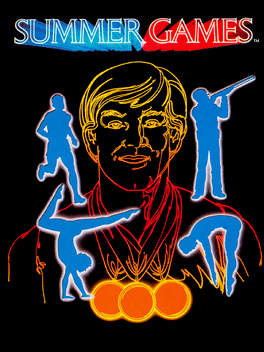
star 6.4Summer Games allows up to eight players to compete in a series of summer themed Olympic events. The gameplay is similar to the other entries in Epyx "games" series. Each player can choose a country to represent, and then takes turns competing in various events to see who will win the gold medal! The game allows you to compete in all of the events sequentially, choose a few events, choose just one event, or practice an event. The events available vary slightly depending on the platform, and may include: Pole vault Platform diving 4x400 meter relay 100 meter dash Gymnastics Freestyle swimming Skeet shooting 100 meter freestyle RowingHat Trick
1984
Hat Trick
1984
Hat Trick is an ice hockey based arcade game released by Bally Sente in 1984. Each team in the game consists of two players, including a goaltender. The game takes an overhead view of the rink. At the end of each game, an ice resurfacer is seen cleaning the ice. Gameplay Hat Trick features a two-on-two version of ice hockey. The player controls both hockey players at the same time, with each up and down movement of the joystick also moving the goaltender across his goal line. Goals are scored each time a player successfully shoots the puck across the opposing goal line. The number of saves are also displayed on the scoreboard, solely for reference. The winner is the player who outscores their opponent in a game length of two minutes. If the scores are tied after the clock has run down, a maximum of twenty seconds of overtime is played until one player scores to be declared the winner. The game is for one or two players simultaneously.Quest for Quintana Roo
1984
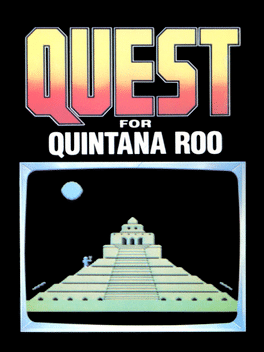
Yucatan Sam explores the temples of Quintana Roo searching for the keys to open the ceremonial vault and acquire the riches inside.Montezuma's Revenge featuring Panama Joe
1984
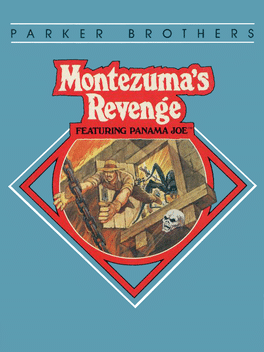
ColecoVision Atari 2600 Atari 8-bit Commodore C64/128/MAX ZX Spectrum Atari 5200 DOS Apple II Sega Master System/Mark IIIstar 7PANAMA JOE, That’s what they call him ‘round these parts; though no one knows his real name or where he comes from. But one thing’s for sure, PANAMA JOE’s a daredevil from the word “go!” No risk’s too great if the reward’s large enough. Winning. That’s what’s the most important to him. And more times than not, that’s exactly what he does. Because he’s tough, clever – resourceful. And sometimes, downright pig-headed! Though occasionally (ah-hum), he’s been known to get in over his head. Luckily, he’s got a knack for getting himself out of hot water as quickly as he gets into it! Let’s hope MONTEZUMA’S REVENGE is one of those times.Aquattack
1984
Aquattack
1984
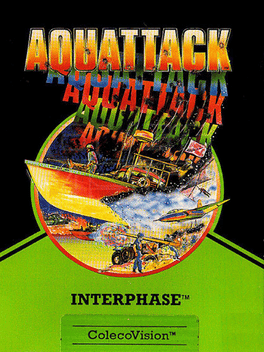
Aquattack is an action game with four levels which partly have varying gameplay mechanics. In level one and two, the player mans a motor boat which needs to travel a certain distance from left to right. Of course there is a lot of enemy opposition which needs to be avoided. Some enemies can be shot while others are out of reach. Fuel is limited and needs to replenished by collecting refreshments dropped by allied planes. Level three is similar; the player uses a hang glider now. There are different enemies to fight and no fuel to collect. In level four, there is a guarded energy field to cross in order to bring four bombs to the other side. However, only one bomb can be transported at once and there is a time limit. After beating all four levels, they loop with more difficult enemies and faster playing speed. The player can take nine hits and the overall goal is to earn as many points as possible before the unavoidable final death occurs.Alphabet Zoo
1984
Alphabet Zoo
1984
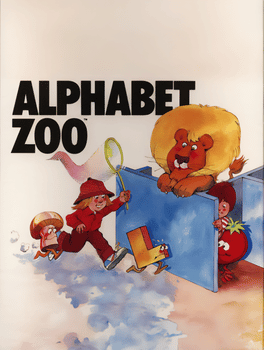
Alphabet Zoo is an educational maze game viewed from above, challenging players to collect letters scattered throughout the arena. Navigate the maze, use teleporters for quick travel, and race against time to complete letter-based objectives. In one mode, repeatedly collect the first letter of a displayed object, while in another, gather all letters of the object's name in order. Enjoy solo play or compete with a friend in two-player mode. With customizable difficulty settings, including letter case options and level selection, Alphabet Zoo offers an engaging way to reinforce letter recognition and spelling skills for players of various ages and abilities.F-15 Strike Eagle
1984
F-15 Strike Eagle
1984
Thomson MO5 Atari 8-bit PC-9800 Series PC-8800 Series Commodore C64/128/MAX ZX Spectrum Atari ST/STE Sega Game Gear DOS Apple II Amstrad CPC Nintendo Entertainment System MSXstar 6.1F-15 Strike Eagle is an F-15 Strike Eagle combat flight simulator first released in 1985 by MicroProse. It is the first in the F-15 Strike Eagle series comprising also the sequels F-15 Strike Eagle II and F-15 Strike Eagle III.Cutthroats
1984
Cutthroats
1984
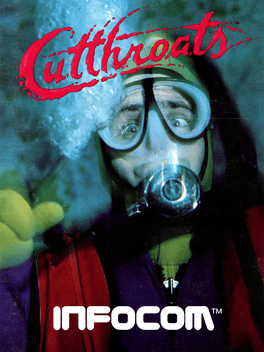
Atari 8-bit Commodore C64/128/MAX Atari ST/STE Commodore 16 Mac DOS Amiga Apple II TRS-80 Amstrad CPC Commodore Plus/4 Amstrad PCW Texas Instruments TI-99Cutthroats is an interactive fiction computer game written by Michael Berlyn and Jerry Wolper and was published by Infocom in 1984. Like the majority of Infocom's games, it was released for most of the popular computer platforms of the time, such as the Apple II, DOS, Commodore 64 and several other platforms. It is Infocom's thirteenth game.Agent USA
1984
Agent USA
1984
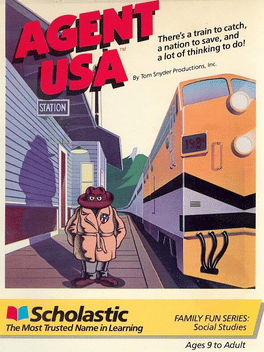
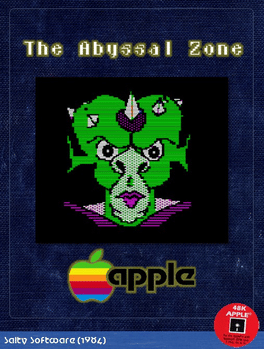
Somewhere in America, a dangerous FuzzBomb is on the loose and Agent USA must intervene.The Abyssal Zone
1984
Donald Duck's Playground
1984
Donald’s mischievous nephews - Huey, Dewey, and Louie, would love to have a playground of their own. You can help kind-hearted Uncle Donald build them one. MATCHING SKILLS Your child will enjoy working at four different. entertaining jobs along with Donald, earning the money needed to buy playground equipment. Whether managing the produce stand, stocking toy store shelves. or sorting cargo at McDuck Airlines, your child will be challenged to recognize and match shapes. colours, and letters. CHANGE-MAKING With their earnings, players may buy equipment and construct a playground of their own design. Your child will find everything from swings to monkey bars in either the general store, the hardware store, or the junk shop. With each purchase. your child will develop a better understanding of money-handling. LOGICAL THINKING Operating the junction switches of the Amquack Railroad. players direct the Amquack Special to any of the eight towns within Duck County. When directed to the specified town, the Special pickArchon II: Adept
1984
Archon II: Adept
1984
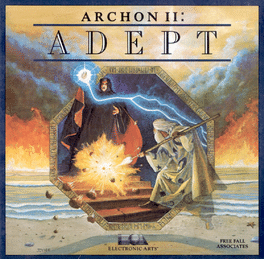
star 6.5Archon 2 or also Adept is the successor of the successful Electronic Arts classic Archon. As already seen in Archon, an apocalyptic fight takes place in a fantasy surrounding, now not between "light" and "dark" but between "order" and "chaos". It all happens in a game area which is divided into 4 elemental layers. In the center is the earth layer, it is surrounded by the water layer and this is surrounded by the air layer. The outer layer is made of fire. Opposite to its forerunner the players start in Adept only with one magician ("Adept") per layer. All the other creatures have to be conjured in the course of the game. Evocations and other spells cost energy, which is renewed by occupying energy points on the game area with your own creatures. The more points you occupy, the more energy you get. Every side possesses 4 own elemental beings, which have a special force when they are on their corresponding layer. Moreover 4 different demons can be conjured from both sides, which can fight independently from the choFrogger II: ThreeeDeep!
1984
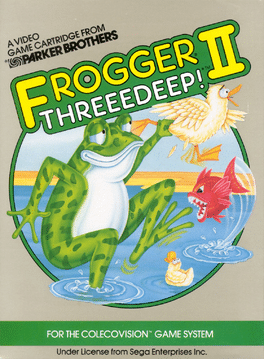
star 5.8In Frogger II, you need to guide your frog to safety in three different locations. Starting out underwater, reach the top of the pond while avoiding dangerous alligators and fish (you can ride a turtle for safety!). Once on top of the pond, hop across logs, birds, and even a whale to the life preserver trailing behind a tugboat. In the third location you have to hop across a flock of birds to reach a cloud at the top of the screen. Each frog has a time limit to safely reach one of the homes on each of the three screens. You move on to the next level when a frog has safely reached each of the homes on all screens.Empire Classic
1984
Empire Classic
1984
Empire Classic is a 4X wargame developed by Ben Norton in 1984 and basey on Peter Langston's 1971-game Empire. This version of Empire was written in Pascal on an HP3000 and released to the HP3000 Contributed Library.