New Games - Page 12318

Jongbou
1987
Jongbou
1987
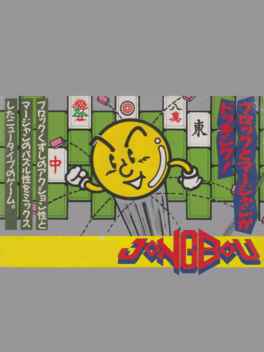
Jongbou is a combination of a Breakout-style arcade game and a Mahjong game. The player can either beat a level by removing all bricks from the screen or finish a valid Mahjong hand by collecting the falling bricks that turned to Mahjong pieces. In the original arcade version the player is rewarded with a picture of an anime-style girl in a sexy outfit after each level. These bonus pictures have been removed from the Nintendo Famicom version.Madballs
1987
Madballs
1987
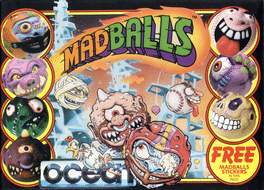
On the planet Orb live a gang of notorious Madballs who decide what is passed through parliament. They have no leader, and this is where a ball simply known as Dust Brain comes in. It is his quest to persuade the other Madballs on the planet to join him in his quest for power, and he does this by bumping them off the multi-directionally scrolling platforms. Once a Madball has been persuaded, it appears in a tube at the bottom of the screen. When a Madball ends up in the tube, Dust Brain must find the 'downtube' exit so that he can pursue other Madballs. While searching for other Madballs, Dust Brain encounters many obstacles that include trampolines, springboards, catapults, ramps, pyramids, and oil slicks; and these obstacles can either help or hinder Dust Brain. Each platform has its own dustbin, and if Dust Brain bounces over this, he changes into a Madball already in the tube. Also, he will make contact with three bureaucrats who will make his task harder, but they can also be pushed of the edge of platformsFortress
1987
16 Shot! Shooting Watch
1987
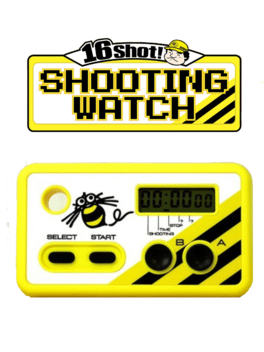
16 Shot! SHOOTING WATCH is an enhanced and portable version of the original Shooting Watch, which was released by Hudson Soft in 1987.Droids
1987
Bullet
1987
Bullet
1987
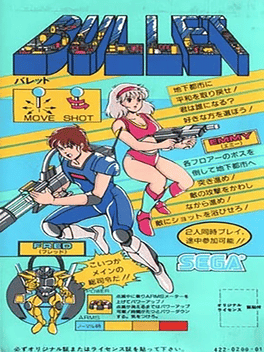
Bullet is an overhead run'n'gun twin-stick shooter for up to three players, set in a dark future. The left joystick will move your character around while the right joystick will make your character fire in the pressed direction, allowing you to move and shoot freely in different directions.Grand Prix Tennis
1987
On Cue
1987
On Cue
1987
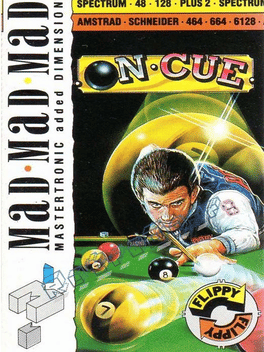
This is the snooker game On Cue by Mastertronic Added Dimension for the Amstrad CPC464 and Sinclair ZX Spectrum home computer.Dead Zone
1987
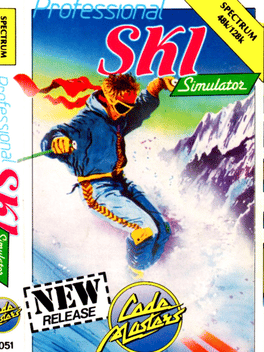
Professional Ski Simulator
1987
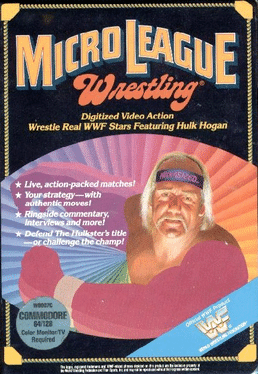
Skiing game for ZX Spectrum, Commodore 64 and Amstrad CPC. Later released on Amiga and Atari ST as Advanced Ski Simulator.MicroLeague Wrestling
1987
Hulk Hogan, Randy Savage, and other superstars of the then-WWF appeared in this turn-based wrestling game - the first licensed WWF game for any platform.Shooting Gallery
1987
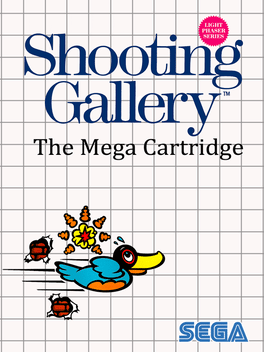
Shooting Gallery
1987
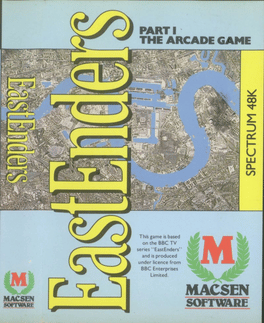
This is a light gun game where players shoot a single type of target in each round, including birds, balloons, blimps, balls, and spaceships. A specific number of hits is required in each round and if it is not met the game ends.EastEnders
1987
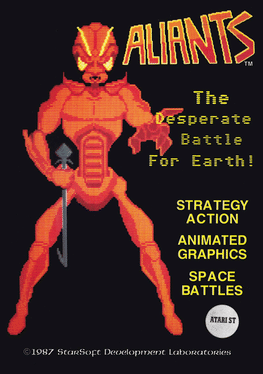
Aliants
1987
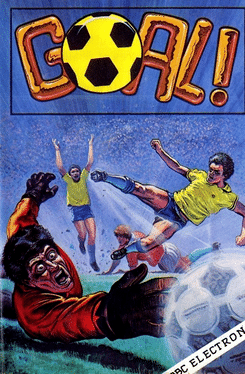
Goal!
1987
Barrage
1987
Barrage
1987
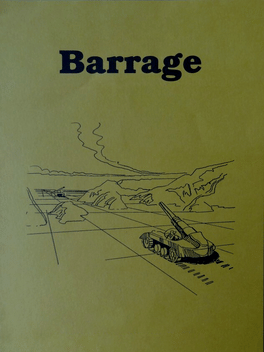
Barrage is a Missile Command variant where the player has to prevent the fiendish Draks from dropping acid balls on a planet. The player commands two laser gun towers at both sides of the screen to aim at and destroy the small dots coming down from above. You have to protect the vehicles and buildings on the ground. Each attack round gets more difficult and faster, and the guns are rebuilt and restocked with limited ammo. The game includes a single player mode, cooperative mode and competitive two player mode.Soccer Boss
1987
Soccer Boss
1987
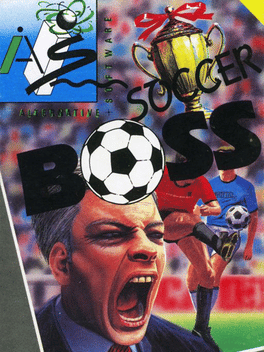
Take control of a football team in a division below the top one, and try to lead them to glory in both league and European competition. You start with a squad of 12 players, whose names can be changed, but have room for 15 players in total, with chances to buy and sell players. You can take out a bank loan, the level of which depends on your division. The team's formation can be customised, and as outfield players are not limited to a single position, you can customise the team's strengths and weaknesses in quite a precise way. Matches are played out by listing scorers as they happen, and are followed by a full list of the division's other results. Finances change after each match to wages, gate receipts, and possible incidents such as riots and illegal player approaches.Alien Strike
1987
Alien Strike
1987
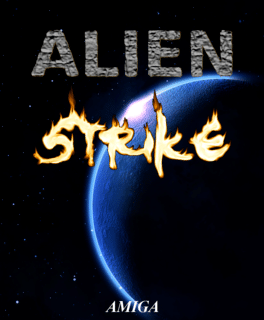
Alien Strike makes use of digitized images, music, and speech, which is noteworthy for a 1987 release. The in-game screen is separated by a line into two sides. Each player controls a jet. You have to shoot the carriers and ships on your enemy's side of the screen while preventing the other player from destroying yours. The game speed is insanely high. You probably won't stand any chance against the computer, but with two players, this could be fun for a short while.