New Famicom Games - Page 39

Ripple Island
1988
Ripple Island
1988
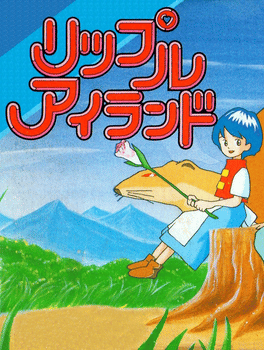
An adventure game for the NES published by Sunsoft. A boy named Kyle must rescue the princess of a kingdom where very small humans and animals peacefully co-exist. Ripple Island (occasionally seen translated as "Lipple Island") is a graphic adventure game where the player interacts with the world using a series of commands, such as "pick up", "walk" or "use". Rather than the usual murder mystery games which were the trend at the time, Ripple Island instead adopts a fantasy storybook setting where smaller humans and friendly animals, such as raccoons and rabbits, co-exist peacefully. The kingdom is threatened by the arrival of Gerogeru, a self-styled Emperor of Darkness and giant frog, after he kidnaps the princess. Kyle, a young boy and the game's protagonist, is attempting to rescue her. The game was never released outside of Japan. It was, however, re-released as part of a Japan-only PS2 compilation based on Sunsoft's works. It also received a manga adaptation.Sukeban Deka III
1988
Sukeban Deka III
1988
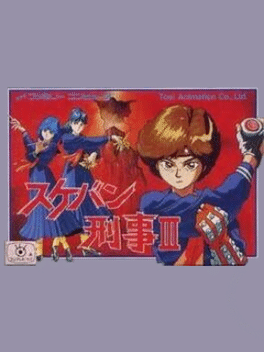
Yui Kazama, a delinquent schoolgirl, is taken in by the government and forced to fight crime to redeem herself. She is given the codename "Saki Asamiya" and a metal yo-yo that doubled as a badge and made to infiltrate high schools around Japan to investigate and stop criminal activities.Stick Hunter: Exciting Ice Hockey
1988
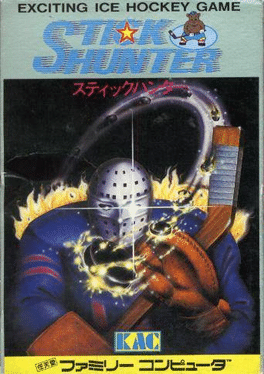
Stick Hunter: Exciting Ice Hockey is a game for the Famicom released only in Japan in 1987. It was never released in North America. Stick Hunter was the first actual ice hockey game created for a Nintendo gaming system. The game was designed so that 1 player could play against the computer, or 2 players could play simultaneously against each other. The length of the periods and difficulty level could both be adjusted. Playing as a character who has possession of the puck, the character could not only skate faster, but could only shoot the puck forward. So if the player wanted to pass to a teammate, the character on screen would have to be facing the person to which he's passing. The same applied to shooting at the net and attempting to score a goal. The character would have to be facing the opposing net. A player without the puck could only skate faster. If the goalie had control of the puck, he could only pass to a teammate. As in the real-world sport of hockey, the object is to score more goals than the opposiExciting Boxing
1988
Exciting Boxing
1988
Exciting Boxing is a Sports game, developed by Human Entertainment and published by Konami, which was released in Japan in 1987.Kaguya-hime Densetsu
1988
Kaguya-hime Densetsu
1988
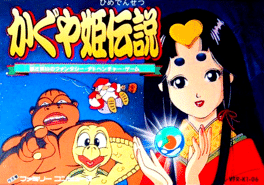
Kaguya-hime Densetsu is an Adventure game, developed by Micronics and published by Victor Interactive Software, which was released in Japan in 1988.Magnum Kiki Ippatsu: Empire City 1931
1988
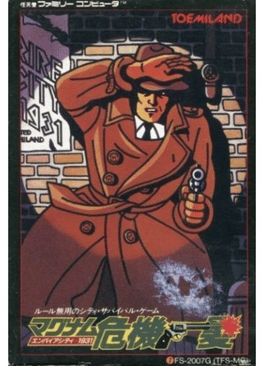
In Empire City: 1931 which is set in 1931 you are a federal agent that has to eliminate all criminal activities in New York City. You must hunt the criminals down and shoot them one by one. To locate a criminal you just have to follow the arrow on the left or right of the screen. Killing criminals is done by moving the cross hair over them. A countdown timer will start counting down if a criminal starts shooting at you. You must kill the criminal before the timer reaches zero or you'll loose a life. New bullets can be collected by shooting at the bullet boxes that regularly appear in the game as other useful objects. The criminals sometimes take hostages for protection. Rescue these hostages for additional points.Konami Wai-wai World
1988
Konami Wai-wai World
1988
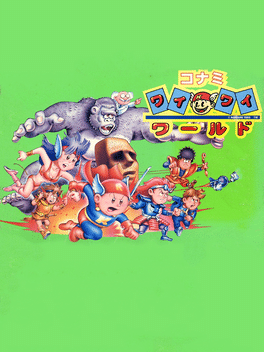
A difficult platformer with characters from the Konami world. You can play with Simon Belmont, Moai, Kong, Goemon, and others.Tetsudou-ou
1988
Tetsudou-ou
1988
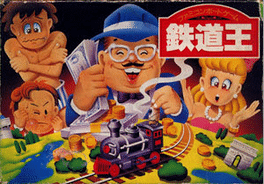
A board game simulation similar to Monopoly, but with railroads. Its name means "Railroad Baron". It was only released in Japan, for the Famicom, and has two sequels. Tetsudou-ou (occasionally with the subtitle "Famicom Boardgame") is a competitive railroad tycoon-type game where the goal is to own a lot of railroad stations and make a lot of money while bankrupting the other players. Tetsudou-ou also borrows elements from the Game of Life board game, specifically the lucky/unlucky event that follows every turn and can completely reverse a player's fortunes. Tetsudou-ou would be followed by Tetsudou-ou '96 and Tetsudou-ou 2, both for the Sony PlayStation. The original game would also see a mobile phone platform remake, named Tetsudou-ou NEO.Golf Club: Birdie Rush
1988
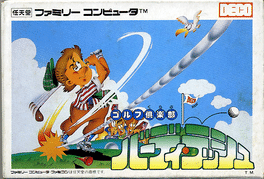
Golf Club: Birdie Rush is a golf game developed by Data East and published for the Famicom towards the end of 1987. It employs a far off bird's eye view throughout the game. It features 18 holes and allows players to play in a stroke game, or a tournament, and allows players to play alone, or head to head. It was only released in Japan, and it was followed up with a sequel for the Super Famicom called Super Birdie Rush in 1992.Satsui no Kaisou: Power Soft Satsujin Jiken
1988
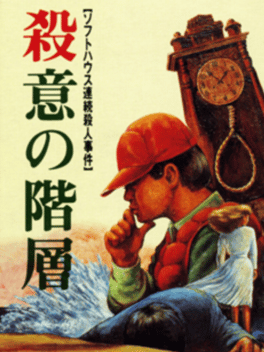
A murder mystery graphic adventure game for the Famicom. It was never released outside of Japan. Satsui no Kaisou: Soft House Satsujin Jiken ("Hierarchy Of Murderous Intent: The Software House Serial Murders") is a menu-based adventure game by Hyperware in which the player is a young man attempting to solve the murder of a successful software developer. Like in many Famicom adventure games, the player can gather clues by examining sites of interest, talking to various people and keeping track of the information they've gathered. As the case continues, more people working for the titular game company start dying and the player is given more murders to solve. Time is an important factor in the game as talking to right people and being in the right places at the right moments will prove instrumental towards solving the mystery. The President of the game company only gives the protagonist three days to solve the case before they get the police involved, giving the player a strict deadline. The game's writer will intrJJ
1988
JJ
1988
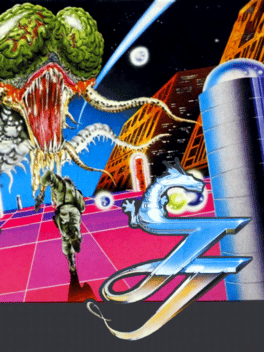
JJ is an action game developed and published by Square for the Famicom in 1987. In English, it is sometimes referred to by its long form, Jumpin' Jack, or by its subtitle, Tobidase Daisakusen Part II. The game was only released in Japan. The sequel to Tobidase Daisakusen (known in North America as 3-D WorldRunner), JJ is a typical scrolling shooter, but it incorporates a third-person view, where the camera angle is positioned behind the main character. As in the previous title, the main character Jack must travel through various worlds, armed with his laser cannon and jumping ability, to defeat the serpentbeasts who have overrun the planets. JJ was the last game by Square to utilize the "3D mode" and 3D glasses, and was Square's last work before the inception of the popular Final Fantasy franchise. The soundtrack of JJ consists of eight tracks, and all of them are either remixed or reused from the game's prequel, 3-D WorldRunner. The game was scored by Nobuo Uematsu, and is Uematsu's 16th work of video game musicDragon Scroll: Yomigaerishi Maryuu
1988
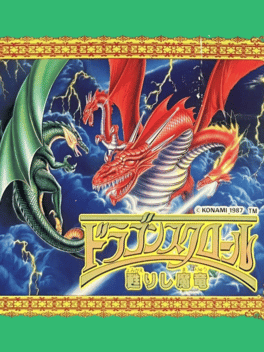
Dragon Scroll: Yomigaerishi Maryuu is an adventure game developed by Konami in 1987 for the Famicom. It is often compared to The Legend of Zelda in terms of game play, but it is considerably more difficult due to the lack of clues or information on how to proceed. The game is non-linear, and you must explore different territories in search of the eight stolen magical artifacts that maintain a sleep spell over a large and dangerous dragon. Enemies roam the overworld and dungeons, and must be defeated in order to earn experience points. Experience points are used to increase the player's level, which makes him stronger and gives him access to stronger weapons and magic. Most useful items are well hidden and, even when obtained, are difficult to determine their appropriate use. The game features a password system which allows you to continue play where you left off.Fantasy of Gun
1987
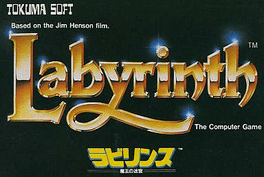
Labyrinth: Maou no Meikyuu
1987
An action-adventure game based on the Jim Henson movie Labyrinth, published in Japan in 1987 for the Famicom by Tokuma Shoten.Taito Grand Prix
1987
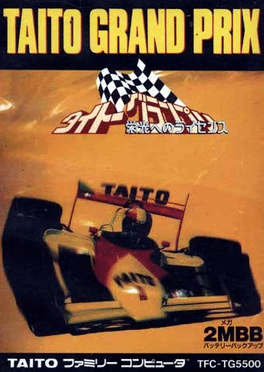
Taito Grand Prix
1987
Formula One racing game with RPG elements published by Taito in 1987 for the Famicom. It was never released outside of Japan.Family School
1987
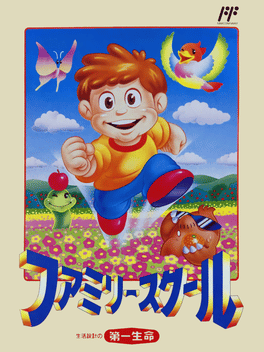
Family School
1987
Family School is an action transport puzzle game, where your task is to water plants in some kind of garden so that fruit grows. Once the fruit has grown, you have to push the right fruit into the right basket at the edge of the playing field. Watch out for animals which will try to harm you. The game can be played with at least two players simultaneously. The game was apparently given as a free gift by 第一生命 (Dai-ichi life), an insurance company, to people who purchased policies from them.Family Trainer: Totsugeki! Fuuun Takeshi-jou
1987
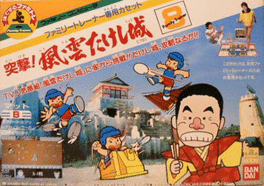
The eighth Family Trainer game produced by Bandai for the NES, Totsugeki! Fuuun Takeshi-jou is based on the obstacle course TV show Takeshi's Castle.Attack Animal Gakuen
1987
Attack Animal Gakuen
1987
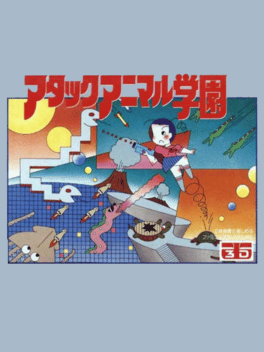
Attack Animal Gakuen is an Action game, developed by Scitron & Art and published by Pony Canyon, which was released in Japan in 1987.Pro Yakyuu Family Stadium '87
1987
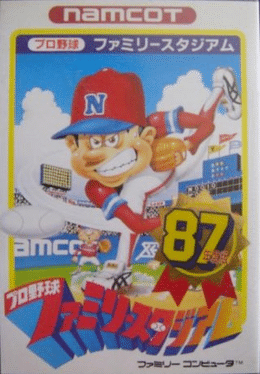
Not so much a sequel to Pro Yakyuu Family Stadium than an enhanced rerelease with updated rosters. It was published by Bandai for the Famicom in late 1987. Pro Yakyuu Family Stadium '87 is the second game in Namco's long running Family Stadium series, also known as Famista. It's a traditional baseball game that allows one human player against the CPU, two competing human players and two competing CPU players in a "Watch" spectator mode. Rather than being a full sequel to Pro Yakyuu Family Stadium the game is instead an updated version of the original, which was reflected in its lower price at release. It adds a few features and updates the official rosters for the athletes, but is functionally identical to the original Family Stadium. This specific type of annualization would become common practice for sports game franchises such as Madden NFL and NHL. It's worth noting that this game is unrelated to R.B.I. Baseball 2 from Tengen. The original R.B.I. Baseball and Family Stadium were one and the same, the formerGeGeGe no Kitaro 2: Yokai Gundan no Chousen
1987
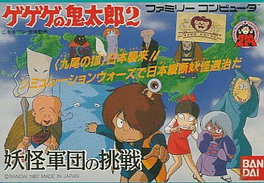
GeGeGe no Kitaro 2: Youkai Gundan no Chousen is a RPG game based on a manga and anime from Japan about a boy who is a youkai, a class of spirit-monster to which all of the main characters belong. The main character, Kitarou, is the last living member of a Ghost tribe. He is missing his left eye, but his hair usually covers the empty socket. He fights for peace between humans and yōkai, which generally involves protecting the former from the wiles of the latter. While the game follows the release of GeGeGe no Kitaro: Youkai Daimakyou (released in the U.S as Ninja Kid), it is not a direct sequel to the original game, which is an action side-scroller. GeGeGe no Kitaro 2 plays very much like a simplified traditional RPG. Fights are turn-based, where the player must input his command, and then watch the sequence of event play out until the round is over and the next round begins. However, even though it is simplified, it is actually a rather difficult and challenging game. In the very beginning of the game, Kitarou st