New Playstation 3 Games - Page 314

Alfred Hitchcock Presents
1993
Released exclusively in Japan, mainly as a disc given away by Toyota as a marketing campaign.Laserstrike
1993
Laserstrike
1993
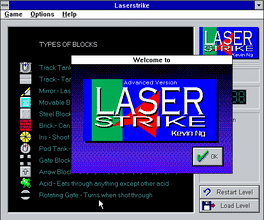
Laserstrike is a single-player, shareware, puzzle game. The object of the game is to fire a laser at a target and hit it twice to complete a level. Lasers can only travel in straight lines and so the player must use lasers and other canons to move blocks and mirrors in order to achieve the task. The full version of the game has twenty two puzzles and seven coaching or tutorial puzzles.1993Tris
1993
1993Tris
1993
In 1993tris the players goal is to destroy a certain number of flies. Flies drop down into the play field in blocks of 2x2. The flies are colored, and can be killed by matching three or more of the same color together. There are also weapons that will fall down that the player can use by pressing the space bar or enter key.Nanotank
1993
Nanotank
1993
Puzzle game in which a microscopic tank navigates electronic circuits, manipulating different components to direct power and get to the exit. 100 levels.Tube-It
1993
The Legend of Myra
1993
The Legend of Myra
1993
In The Legend of Myra, humanity tries to exterminate all rabbits. And obviously the best way to do this is by storing all cabbages underground so that they can't reach them. The player takes control over the rabbit Myra who has to try just that.Pile Wonder
1993
Ant Soldiers
1993
The Fidgetts
1993
The Fidgetts
1993
star 5The Fidgetts is a puzzle side-scrolling platform game in a similar vein as 'The Lost Vikings'. The player can switch between two Fidgetts (cartoon-like animals) to get past obstacles. One of the Fidgetts can jump higher to reach objects or locations otherwise unreachable. They can also lift and drop items to help them climb over obstacles. Within each level the player must get both Fidgetts to the exit before a time runs out. There are pit traps and enemies that can cause the Fidgetts to loose lives or receive damage.Mario's Early Years! Fun with Letters
1993
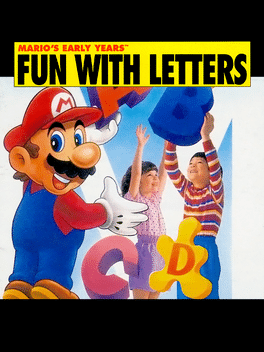
star 4.5Mario's Early Years: Fun With Letters is a collection of letter-related activities for kids ages 3 to 6. Playing with either Mario or Princess Toadstool, you select from 10 different activity worlds each filled with different activities that range from letter recognition to sentence fill-in, letter-sound recognition, vowel recognition, etc. Each activity can be played in either Discovery mode, where you are free to do what you wish, or in Learning mode, where Luigi guides you through the activities.Dinolympics
1993
Dinolympics
1993
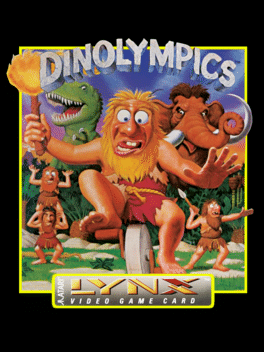
Come back to the dawn of history in this combination of puzzling problems, awesome adventures, and mind-bending mazes. The survival of your race is at stake!Kero Kero Keroppi no Issho ni Asobou
1993
A one player misc. game published and developed by Sammy Industries in 1993. US version is called Kero Kero Keroppi's let's play together.The Shinri Game
1993
The Shinri Game
1993
The Shinri Game is an Adventure game, published by Visit, which was released in Japan in 1993.10 out of 10: Maths Algebra
1993
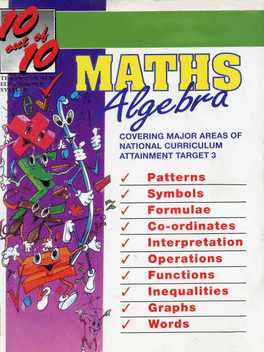
Educational game for children designed to expand the user's knowledge of algebra.10 out of 10: Junior Essentials
1993
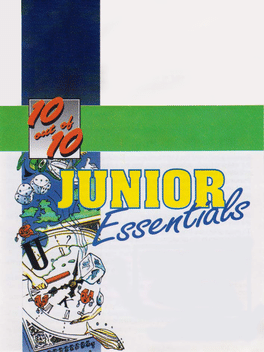
This suite of SIX expertly designed games will give fun and motivation to all children. It is an invaluable aid to learning, revision and reinforcement of many of the facts needed for National Curriculum Key Stages. As children play the games, their progress is automatically monitored and recorded in 36 specific challenges with no input from parents or teacher. Each challenge has four graded practice levels - each of which is also monitored. With many user-customisable features, this is the package that grows with your child. You can watch the children learn, join in the fun or leave them and return later to check progress. You're in control!10 out of 10: French
1993
10 out of 10: Early Essentials
1993
10 Out Of 10 Early Essentials is an educational game for younger children.Keeper
1993
Keeper
1993
star 3.6Keeper is an action/puzzle game developed by Fupac and published by Bullet-Proof Software, and released only in Japan for the Super Famicom.Hebereke's Popoon
1993
Hebereke's Popoon
1993
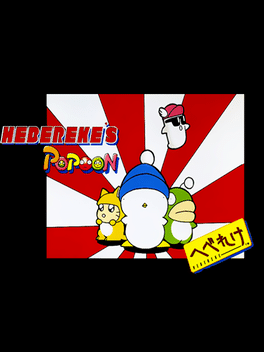
Hebereke's Popoon is a block-grouping game closer in style to Dr. Mario than Tetris. There are eight playable characters, each having different abilities. In one-player mode, the player is forced to choose Hebereke and must play against Oh-Chan. After defeating Oh-Chan, the player is allowed to choose between Hebereke and Oh-Chan in the next match against Sukezaemon, and so on, until the player has "unlocked" all the characters. Each match consists of a single-round. A defeated player may elect to resume play by using a continue. In two-player mode, all characters are immediately available to either player and each match is the best of three rounds. Players can also select a handicap level (from 1 - 5) to increase or decrease the difficulty of the game.Nazo Puyo 2
1993
Nazo Puyo 2
1993
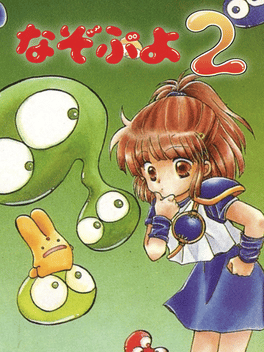
Nazo Puyo 2 is a Puzzle game, developed by Compile and published by Sega, which was released in Japan in 1993 and is the second Nazo Puyo title for the Game Gear.