New Games - Page 13298

Lock-On
1988
Lock-On
1988
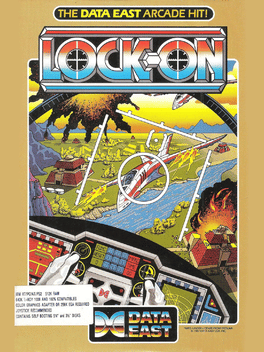
Port of the arcade title "Lock-On" DOS and Atari ST. Lock-On is a 1986 first-person combat flight simulator video game with a futuristic theme. It was developed by Tatsumi and licensed to Data East for US distribution. Its graphics feature scaling sprites and a full-screen rotation effect. The game consists of 20 levels. Gameplay is similar to After Burner: the plane follows a predefined path, but the player can steer it slightly to evade incoming missiles. The player can fire guns and homing missiles, the latter of which requires the eponymous lock-on first.Kitten Kaboodle
1988
Kitten Kaboodle
1988
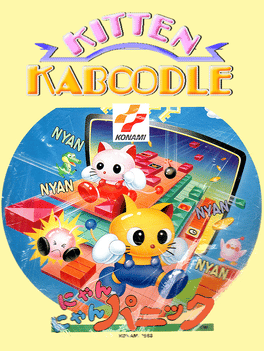
Kitten Kaboodle was produced by Konami in 1988. The game lets the player control a cat as it searches each stage trying to find four hidden keys. The stages are filled with enemies that can be defeated by pushing blocks into them. Blocks can also be jumped over if they get in the way. There are also special blocks that when three of the same kind are lined up it will cause an effect to happen such as clearing the screen of every enemy on it or giving the player temporary invulnerability. Enemies can drop valuables which increase the players points and in turn these points can be spent at a shop which sells various items like running shoes and bombs.Passing Shot
1988
Passing Shot
1988
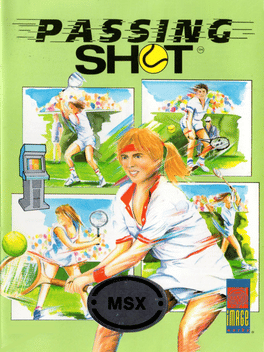
This is a conversion of the SEGA coin-op game of the same name, playing lawn tennis around the world. The player travels from France, to Australia, to the US and end up in England and get to listen to the national anthem of each country. There are four difficulty levels to select the skill of the computer controlled player. One or two players may play but always against the computer. In a two player game, both players play as a doubles team. The game starts off looking behind the player as the style of serve is chosen (top spin, curve, etc) and then it switches to a top down view for the rally.Power Drift
1988
Power Drift
1988
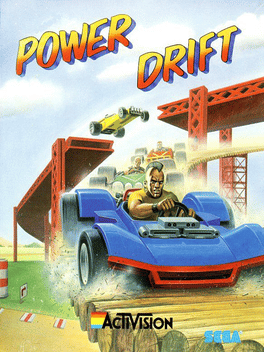
Arcade Commodore C64/128/MAX ZX Spectrum Atari ST/STE TurboGrafx-16/PC Engine DOS Amiga Sega Saturn Amstrad CPC MSXstar 7.2Power Drift is a kart racing game released in arcades by Sega in 1988. More technologically advanced than Sega's earlier 2.5D racing games, like Hang-On (1985) and Out Run (1986), in Power Drift the entire world and track consist of sprites. The upgraded hardware of the Sega Y Board allows individual sprites and the background to be rotated–even while being scaled–making the visuals more dynamic. Designed and directed by Yu Suzuki, the game was a critical and commercial success upon release in arcades. It was subsequently ported to various home computers in Europe by Activision in 1989, followed by a PC Engine port published in Japan by Asmik Ace in 1990. It was not released on Sega consoles until the Sega Ages release for the Sega Saturn in 1998.Airwolf
1988
The NewZealand Story
1988
The NewZealand Story
1988
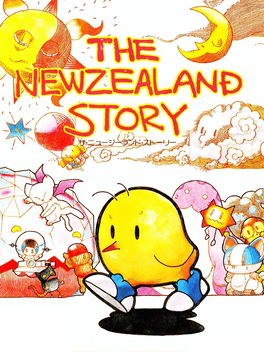
star 7.6Tiki, a sneaker-wearing kiwi who must save his lover Phee Phee and several of his other kiwi chick friends who have been kiwi-napped by a large blue leopard seal. The player has to navigate a scrolling maze-like level, at the end of which they release one of Tiki's kiwi chick friends trapped in a cage.Megumi Rescue
1988
Megumi Rescue
1988
Megumi Rescue lets you control a rescue party of three to save people from a burning building. The group consists of two people holding a jumping sheet, and a third fire fighter bouncing on the sheet to reach the building's inhabitants at the windows.Pac-Mania
1988
Pac-Mania
1988
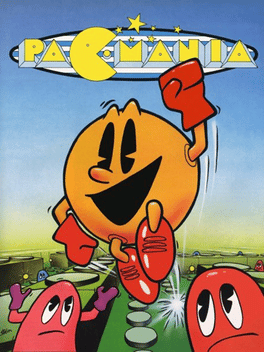
Pac-Mania is a variation on the game Pac-Man. You need to guide Pac-Man around a maze and eat all of the dots on the board to proceed on to the next round. Numerous, multi-colored ghosts also roam the maze trying to stop you. If you eat one of the power pellets in the maze, the ghosts will temporarily turn blue and run from you. Pac-Man can earn bonus points by eating the ghosts when they are in this state. The maze is now shown in isometric perspective and is larger than the screen which will scroll to follow the action. To help get out of tight spots, Pac-Man can now jump. But be careful, because some of the ghosts have learned this trick as well and you could end up in a mid-air collision!Rainbow Islands
1988
Rainbow Islands
1988
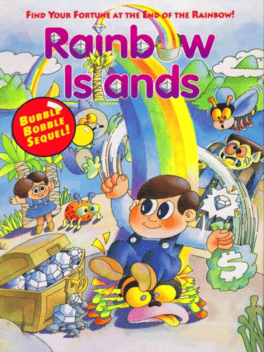
This Port of Rainbow Islands released in North America and Japan includes different level layouts and game mechanics compared to the original arcade release. It also includes an island based on "KiKi KaiKai" as a replacement for Magical Island.Nekketsu High School Dodgeball Club
1988
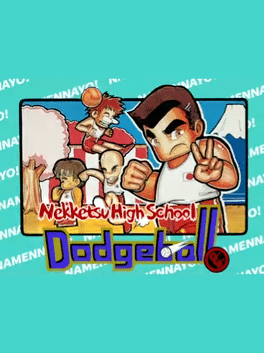
47th National High School dodgeball tournament. Spring, Mount Fuji blossoms with the cherry tree park in Shizuoka Prefecture. The fight has begun. Nekketsu High takes on Hanazono High in a dodge ball battle. If they are victorious nationally, the world is next.Space Harrier
1988
Space Harrier
1988
Youkai Douchuuki
1988
Youkai Douchuuki
1988
The player controls a boy named Tarosuke, who travels through "Jigoku" (the Japanese concept of Hell) fighting off "youkai" (mythical Japanese monsters) on his way to his final fate, as determined by Buddha. He destroys his enemies by firing small Ki bullets, which can be charged to increase their power; however, if overcharged, he is left unable to move or fight for a few seconds. During boss battles, Tarosuke kneels at a shrine to Buddha and prays, summoning "Monmotaro" (not to be confused with "Momotarou"), a spirit which floats in the air and drops energy balls on the boss and any lackeys he has. Once the boss is defeated, Tarosuke goes to the next stage.Double Dragon
1988
Blades of Steel
1988
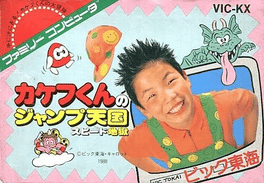
Kakefu-kun no Jump Tengoku Speed Jigoku
1988
A video game released for the Nintendo Entertainment System in 1988 by Vic Tokai. The game's main character is based on Kenji Sagara (相良 健治, Sagara Kenji), a popular Japanese child actor who was famous in the 1980s for his impersonation of baseball player Masayuki Kakefu.Sorcerian Utility Vol. 1
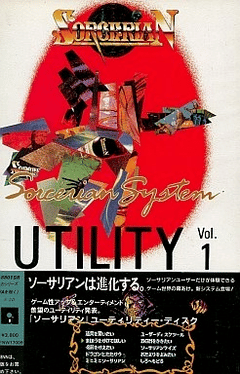
1988
A utility for Sorcerian that allows the player to alter various aspects of the game. Other bonuses were also included such as a music player, a Sorcerian quiz game and other features.Sorcerian Additional Scenario Vol. 1
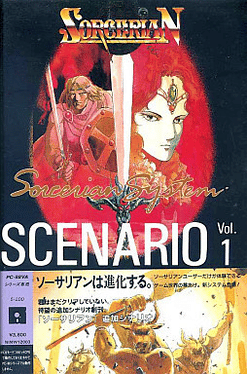
1988
An expansion pack for Sorcerian featuring five new scenarios to play through.