New Games - Page 12215

Tecmo Knight
1989
Tecmo Knight
1989
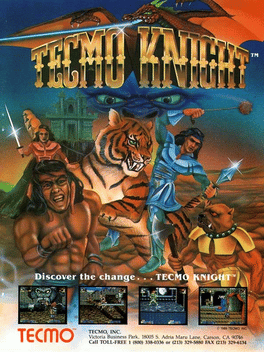
The protagonist Tecmo Knight has the assistance of "Smokeman" and "Tiger". Pressing the "change" button allows Tecmo Knight to switch between the two. Smokeman uses powerful punches and kicks against enemies while Tecmo Knight rides him. While riding the tiger, Tecmo Knight has the use of a spiked ball and chain less powerful than Smokeman's attacks, but with greater range. When collecting the special dragon skull that randomly appears after defeating an enemy, the Tecmo Knight will summon the most powerful creature to ride on in the game: the Flying Dragon. Tecmo Knight is immune to attack while riding Flying Dragon, whose breath kills any monster in the game instantly, including the stage-end bosses. Using the "jump and attack" maneuver, Tecmo Knight can bound Smokeman or the tiger onto enemies and pummel them. Sometimes, if Tecmo Knight runs low on life, a blow by a weak monster will kill only Smokeman or the tiger, leaving Tecmo Knight to fend for himself with a very weak short-ranged attack. It is extremely hDynamite Duke
1989
Dynamite Duke
1989
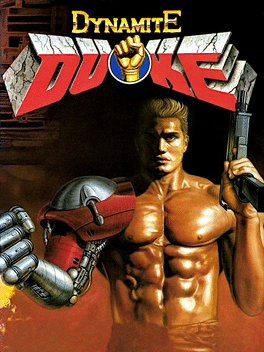
Dynamite Duke is a 1989 action arcade game developed by Seibu Kaihatsu. It was later ported to the Sega Master System, Sega Mega Drive and Sharp X68000. Being a Cabal-based shooter, it can be considered a follow-up to Seibu's Empire City: 1931 and Dead Angle.Cue Brick
1989
Cue Brick
1989
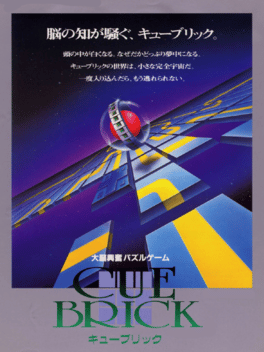
A puzzle game where you shift blocks so that a ball rolling along a path can roll across every block that has a path drawn on it.Demon's World
1989
Demon's World
1989
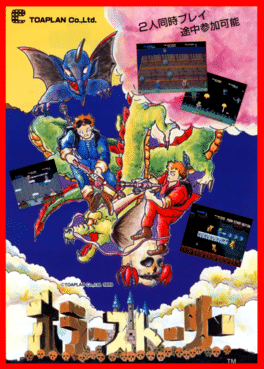
Demon's World, released in Japan as Horror Story, is a platformer arcade game that was developed by Toaplan and published by Taito in 1989. This game is multi-regional, meaning that it can be configured for different regions via the DIP switches. These settings change the legal warnings, can display the Taito licensing message and can change the title between the English version (Demon's World) and the Japanese version (Horror Story).Poker Ladies
1989
Poker Ladies
1989
Poker Ladies is an Erotic Card based game, Developed and published by Mitchell Corp. in 1989.Cyber Police ESWAT
1989
Cyber Police ESWAT
1989
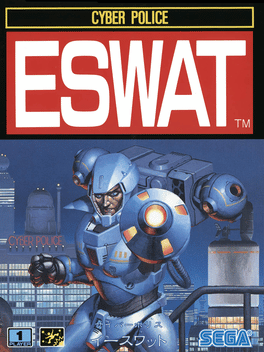
ESWAT is: the toughest fighting force alive! ESWAT means: Enhanced Special Weapons and Tactics! You're staring straight into the evil E.Y.E., a power-mad horde of vicious terrorists. But you are the ultimate crimebuster. Decimate their front lines with your lead-belching Gatling gun! Incinerate their mobs with your spinning flame thrower! Start as an ESWAT rookie and blast your way up to become an awesome supercop - more machine than man! Metal attack! Annihilate helicopters, machines, and maniac robots. Feel the heat while bulldozing crazed "experiments." Hear, see, and smell the danger when sewer ooze turns into man-hungry goo. Grapple with bionic monsters to face the final showdown! Stay glued to your weapons through 8 missions of grueling combat! You have the ultra-tech gear and the guts to survive! The ESWAT force is waiting. Hit the streets!Gonzzalezz
1989
Gonzzalezz
1989
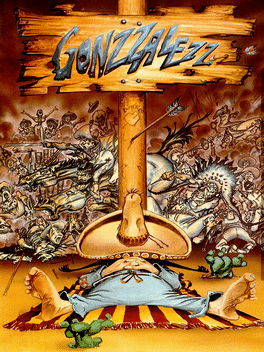
Pesadillas, un despertador que no cesa de sonar, musicos callejeros, pieles rojas, es casi imposible dormir. ¡Apaga el despertador! ¡Localiza una hamaca! y duerme una buena siesta (si puedes).MiG-29 Soviet Fighter
1989
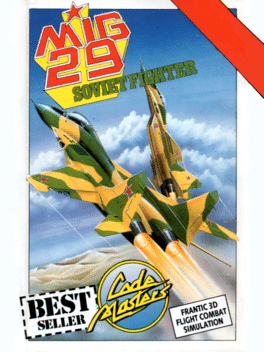
MiG-29: Soviet Fighter is a shoot 'em up game developed by Codemasters in 1989 and released for several contemporary home computers. An unlicensed version was also released for the Nintendo Entertainment System by Camerica.Renegade III: The Final Chapter
1989
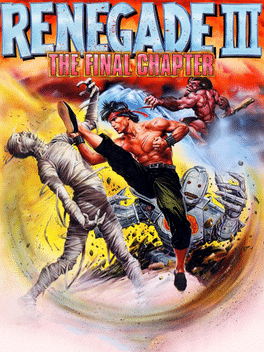
Renegade 3: The Final Chapter is a scrolling beat'em up computer game released on the Amstrad CPC, Commodore 64, MSX and ZX Spectrum systems in the late 1980s by Ocean Software under their "Imagine" label. The game is a sequel to Target: Renegade which itself is a sequel to the arcade game Renegade. Unlike the first two games, Renegade 3 follows the character known only as "Renegade" as he travels through time to rescue his captured girlfriend. It also dropped the two-player mode found in the previous title.Parasol Stars: Rainbow Islands 2
1989
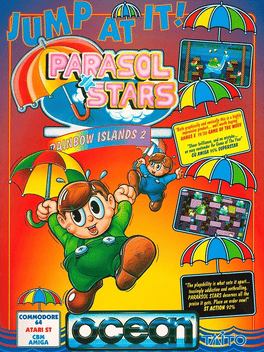
Port of "Parasol Stars - The Story of Rainbow Islands II" (also known as Bubble Bobble 3) was published by Ocean and Graftgold for Commodore 64, ZX Spectrum, Amstrad CPC, Amiga, and Atari ST. This sequel to Rainbow Islands sees a return to the gameplay of Bubble Bobble, but with Bub and Bob in their now-human forms. The boys must clear a series of screens of bad guys - who take slightly more esoteric forms than the angry caterpillars from Rainbow Islands - and again pick up a whole bunch of power-ups. But this time they're armed with umbrellas! Oh, okay then, parasols...Champion Wrestler
1989
Champion Wrestler
1989
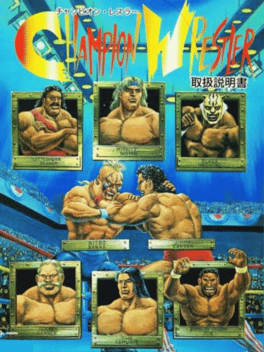
Champion Wrestler gained popularity in the arcade, and now it is reborn on the PC Engine! Up to 2 people can play simultaneously as well, and you can also enjoy a large number of wrestlers and tag team. In order to take the TWF championship belt, the game will challenge you with formidable enemy skills.Ghouls 'n Ghosts
1989
Naxat Open
1989
Naxat Open
1989
Naxat Open is a golf simulator from Naxat Soft. Naxat Soft hired contract developers TOSE to develop the game. Released the same week as Power Golf, Naxat Open aimed for the more serious simulation crowd whereas Power Golf appealed more to those looking for a more casual golfing video game experience. Besides a harsher level of challenge - the acceptable window of error is greatly diminished - Naxat Open plays much like other golf sims for console games: the gameplay chiefly focuses on hitting a power gauge just right to maximize the effect of each swing.Sir Fred
1989
Emmanuelle
1989
Emmanuelle
1989
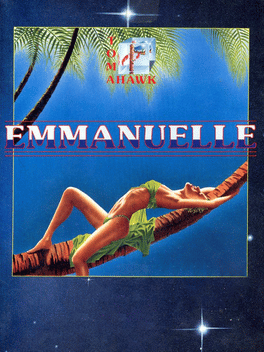
Emmanuelle is an erotic graphical adventure game from Coktel Vision, originally released in 1989 for Amiga, Atari ST, and IBM PC (DOS). The game was developed by Muriel Tramis, who is perhaps better remembered from her games in the Gobliiins series. The game is considered to slightly erotic, but not pornographicTusker
1989
Tusker
1989
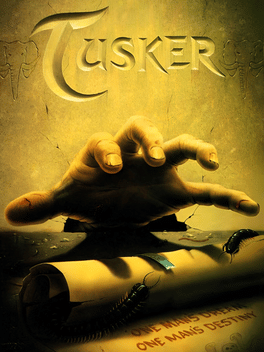
Finding the mysterious Elephant's Graveyard in Africa was your Father's lifelong quest. When he disappears you are determined to find out what might have happened to him, and what secrets may lie within. This side-scrolling action game is split into three stages, taking in the harsh and barren desert, an underground network of caves, and a tough tribal jungle. The natives are hostile to your presence, and weaponry must be found to fend them off, although its use does little to put the natives at ease initially. The machete to cut through the jungle is equally important. At many other points you will need to use objects you have found along the way. The backgrounds are in full 3D and can serve to obscure the character when he is behind trees or rocks.Twin Hawk
1989
Twin Hawk
1989
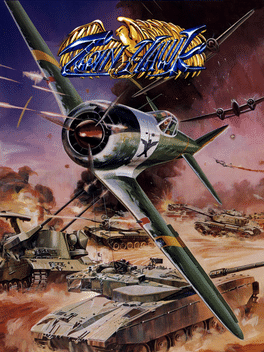
star 5.9Twin Hawk is a 1989 vertically scrolling shooter arcade game developed by Toaplan and published by Taito. Twin Hawk resembles other shooters of the time, specifically Toaplan's earlier game, Flying Shark. Also like Toaplan's other games, there were various differences between the Japanese version and other versions, including a checkpoint system and higher difficulty for the former. Unusually, the game contains no flying enemies; thus, a complete lack of physical obstructions and a stronger focus on the numbers and speed of ground forces. Another draw of Twin Hawk is the game's unique "smartbomb" in the form of a group of friendly planes; pressing button 2 once will call in six Flying Fortresses to surround and protect the player's plane, and provide back-up fire. They are easily taken down by enemy fire, so the player must use them wisely. Pressing button 2 again immediately after the call-in will sacrifice the planes for a more typical smartbomb. Otherwise, pressing button 2 while any other plane is on-screen wDJ Boy
1989
DJ Boy
1989
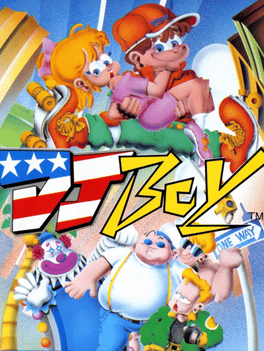
DJ Boy, also known as DJ Kid, was designed as a standard side-scrolling beat'em up game partially based on the hip-hop culture of the U.S. cities. What made the game unique at the time was the fact that many of the characters rode around on roller skates rather than walking or running. DJ Boy skates across various stages and utilizes hand-to-hand combat moves in order to defeat opponents, culminating with a battle with a boss at the end of each level. Along the path, the player also encounters prizes, which then can be used later to purchase Power-ups from a store located at the end of each level (in the home version, the arcade simply tallied these as points). In the console versions of the game, as another game, River City Ransom, the "prizes" consist of coins that are dropped by defeated enemies, or food items like burgers that restore health.Railroad Empire
1989
Railroad Empire
1989
The second game in the A-Train series. This American localization/port was the first time the series ever landed in the U.S, though it wasn't until the third entry that the series gained some success.Wrestle War
1989
Wrestle War
1989
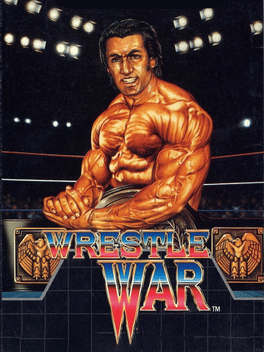
Wrestle War is the name of a video game which was released in the arcades in 1989, and for the Sega Mega Drive/Genesis console in 1991 in Japan, Australia, and Europe only. and was published and developed by Sega. Despite being released the same year as the National Wrestling Alliance/World Championship Wrestling's WrestleWar pay-per-view, it is not associated with any wrestling promotion. The original Japanese game cover featured a Hulk Hogan look-alike, with a bandana that spelled "Hogan". It was changed for the European and US releases for royalties reasons. It did not change the wrestlers faces though, which still are similar to those of real wrestling stars of the time. Wrestle War has also been released as part of the Sega Smash Pack The player takes control of Bruce Blade, a rookie wrestler, through a series of matches to win the Sega Wrestling Alliance championship belt by facing the following wrestlers, each possessing their unique wrestling moves: Mohawk Kid Sledge Hammer (based on Bruiser Brody) Mr. J