Most Popular Games - Page 395

Boyfriend Dungeon
2021
Boyfriend Dungeon
2021
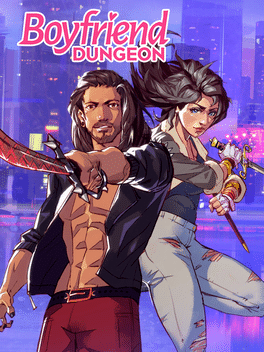
star 6.6In this title not only are you able to work your way through a variety of procedural dungeons taking on enemies and collecting loot you’re able to spend that loot dating your weapons.Misao: Definitive Edition
2017
star 7.2In this horror-adventure game, you must search for your missing classmate in a school plagued by unnatural phenomena. This new upgraded version of "Misao" features improved graphics and additional content. Get your own copy of Misao: Definitive Edition now!Street Fighter V: Arcade Edition
2018
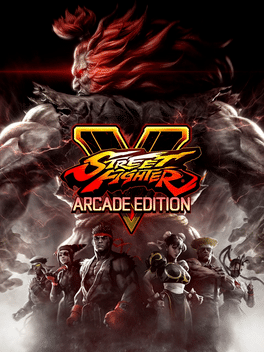
star 7.9"Prepare yourselves, Street Fighter V: Arcade Edition is coming out on January 16, 2018! If you’ve been spectating from the sidelines or are waiting for a reason to join the fight, now is the time! In addition to the highly-requested Arcade Mode, Street Fighter V: Arcade Edition contains a bounty of new features, including Extra Battle Mode, Gallery, a redesigned UI, and more! All 28 characters will also be present with a second V-Trigger to change the way each battle is fought. From the beginning, we promised that you’ll only need to purchase the original Street Fighter V, which we’re sticking to. All the new gameplay-related content – Arcade Mode, Extra Battle Mode, a second V-Trigger, the Gallery, and more – will be available as part of a free in-game update for current players! "Fight'N Rage
2017
Fight'N Rage
2017
star 7.6Fight’N Rage is a brand new old-school side-scroller beat’em up. Inspired by the classics from the “golden age”, and with an art style that mimics the aesthetic from the 90's arcade gems, this game pays homage to all classic gameplay features that makes this genre one of the best from its time!RoboCop
1989
Girls' Frontline
2016
Girls' Frontline
2016
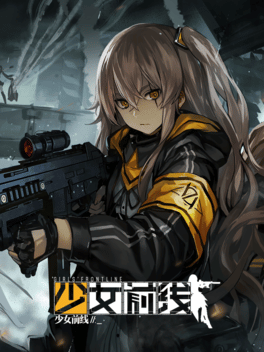
star 7.1Girls' Frontline is a moe anthropomorphism game in which the player controls of android characters, known in-game as "T-Dolls" or "Tactical Dolls", each of which represents a real-world firearm. The player plays as a newly recruited commander of an area who commands the T-Dolls in battle, and organises the echelons as well as the T-Dolls' wellbeing. Battles are a mix of turn-based strategy puzzles on a set map with enemies that can move about, random item nodes and heliports/command nodes, from which the player can summon their own echelons, or support echelons, which are echelons that the player's friend sets on their profile to be used by others, and real-time battles with enemy echelons. Battles are for the most part automated, although the player can activate the T-Dolls' special abilities manually if wanted, or order them to different spots in formation (which the player can organise out of battle to be set as the default formation when entering a battle) or to withdraw in order to conserve health or resourcesLuna: The Shadow Dust
2020
star 7.6Luna The Shadow Dust is a fully hand-animated Point&Click puzzle adventure, brought to life through wordless storytelling, beautiful cinematics and a breathtaking original soundtrack. Inspired by the adventure games of old, LUNA The Shadow Dust is a moving tale of two playable companions drawn together in a hand-animated puzzle adventure, featuring a breathtaking original soundtrack and beautiful 2D cinematics.Mashinky
2018
Mashinky
2018
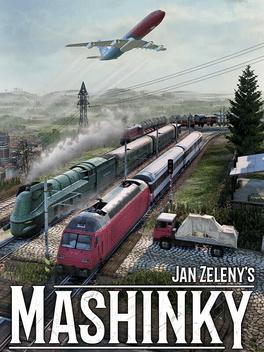
star 8.9Mashinky is a transport strategy game about trains. The goal is to create your own transport empire on a procedurally generated map. It’s a unique blend of realistic graphics combined with an isometric construction mode and board game-like rules.Boxing
1980
Boxing
1980
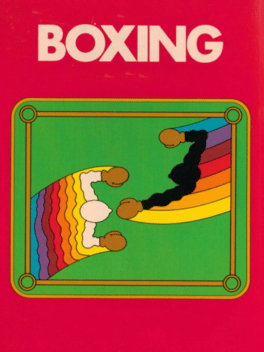
star 6.9Boxing is an action boxing game for one or two players which is played from an overhead point of view. The game lasts for two minutes, and the player who can earn the most points in that time wins. You earn one point for a long jab, two points for a close power punch, and if you can manage knockout it's worth one hundred points. Two difficulty levels are included which can be set individually for each player.Shatterhand
1991
Shatterhand
1991
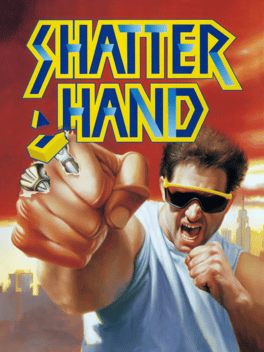
star 7.9Imagine packing the power of 100 strategic missiles in every punch. Imagine needing every single megaton just to hold your own against a cybernetic army of metallic monstrosities. That's the guts of Shatterhand, the game that redefines hand-to-hand combat in the 21st century... along with all the standards for single-player action games for the NES. Seven levels of programmed adventure - you choose the action! State-of-the-art graphics featuring 8-direction scrolling! "Anti-gravity" levels force you to fight upside-down! Armed "satellite robots" assist you in battle. No arms on Earth can withstand the power in your hands! This port is a localized version with differences such as different graphics for characters and items, different story and opening, and the most substantial change is Area C which is a carnival stage in the original but here it was replaced with a nuclear-submarine stage.The Crooked Man
2018
The Crooked Man
2018
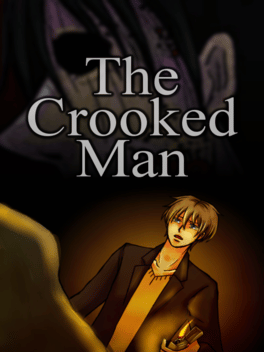
star 6.9David Hoover decides to move into a new apartment during a rough time in his life. After some odd occurrences, he decides to ask about the room's former owner, but learns little. So he sets off in search of him, strangely compelled to know more about this man...Sengoku 3
2001
Sengoku 3
2001
star 8The game takes a greater departure from its predecessors in both story and presentation. The heroes are now members of a ninja clan who have to dispatch an evil emperor before he is released. Players can choose which character they want for the first time, each having their own strengths and weaknesses. Two bosses that confront the player can also be playable after a certain chapter of the game, allowing players to re-select their character if they wish.Splatterhouse 3
1993
Splatterhouse 3
1993
star 7.3Splatterhouse 3 is a video game released by Namco for the Mega Drive/Genesis in 1993. It is the sequel to Splatterhouse 2 and was one of the first games to be given a rating by Sega's own Videogame Rating Council.Alex Kidd: High-Tech World
1987
star 5Life isn't always easy for the Crown Prince of Radactian. When the High-Tech World arcade opened up, someone in your castle tore the map into eight pieces! But it's such a cool arcade, you have to go there. It's a challenge worthy of any Kidd!Sonic.EXE
2013
Sonic.EXE
2013
star 1.2In Sonic.EXE, you start as Tails and move through a level. But things don't look right. All the little animals have been slaughtered. Then you find Sonic. But Sonic doesn't look right, either. He tells you he wants to play but losing this game can be fatal. After Tails, you play as Knuckles the Echidna then as Dr. Robotnic. Sonic gets no nicer, however.Heavy Rain: Director's Cut
2011
star 8Heavy Rain: Director's Cut was released as a "complete" version of the game which includes the only piece of downloadable content, The Taxidermist, as well as the game soundtrack, Playstation Move support, eight making-of videos, three dynamic themes, fifteen pieces of concept art, and two bonus trailers. The game is also marked as a Playstation Greatest Hits title, bearing the red box.Jade Cocoon: Story of the Tamamayu
1998
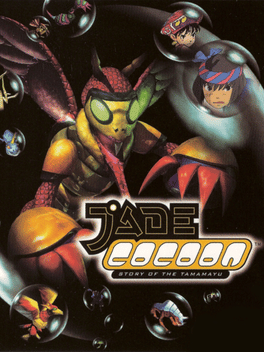
star 7.3Enter the world of Jade Cocoon: Story of the Tamamayu. As Levant. a Cocoon Master. you will engage powerful monsters in deadly one on one combat. As the magic and talon clashes of these battles turn to your favor you can call on the mystic cocoon powers and capture your fallen foe. Once captured these mighty creatures will be the key to unlocking the curse that has overcome your village. The game combines elements of role-playing video games and digital pet virtual pet management. It was developed by Genki in collaboration with Katsuya Kondō, character designer for the Studio Ghibli movies "Kiki's Delivery Service" and "I Can Hear the Sea".Disney's Goofy's Fun House
2001
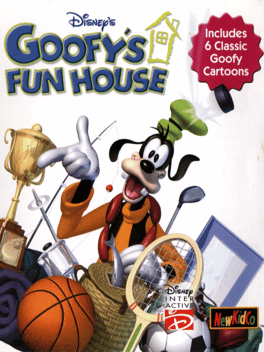
star 6.8Goofy must explore each a part of his home which consists of 15 distinct rooms. Each room includes elements such as a blender in the kitchen or table saw in the garage that the player can interact with. The main focus of play centers around collecting the 50 film canisters and certain objects Goofy has misplaced throughout his home. In addition to this, there are several mini-games that may be accessed via the paintings in the rec room of Goofy's house if the player finds all the objects that are needed. There's mini-games that range from golf and fishing to skiing and driving (based on How to play...) . After Goofy completes each mini-game and finds a few special items found somewhere in the house, a corresponding cartoon like: How to Play Golf will be unlocked. The game is considered "Completed" when the player completes all the mini-games, finds all of the cartoon-specific items, and collects at least 50 film canisters, unlocking the final cartoon.Idle Champions of the Forgotten Realms
2018
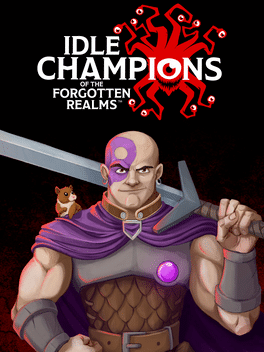
star 7Idle Champions of the Forgotten Realms is a Dungeons & Dragons strategy management game uniting characters from throughout the D&D multiverse into a grand adventure.Hagane: The Final Conflict
1994
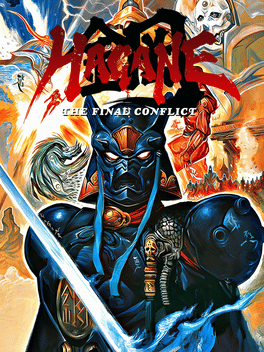
star 6.7Hagane: The Final Conflict is a 1994 action-platform video game developed by CAProduction and published by Red Entertainment and Hudson for the Super Nintendo Entertainment System. The player takes on the role of a ninja cyborg named Hagane on his path to take revenge on an opposing ninja faction. The game combines traditional Japanese ninja and samurai aesthetics with a futuristic setting. The player has a wide variety of weapons, moves, and attacks at their disposal to defeat enemies and progress through the game. Hagane released to positive reception, and was compared favorably to classic side-scrolling action games. Reviewers praised the controls, art design, and challenge but criticized the quality of the graphics and sound.