Most Popular Family Computer Games - Page 42

The Golf '92
1992
The Golf '92
1992
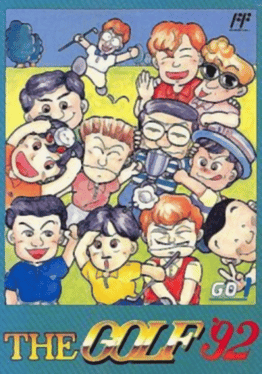
There are three difficulty levels and the game is almost completely in Japanese. There are also three modes: leaderboard (similar to major PGA events), tournament (using a format found in most sports playoffs), and stroke play. Players have a crowd to play their round of golf into front of.Golf Club: Birdie Rush
1988
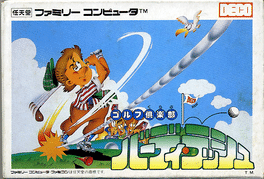
Golf Club: Birdie Rush is a golf game developed by Data East and published for the Famicom towards the end of 1987. It employs a far off bird's eye view throughout the game. It features 18 holes and allows players to play in a stroke game, or a tournament, and allows players to play alone, or head to head. It was only released in Japan, and it was followed up with a sequel for the Super Famicom called Super Birdie Rush in 1992.Gozonji: Yaji Kita Chin Douchuu
1989
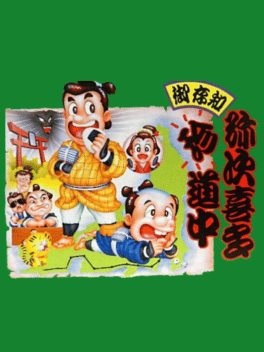
Gozonji: Yaji Kita Chin Douchuu is an Adventure game, developed by Hyperware and published by HAL Labs, which was released in Japan in 1989.Great Battle Cyber
1993
Great Battle Cyber
1993
Great Battle Cyber is an Action game, developed by Arc System Works and published by Banpresto, which was released in Japan in 1992.GunHed: Aratanaru Tatakai
1990
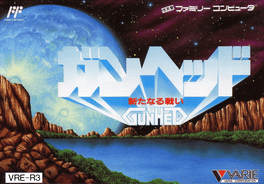
GunHed: Aratanaru Tatakai is a 1990 strategy game for up to four players. It is the second game based on the 1989 sci-fi movie GunHed, the first being Blazing Lazers for the TurboGrafx-16. Aratanaru Tatakai is closer to the movie: the players re-activate GUNHED mech units to defeat the supercomputer Kyron-5 and its enforcer Aerobot. Each player chooses where on 8JO, the island base of Kyron-5, to deploy their GUNHED models, and then fights opponents in real-time combat while collecting robot pieces along the way to build stronger robotic armies. The game culminates with a fight against the powerful Aerobot.Hana no Star Kaidou
1987
Hana no Star Kaidou
1987
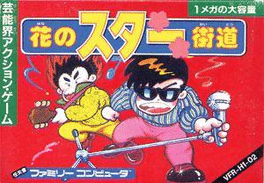
Hana no Star Kaidou (which can be loosely translated as "Blossoming Star Highway") is an action game for the Famicom that was developed and published by Victor Musical Industries in 1987. It is about two musicians who dream of obtaining a recording contract and becoming big stars. The player must control both Moero and Goro on the screen at one time. They run, jump, and attack simultaneously. Each one has their own life count, and the game is over as soon as one of them loses all of their lives. Because of the unituitive controls, and unforgiving game mechanics, this game is considered quite difficult and generally not fun to play.Hi no Tori Houou-hen: Gaou no Bouken
1987
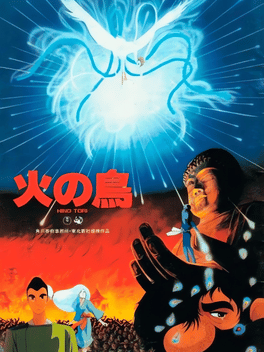
Hi no Tori Hououhen: Gaou no Bouken is a licensed action platformer with block placing mechanics, based on Osamu Tezuka's Phoenix (Hi no Tori) manga series.Hirake! Ponkikki
1992
Hirake! Ponkikki
1992
Hirake! Ponkikki is a Miscellaneous game, developed by Minato Giken and published by Takara, which was released in Japan in 1992.Hokuto no Ken 3: Shinseiki Souzou Seiken Retsuden
1989
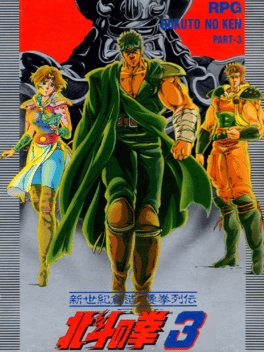
Hokuto no Ken 3: Shinseiki Souzou Seiken Retsuden is the third Hokuto no Ken video game developed by Shouei Systems and released by Toei Animation for the Family Computer (the Japanese version of the Nintendo Entertainment System) on October 19, 1989. Unlike the first two Hokuto no Ken video games for the platform, which were side-scrolling action games, Hokuto no Ken 3 is a role playing game which adapts the storyline of the original manga from the beginning to the Kingdom of Shura story arc. It was the first in a trilogy of RPGs based on the franchise.Hokuto no Ken 4: Shichisei Hakenden - Hokuto Shinken no Kanata he
1991
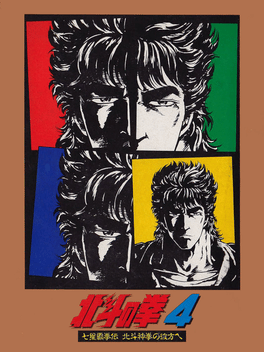
Hokuto no Ken 4: Shichisei Hakenden - Hokuto Shinken no Kanata he is the fourth Hokuto no Ken video game released by Toei Animation and developed by Shouei System for the Family Computer, released on March 29, 1991. It is second of three role playing games based on the series produced by Toei, following the previous game in the series. The story takes place in the 21st century, several years after the conclusion of the original, in which a new generation of martial artists seeks to follow the foot-steps of Kenshiro and his rivals, and save from its third dark age. The game's story was written by Hiroshi Toda, who wrote episodes of the Hokuto no Ken anime series, and supervised by original author Buronson.Home Run Nighter: Pennant League!!
1989
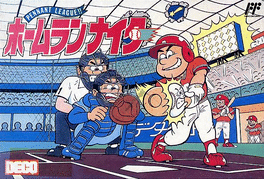
Home Run Nighter: Pennant League!! is a Sports game, developed and published by Data East, which was released in Japan in 1989.Home Run Nighter '90: The Pennant League
1990
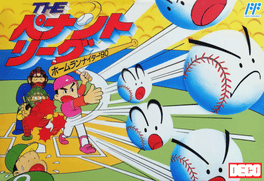
Home Run Night '90: The Pennant League is a Sports game, developed and published by Data East, which was released in Japan in 1990.Heisei Tensai Bakabon
1991
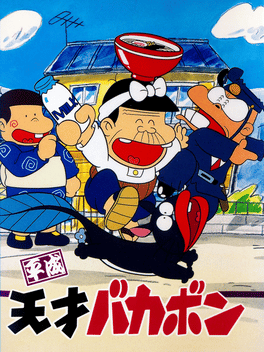
A former genius has now become very eccentric and senile. His family deals with all the crazy problems he and his old friends cause around the neighborhood.Hottaaman no Chisoko Tanken
1986
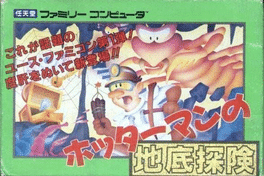
Players get to dig up dirt beneath the surface, find keys behind four doors, and then find the door to the next level. The most obvious game to compare it to is Dig Dug, but without the boulders and with various devices like teleporting doors, speed, dynamite, and a wet suit. There are 15 levels in the entire game; which repeat themselves after the 15th level is finished. Lava can spew out at a vertical direction towards the player and kill him; it does not reset itself even after the players loses a life (but it does reset itself after a game over) Passwords are activated by pressing a certain button combination on the password screen. Several passwords results in cheat codes that does certain things; such as deactivating the lava in all levels of the game. Certain type of blocks are worth different points once they are dug up; ranging from common dirt to destructible blocks. The game features an instant death clause where players die in a single hit. Killed enemies reappear at the same location where they wereI Love Softball
1989
I Love Softball
1989
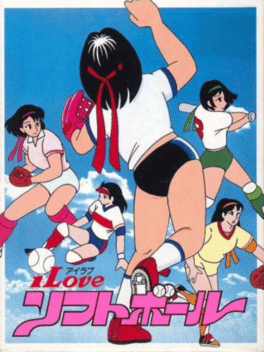
The object is to win the championship using female softball players. Players must choose between the six major high schools from all of the regions of Japan. After winning the Japanese high school championship, the player must take on the American women's softball team before becoming a professional softball player. If the player loses one game, play starts over unless the player uses a password to return to the previous round. The game's password feature allows games to be replayed and maintains total memory of which teams have already been defeated. However, the passwords and long and very difficult to remember.Thunder Blaster Man
1995
Thunder Blaster Man
1995
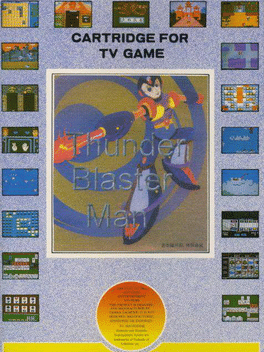
Tonight the whole Chiateng City and its citizens are very high in various recreational activites that are carried in commemoration of its centennial. Just when a crowd of VIPs gathering in the Mayor's residence were raising their glasses to toast Chiateng City, a mysterious stranger broke into the house from the window and quickly flew away with the cauptured Mayor's daughter, Rose. Very quickly several explosions broke out successively on the street and the whole city was soon in fire. Do you think that these people, now all at their wits' end, could do nothing by wait and be played by the jerk or some miracle would happen and the people were rescued?Ikinari Musician
1987
Ikinari Musician
1987
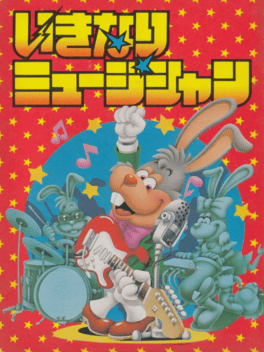
Ikinari Musician provides a piano-like keyboard, a treble clef on the staff to show note location, a 5-channel Backing track, 4 timbre choices, and controllers to manipulate common synthesizer parameters such as release and attack, LFO, etc. It also provides recording and play back function. The player has many choices of styles of the backing track, from popular styles such as Rock, Techno, and Jazz, to various ethnic flavors such as Bossa, Rio, Japan, India, Arabia, etc. The backing tracks representing the styles use familiar elements to make the game more accessible to the general audience. For example, in the Scotland style Cadence to Arms, a familiar bagpipes tune, is used. Most backing tracks loop around one or two chords, allowing an open improvisation on the main keyboard. Once the style is chosen, the main keyboard is masked in the way that only the scale that easily fits into the style is available, e.g. blues scale, pentatonic scale, etc. The keyboard is controlled by the UP-DOWN or LEFT-RIGHT d-padsIndra no Hikari
1987
Indra no Hikari
1987
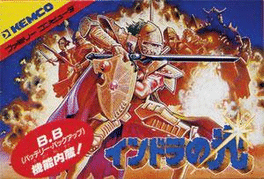
Around the year 2000, mankind departs a depleted earth and travels through space to the plant Ibaru some 8,500 light years away. There, people live peacefully under the protection of a god whose power source is the Light of Indora. However, a demon siphons the light away from the planet and the god begins to slumber. The surface of the planet transforms into a vast desert and monsters begin to appear. The player must quest to put an end to the demon and restore the Light of Indora to the god that protects the planet.JaJaMaru Gekimaden: Maboroshi no Kinmajou
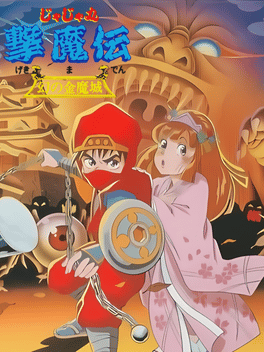
1990
JaJaMaru Gekimaden is an action role-playing game, with gameplay similar to The Legend of the Zelda. Players control the protagonist character through towns, dungeons, and a world map. Each different type of map features top-down exploration. When moving through a dungeon, the protagonist will gradually recover health. The protagonist can equip different types of weapons and items that he can buy or find and use them during combat. Dungeons are made up of several rooms with enemies inside. Occasionally, an enemy will drop money when defeated, which can be used to buy items or heal health points at an inn.JaJaMaru Ninpouchou
1989
JaJaMaru Ninpouchou
1989
"JaJaMaru Ninpouchou" is a ninja themed role-playing game. Play as Jajamaru and Princess Sakura as you explore around a world map visiting towns and dungeons. Fight against random encounters using the separate turn-based combat screen.