Most Popular Arcade Games - Page 133

Ring of Destruction: Slam Masters II
1994
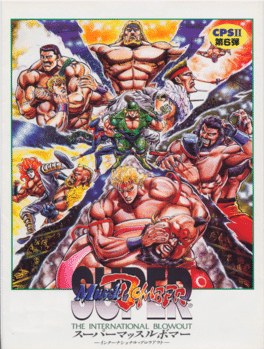
The wrestlers of the Capcom Wrestling Association gather once again, but this time the Blood Wrestling Association has joined in to wrestle with the CWA for the championship. Victor Ortega, the previous Muscle Bomber champion, as well as owner of the CWA, had left because he couldn't find anyone strong enough to give him a decent challenge. Now he's back, and is the guy to beat to earn the championship.SD Fighters
1996
SD Fighters
1996
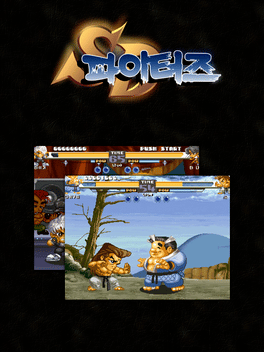
SD Fighters is a fighting game with eight super deformed characters. The 3-button control scheme is more typical for 3D fighters like Virtua Fighter.Battle K-Road
1994
Battle K-Road
1994
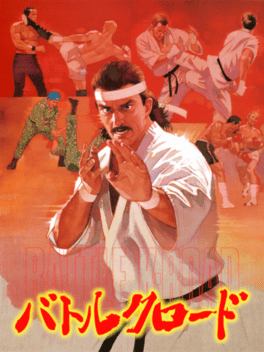
The game focuses mostly on reality fighting than fictional. At the start of the game in 1P mode, the player will face against the other fighter that uses the same fighting style as the one the player chose. After the player wins against the opponent, the player will face against other opponents that use other fighting styles in the K-Road Tournament. If the player loses, the game will only allow the player to continue fighting through it with the character he used, and will not allow the player to choose another character. The gameplay has a 6-button layout, but with command inputs different compared to ones in most fighting games released at the time. There are three punches and kicks for a few directions (weak, medium and strong). There are seven fighting styles featured in the game and two playable characters per style, for a total of 14 playable fighters.Blood Warrior
1993
Blood Warrior
1993
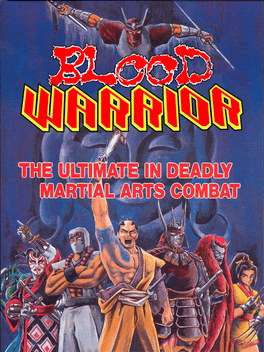
The gameplay of Blood Warrior is quite similar to many of the 2D fighting games of the same era. However, Kaneko seem to have taken much of their inspiration from the Mortal Kombat franchise in terms of over the top gore and violence; however, Blood Warrior's predecessor Shogun Warriors predates Mortal Kombat in featuring blood, while Barbarian: The Ultimate Warrior predates Mortal Kombat in featuring death moves.Burning Rival
1993
Burning Rival
1993
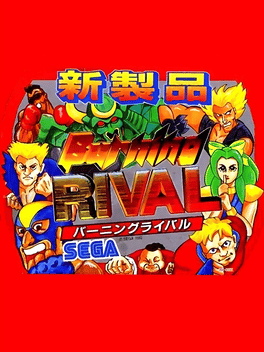
The game takes place in a fictional city located in central Canada known as "Destiny City," a midsized American metropolis. Once every few years, strong fighters gather here and hold a violent, secret no-holds-barred fighting spree. This year, too, a group of extraordinary fighters gathered, sick of fighting by the rules. Some coveted the titled of "World's Strongest," while others dreamt of acquiring vast wealth. Things in Destiny City heated up before the tournament began.Dragoon Might
1995
Dragoon Might
1995
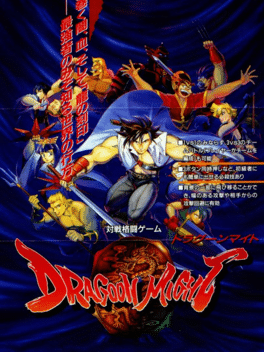
Dragoon Might features two distinct game modes. A single match mode in which the player must defeat their opponents in round-based matches, and a team match mode similar to The King of Fighters series in which two teams of three members must battle each other until the members of one team are all defeated.Fighting Layer
1998
Fighting Layer
1998
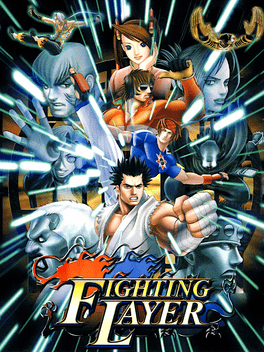
The gameplay system is similar to that of the Street Fighter EX series (also developed by Arika), such as canceling supers into other supers, and universal guard-break attackFire Trap
1986
Gaia Crusaders
1999
Gaia Crusaders
1999
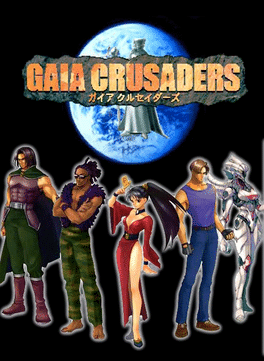
Gaia Crusaders' story involves the world being destroyed by demons in the year 20XX. Chosen warriors, the Gaia Crusaders, are sent in by an ancient spirit to destroy the demons and rebuild the world. There is a lot of post apocalyptic imagery including ruined skyscrapers, vast desert wastelands and a ruined Statue of Liberty possibly inspired by Escape From New York or maybe Planet of The Apes. Acquiring seven pieces of The Demon's Tear can restore the world.Power Instinct Legends
1995
Otane Goketsuji, leader of the Goketsuji clan, was kidnapped. A new tournament was held to find a successor. Otane managed to arrive at the tournament to defend her title as clan leader against the winner of the tournament. Unfortunately to Otane, she was too tired to fight and was defeated by Kokuin Kanji! After his victory in the Goketsuji tournament, Kanji thought that would be fun to test the strength of the Goketsuji family members, so he invited them for a new tournament.Magical Cat Adventure
1993
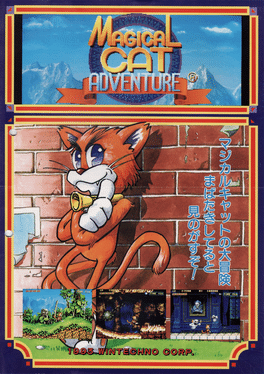
A cat encounters many obstacles and enemies while traveling through various terrains.Metamoqester
1994
Metamoqester
1994
Metamoqester (known in Japan as "Oni: The Ninja Master") is a 2D arcade fighting game, similar in concept to Red Earth or Monster Maulers. One or two players (there is a co-op mode) fight against big monsters in deadly duels. There are three different characters to choose from. The game uses four buttons - Weak Attack, Medium Attack, Strong Attack, and Shoot/Throw Weapon.Monster Maulers
1993
Monster Maulers
1993
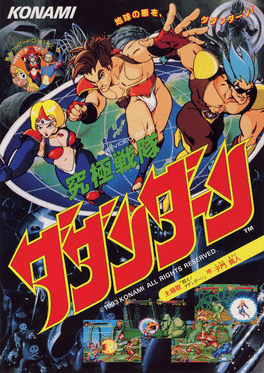
The three main protagonists are Kotetsu, Anne and Eagle, members of the "Ultimate Task Force". A trio of evil villains known as the Happy Droppers unleashes a swarm of monsters to terrorize countries of the world, sending the three heroes on a mission to end the disaster and defeat the evil masterminds.Ah Eikou No Koushien
1991
Ah Eikou No Koushien
1991
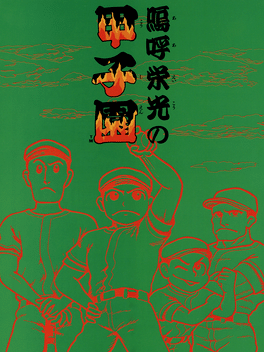
Ah Eikou no Koushien is an arcade baseball game which is played under normal baseball rules with the exception being that players can charge themselves up to attempt a better hit or pitch.Fax
1983
Fax
1983
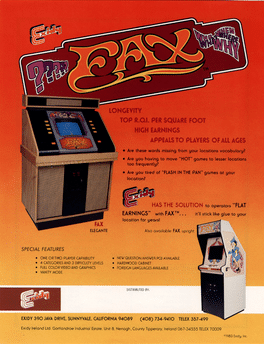
Fax is a trivia game which asks questions about a number of topics, including: General Knowledge, Sports, History and Entertainment. This was released by Exidy in 1983 and written by Vic Tolomei and Larry Hutcherson hopeful to play on the Trivial Pursuit craze as it was released over a year earlier than the registered Trivial Pursuit versions (produced by Bally/Sente). The game came in what was essentially a jukebox cabinet (complete with a woodgrain finish), which lent itself to possible markets outside of the typical arcade setting. It had a 9-inch monitor mounted in the center, logo on the bezel itself and a row of buttons on each side of the screen to accommodate two player simultaneous play. Fax used unique compression to hold nearly 3700 questions in as small of storage as possible. Exidy also sold several EPROM replacement kits that provided new questions but they are nearly impossible to find today.Alien Arena
1985
Alien Arena
1985
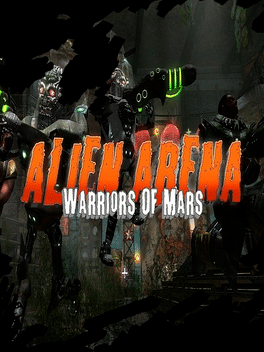
Alien Arena was developed by Duncan Brown in 1984 to run on the classic Williams hardware. It is a "capture the flag" style game with a number of interesting twists.Vendetta
1991
Vendetta
1991
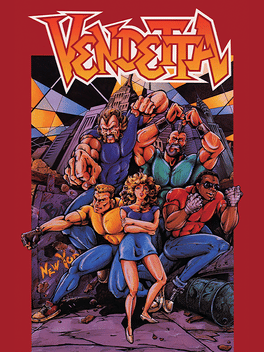
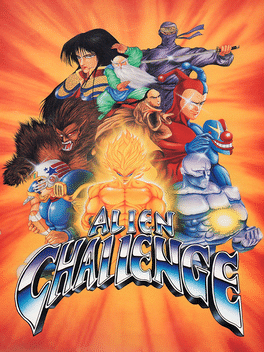
Beat 'em up for up to four players. It is the sequel to Crime Fighters , renamed internationally as Vendetta.Alien Challenge
1995
Alien Challenge
1995
Alien Challenge is a 2D versus fighting game in which you take control of one of eight eight fallen gods, taken down to the mundane world to atone for their actions. Each fighter has their own moveset, with three punch buttons, three kick buttons, and command inputs that use those six buttons. The seven other playable characters must be defeated to reach the final opponent, boss character Claus.Mystic Warriors: Wrath of the Ninjas
1993
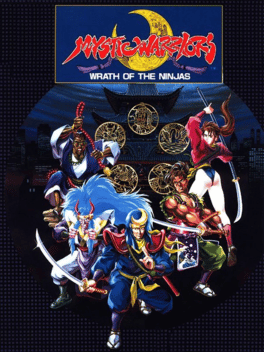
The game's controls consists of an eight-way joystick and two buttons for attacking and jumping. Like in Sunset Riders, the player can jump between higher or lower levels, as well as slide. The player character attacks primarily by shooting an unlimited supply of shurikens/daggers, or using his/her weapon at close range. The game includes some improvements that were not included in Sunset Riders, such as the ability for players to change characters after they lose a credit as well as a life gauge that allows the player to sustain up to four hits from enemy attacks before losing a life. The player must defeat box-carrying enemies in order to obtain power-up items. These includes a shuriken power-up that can increase the player's shooting power by up to two levels (which differ between characters), food (sushi, tempura, udon, sukiyaki) that will replenish the player's life gauge, a blue orb with the kanji shinobi (忍?) that will surround the player with a barrier for a limited period, a yellow orb with the kanji chRobot Bowl
1977
Robot Bowl
1977
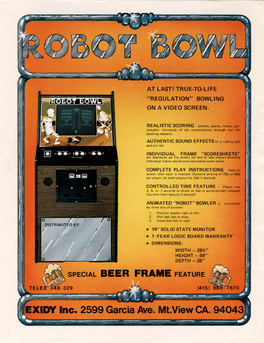
Robot Bowl was a black & white bowling alley game designed and programmed by Edward Valeau and Howell Ivey of Exidy. The game featured one or two robot bowlers playing with the standard bowling rules. To control the outcome, the game had five buttons: left, right, shoot, hook left, and hook right. "Hooking" the ball was the key to getting a good score, as you could only hook the ball after it had been thrown. This made it easy to pick up a spare, but the game made up for it by making splits very common. Robot Bowl was available in two different dedicated cabinets, an upright and a cocktail, both of them used the same internal hardware. The Robot Bowl upright was of the common 1970s 'short cabinet' design, as the machine had no marquee and was only as tall as the monitor. Some machines also had a decorative 'ball return' on the front at the very bottom of the cabinet. There is an interesting story behind that. At the time the game was created, Exidy had just purchased Fun Games and had a number of cabinets left ov