New Ps3 Games - Page 312

Kunio's Oden
1994
Kunio's Oden
1994
When Misako realizes her favorite Oden shop is going out of business, she comes to Kunio in helps he can save the business from going bankrupt. Kunio must awaken his appetite to save the Oden shop.Museum Madness
1994
Museum Madness
1994
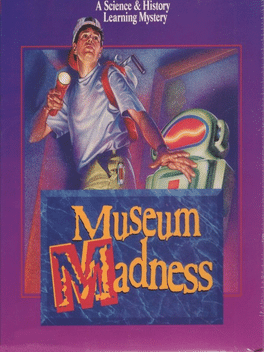
Museum Madness is an educational computer game for the PC (DOS) and Macintosh developed by Novotrade for MECC, and was released in 1994. The game is based in an American natural history museum and aims to teach the player many aspects of history such as technology, geology, space, American history, and prehistory. PC Magazine described the game as having kids learn about educational topics (i.e. ecology) while making logical deductions in a series sequence and solving puzzles.[1]Dynamaite the Las Vegas
1994
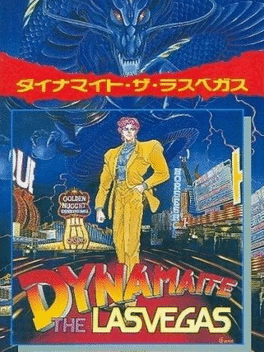
A 1994 casino gambling game for the Super Famicom. The stylish Mr. Dynamite must defeat the Las Vegas Dragon by making a lot of money at the craps tables.Puyo Puyo CD
1994
Puyo Puyo CD
1994
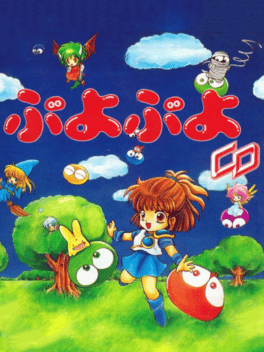
A PC-Engine port of the first Puyo Puyo game. Includes full voice acting for cutscenes, in addition to exclusive scenes that play when the difficulty is set to Hardest. Most notably, it also allows both players to choose who they want to play as, making all of the characters playable (except everybody after Witch).Pachio-kun: Puzzle Castle
1994
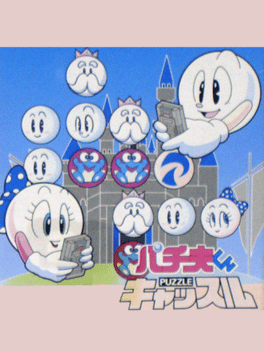
Coconuts and Marionette bring you this Pachio-kun game for the Game Boy.Puzzle & Action: Tant-R GG
1994
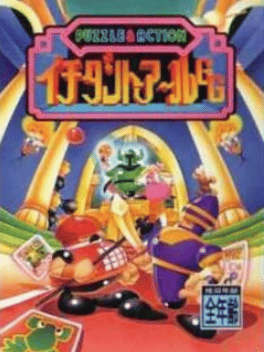
Puzzle & Action: Tant-R is a Miscellaneous game, developed by CRI and published by Sega, which was released in Japan in 1994.Nontan to Issho: Kuru-kuru Puzzle
1994
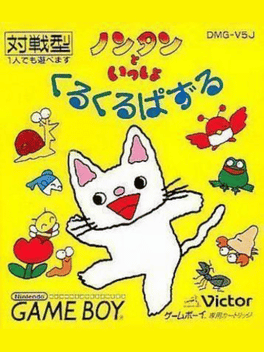
Nontan to Issho: Kuru Kuru Puzzle is a game based on a children’s anime and book series telling the story of a young kitten and his animal friends. It is a block puzzle game the likes of Tetris and Baku Baku Animal, where the goal is to stack blocks in a way that matching ones are connected and therefore disappear. Unlike in Tetris games though, the blocks cannot be rotated – they can instead be flipped around to reveal different blocks on the reverse side. There’s also the usual bonus blocks that remove entire rows, as is common in this genre. A two-player mode is also featured, even though unlike what usually happens in two-player gameplay of puzzle games, the actions of one player will not affect the other directly (like having more blocks falling on your opponent’s screen after you scored pretty high).Dharma Dojo
1994
Dharma Dojo
1994
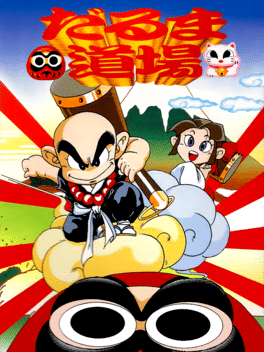
Dharma Dojo, or Daruma Dojo, is a puzzle game with stacks of blocks that the player bashes through to a gutter that collects the blocks at the bottom of the screen. By removing blocks of the same type, the player eliminates them. In the game's story, the daruma/dharma dolls and colored blocks are summoned by oni to terrorize the populace, and it's down to the player character (the player can choose from a male and a female character) to remove them. Dharma Dojo was released to the Arcade in 1994 and ported to the Super Famicom the following year.Raccoon Rascal
1994
Raccoon Rascal
1994
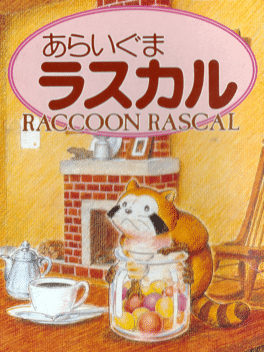
The 11 year old Robby North and his friend Oscar live in Wisconsin. During fishing they hear a shoot. A racoon-mother was shot. Robby takes the baby of this racoon with him and cares for it. The boy names the racoon Rascal. Guide Rascal through puzzles and trouble and find Robby!Olivia's Mystery
1994
Olivia's Mystery
1994
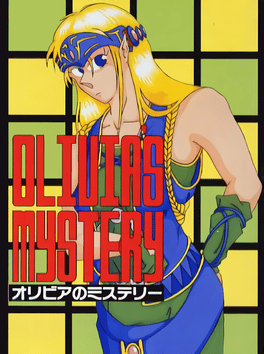
Olivia's Mystery is a Puzzle game, published by Altron, which was released in Japan in 1994.Super Loopz
1994
Super Loopz
1994
Super Loopz is a revamped version of Loopz. Feature enhanced graphics and new musics, but the same gameplay: sort of Tetris encounter Pipe Dream. Tubes of random shapes drop on to a board, and by rotating and placing them you have to make shapes that join up in loops. Once you have placed a piece you can't remove it, except by using a special items which destroy every part of an incomplete loop it touches; every tenth loop takes you to a new level.Kokontouzai Eto Monogatari
1994
This is a strange game that deals with two cats; a pink and white one (player 1) known as Nyan and a brown and white one (player 2) known as Dodonpa. One day, Nyan questions the Chinese Zodiac and wonders why a cat isn't part of the zodiac while others like the dog and monkey are. Dodonpa isn't really bothered by it so much and sort of teases Nyan but then he too wonders about it and Nyan (feeling inspired) gets optimistic. The story of the game has Nyan and Dodonpa eventually going to meet a fairy after battling 12 animals (specifically of the Chinese Zodiac) in order to make the request that cats be part of the zodiac. Apparently, if you play with player 2 and beat the game, the ending is slightly different or so I hear. Kokontouzai Eto Monogatari (KEM from this point forward) roughly translates into "Chinese Astrology Story for All Ages". However, the game has a lot of stages for a puzzle game (13 to be exact) and the speed picks up pretty quickly so as childish as it looks, it definitely requires skill on thTrolls on Treasure Island
1994
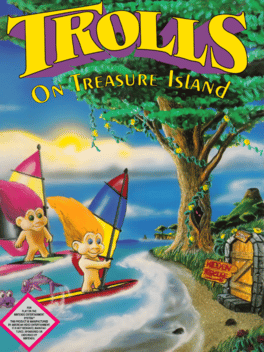
In this puzzle game, the player controls one of the trolls as they bounce back and forth across the screen trying to acquire the jewels on the playfield. The one caveat is that the players troll has to match the color of the jewel he or she is trying to collect. To become the correct color to snatch up the jewels, the player has to bounce across a paint can that will change your trolls hair to that of the same color as the paint can. The object in each puzzle is to retrieve all the treasures in a room without their character falling prey to the various enemies in rooms or running out of time.Master Labyrinth
1994
Quadpawn
1994
Quadpawn
1994
Quadpawn is a short chess-like puzzle game where you and your opponent both control four pawns. These pawns move with the same rules as chess pawns. Multiple rounds can be played and tally of the score is kept for all rounds played. The goal of the game is to try to get one of your pawns to the starting row of your opponent's pawns. The player loses a round if a black pawn reaches the player's starting row or if the pawns are locked up in such a way that doesn't allow anyone to move.Jan Jan Paradise
1994
Gumbo
1994
Gun Dealer '94
1994
Gun Dealer '94
1994
This upgrade to one of Dooyongs early games brings first and foremost one important addition: Competetive gameplay. Playing good hands now throws more cards at the opponent's field, disturbing their plans. As the deck is always limited, with remaining cards substracting from the score, matches are quick and intense. Once again an "adult" game, Gun Dealer 94 lazily uses the same artwork as Sadari. New is the picture of an "ugly" woman displayed to mock the player each time the computer wins. In Japan, the game was known as Primella and published by NTC this time, like all of Dooyongs games after the first Gun Dealer.WildSnake
1994
WildSnake
1994
WildSnake is a puzzle game in which the player must manage falling snakes in a confined space and keep the snakes from reaching the top of the space. Snakes fall and slither until they reach a resting spot on the floor of the space. A snake will destroy any other snakes of the same color and pattern that it touches with its head on the way down, which often has the chain effect of loosening the pile of snakes so that all the snakes slither into new positions, possibly eliminating even more snakes. The game is played against a selection of backgrounds including desert, forest, water, or grass. Further, there are 7 game grids including the standard grid (a tall rectangle), X, plus, flask, Diabolo (an hourglass pattern), T-square, and obstacle (with a number of intermediate blocks). The player starts out as a nestling and earns higher and higher distinctions taken from the snake realm (garter snake, water snake, boa, mambo, python, king cobra, etc.) as more snakes are cleared. Also, as the level increases. more type