New Racing Games - Page 148

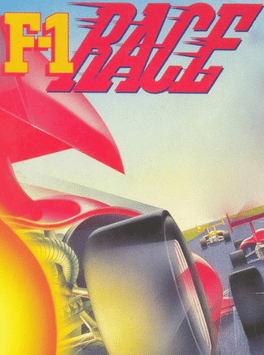
F-1 Race
1990
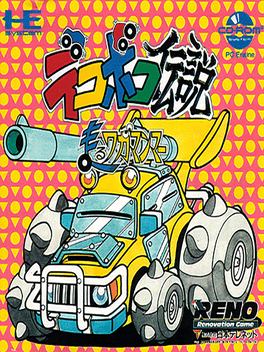
Dekoboko Densetsu: Hashiru Wagamanma
1990
Dekoboko Densetsu is a humorous game that combines elements of arcade action and racing. Up to five players can compete in the races. All the stages are vertically-scrolling (top-down), with the cars represented as small sprites of different colors. The player's goal is not only to beat the other cars, but also reach the finish line safely: each car has limited hit points, and continuously receives damage during the race.Astro Fang: Super Machine
1990
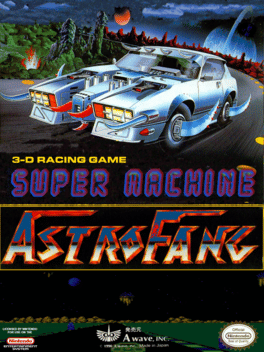
Astro Fang: Super Machine is a Family Computer video game that was released for an exclusively Japanese market in 1990. Somewhere in the galaxy lies the planet RS-121 – a desolate planet that has suffered terrible disasters which made life impossible. Only one construction still remains on the planet – a highway called the Black Line. It is said than an ancient legend is somehow connected to this highway. Players must knock enemies off the road by using missiles before they can knock him off the same highway. Automobile repair shops can be found where cars can be repaired and re-supplied with much-needed weapons. The playable vehicle resembles a 1982 DeLorean DMC-12 while the unplayable enemy vehicles resemble dune buggies. The game has an infinite amount of continues and a meter appears on the bottom left-hand side of the screen to remind how close the player is to achieving the goal.Monster Truck
1990
Monster Truck
1990
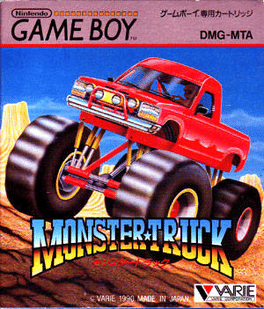
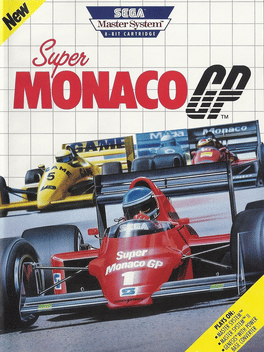
Monster Truck is a Racing game, developed by Another and published by Varie, which was released in Japan in 1990.Super Monaco GP
1990
Sunsoft Grand Prix
1990
F1 Circus
1990
F1 Circus
1990
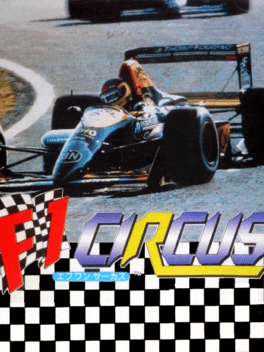
The first game in Nichibutsu's Formula One top-down racing series. F1 Circus is a top-down Formula 1 racing game and the first game in Nihon Bussan's F1 Circus series. It was first released on the PC Engine in 1990, but a modified version - also partially based on this game's sequel, F1 Circus '91 - would later be released on the Famicom in 1992. As with every other game in the series, the game was never localized in North America or Europe. The game uses the real life names of drivers and teams from Formula 1, like Nigel Mansell and Ferrari. The series would continue to acquire the various licenses needed to use real names from Formula 1.Burnin' Rubber
1990
Burnin' Rubber
1990
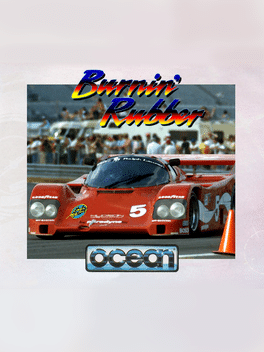
Burnin' Rubber, a GX4000/CPC plus launch/bundle title (and one of the few exclusives for the range), is an arcade-style racing game, much inspired by the developers' earlier WEC Le Mans. The game depicts a Le Mans-inspired endurance race over four laps consisting of four checkpoints each. The game begins with a qualification lap before the race itself starts. Racing is arcade-style, with Outrun-style 3rd person perspective view graphics and a timer that indicates how much time is left before the next checkpoint has to be reached. Opponents fill the track and billboards fill its sidelines - crashing too fast into either displays a spectacular crash animation and takes valuable time off the clock. The game offers a choice of automatic or manual gear switching. The time of day passes during racing, thus offering driving in sunsets and sunrises and during the night.Bigfoot
1990
Bigfoot
1990
Bigfoot is a monster-truck racing game developed by Beam Software Company for the Nintendo Entertainment System.Rad Racer II
1990
Rad Racer II
1990
star 6Speed, Thrills and Glory! Feel the exhilaration of road racing with lightening fast Turbo Boost acceleration to 250 miles per hour. Plus the sensational ups and downs of zooming over ruggeg terrain in the hottest cars on the road today. All it takes to handle the action is skill, reflexes and nerves of steel. Drive to Win! Rad Racer II gives you all-out access to 8 of the most challenging race courses ever! Including the streets of New York City, Las Vegas and San Francisco. You'll feel more sense of speed and more responsiveness than ever before. And you can test your skills in both nighttime and daytime driving conditions. With realistic new graphics, dynamic new music and perilous new challenges -including dizzying spinouts that make Rad Racer II the most fun you've ever had behind the wheel!World Grand Prix 2
1990
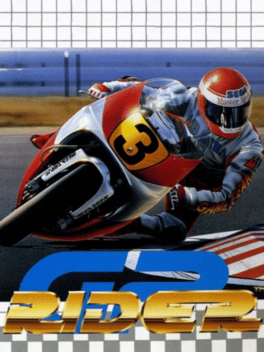
GP Rider
1990
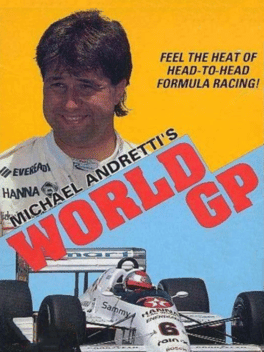
Michael Andretti's World GP
1990
Superstar Michael Andretti personally guides you through the perilous and exciting world of Grand Prix Racing! Four of the most powerful racing machines are your to command on 16 famous international Grand Prix courses from around the globe! Hone your driving skills or challenge the best - it's all up to you in this amazing simulation of Formula One racing!Over Drive
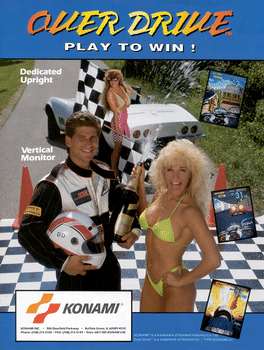
1990
Galaxy 5000
1990
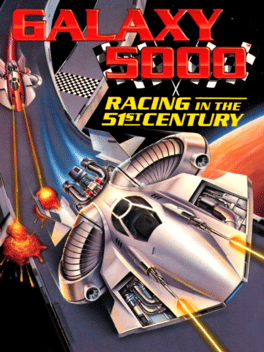
Galaxy 5000
1990
The future of Grand Prix racing is in outer space. And you're one of the hottest turbo-racers in the solar system. But are you tough enough to win the ultimate racing challenge, the GALAXY 5000? Dozens of track objects, including land mines, gun turrets, speed zappers, warp doors and deadly solar spikes! Awesome digitized sound effects. Hear the driver scream as he falls off the track. Use your winnings to repair damage, or upgrade to a more powerful turbo-craft!Double Axle
1990
Double Axle
1990
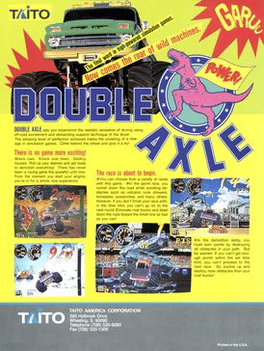
Double Axle is a monster truck racing game created by Taito in 1991. The object of the game is to complete every single race by coming in 3rd Place or better. If the player fails to do so, the game will end. By completing races successfully, the player will be awarded prize money depending on how well they did. This game also features the option of upgrading the monster truck, which is essential for completing harder races. Additional money can be earned by completing the bonus stages after each race. The Japanese variant of Double Axle was as Power Wheels, featuring slightly modified gameplay.Chase H.Q.
1990
Chase H.Q.
1990
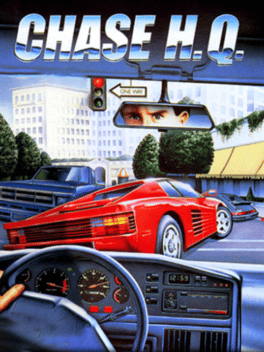
As an undercover agent of Chase Headquarters, your job is to patrol the streets and track down five criminals. You are given a mission briefing before you start which gives information on the suspect and what car they drive. Then you drive across the city without crashing into other cars, and catch up with the criminal's car. To arrest the suspects, you must keep bumping into their car until it is no longer functional. And you have to do this under a strict time limit. You can't afford to crash into cars or buildings or you waste time getting on the road again.Riding Hero
1990
Death Race
1990
Death Race
1990
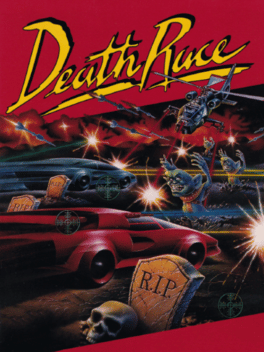
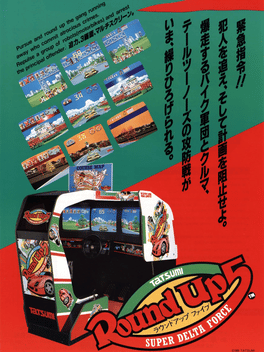
Death Race is an unlicensed game developed by American Game Cartridges Inc. that was released on the Nintendo Entertainment System in 1990. It was also released by Home Entertainment Suppliers for an Australian release. The game is a remake of the 1976 arcade game by Exidy.Round Up 5: Super Delta Force
1989
Round Up 5: Super Delta Force is a clone of Chase HQ, featuring flat-shaded cars and a goofy depiction of various American cities. Each boss car now comes surrounded by armed motorcyclists that must be defeated.