New Racing Games - Page 149

Round Up 5: Super Delta Force
1989
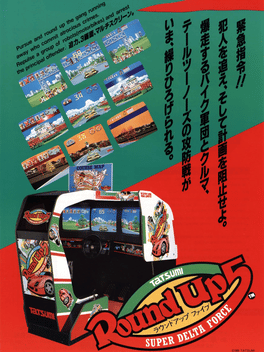
Round Up 5: Super Delta Force is a clone of Chase HQ, featuring flat-shaded cars and a goofy depiction of various American cities. Each boss car now comes surrounded by armed motorcyclists that must be defeated.Turbo Champions
1989
Turbo Champions
1989
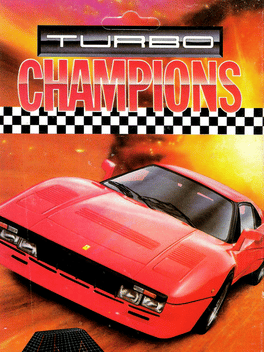
Turbo Champions is a straight and to-the-point sports racer: you compete against the clock in a variety of courses, navigating tunnels and sharp turns while avoiding other cars, gas trucks, various road obstacles and the likes. Highlight features include detailed animations for multiple types of slides and crashes, a fast graphical engine that smoothly zooms sprites and text (and scales with CPU power), and a course designer where you create, edit and customize your own tracks.Futur Racer
1989
Futur Racer
1989
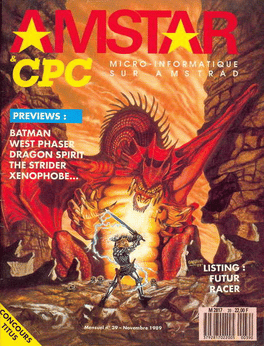
This futuristic racing game was published as a type-in listing in the November 1989 issue of Amstar & CPC magazine. It contains five courses.Super Sprint
1989
OutRun
1989
OutRun
1989
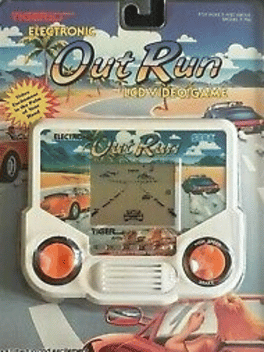
The LCD version of OutRun is a watered-down version of the arcade game OutRun created by Tiger Electronics. Two versions were created - a handheld version, and a large tabletop unit, although the game itself is presumed to be identical. OutRun is similar to several other LCD games on the market - you simply drive forward and try to avoid traffic. There is both a high and low gear, much like the arcade version.Hang-On
1989
Hang-On
1989
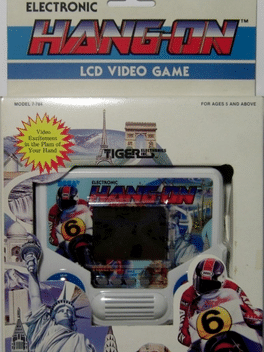
Electronic Hang-On is a watered-down version of the arcade game Hang-On created by Tiger Electronics. It was released in 1989.Egyptian Run
1989
Egyptian Run
1989
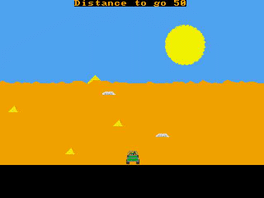
Egyptian Run is a freeware game release for the Amiga microcomputer in which the player must run through a desert.Tunnels of Armageddon
1989
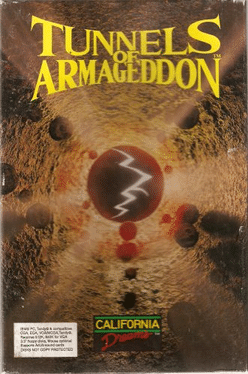
Your ship has minimal shields to protect you from slamming into walls as you navigate the deep underground tunnels. But it's not easy: You'll have no idea which tunnels are the fastest/shortest until a split second before you get to them, and there are alien weapons trying to destroy you along the way. If you manage to complete the run and save the earth, you can tell the program to randomly generate an entirely new game with different tunnels for endless replayability.E-Type
1989
DeathTrack
1989
DeathTrack
1989
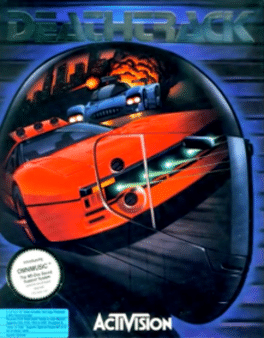
There are two ways to win a race: be the first, or be the only one. Based in a futuristic America, the player races on various tracks across the country for money, which can be spent on armor, weapons and other modifications to protect and use against the competition. The player chooses from one of three cars (either "The Hellcat" for high speed, "The Crusher" for high firepower or "The Pitbull" for heavy armor).Yasuda Fire & Marine: Safety Rally
1989
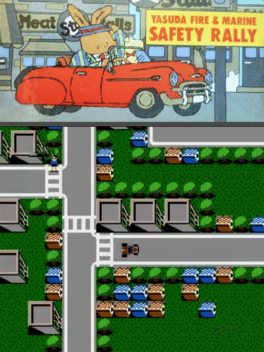
This game was not sold in stores but rather it was distributed by the Yasuda insurance company in 1989.R.C. Grand Prix
1989
R.C. Grand Prix
1989
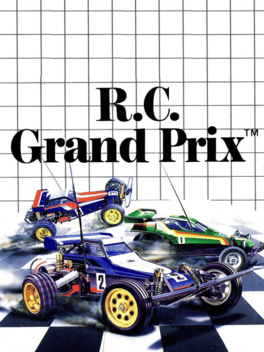
R.C. Grand Prix is a Driving game, developed by Imagineering Inc and published by Absolute Entertainment, which was released in 1992.Street Rod
1989
Street Rod
1989
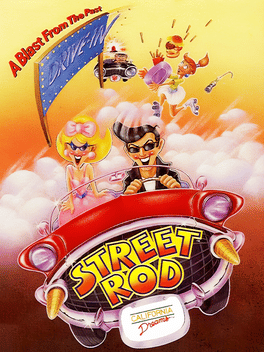
star 8.1Year is 1963 and you're one of the hotshots aspiring to be king of the county. You're given a small sum of money to buy your first car. Tune it for maximum performance and off you go. In the diner where other hotshots are waiting to take your prized possession, you race for money and pink slips and if you win, you get to take home their cars!Highway Patrol II
1989
American Turbo-King
1989
Chicago 90
1989
Chicago 90
1989
Chicago 90 is an Action/racing game developed by Microids in 1989 which provides two game modes : one can play both gangsters and policemen with two different goals and strategies. In the "gangsters mode", you simply have to escape the city while avoiding the cops. In the "police mode", you have to control 5 police cars in order to prevent the gangsters from escaping the city and arrest them. Those two modes give some diversity to the game although its expectancy is a little short.Taito Chase H.Q.
1989
Taito Chase H.Q.
1989
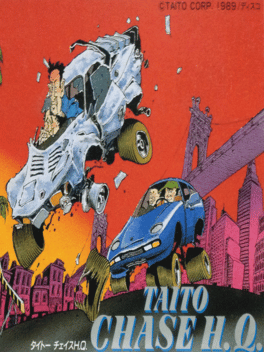
The fastest, most thrilling, 3D driving game yet! Take the wheel of your turbo-charged Porsche as you and your partner go in pursuit of dangerous criminals all driving an evil array of souped-up roadsters. TURBO BOOST! Need to catch up in a hurry? Well, just one press of your Turbo Button will leave your eyes in the back of your head! Barrelling through the city streets, along the roughest of dirt tracks and through busy tunnels - if you can hold the line!S.C.I.: Special Criminal Investigation
1989
Arcade Commodore C64/128/MAX ZX Spectrum Wii Sega Mega Drive/Genesis Atari ST/STE TurboGrafx-16/PC Engine Amiga Amstrad CPC Sega Master System/Mark IIIstar 6.9Chase H.Q. II- Special Criminal Investigation- continuing where Chase H.Q. left off. Your mission is to track down, chase and apprehend the dangerous criminals. It's faster- explosive power sends you bulleting through various terrains- hold the line or plough the field! It's tougher- the criminals wield some heavy hardware- but so do you! You can shoot but you must dodge their flak... heavy gunfire, trucks unloading their cargo onto your bonnet... it's the meanest pursuit game to hit the micro screen. The extra features will leave you gasping for extended play- weather changes, bodyguard squads, grenade lobbing bikers, gun-choppers... just play it!... we dare you to stop!Bari Bari Densetsu
1989
Bari Bari Densetsu
1989
Based on a manga, Bari Bari Densetsu is something of a rare breed on the Engine - a motorcycle racing game. You can pretty much guess how it works - there's a World GP mode where you have to compete in a variety of races in order and a Travel mode that let's you pick a track of your choice. Also to consider is the gubbins that make up your bike, such as tyres, engine, brakes etc as these have an effect depending on the type of course and the weather conditions. Races are started with a qualifying lap that lets you get the feel of the track, followed by the race proper. You are then placed and can hopefully move on to the next country.