New Games - Page 13087

Blue Almanac
1991
Blue Almanac
1991
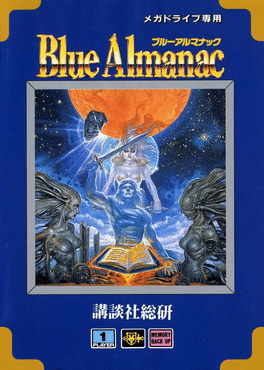
Blue Almanac is a 1991 RPG for the Sega Mega Drive by HOT-B published by Kodansha Research Institute for some reason. While it was only released in Japan, Kodansha was planning on translating the game as Star Odyssey, but the translation was cancelled for unknown reasons. Two prototypes were independently discovered by drx and by Brandon Cobb, head of Super Fighter Team, who subsequently acquired a license to complete the translation from HOT-B successor company Starfish (who like to revisit old properties), with intentions on releasing it on the twentieth anniversary of the original release. Despite his PR claiming that he received an "unofficial license" from Sega to distribute the game, Sega really asked him to remove their copyrights and trademarks, consequently making the translation fully unlicensed (while Blue Almanac is fully licensed).Power Eleven
1991
Power Eleven
1991
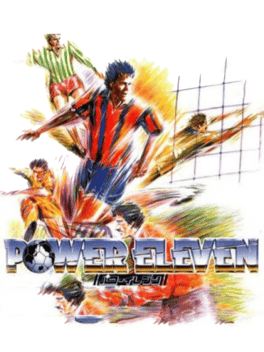
Power Eleven is a 1991 Japan-exclusive football video game with top-down perspective, published by Hudson Soft for the PC Engine. It was part of the Power Sports Series, a series of sports games released between 1988 and 1998.Battle Dodgeball: Toukyuu Daigekitotsu!
1991
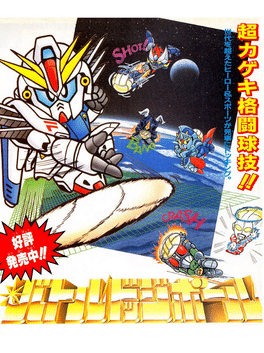
Battle Dodge Ball is a part of the Japanese exclusive Compati Hero Series. Gundam, Kamen Rider V3, and Ultraman Taro are the main representatives of the 'heroes' side of the six teams in Battle Dodge Ball, with Zeong, Ika Devil, and Zetton rounding out as the villains. The general gist of the game is that you can choose one of the six teams. You then fight each of the other five teams once per round in a short dodgeball game, two-on-two. Unlike normal dodgeball, you are not knocked out with a single hit. Rather, in Battle Dodge Ball, each character has a specific amount of HP. Once he takes enough hits to lose all his HP, he is out of the match. The game also adds an RPG element in the ability to gain experience at the end of a match, win or lose, which can then be used to power up stats of your team's players.Ganbare Goemon: Yukihime Kyuushutsu Emaki
1991
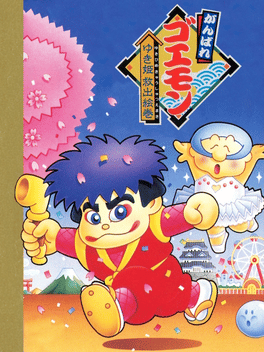
Ganbare Goemon: Yukihime Kyuushutsu Emaki is is a light-hearted action-adventure game for 1-2 players and the first game in the Ganbare Goemon series for the Super Famicom. It was later released in the Western market as The Legend of the Mystical Ninja with several changes.Toki
1991
Santa-kun
1991
Santa-kun
1991
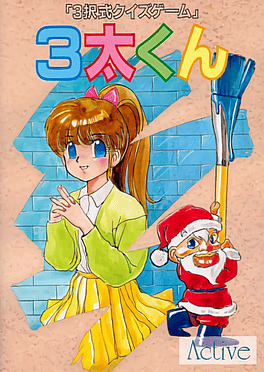
A nameless otaku (which roughly corresponds to the English geek, albeit with a focused "nerdiness" in all things anime) encounters an aggressively-looking Santa Claus, who offers to test his knowledge; if he succeeds, he can have his way with a few magically summoned beautiful girls... Santa-kun is a quiz simulation. Santa asks a question, and the player must choose the correct answer among the three available ones. The game consists of several "matches"; in the beginning of each, a fully dressed young girl is introduced. A match consists of three rounds (25 questions all together); after each round, the girl removes part of her clothing. Upon successful completion of a match, the girl is shown fully naked. The questions revolve (with a few exceptions) around video games and computer technology.Ys
1991
Ys
1991
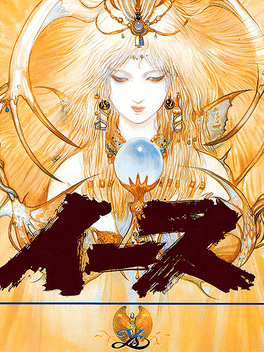
Ancient Ys Vanished is a remake of Ys: The Vanished Omens. Story-wise, it is identical to the original version. However, there are more characters in the towns, and some of them have additional dialogue lines.Kyatto Ninden Teyandee
1991
star 8Players take the role of the three main cats and otasuke (rescue team) members, who can be switched to at any time and have special abilities to progress through the game. The game features most of the characters in the series as well as an additional villain, a mysterious scientist named Dr. Purple (Dr. パープ).Disney's The Little Mermaid
1991
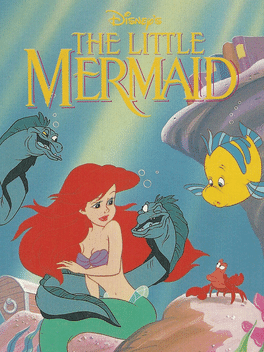
star 6.7In this version of Disney's The Little Mermaid you play as Ariel the mermaid. Ariel has already met Eric, and they plan to wed, but the sea-witch Ursala has taken control of the ocean! So Ariel (After explaining what's going on to Eric) becomes a mermaid once more and sets off to rescue the sea. The game takes place from a side view and Ariel (Swimming most of the time, but hopping around on the land occasionally) can shoot bubbles to trap her foes and can then throw them at each other. She can also dig through sand to find treasure and pick up sea shells to help her break chests open.Fantasy Zone
1991
Fantasy Zone
1991
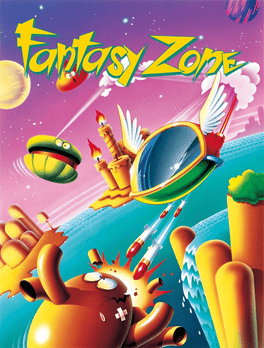
star 6.3Originally titled "Fantasy Zone Gear: Opa Opa Jr. no Bōken", this game is technically a sequel to the first Fantasy Zone, but got released under the same name outside of Japan. Like the other Fantasy Zone titles, this is a side-scrolling shooter where you can fly through the levels in both directions, with a boss fight waiting after you destroyed all "base" enemies (they are bigger than the regular enemies and static). Along the way you can upgrade your ship in shops, if you collect enough coins from destroyed enemies.Final Fantasy IV
1991
Final Fantasy IV
1991
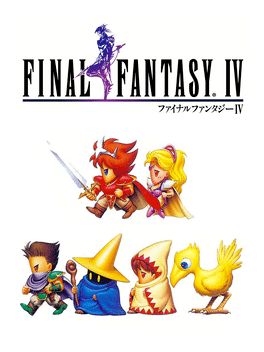
star 8.2FINAL FANTASY IV is the fourth main installment in the FINAL FANTASY series, developed and published by Squaresoft. It was released in July 1991 for the Super Nintendo Entertainment System in Japan, and released as FINAL FANTASY II in North America in October 1991 with alterations made due to Nintendo of America's guidelines at the time.Bonk's Revenge
1991
Bonk's Revenge
1991
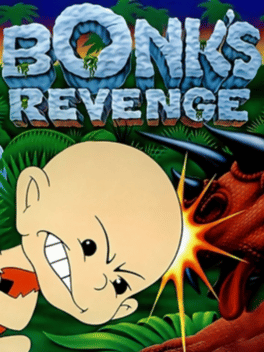
star 7.8In Bonk's Revenge, King Drool hijacks half the moon in an attempt for world domination! Of course it's up to our favorite prehistoric hero to stop him, and so Bonk embarks on an all-new quest to save the world. Bonk’s second adventure leads him through 7 exotic levels, from sunny beaches to winter wonderlands, including 8 special bonus stages. Bonk’s new enemies include bad-attitude dinosaurs, vicious piranhas, oversized insects and many more treacherous foes. However, as always, Bonk comes packed with an arsenal of his very own dangerous moves. Staying true to his name, Bonk’s ultimate weapon is still his gigantic head! Bonk can pummel his enemies into submission with his signature headbutt or shake the very ground they walk on by pile-driving straight into the earth. A master of his terrain, Bonk can also climb various objects using his razor sharp teeth. Of course, what would Bonk be without his favorite caveman power-ups? That’s right, the roasted meat is back, but this time with an all new Bonk! ByShikinjoh
1991
Shikinjoh
1991
Shi-Kin-Joh ("Forbidden City") is a puzzle game similar to Sokoban in which the player must reach a goal by pushing oversized mahjong tiles which block the path. When two matching tiles are pushed next to each other, they disappear. Other types of tiles will lock any movable tiles that come in contact with them. The Megadrive version includes five different sound & graphics sets, dozens of puzzles to solve, and a "special puzzle" mode where the rules of the game are changed dramatically. There is also a puzzle construction mode where custom puzzles can be created. Game progress is saved using passwords.Magical Taluluto-kun
1991
Magical Taluluto-kun
1991
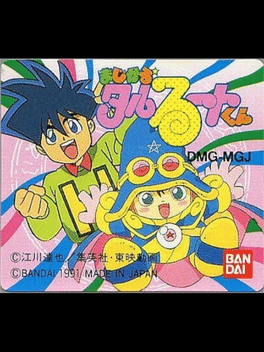
Fifth grader Edojou Honmaru is one of the most trodden-upon losers in his class, until he meets Magical Taluluto-kun. Taluluto's powers help him deal with all his hardships, such as girls, bullies, and numerous other challenges.Vain Dream
1991
Vain Dream
1991
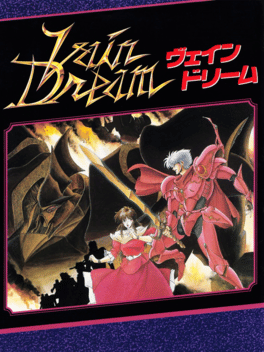
Vain Dream is a RPG with traditionally Japanese emphasis on story and characters, as well as simple game mechanics and mostly linear progression. Its turn-based combat allows free movement on the battlefield.Super R-Type
1991
Super R-Type
1991
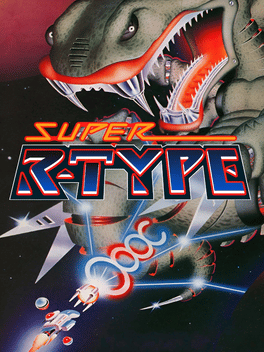
star 6.7In this SNES sequel to the arcade R-Type shooters, you are the R-9, Earth's most advanced form of defense against the evil BYDO Empire. There are seven stages you must go through, picking up power-up items to defeat the stage bosses which have returned from the arcade versions of R-Type and R-Type II. Your R-9 ship can also be united with FORCE, which are invincible units that surround your ship to protect you and can also power up and attack.Branmarker
1991
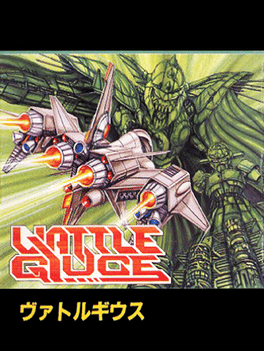
Vattle Giuce
1991
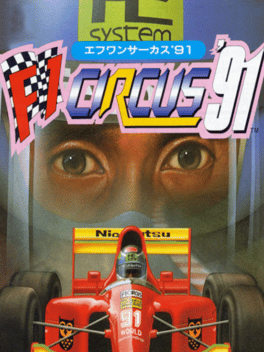
F1 Circus '91
1991
F1 Circus '91
1991
A Formula One licensed racing game for the PC Engine and the second game in Nichibutsu's F1 Circus series. F1 Circus '91 is a top-down Formula One racing game with a strong simulation element. Players kit out their vehicle, take on various prominent Formula One competitors of the era in races that track the vehicle's damage and fuel. Due to the high speeds involved, players need to pay attention to flashing icons that indicate turns coming up in the road. The game followed 1990's F1 Circus and was followed by 1992's F1 Circus '92. The series would then move to the Super Famicom as Super F1 Circus.