New Games - Page 12789

Living Ball
1994
Living Ball
1994
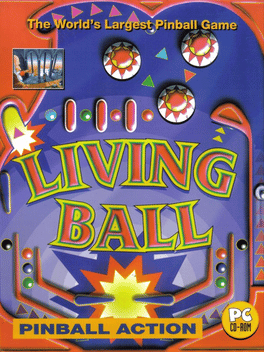
The game can be played in either normal Arcade or story-driven Adventure modes, and in Bonus mode for the minigame tables. In the game's Adventure mode, six elements ensuring the temporal and ecological balance of the planet Calypso have been stolen by three power-hungry magical princesses. A warrior needs to challenge and defeat each of the witches (Wuhan, Omdura and Freila) in their respective domains (the desert, the arctic, and metal wasteland themed tables) in order to find and retrieve the elements and restore the planet. Released in the UK for the Amiga as The Ultimate Pinball Quest.Red Babe
1994
Iron Seed
1994
Iron Seed
1994
Ironseed is a 1994 MS-DOS video game, developed and published by Channel 7. It is a space trading and combat game with real-time strategy elements. The game plays in fictional alternative reality in the future, several hundred years ahead. The game starts when the eponymous space ship, the "Ironseed", flees a theocracy on Mars. The ship is crewed by disembodied, digitized rebels originally scheduled for termination. In hastily fleeing, the ship suffers damage and gets lost in time and space. The crew finds itself in unknown space somewhere in the Milky Way with a badly damaged ship and nearly depleted fuel reserves. First objective is therefore finding resources for ship repairs and fuel while gathering intelligence about the surrounding space and also their own history. After encountering other alien species and learning about some greater threat, the ultimate goal becomes to forge an alliance of several alien races to counter this threat.Race Track
1994
Race Track
1994
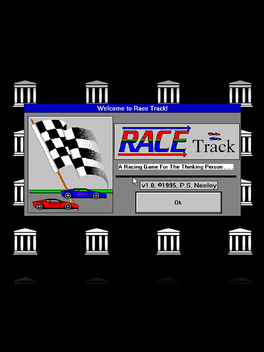
Race Track is a Windows shareware version of the classic Swiss racing simulation game. Not an arcade game, but just as exciting—it requires thinking rather than reflexes. A good example of a game based on simple rules that models the real world with amazing accuracy. Design and build your own tracks and share them with a friend. Race against a friend or the 'ghost' of the track champion. Challenging but fun, easy to learn and play, great graphics, sound effects, and MIDI background music!Links: Championship Course - Castlepines
1994
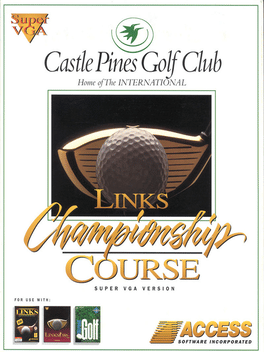
Links: Championship Course - Castle Pines Golf Club is a golf course add-on compatible with Links 386 Pro and Microsoft Golf.Team
1994
Team
1994
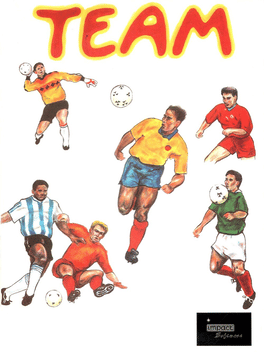
This top-down soccer game has a similar long-range look to Sensible Soccer. The ball runs close to the player, but some fine control is required. Passing involves pushing the controller in the pass direction while hitting fire. The English Premiership teams of the time are included, with 22 man squads and 8 formation options. You can play individual matches or league or cup tournaments. Match lengths can be set between 2 and 20 minutes, with 3 levels of wind, 3 levels of referee toughness, and 5 pitch styles. Replays can be viewed in 3 speeds, and stored for later viewing.Troggle Trouble Math
1994
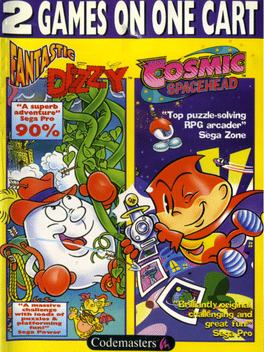
Codemasters 2 in 1: Fantastic Dizzy + Cosmic Spacehead
1994
Codemasters 2 in 1 is a compilation of two classic titles released on the console on a single cartridge: Fantastic Dizzy and Cosmic Spacehead AKA Linus Spacehead's Cosmic Capers.Discovering America
1994
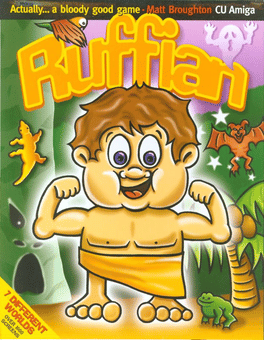
Ruffian
1994
Ruffian
1994
Ruffian is a video game developed by Moonstruck and published by Explosive-Software. The programmer behind the game was Robert Tomlinson. It was released in 1994 for the Commodore Amiga. The game is a multi-directional scrolling platformer and features 17 levels. Ruffian bears similarities to Rainbow Islands, although its levels are significantly longer.Legions
1994
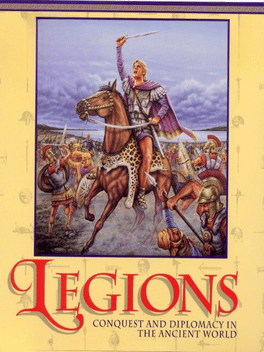
Legions
1994
In Legions, lead your empire to glory across 10 historical scenarios, from Caesar’s conquest of Gaul to the rise of Charlemagne. Master diplomacy, economy, and military strategy to dominate rivals in this immersive strategy game set in the ancient world.SSN-21 Seawolf
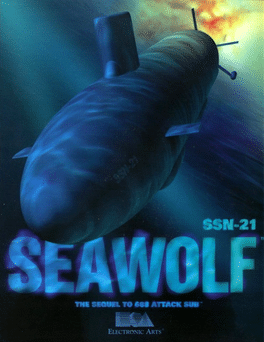
1994
Glider Pro
1994
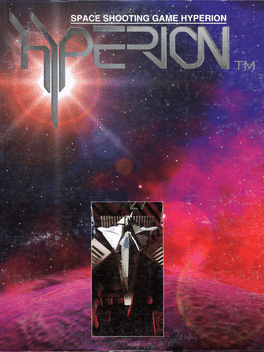
Hyperion
1994
3D Atlas
1994
3D Atlas
1994
The World Isn't Flat. Why Should Your Atlas Be? Multidimensional Imagery and Navigation - 3D spinning globes - Nine zoom levels of detail - Thousands of satellite images - 3D flights Integrated Geographical Approach - Environmental globe - Physical globe - Political globe Interactive Multimedia Exhibits - Satellite photos of major cities - Dozens of video documentaries - Time lapse photography - Thousands of statistics Examine our world in 3 different visual contexts - environmental, physical and political.Vajra Ni
1994
Romance of the Three Kingdoms IV with Power Up Kit
1994
"Romance of the Three Kingdoms Ⅳ with Power Up Kit" was released in 1994 as an expansion to the 4th release in the series. About 450 officers appear in the game and "Frontier Tribes" have been added as a diplomatic element. In battle, in addition to the standard field and castle battles, we also include final battles inside the castles and large weapons like chariots and catapults.Around the World in 80 Days
1994
star 8Around the World in 80 Days is a children's game based on the novel of the same name. It follows the English nobleman Phineas Fogg and his sidekick Sidney (a monkey) who bets that he is able to travel around the world in 80 days.Airlines
1994
Airlines
1994
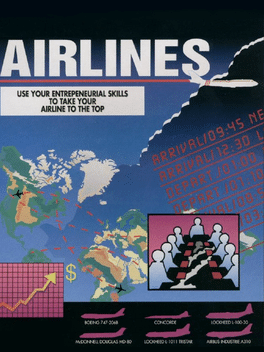
The main object of the game was to successfully set up an airline by buying aircraft, planning routes, setting ticket prices and dealing with events such as hostage and oil crises. The game had 4 airlines, a minimum of one of which was human controlled, with the rest being computer-controlled. The game begins with the year set as 1970 and as time progresses more aircraft models become available, corresponding with their first flights in reality.