New Games - Page 12290

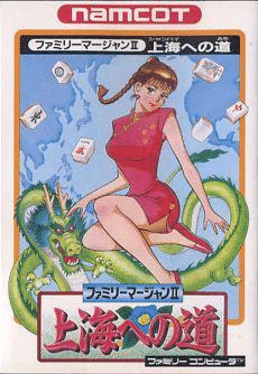
Family Mahjong II: Shanghai he no Michi
1988
Family Mahjong II: Shanghai e no Michi is a Mahjong game released only in Japan for the Nintendo Famicom. Family Mahjong II: Shanghai e no Michi is a Mahjong game and the direct sequel to Family Mahjong. In addition to the standard Mahjong mode, there is a tournament mode with a slight RPG aspect to it, in that the player can enhance certain stats after winning games in order to increase their odds in future rounds of the tournament. The game is a one-on-one version of the game, less common in real-life Mahjong games but the standard for computer adaptations due to the reduced complexity of having only a single AI opponent. Nihon Bussan was responsible for Family Mahjong II's development and was at the time fairly well known for their Mahjong Arcade games.Airwolf
1988
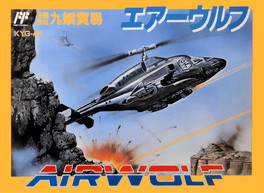
Airwolf
1988
Airwolf, based on the Donald Bellisario 80s TV show about a hi-tech military helicopter solving Cold War era missions, is a horizontal shoot-em-up. Kyugo Boueki originally created it for the Arcades in 1987 and it would receive an NES home version the following year. It is not to be confused with the 1989 Airwolf licensed game from Beam Entertainment and Acclaim. The player receives their mission via an introductory cutscene, chooses the weapon load-out for the Airwolf that best suits the kind of resistance they're likely to face (so an emphasis on bombs if there's expected to be a lot of ground units) and is sent off to complete the mission. For the boss battles, the game will occasionally switch to a first-person view in which the controller guides a set of crosshairs on screen. The goal of these battles is to shoot down each element of the boss (guns, etc.) as well as any projectiles the boss sends the player's way.Rockman 2: Dr. Wily no Nazo
1988
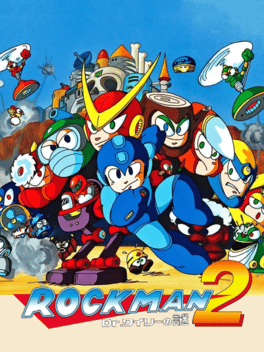
Rockman 2: Dr. Wily no Nazo is the original Japanese version of Mega Man 2. The Japanese version of the game doesn't have difficulty settings, having its difficulty the same as the Difficult setting of the Western version, thus, being more difficult in comparison with the Normal mode of Mega Man 2.Shoukoushi Cedie
1988
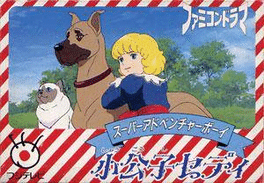
Shoukoushi Cedie
1988
A NES adventure game based on the anime of the same name, which is an adaptation of Little Lord Fauntleroy. Shoukoushi Ceddie (sometimes Cedie) is the Japanese title of the 1886 Frances Hodgson Burnett novel Little Lord Fauntleroy, about a down-to-earth kid from New York discovering his heritage as the heir to an Earldom in England, moving to his inherited estate and learning how to become a nobleman. Fuji Television created a 43 episode anime series based on the novel in 1988, and this video game adaptation is based on that TV show. Fuji Television is perhaps best known in western video game circles for being responsible for Doki Doki Panic (the game the American/European Super Mario Bros 2 is based on) as well as airing GameCenter CX (or Retro Game Master). The game plays much like a regular Famicom adventure game: The player walks around, talks to people and finds items which are used to solve puzzles. However, rather than selecting destinations from a menu, the player manually walks around the different localPro Yakyuu? Satsujin Jiken!
1988
A comedic adventure game that satirizes the heavy number of baseball and murder mystery games for the Famicom. It was developed and published by Capcom in Japan only. Pro Yakyuu? Satsujin Jiken! ("Pro Baseball? Murder Case!") is a slightly tongue-in-cheek parody of the Famicom's overabundance of Portopia style murder mystery adventure games and baseball simulators, especially the annual Pro Yakyuu Family Stadium releases. The player controls a professional baseball player that's been framed for a murder and must solve the case while on the lam. Capcom inserted various additional modes into the game, such as mini-games and a shoot-em-up sequence whenever the protagonist is caught by the cops. This game is perhaps notable for being released on the same day in Japan - December 24th 1988 - as another Capcom game: Rockman 2. One of these sort of overshadowed the other.Osomatsu-kun Hachamecha Gekijou
1988
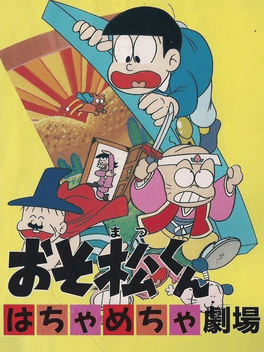
The game was based on the Manga/Anime series Osomatsu-kun by Fujio Akatsuka; players controlled the title character and encountered many of the series' characters in a strange (but comical) world.Akira
1988
Akira
1988
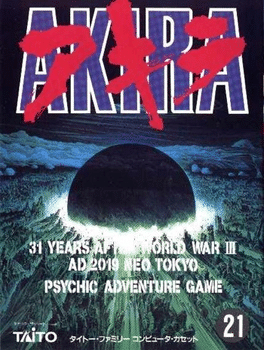
star 4.7Akira is a 1988 adventure video game by TOSE for the Family Computer console exclusively in Japan. It is based on Akira, the 1988 animated film version of Katsuhiro Otomo's manga of the same name.Sorcerian Additional Scenario Vol. 3: Pyramid Sorcerian
1988
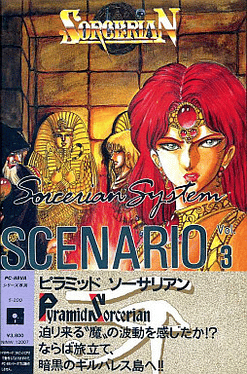
The third expansion pack to Sorcerian containing five new scenarios.Tarot
1988
Tarot
1988
Fortune-telling interactive software that predicts the player's fate with a virtual deck of tarot cards. It was developed and published by Scorpion Soft for the Famicom Disk System in Japan only.Xevious: Fardraut Saga
1988
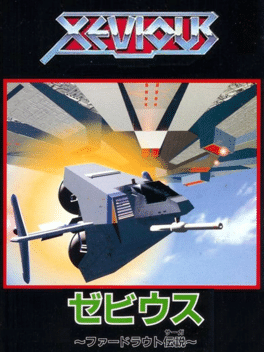
A vertically-scrolling shoot 'em up in the Xevious franchise. Adds bosses, power-ups and a story to the Xevious model.The Old Village Story
1988
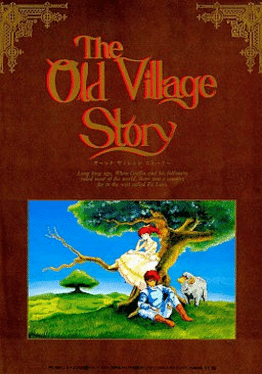
An adventure game developed by Enix that follows the stories of Shion and Lisa Lisa in a small village town.Goal!
1988
Goal!
1988
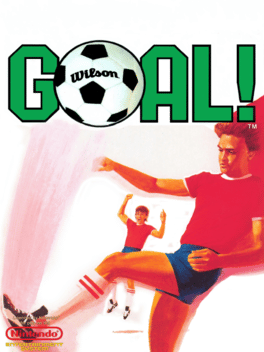
Goal! is a soccer game from an angled overhead point of view, with the screen scrolling to follow the action. You play with a full team of 11 players, each one rated in 7 different skill categories. You can match them against a team controlled by the computer or another player. You can even team up with a friend and match your combined skills against the best computer team. Several game modes are available, including tournament mode, world cup mode, and a goal shooting competition.Tetris
1988
Tetris
1988
Tetris for Famicom is a port of the Japanese home computer version. Originally published under an incorrect licence, the game led to Henk Rogers's purchase of the Tetris licence on multiple platforms, which later led directly to further Nintendo releases. It is infamous for its control scheme, which mapped down to rotate, and A to hard drop, the opposite of most later versions which have down for drop and A for rotate. On October 1st, 2018 the game was re-released as part of the AtGames Legends Flashback. It has an updated copyright screen and remapped controls (up/B for rotate, down/A/C for hard drop). On November 1st, 2019, it was re-released on the updated Legends Flashback, Legends Ultimate Arcade, and the Adventure Flashback Blast!.Hoops
1988
Hoops
1988
Gym rats, beware! HOOPS takes you out to the asphault, where basketball is a half-court game of fast hands, faster moves and slam-jam-thank-you-Sam dunks! The legends of the Playground are all here: Mr. Doc, Jammer, Legs, Bomber, Wiz, eight players in all. You can pit them one-on-one or two-on-two. You pick the court - Eastern or Western - and you pick the rules, too. You can play against the computer or one other player. Or you can even team up with another player against the computer. You can block shots, make steals, pass off or go strong to the hoop - in fact, you control just about everything in this ultra-realistic rendition of the playground game. Except, of course, the final score. But win or lose, you know you've been in a game after you've played a game of HOOPS!Ultima I
1988
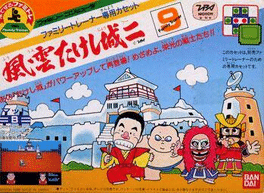
Family Trainer: Fuuun! Takeshi-jou 2
1988
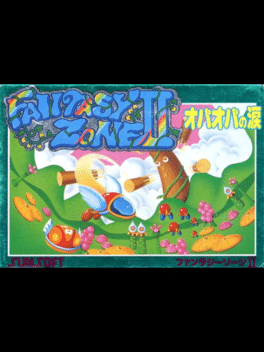
The sequel to Family Trainer: Totsugeki! Fuuun Takeshi-jou and the ninth game to be made for the NES Power Pad/Family Trainer by Bandai and Human Entertainment. Like its predecessor, it is based on Japanese TV show Takeshi's Castle.Fantasy Zone II: Opa-Opa no Namida
1988
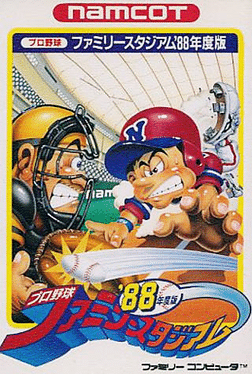
Opa-Opa is at it again in this zany return to his original homeland some ten years later. Welcome to Fantasy Zone II where perils are great and rewards even greater. During your visit you'll discover that peace is at stake once again and those who threaten it are more cunning and wicked than before. So beware, the evil Blackhearts are near and they're not alone. Scores of unusual and seemingly innocent creatures will enthusiastically approach you. But don't be fooled. They're not here to help. They're henchmen for the dark powers of the Blackhearts. And they'll sabotage every chance you've got to protect the warp gates from total ruin. So fight valiantly, because just when you think you've made it, the Blackhearts will be waiting.Pro Yakyuu Family Stadium '88: Nendo-ban
1988
Pro Yakyuu Family Stadium '88 is the third in Namco's Pro Yakyuu Family Stadium series. As with its immediate predecessor, Pro Yakyuu Family Stadium '87, it is a slightly revamped version of the original with updated rosters. As with EA Sports's present-day practice, Namco released these games annually with little to distinguish each new iteration. Most notable of the smattering of minor new additions is allowing the player to choose their venue from four options, ranging from a fully-packed stadium to a park. Though this is the second sequel to Pro Yakyuu Family Stadium, which was released in the US by Tengen as R.B.I. Baseball, Pro Yakyuu Family Stadium '88 is not to be confused with R.B.I. Baseball 3. Though the first R.B.I. Baseball was a direct localization, subsequent R.B.I. Baseball games were created in the US and are entirely independent from Namco's series.Laydock 2: Last Attack
1988
Sequel to the successful shoot 'm up Laydock. Again two jet fighters go on a joint mission, each space ship managed and controlled by a different player. The ships can be docked side-by-side or end-to-end for greater fire and fighting power. When docked one player is the pilot and the other is the weapons officer. But this game can also be played by a single player. When you progress in the game you can select more advance weapons systems to fight the over 50 different enemy characters. Compared with its predecessor there is not much changed only better graphics, more detailed backgrounds and inter level animations.Kaijuu Monogatari
1988
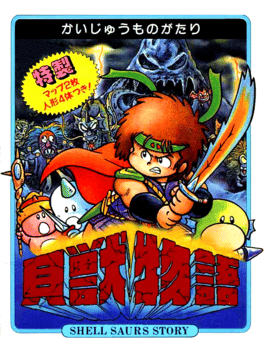
Kaijuu Monogatari
1988
Kaijū Monogatari is a role-playing video game developed by Birthday and published by Namco for Famicom, in November 1988 in Japan.