New Games - Page 12047

Rogue Trooper
1991
Rogue Trooper
1991
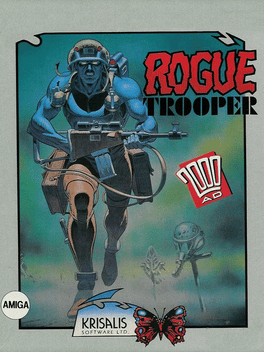
Rogue Trooper is a Genetic Infantryman (G.I.) of the future whose entire battalion was wiped out on their first mission in the Quartz Zone of Nu Earth. Rogue must navigate many platform levels and several first person style flying levels to get to the root of the treachery. He is assisted by three bio chips containing the personalities of three of his dead buddies; Gunnar, Helm and Bagman - unfortunately, Bagman's silicon is deteriorating. The plot is helped along with comic pages between levels. This game is based on the long-running 2000 AD comic character of the same name.Talking ABC's: A Day at the Beach
1991
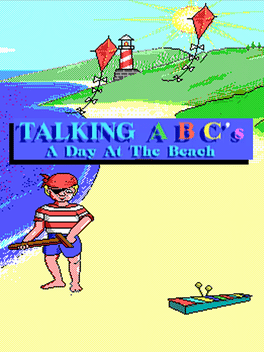
Talking ABC's: A Trip To The Beach is an early spelling game for children 2 to 6 years old. The game uses software called TurboSound to produce voice through the PC speaker, while the vast majority of games required a soundcard. There are three modes of play. In the first mode, the game announces a letter, which the player must find on the keyboard, and then an object that starts with that later is introduced and drawn onto the screen. In the second mode, the player can press any letter and the corresponding object is drawn to the screen, which the player can move wherever they want. In the third mode, three letters and three objects are displayed, and the player must draw a line between the letters and objects to make them match. Registered users received a copy of the game which displayed their child's name, and could request a CGA optimized version which was much faster for CGA users. Additionally, they were promised a free game. Later versions promised a copy of Millions of Mazes, which may or may not have beenGreen Crystal
1991
A.P.B.
1991
Klax
1991
Battle Chess
1991
Orius
1991
Orius
1991
Orius is the overseas release of Xexex, a 1991 side-scrolling shoot 'em up arcade game by Konami. It was renamed Orius in North America but kept its original title in other regions. The overseas versions introduce a variety of changes, with the most notable being the removal of all but one upgradable weapon, as well as the removal of a lives system, which is replaced with an energy bar. The enemy patterns are also changed slightly and the bosses have more health. Upon dying, the player starts where they died instead of going back to a checkpoint. The overseas versions also features two-player simultaneous co-operative play.MegaBoy
1991
MegaBoy
1991
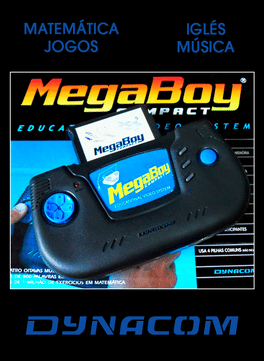
This is the educational cart for the MegaBoy console, a handheld Atari 2600 clone. It contains 16 games plus the contents of the MegaBoy compact. This console was released in Brazil and many were sold to schools.Demon Slayer 3
1991
Demon Slayer 3
1991
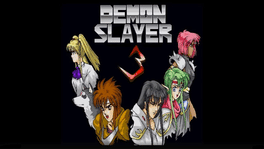
Demon Slayer 3 is an Adventure game, developed and published by T&H Software, which was released in Japan in 1991.15 Puzzle
1991
15 Puzzle
1991
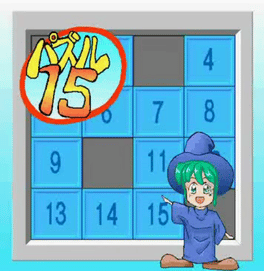
15 Puzzle, or the slide puzzle game is based on the physical slide games where you try to put the scrambled numbers back in order. This one features manga images.Off the Wall
1991
Off the Wall
1991
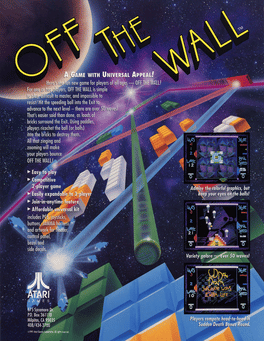
One or two players bust through blocks in various formations using a paddle and ball, trying to reach an exit located in the center of the blocks in order to advance to the next wave. There are glowing blocks which give you "Power Ups" Xextra ball, Ccatch ball, I invinciball, S slow ball, B bigger paddle, F firepower which allows you to shoot blocks with a gun located in the center of your paddle. You get points for busting blocks, but get more bonus points for blocks left when you reach the exit. This game expands upon the classic Breakout theme in several ways. There are many levels with unique variations, such as new blocks parachuting in to replace the blocks which you just busted, barrier blocks that cannot be busted, moving blocks, and objects which can deflect or place spin upon the ball. If you keep the ball in play long enough, the ball splits in two. In the two-player mode, you only get points when the ball color matches your paddle color. The ball color is determined by the last paddle to hit the ball. TLifeGenesis
1991
LifeGenesis
1991
The object of the game is to remove all the red cells from the grid. The computer will try to remove all the blue squares. You and the computer take turns adding and deleting cells.Klotski
1991
Klotski
1991
Klotski is an ancient Polish game that provides mathematical problems in the form of a small wooden game board with various sized blocks. The object of the computer game is to free the "master block," in as few moves as possible. The computer scores you on the number of moves it takes to solve a puzzle. 24 puzzles are included, as well as a puzzle editor.Stones
1991
Stones
1991
Stones is a game developed by Michael C. Miller and released in 1991 as part of Microsoft's Windows Entertainment Pack. The object is to place 90 tiles, or "stones", on a board. A tile can only be placed if it shares two of three attributes - background color, character color, or character shape - with every adjacent tile. Wild tiles may be placed anywhere regardless of attributes. The game is won when all tiles are placed or when there are no valid spaces to place the next tile.TriPeaks
1991
TriPeaks
1991
TriPeaks is a patience or solitaire card game that is akin to the solitaire games Golf and Black Hole. The game uses one deck and the object is to clear three peaks made up of cards. It was created by Robert Hogue and popularized as a result of being included in Microsoft Solitaire Collection 3.Tut's Tomb
1991
Tut's Tomb
1991
Tut's Tomb is a variation on "Pyramid", a patience or solitaire game of the Simple Addition family, where the object is to get all the cards from the pyramid to the foundation. The object of the game is to remove pairs of cards that add up to a total of 13, the equivalent of the highest valued card in the deck, from a pyramid arrangement of 28 cards. When using the standard 52-card deck, Jacks are valued at 11, Queens at 12, and Kings at 13.