New Games - Page 11932

GP-1
1993
GP-1
1993
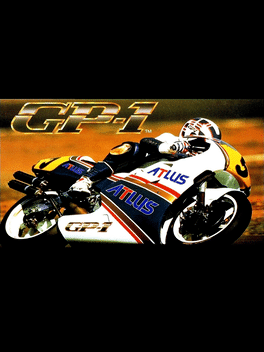
GP-1 is a motorcycle racing game developed by Genki and published by Atlus for the SNES, which was released in 1993.Golden Axe III
1993
Golden Axe III
1993
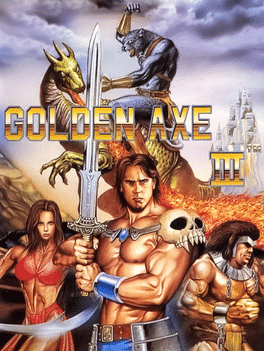
star 7.6Chaos is spreading across the land once again as the Prince of Darkness arises to conquer the world. To stop him and retrieve the legendary Golden Axe, four heroes step forward to accept the challenge.A-Rank Thunder Tanjouhen
1993
A-Rank Thunder Tanjouhen (Aランクサンダー 誕生編?) is a adventure game released in 1993 on Mega-CD. The game was developed by Riot and released by Telenet. The game's cover art was created by Yasushi Nirasawa, in his position as a model-builder for Hobby Japan magazine.Lufia & the Fortress of Doom
1993
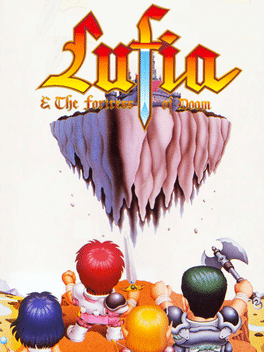
star 6.8The Sinsitrals, four masters of Doom, arrived in this land on their floating island 100 years ago. You will begin your quest by travelling through time to join in a temendous battle against them--and you will determine the outcome. When you return to present time, you and Lufia, your companion, must join forces with two others to prevent the Sinistrals from regaining control of your world. It will be a long and difficult task--This land is larger than that of most RPG games. And in the end, the balance of fate will be overturned in a contest of love and betrayal that could destroy you all.Day of the Tentacle
1993
Day of the Tentacle
1993
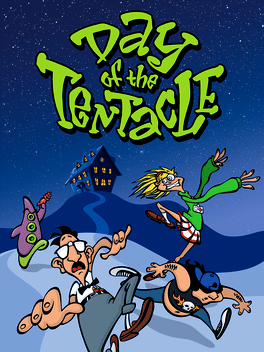
star 8.8Day of the Tentacle, also known as Maniac Mansion II: Day of the Tentacle, is a 1993 graphic adventure game developed and published by LucasArts. It is the sequel to the 1987 game Maniac Mansion. The game's plot follows Bernard Bernoulli and his friends Hoagie and Laverne as they attempt to stop the evil Purple Tentacle — a sentient, disembodied tentacle — from taking over the world. The player takes control of the three and solves puzzles while using time travel to explore different periods of history. Dave Grossman and Tim Schafer co-led the game's development, their first time in such a role. The pair carried over a limited amount of elements from Maniac Mansion and forwent the character selection aspect to simplify development. Inspirations included Chuck Jones cartoons and the history of the United States. Day of the Tentacle is the eighth LucasArts title to use the SCUMM engine, and the company's first title to feature voice acting. The game was released simultaneously on floppy disk and CD-ROM to critiBetrayal at Krondor
1993
Betrayal at Krondor
1993
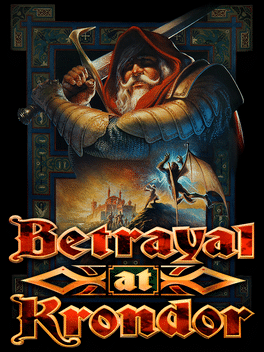
star 8Betrayal at Krondor: Midkemia – a realm of enchantment and ancient magic where elves, dwarves and man once battled an unimaginable evil across rifts in time and space. The legends tell of a boy named Pug who would become Master Magician. His friend, Tomas, would wield the unearthly armor of the Valheru and command the armies of Elvandar to fight the final titanic battle at Sethanon. In Betrayal at Krondor experience an all-new tale in the Riftwar legacy as you travel the world of Ramar.Star Cruiser II: The Odysseus Project
1993
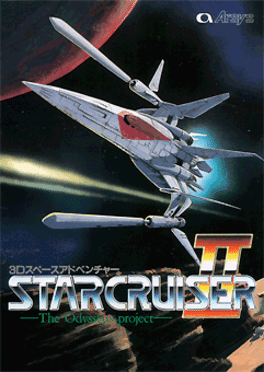
The Odysseus Project is a follow-up to Star Cruiser. Gameplay concept and visual style are very similar to that of the predecessor: it is a first-person 3D shooter with extensive exploration and customization elements, which grants it a light role-playing angle. Much of the game is spent on planet surfaces, in populated or hostile areas. Combat is action-based by default, but there is an option for a menu-based combat as well. There is a variety of weapons, armor, gadgets, and items to find or purchase. It is also possible to physically navigate a spaceship. Combat in space plays similarly to on-foot battles, with the additional of a freely rotatable camera.Pachio-kun 5
1993
Pachio-kun 5
1993
The final Famicom Pachio-kun game. Pachio-kun 5 is a Miscellaneous game, developed by Color Dreams and published by Coconuts Japan, which was released in Japan in 1993.J.League Pro Striker
1993
J.League Pro Striker
1993
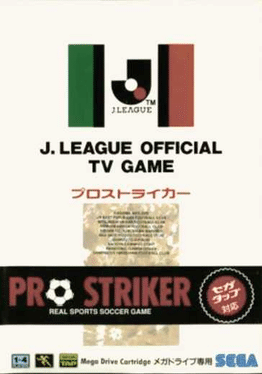
J.League Pro Striker is a 1993 football game for the Sega Mega Drive by Sega. It was the first in a long line of J. League games developed by Sega after acquiring the license to the franchise for their consoles (but it was not the first J.League game on a Sega system — Game Arts's J. League Champion Soccer, released a few months earlier on the MD, was).Shinseiki Odysselya
1993
Shinseiki Odysselya
1993
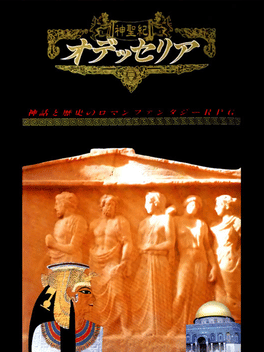
Shinseiki Odysselya is a Role-Playing game, developed and published by Vic Tokai, which was released in Japan in 1993.Hayazashi Nidan Morita Shogi
1993
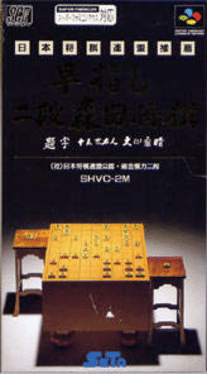
Hayazashi Nidan Morita Shogi is a Miscellaneous game, developed by Random House and published by Seta Corporation, which was released in Japan in 1993.Death Brade
1993
Death Brade
1993
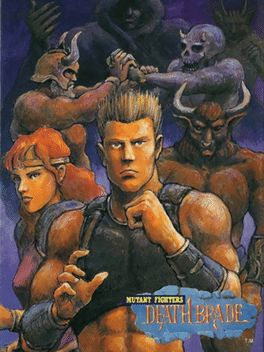
Fight! Win the tournament and take the throne. The kingdom will be yours. Win or die, there is no escaping the deathmatch! Fight on fearless warriors!Princess Maker 2
1993
Princess Maker 2
1993
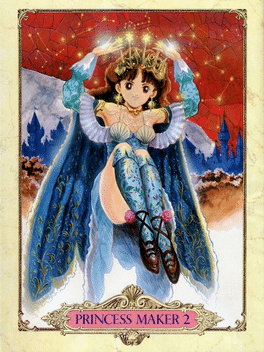
star 6.1In this fantasy game, the player takes role of a war hero who raises a girl to the age of 18. At the end of the game, the daughter goes into a line of work; what this work is, how much talent she has for it, her marital life, and her overall happiness all depend on the player's actions.Leisure Suit Larry 6: Shape Up or Slip Out!
1993
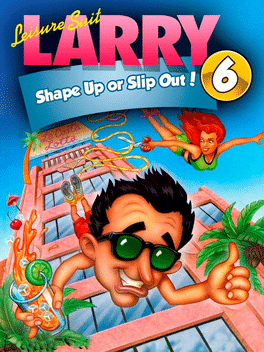
star 7.3Shape Up or Slip Out! is the fifth game in Al Lowe's Leisure Suit Larry series. All the events from the previous games are forgotten. Larry is once again single, and again his goal is to capture the interest of various ladies. By sheer coincidence, Larry finds himself on a TV Game Show called "Stallions". He wins a weekend at the Spa Resort, La Costa Lotta. Naturally, there are some beautiful women in the spa who are just dreaming about such a wonderful, handsome man as Larry! Uh... or is it really so? It is the player's goal to find out! This instalment focuses more on conversations with women and puzzles than on the storyline. The entire game is spent at La Costa Lotta. There are plenty of traditional inventory-based puzzles to solve in the game. Larry can die, but the player is allowed to try again every time that happens, without the need to restore a saved game. This is also the first Larry game with SVGA graphics, and voice-overs in the CD version.J.League Greatest Eleven Soccer
1993
Soccer game released in 1993 for the PC Engine. J.League Greatest Eleven is a soccer game for the PC Engine published by Nichibutsu/Nihon Bussan. Despite the similar name, it has no relation to Konami's J-League Winning Eleven series. The game features the Japanese soccer league's ten teams from its inaugural 1993 season. There's an exhibition mode with support for four players and a league mode where 1 or 2 players can face off against the computer. The game also offers an option to play with four human players, but only in the exhibition mode.Malibu Bikini Volleyball
1993
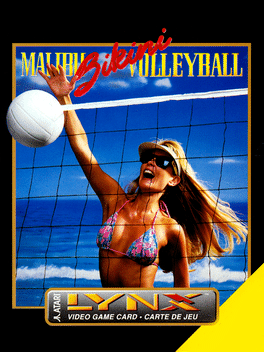
Welcome to Malibu: Volleyball capital of the world. This is where the best come to play--and show off their tans. If you want in, sign up. But keep your eyes on the ball...there'll be plenty of time for bikini-watching after the match!A-Ressha de Ikou III
1993
A-Ressha de Ikou III
1993
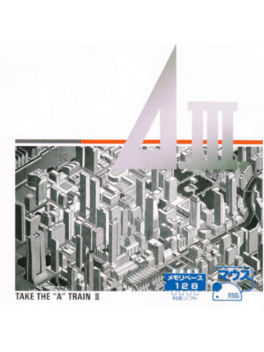
Play the part of the head of a railroad company, with the aim of creating a railroad empire, providing a successful mass transit system that will be an inspiration to the rest of the world. Another goal is to provide the impetus for a chosen city to develop. There are a number of different places to set up business each with different layouts and existing houses and businesses. The main money earners are passenger trains, that can be scheduled to pick up passengers at the times of day when the demand is high. However, in the long term you need the city to develop. This requires setting up trains that transport resources to where they are needed. These resources are used to build houses, and other buildings, increasing the number of passengers for commuter trains. As the city develops, new businesses will spring up, such as stadiums, high rise office blocks, and ski resorts. The player may also build own businesses, the success of which will depend on the local population, the presence of competing businesses, andPro Mahjong Kiwame
1993
Pro Mahjong Kiwame
1993
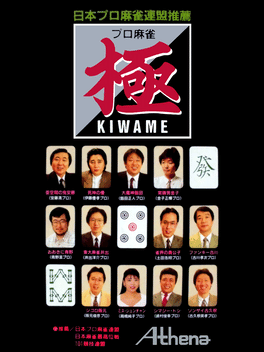
Pro Mahjong Kiwame is a Super Famicom mahjong game from Athena and the first of their Pro Mahjong Kiwame series, which would go on to have many sequels for various systems (including Pro Mahjong Kiwame GB for Game Boy). The game is touted as a serious mahjong game, requiring a certain level of skill from its players. Unlike many early video game mahjong games, the game allows for the full four participant experience rather than the truncated one-on-one set-up.Super Formation Soccer II
1993
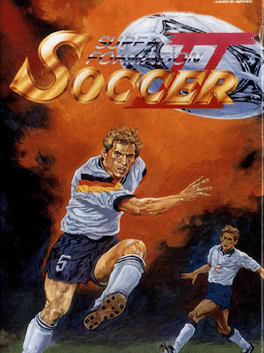
Super Formation Soccer II is a Sports game, developed and published by Human Entertainment, which was released in Japan in 1993.Cosmo Police Galivan II: Arrow of Justice
1993
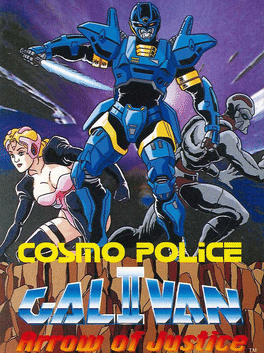
The evil syndicate Mado was defeated and couldn't seize control over the universe. The dark lord Madius has rebuilt his forces, and again Earth comes threatened by evil. Cosmo Police Galivan strikes back to save the universe once again from the clutches of evil.