New Games - Page 11890

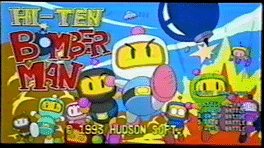
Hi-Ten Bomberman
1993
Hi-Ten Bomberman
1993
Hi-Ten Bomberman is a special HD version of Bomberman brought out on a brief promotional tour in 1993. It is said to be the first HD video game ever made.ScubaVenture: The Search For Pirate's Treasure
1993
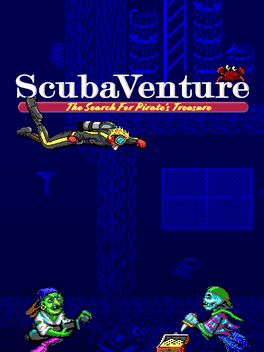
You play a diver who must find the treasures of the Barbarosa, a sunken pirate ship. In search of those treasures you encounter the inhabitants of the Caribbean waters and pirate ghosts.IndyCar Racing
1993
IndyCar Racing
1993
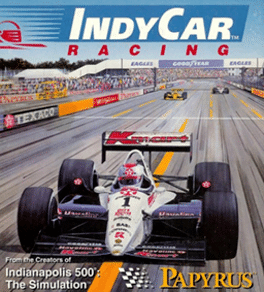
IndyCar Racing is a racing game by Papyrus Design Group. It was released in 1993.Allan Border's Cricket
1993
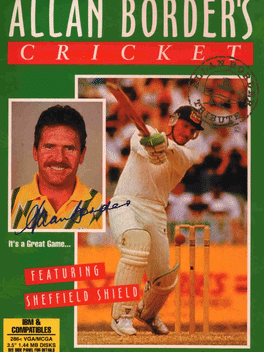
Allan Border cricket is a rebranded version of Graham Gooch's World Class Cricket. It is based on the sport of cricket played mainly in the British Commonwealth Countries. All the international teams are present with full customization of player names, match modes and teams. Amateur, Professional and World Class make up the difficulty levels. It was released as Brian Lara Cricket for the Sega Genesis for the European Version.Alfapet
1993
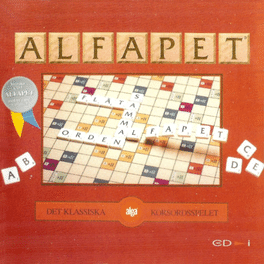
Alfapet
1993
An early regional CD-i release to Sweden with what looks to be a conversion of the popular board game scrabble.Mobile Suit Gundam
1993
Super Morph
1993
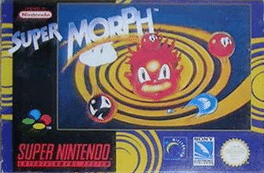
Super Morph
1993
A puzzle game where the player morphs between different objects like cannonballs, a cloud and water. It was released in 1993 in Europe.Alfred Chicken
1993
Alfred Chicken
1993
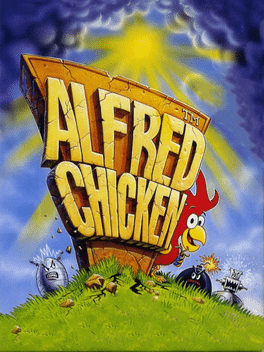
star 6.4Alfred Chicken is a platform video game developed by Twilight and published by Mindscape. The game was released for Amiga, Amiga CD32, Game Boy, NES, Super NES in 1993 and February 1994, in Europe and North America, respectively.Silverball
1993
Silverball
1993
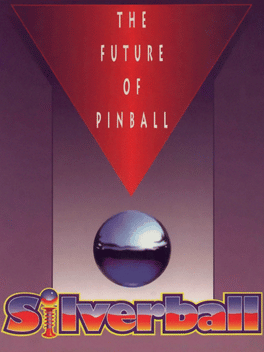
Silverball is a pinball game from the creators of Epic Pinball, using the same engine and similar menus. The tables featured are Fantasy, Blood, Snooker Champ, Odyssey and Nova.Amiganoid
1993
Alien Bash
1993
TFX
1993
TFX
1993
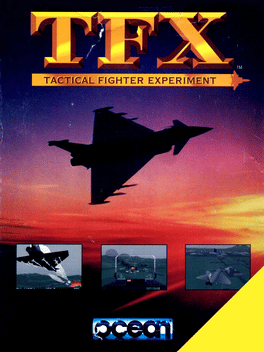
TFX (Tactical Fighter eXperiment) is a flight simulation where the player can fly with F-117A, Eurofighter 2000 or F-22 Superstar in various scenarios as a UN fighter pilot. Before the player begins his/her duty, there is a need to complete 10 training missions. Only then will the rest of the possible game modes be available. The game also contains a mission editor where the player can create his/her own missions in any of the chosen scenarios.Godzilla
1993
Godzilla
1993
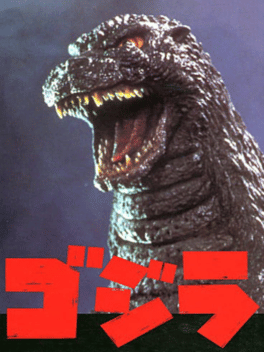
Godzilla is a game for the NEC PC-9800 series developed by SystemSoft and released in 1993.King's Bounty 2
1993
King's Bounty 2
1993
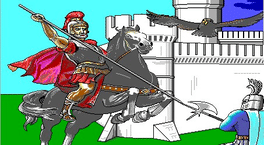
King's Bounty 2 is an unofficial game inspired by New World Computing's King's Bounty that was created in 1992-1993 by Sergei Prokofiev, a programmer based in Kharkov (Ukraine). The game is neither a remake nor a sequel to the original King's Bounty, but rather it expands on the ideas of its inspiration while adding new, unique elements. Custom EGA graphics that had been made for King's Bounty 2 often draw inspiration from Russian/Slavic folk tales. The game isn't shy of its rather clichéd plot. An evil wizard has stolen an important MacGuffin (which isn't even named) from the King, and hid it away in the Dark Castle on a lost continent. The player, taking the role of the King's trusted knight, must find the castle, defeat the wizard and bring the artifact back. Before this can be done however, the continent where the Dark Castle is located must be found. To this end, the player must find five pieces of an ancient map that have been scattered across other continents. Each continent's Lord of the Land might helpKuài Dǎ Chuánshuō
1993
The Beverly Hillbillies
1993
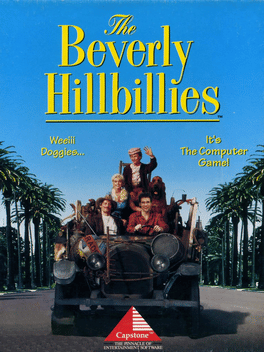
A quasi-adventure based on the movie The Beverly Hillbillies, which in turn was based on the movie of the same name, and not the television show. The player takes control of Jed Clampett after his unexpected discovery of oil, and help him build a new life in Beverly Hills, only to find out that two criminals targeted him as a blackmail victim.Solar Winds: Galaxy
1993
Solar Winds: Galaxy
1993
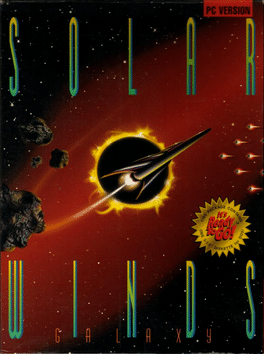
Sequel to Solar Winds: The Escape, you play the role of Jake Stone, a bounty hunter seeking to save his people from destruction.Zone 66
1993
Zone 66
1993
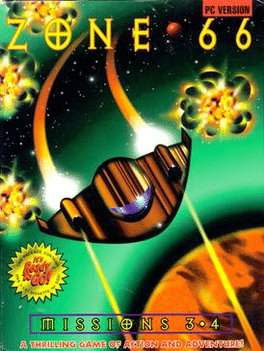
A pilot is warned by a mysterious stranger that something terrible is about to happen in his town. Rushing home, the pilot discovers that his wife and baby daughter were murdered. The stranger who tried to warn the pilot is gravely wounded; however, before dying, he passes some information to him. The hero is back on his plane, determined to avenge the deaths of his beloved ones, alone against terrorist forces whose true goals are yet unknown... Zone 66 is a top-down shooter in which the player controls an aircraft, eliminating other planes as well as ground-based hostile units (tanks, etc.). The player-controlled aircraft is able to move in any direction, avoiding enemy fire or preparing a better angle for the next shot. There is a wide selection of aircraft to choose from and each of them, before the gameplay, can be individually equipped with different types of weapons like missiles and bombs. Battles take place on eight different maps.