New Games - Page 11320

Sega Top Ten
1997
Sega Top Ten
1997
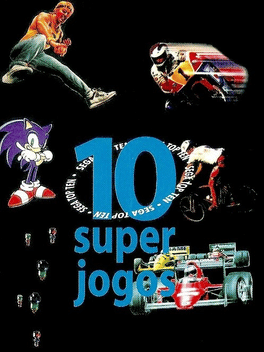
10 Genesis classics on one cartridge, released in Brazil by Tec Toy and in Asian territories by Sega themselves.Crazy Hospital Fushigi no Kuni no Tenshi
1997
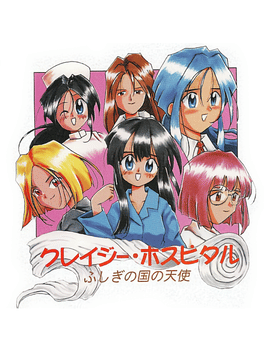
The player controls a young man who feels sick and has to visit the hospital. Once there, the plot split into different paths, depending on the choices of locations, dialogue responses and actions made by the player. All the branches involve focusing on one of the several available female characters and pursuing the short courting process to the point of its intimate conclusion.Silhouette of Darkness
1997
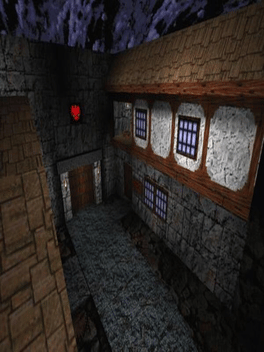
A medium sized medieval map with new textures, gameplay focuses largely on discovering secrets.Polystars
1997
The Lychgate
1997
The Lychgate
1997
This is an awesome "1-level-hub" which is tough, beautiful, and complete. The architecture is nice, the enemies are numerous, and it'll give you a good challenge, especially on the top skill level.Game-Ware Vol. 4
1997
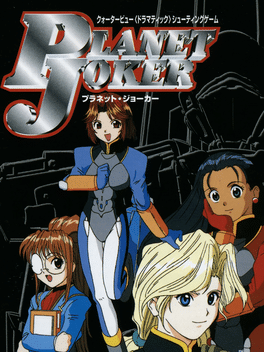
Planet Joker
1997
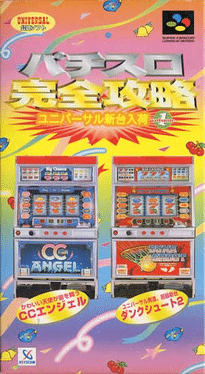
Pachi-Slot Kanzen Kouryaku: Universal Shindai Nyuuka Volume 1
1997
A pachi-slots game that draws from Universal Entertainment's product line. Like many pachinko/pachi-slots games, its chief role is to help gamblers practice for the real deal.Mobile Suit Gundam Side Story III: Sabakareshi Mono
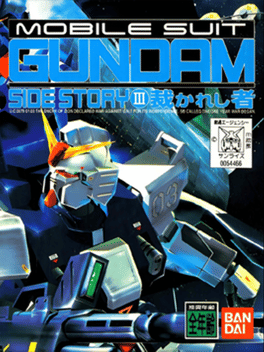
1997
Sabakareshi Mono is the final game in the Blue Destiny trilogy of Gundam-based shooters.Kakoong
1997
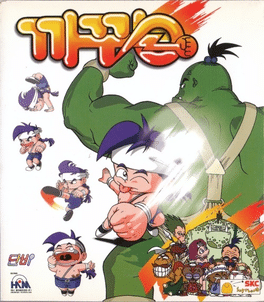
Kakoong
1997
While it draws just as much inspiration from the Dragonball aesthetic than My Love, Kakoong is even more tasteless than its Japanese role model. The introduction shows the titular hero taking a crap on a platform. First one only sees his strained face and has to wonder what physical challenge he has to endure, but then the camera zooms out to reveal everything. Players who haven't already been chased away by this gross display get "treated" to a decidedly mediocre 1-on-1 fighting game. The controls work a tiny bit better than in most other examples of the genre on the PC, but there's not much meaning to the fighting overall. The game works on a weird experience system, which encourages to use the same move over and over again and destroys any balancing the game might have had in the first place.Rulue's Iron-Fist Spring Break
1997
Released in Vol 14, Rulue's Iron-Fist Spring Break is a visual novel starring Rulue. She is tasked to complete one of three objectives over her spring break: Find the five divine treasures, explore the "wonderful land," or gather ingredients for a recipe. This game is mentioned, using the fan title of "Rulue's Spring Break of Fists", in Sega 3D Classics Collection's English-language manual for Puyo Puyo Tsu.Shadow Over Innsmouth
1997
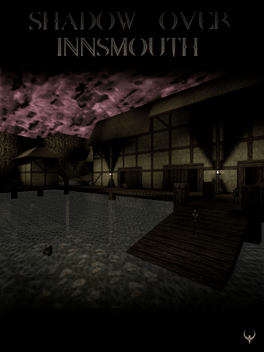
Very Early and Historically-relevant in the Quake modding scene, this map stood out when single-player modding wasn't common, with its moody atmosphere. Shadow over Innsmouth is a large medieval village with a few new textures and reskinned monsters. Somewhat of a sequel to "Village of Dread". This is considered Steve Rescoe's finest map by many. The map was featured on the RockPaperShotgun's "Quake Renaissance: a short history of 25 years of Quake modding" article. The map name is taken from a horror-occult short story by author H.P. Lovecraft, main inspiration for the Quake game.Gensei Suikoden
1997
Gensei Suikoden
1997
Gensei Suikoden is a Role-Playing game, developed and published by Compile, which was released through Disc Station Vol. 14 in 1997 for Windows 95.Neon Genesis Evangelion: 2nd Impression
1997
A Sega Saturn game that focuses mainly on Shinji and Mayumi Yamagishi, with RPG-style gaming and combat in the structure of an episode.Jack Nicklaus 4
1997
Jack Nicklaus 4
1997
This update to the Jack Nicklaus golf games was long awaited. The game allows to play 4 of Jack Nicklaus' designed courses (Muirfield Village Golf Club, Colleton River Plantation, Country Club of the South, and Cabo del Sol) and one course created especially for the game.Cyberswine
1997
Cyberswine
1997
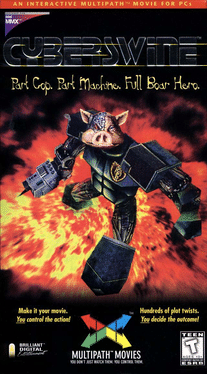
The protagonist of Cyberswine is, as the title implies, a cybernetic pig on a race to save CyberCity from a deadly virus. Helping him on his perilous mission is his partner, Sara Lee. The game is essentially an interactive movie done with 3D graphics. The player may interfere and choose the course of action for the hero.Carnage Heart
1997
Carnage Heart
1997
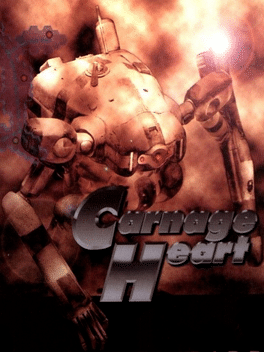
star 9.2By 2073, war has evolved. The battle for domination is now a game fought on the moons of Jupiter by warrior mechs armed with deadly firepower. You control an army of cyber gladiators. More importantly, you design them, deal for parts, set up assembly lines and devise battle plans. When the game begins, whoever has created the most diabolical strategies and deadliest mechs wins!BS Ihatovo Monogatari: Dai-1-ya
1997
The first part (night) of BS Ihatovo Monogatari. BS Ihatovo Monogatari is a downloadable 4-part Soundlink game for the Satellaview that was broadcast in at least 2 distinct runs between its March 2, 1997 release and May 31, 1997. The game is a role-playing game based on the works of Japanese author, Kenji Miyazawa, and its release was intended to commemorate the 100-year anniversary of his birth. The game is a sequel to the 1993 Hecht game for the SNES, Ihatovo Monogatari, earlier-broadcast for the Satellaview as well. Intended as a family-oriented game for all ages, the game makes reference to many classic works of Japanese children's literature. BS Ihatovo Monogatari incorporates voice narration at the start of each weekly broadcast to provide dramatic performances of Miyazawa's poetry set in Ihatovo. During gameplay, the Soundlink provides sound effects and gameplay hints for players. The game's voice actors were selected by popular vote by readers of Seiyu Zasshi and included Kikuko Inoue, Kouichi Yamadera, YBS Ihatovo Monogatari
1997
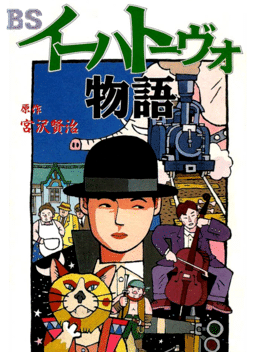
BS Ihatovo Monogatari is a downloadable 4-part Soundlink game for the Satellaview that was broadcast in at least 2 distinct runs between its March 2, 1997 release and May 31, 1997. The game is a role-playing game based on the works of Japanese author, Kenji Miyazawa, and its release was intended to commemorate the 100-year anniversary of his birth. The game is a sequel to the 1993 Hecht game for the SNES, Ihatovo Monogatari, earlier-broadcast for the Satellaview as well. Intended as a family-oriented game for all ages, the game makes reference to many classic works of Japanese children's literature. BS Ihatovo Monogatari incorporates voice narration at the start of each weekly broadcast to provide dramatic performances of Miyazawa's poetry set in Ihatovo. During gameplay, the Soundlink provides sound effects and gameplay hints for players. The game's voice actors were selected by popular vote by readers of Seiyu Zasshi and included Kikuko Inoue, Kouichi Yamadera, Yuka Imai, and Eiichi Onoda.Advanced T-Robots
1997