New Games - Page 11316

Street Fighter EX Plus
1997
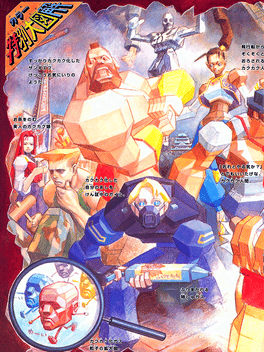
A few months after the original version of Street Fighter EX was released, an upgraded version titled Street Fighter EX Plus was released in arcades on March 31, 1997. Street Fighter EX Plus has all the hidden time-released characters are available by default. This version also adds four new hidden characters, Evil Ryu from Street Fighter Alpha 2, an alternate version of Hokuto named "Bloody Hokuto" and two cyborgs named Cycloid β and Cycloid γ.Quake: Mission Pack 2 - Dissolution of Eternity
1997
star 8Two new episodes. Sixteen new levels. One way out. Your journey has led you down a path of no return. The acrid smell of death fills the air. And you know the road ahead may lead to your grave. But Quake, with his insidious, apocalyptic plans, must be crushed. If you fail, evil will shroud the universe for all eternity.Outlaws
1997
Outlaws
1997
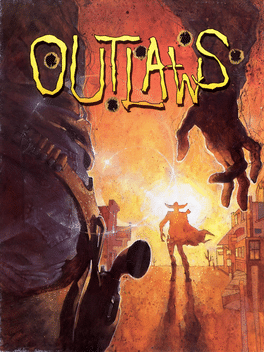
star 8.2Outlaws is a first-person shooter released by LucasArts in 1997. It uses a Wild West setting. It follows retired U.S. Marshal James Anderson, who seeks to bring justice to a gang of criminals who killed his wife and kidnapped his daughter. The game is a first-person shooter. Players control the character as he utilizes several American Old West weapons and items, such as a rifle, shotgun, dynamite and revolver. The player can activate the lantern inventory item to lighten dark areas, and use a shovel in specific areas to dig holes.Ballblazer Champions
1997
Ballblazer Champions
1997
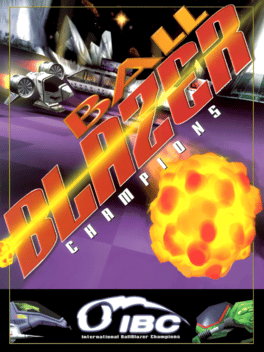
Ballblazer is a futuristic version of one-on-one indoor soccer, but with the use of a variety of weapons. Much like soccer, your goal is to put the ball in the net more times than your opponent does. Each player rides around in a rotofoil, used to speed around the arena field. However, in order to win the match, you must win three, four-minute rounds. Sounds easy enough, but you have to beat eight challengers in order to be the Ballblazer champion. Ballblazer offers eight characters to choose from and four modes of gameplay, including Practice, Tournament, Single-Player Free Play, and Two-Player Free Play. Each mode offers its own variety of funStar Wars: Yoda Stories
1997
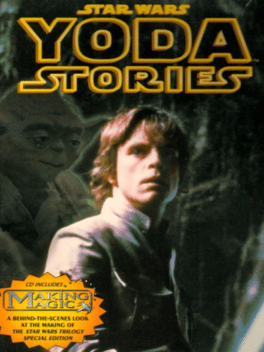
star 6.2Grab your lightsaber and get ready for terrific Star Wars adventuring in Yoda Stories, the newest in a series of easy-to-play Desktop Adventures from LucasArts. Join Luke Skywalker as he trains to become a Jedi with Yoda, then harness the Force and cross the galaxy to meet exotic aliens, collect stange devices and weapons and deal the Galactic Empire one crippling blow after another - all within an hour!Need for Speed II
1997
Need for Speed II
1997
star 6.7There are three main game types. The first two are single race and tournament and the last is a knockout race. Single races allow players to become familiar with the circuits and increase their skill of any one of the six tracks. The six tracks are called Mediterranean, Mystic Peaks, Proving Grounds, Outback, North Country, and Pacific Spirit.BS Zelda no Densetsu: Inishie no Sekiban - Dai-1-wa
1997
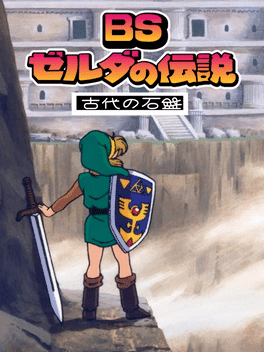
The first part (week) of BS Zelda no Densetsu: Inishie no Sekiban.Dr. Mario BS Ban
1997
Dr. Mario BS Ban
1997
Dr. Mario BS Ban is a Downloadable game for the Satellaview that was broadcast in at least 9 runs between March 30, 1997 and April 2, 2000. Early game broadcasts were accompanied by the Dr. Mario BS Ban: Seiseki Magazine (「Dr.マリオBS版 成績マガジン」), however these ceased after April 26, 1997.E.T.: No More Mr. Nice Alien
1997
A minigame for a three-hour Blender competition (#19) demanding works incorporating the three subjects "E.T.", "being scared" and "Stonehenge", this title adeptly strings them together, permitting the player to play E.T., frying tourists who are being scared at Stonehenge... er, with destructive rays fired from the tip of his glowing finger. Plot niceties such as why E.T., the friendly extra-terrestial, has such anger at the tourists -- or since when his finger began packing such a payload -- are largely unexplored here. As far as gameplay goes, the following can be said: the tourists run at varying speeds, and can only be shot when the finger is fully charged -- beyond these factors, the rule of the day is "if it moves, shoot it!"BS Zelda no Densetsu: Inishie no Sekiban
1997
Ancient Stone Tablets was a Japan-Only release for the Legend of Zelda: A Link to the Past. It was an add on made for Satellaview, a system that takes radio broadcasts and processes them into games live. The game came in four weekly broadcasts and made new additions to the original, such as weather, many new dungeons, and a new story. The game was much like a Second Quest or Master Quest of A Link to the Past, sharing a very similar overworld with slight changes and entirely new dungeons. Unlike a Second Quest however, it has an entirely new story. Various actions earned the player points, and these points could later be traded in to Nintendo for different prizes. Ancient Stone Tablets is different from most other Zelda games as the game's central heroes are actually the avatars of the player's ID for the BS-X Broadcasting System (Super Famicon), drawn into Hyrule, which is also true for BS The Legend of Zelda. The difference being that this time the player does not take the place of Link, but takes part in a newThe Last Express
1997
The Last Express
1997
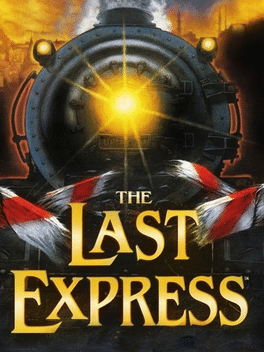
star 8.4A point-and-click adventure game that takes place on a European train shortly before the outbreak of World War I. The game attempts to simulate real time with a non-linear story and dozens of fully voiced characters.Thieves
1997
Mega Man X3
1997
Mega Man X3
1997
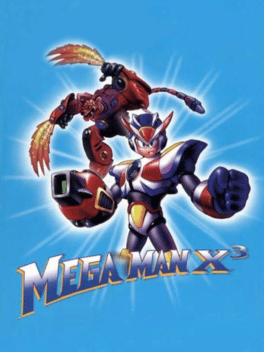
The PC port of Mega Man X3 expands upon the PlayStation and Saturn versions by adding a difficulty select option.Bust-A-Move 3
1997
Pro Yakyuu Greatest Nine 97
1997
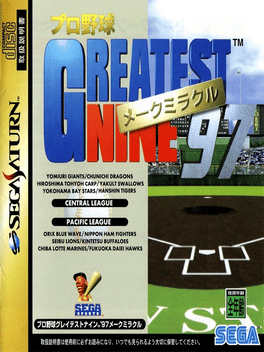
This is a baseball game released as part of the Greatest Nine series for the Sega Saturn.Boys Be
1997
Helicops
1997
Helicops
1997
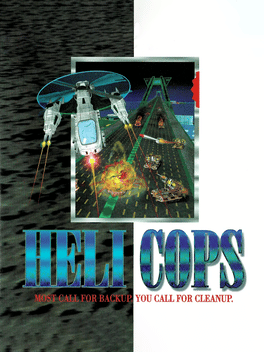
Helicops is a 3D Helicopter game with a view in the cockpit and externally. You can choose different pilots which have different stats, as well as choosing a helicopter.Hanagumi Taisen Columns
1997
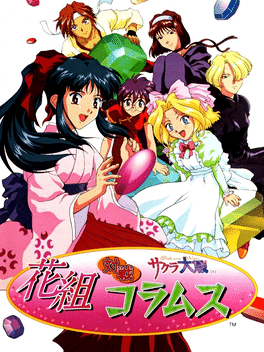
This game is a spin-off of Sakura Taisen and Columns. This was developed by Sega and was released in 1997 for the ST-V arcade board and the Sega Saturn in Japan. The game follows the Sakura Taisen story line and uses Columns gameplay.Monster Slider
1997
Monster Slider
1997
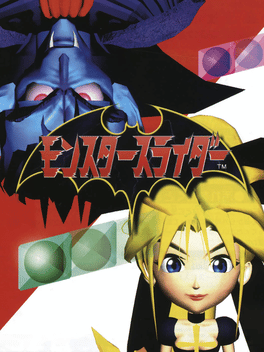
The game is a competitive falling block puzzle game similar to Puyo Puyo. Pairs of differently colored blocks fall into a well. The player must arrange them so that three identically colored blocks are touching in order to eliminate them. The floor of the well is staggered such that a block can be touching two other blocks on each side (in addition to a block above and a block below). Additionally, the floor is tilted at an angle. Blocks are affected by gravity and slide off of each other in the direction of the tilt after they are placed. The player can change the tilt of the floor at any time, which causes the blocks to shift around. A block also falls when placed over an empty space or when the block below it is eliminated. Players can use the effect of gravity to create chain reactions where one set of eliminated blocks causes another set to be eliminated, and the ability to change the tilt of the floor can be used to induce reactions by shifting falling blocks before they land.