New Games - Page 11321

MechWarrior 2: BattlePack
1997
BattlePack is the re-release of MechWarrior 2, its first expansion and multiplayer ported to Mercenaries' engine.Kazoo
1997
Kazoo
1997
The third phase of development of the game which would later get released as Banjo-Kazooie, Kazoo now stars Banjo instead of Edson, but the gameplay would still be in a top-down view, now as a 2.5D adventure platformer, with a grid-based movement system. Banjo would wear sports clothing as means of power-ups. The game was later reworked into a collect-a-thon 3D platformer, abandoning the sports motif in favor of a fantasy and comedy setting, when it was released as Banjo-Kazooie.Lunatic Dawn: Passage of the Book
1997
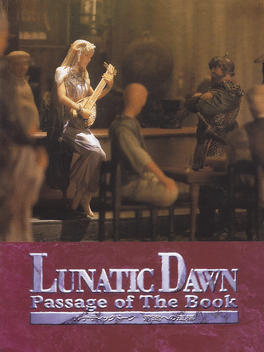
Small tales add up to create a history that is all your own. Your mission is to seize the key of fate and build the history of this land. Lunatic Dawn - Passage of the Book is a non-linear RPG in which you can create your own character anywhere in the world and travel freely as you desire. Take on jobs, deliver items, explore various dungeons & buildings, hunt down criminals, assassinate people, start fights in towns, steal, buy a house, raise a family & get married, be a good person or a murderous cutthroat, or save the world from ultimate evil! The choices are limitless in this game! The only thing you are bound to is can you survive the decisions that you choose to follow?Pocket Racer
1997
Kyodai Mahjongg
1997
Kyodai Mahjongg
1997
Kyodai Mahjongg is a tile-matching game developed by one person since 1997, with many features and options. It offers 2D and 3D modes, online multiplayer, various tilesets and layouts, and relaxing oriental music. The 2006 version was released on September 25, 2006, and it is currently the latest version nowadays (ver. 21.42).Hexen: Beyond Heretic
1997
The PlayStation version has the FMV scenes and audio music from the PC CD-ROM version, but no multiplayer mode. The scripting and animation is slower, enemies have only their front sprites and lack gory deaths when attacked by strong hits or weapons, and the frame rate is slower. Although all levels are present in this version and feature their correct layouts, their architecture details are somewhat simplified and there is some loss in overall lighting quality. This port is based on a beta version of the original PC version of Hexen as many gameplay tweaks are shared, such as the simpler level design and the Fighter's fists being weaker compared to other versions.Densha de GO!
1997
Densha de GO!
1997
Densha de GO! is a 1997 train simulator arcade game developed and published by Taito in Japan. Players are tasked with driving a train, adhering to the schedule and obeying signals and speed restrictions. It features real-world train lines from Japan, including the Yamanote Line and Keihin-Tohoku Line. The game was ported to the PC, Sega Saturn, and PlayStation. The concept for Densha de Go! was inspired by designer Akira Saito's personal fascination with Japanese train lines and railroads. He wanted to create a game that allowed players to familiarize themselves with driving a train. The controls were his primary focus as he wanted them to be accurate and responsive, and to mimic the controls of a real train—his father worked for the Kyoto City Transportation Bureau Facilities Division, which made this easier to accomplish. Saito included real-world railroads and trains to appeal towards other railroad enthusiasts, thinking that it could also attract more "ordinary" players for its realistic, familiar theme. AsKosodate Quiz My Angel 2
1997
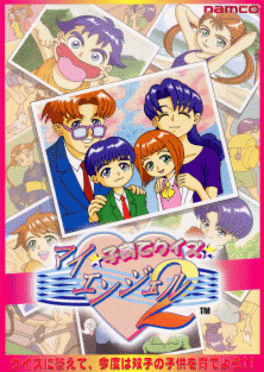
KOSODATE QUIZ : MY ANGEL 2 is the second sequel of unique quiz simulation games in where players can enjoy assuming the role of a couple of newly parents who must raise their newborn daughter from the age of 0 until the age of 25.Micro Machines V3
1997
Micro Machines V3
1997
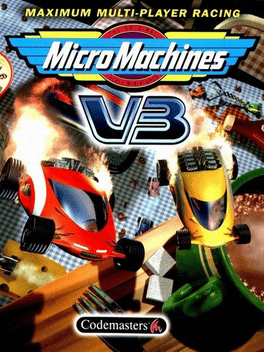
star 8.8Micro Machines V3 takes the immensely popular miniature-scale racing series to a new level by adding weapons and power-ups to the fray. Now you can grab turbo charges for bursts of speed or blast away opponents with grenades and force-fields. For the first time on a portable system you can still drive all of your favorite Micro Machines vehicles on all the classic tracks such as the pool tale and sand-box, but now you can do it with an attitude! Features 48 courses - breakfast table, school desk, science lab, beach, restaurant, garden, pool table, etc. Power-ups to blitz the opposition include: hammer, mines, force-field, etc. Collect, test and gamble special prize cars for up to 32 vehicles -- including monster trucks, transmutable cars, futuristic cars which are all faster than before.MechWarrior 2: Arcade Combat Edition
1997
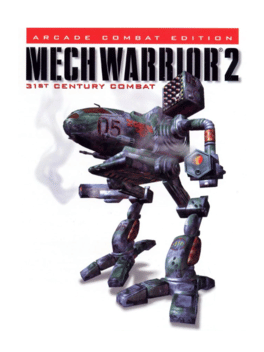
star 8MechWarrior 2 gives you the chance to strap yourself into a 40-ton hunk of metal armed with a full arsenal of weapons and wreak havoc on a futuristic band of enemies. The game features eight brand new missions and 32 reworked versions of popular PC campaigns. At the outset of the game you can choose between the Wolf Clan and Jade Falcon squads, or opt for the "instant action" feature to jump right into the fray. No matter which route you take, be ready for some explosive action, as every mission calls for you to destroy something. The emphasis in the PlayStation version is shoot-em-up action, but fans of the PC version will still be able to trick out their mechanical monster to their heart's content. If you love mech games or you just want to deal out some damage, then you should check this game out.Imperium Galactica
1997
Imperium Galactica
1997
star 8.3We are in the year 2300. The Galactic Empire, formed by the human species in the known universe, eventually split into numerous factions, seven alien races and two empires of renegade humans. One of the most dangerous, the Darglans threaten the coexistence and peace established between the various species. It is time to face the threat and stop the expansion. You start out as a young lieutenant and are given a series of missions to complete. You then advance to the next rank and are given more ships to control and more available commands, but you have more area of the universe to police and more colonies. This continues until you reach the rank of Grand Admiral, where you are able to view the whole map.Mace: The Dark Age
1997
Mace: The Dark Age
1997
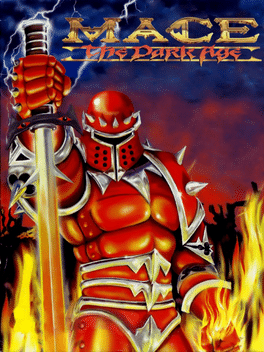
star 7.9Mace: The Dark Age is a fighting video game released by Atari for arcade machines in 1997 and ported by Midway to the Nintendo 64 in 1997. The game is similar to Bio F.R.E.A.K.S. and the Mortal Kombat series. Like in Mortal Kombat, when a character wins both rounds, they can perform an execution move on the enemy. Methods included severing an opponent's limbs and torso (Al Rashid), beheading (The Executioner), repeated stabbing (Koyasha), impaling the opponent with a sword (Lord Deimos), breaking an opponent's back by hoisting them on top of a Viking helmet and throwing them to the ground, causing their body to explode (Ragnar), and some more far-fetched methods including pulling out an opponent's heart (Xiao Long), shrinking (Namira), transforming the opponent into a chicken (Taria), and entering an opponent's body and bursting them from inside (Dregan). Note: Heavily borrowing from the arcade game Soul Edge (1995)--first of the Souls Series. Which borrowed heavily from the framework WeaponLord (1995) laid out.G-Nome
1997
G-Nome
1997
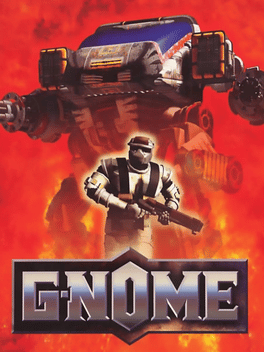
The entirety of G-Nome's gameplay is based around close-surface combat, by the means of direct foot movement or the occupancy of vehicles. The majority of the vehicles are bipedal assault machines called "HAWCs", (Heavy Armored Weapons Chassis), that usually carry between two and four weapon mounts, which vary between laser pulse weapons, machine guns and missiles. Aside from the HAWCs, each of the races in the game maintain hovercrafts and armored support vehicles, for strategic insurance and variability.Marble Drop
1997
Marble Drop
1997
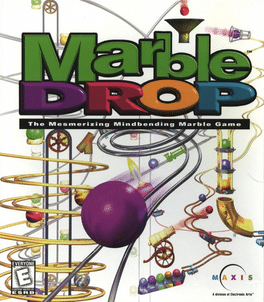
Players are given an initial set of marbles that are divided evenly into six colors: red, orange, yellow, green, blue, and purple, with two more colors available to purchase: black and silver (steel). These marbles are picked up and dropped by the players into funnels leading to a series of rails, switches, traps and other devices which grow more complex as the game progresses. The aim is to ensure that each marble arrives in the bin of the same color as the marble. Players must determine how the marble will travel through the puzzle, and how its journey will change the puzzle for the next marble. When a marble runs over certain sections of the puzzle, the paths may be rerouted or cut off, either temporarily or permanently. For example, if the marble runs over a button, it might hop, skip and jump a diversion that sends the next marble down a different road.Tenchi Muyo! Rensa Hitsuyou
1997
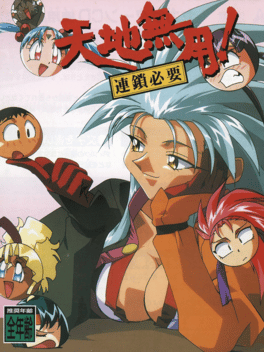
Tenchi Muyou! Rensa Hitsuyou is a Japanese only released . It's a puzzle game based on the anime series, Tenchi Muyou (Tenchi Muyo in the U.S).Kowloon's Gate
1997
Kowloon's Gate
1997
Kowloon's Gate is a 1997 Japanese adventure video game developed by Zeque. Set in the Kowloon Walled City in Hong Kong, it is considered a cult hit. Kowloon's Gate is a first person adventure game that puts the player in a futuristic fantasy world in which he will take the role of a young woman (a master feng shui) that will have to encounter different people, fight evil enmies, and solve some strange situations and puzzle to advance in the adventure and try to make that the world won't dissappear. Kowloon's Gate uses motion JPEG technology to render the strange CG enviroments you'll explore. Interact with unique characters, traverse the real-time 3D scenes freely, and solve imaginative puzzles in this Adventure game.Azito
1997
Azito
1997
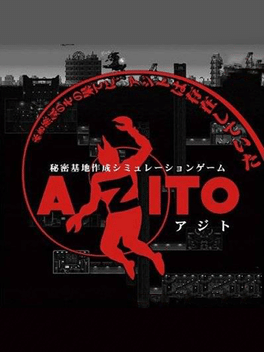
In Azito, the player takes the role of chief commander of a new secret base. Weapons, in the form of Mechs are developed and used to defend the secret base from enemy attacks. The secret base must be protected in order to be completed. The player cannot attack enemy bases, but only intercept the enemy units. As the player chooses their attributes with the help of specialized staff, a variety of weapons can be developed, and the appearance of the base will change depending on what is being developed.Love Game's Wai Wai Tennis
1997
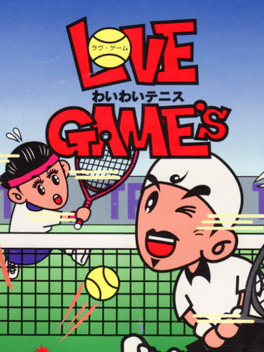
WaiWai Tennis is a tennis game using behind-the-player angled camera view. The game is authorized by JPTA (Japanese Tennis Association) and tried to be realistic even though characters may look less so. You can play as one of pre-selected male or female tennis players, or you can create your own character. Each character has his own ups and down, the game features dozens of moves and character skills which can become better through practice and playing matches and tournaments. Characters also have their preferred hand which will decide whether they'll hit a ball using a backend or forehand. The ball will not be automatically hit if you're in its vicinity, instead, you'll have to be well positioned to hit the ball and time your swing as well as the direction in which you wish to hit the tennis ball. Whether you catch and hit or miss the ball may also be affected by your skill level to perform a certain type of moves.A Fork in the Tale
1997
A Fork in the Tale
1997
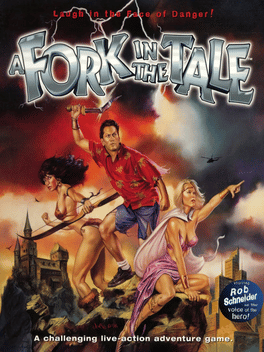
Developed as a comedic take on the famous Dragon's Lair video game series by Advance Reality Interactive, A Fork in the Tale is an adventure FMV game.Emperor of the Fading Suns
1997
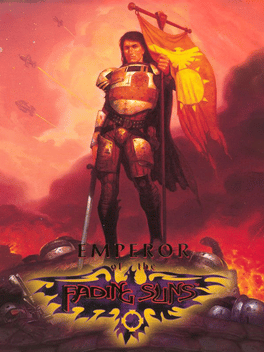
Emperor of the Fading Suns is a science fiction "grand-scale" space strategy computer game made by Holistic Design in 1996. This game was based on Holistic's in-house role playing game Fading Suns. The game had a wide array of units and a complex back-story but was rushed to market and released with numerous severe flaws and several features underdeveloped. In patched form, it survives as a popular abandonware title with numerous unofficial, fan-made mods.[citation needed]