Most Popular Famicom Games - Page 46

Pizza Pop!
1992
Pizza Pop!
1992
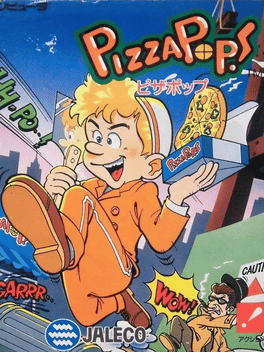
The Pizza Boy must deliver pizzas to various dangerous locations in order to make enough money to buy his girlfriend an engagement ring. He is thwarted by many enemies, including his romantic rival who appears frequently to take him down. Points are scored at the end of each stage based on completing stages quickly, defeating enemies and recovering extra pizzas.'89 Dennou Kyuusei Uranai
1988
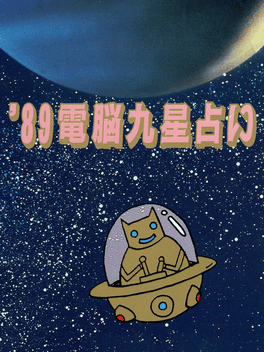
'89 Dennou Kyuusei Uranai is one of those horoscope sims that used to be very popular in Japan in the early days of home consoles. They still exist today, but they tend to be extended to more interactive dating sims rather than just walls of text to read. This game being released in December 1988 and namely so, it was designed to predict your fortune for the upcoming year 1989. This makes attempting to play it already kind of useless once the year had passed. Therefore one can only look back at what the computer predicted for you back in 1989.Blood of Jurassic
1997
Blood of Jurassic
1997
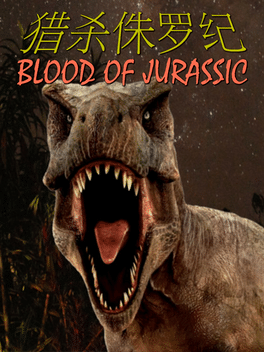
An unlicensed shooter from Inventor for the Famicom, allowing players to choose from 6 different stages of dinosaur action. Compatible with the NES zapper.Dream Fighter
1992
Dream Fighter
1992
Unlicensed fighting game by Caltron for the Famicom. Tony must fight his way around the world to prove he is the greatest world warrior, the Dream Fighter!Outlanders
1987
Outlanders
1987
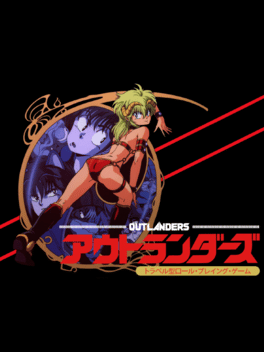
In the midst of a violent invasion of Earth by unknown alien forces, photojournalist Wakatsuki Tetsuya comes across a scantily-clad alien woman, cutting a swath of death through the Terran ranks with her sword. After a chaotic struggle, Tetsuya is knocked unconscious, only to awaken aboard her starship. To his surprise, she turns out to be Kahm, the invaders' princess - and she has picked Tetsuya for a starring role in her upcoming wedding. As the groom....Bakushou!! Jinsei Gekijoh
1989
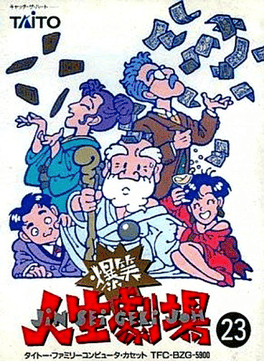
The first game in the Bakushou!! Jinsei Gekijoh series and is a four-player NES board game simulation that plays like Milton Bradley's The Game of Life. It was only released in Japan on March 17th 1989. Bakushou!! Jinsei Gekijoh ("Burst of Laughter!! Theater of Life") is the first game in a long-running series developed and published by Taito for the Nintendo Entertainment System in Japan that allows players to live an entire lifetime, moving through various stages of life and accruing as much wealth as possible. It is based on the Jinsei Game, or The Game of Life as it is known in the west. Up to four human players take turns moving around a board by a number of squares as indicated by dice rolls and make various life decisions, or are passively shown events happening to them, which determine their success. The game was followed by two sequels for the NES and four for the SNES.Hokkaido Rensa Satsujin: Okhotsk ni Kiyu
1987
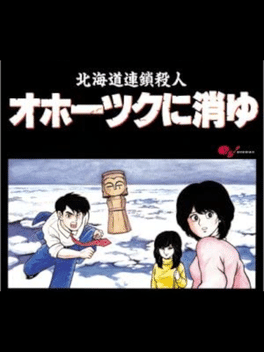
A man's corpse is discovered near a sea wharf in Tokyo Bay. While the police investigates, a 2nd and 3rd murder occurs one after another. You begin your investigating with Shunsuke Saruwatari, a detective from the Kushiro station, and seek the truth to discover the criminal's motivation. An examination of the relation between the victims exposes a important details from the past.The Quest of Ki
1988
The Quest of Ki
1988
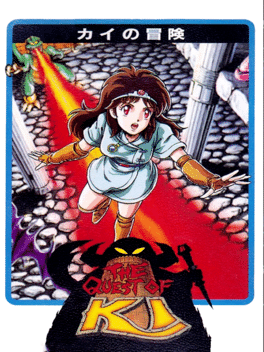
The Quest of Ki is a 1988 video game developed by Game Studio and published by Namco for the Family Computer. It is the third game in Babylonian Castle Saga series which started with the 1984 arcade game, The Tower of Druaga. The story of The Quest of Ki is actually a prequel to the original Tower of Druaga. It occurs shortly after the demon Druaga has stolen the Blue Crystal Rod and taken it to his tower. The goddess Ishtar sends the priestess Ki to the tower in order to retrieve it. The game then follows her doomed quest to the top of the tower, and leads directly into the story of the original game. The game is a side-scrolling platformer with one hundred levels. In each level, the player's goal is to pick up a key and open the door leading to the next area. Various enemies, including slimes, ghosts, and wizards, appear on each floor, and any contact with them results in death. Ki has no weapons, and thus can not damage or defeat any of the enemies. Her only abilities are to dash and jump. As long as the playKero Kero Keroppi no Daibouken
1991
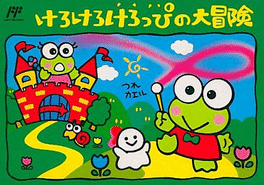
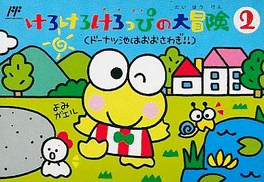
Kero Kero Keroppi no Daibouken is based on the popular Sanrio character Keroppi. Released on the Nintendo Family Computer console in Japan in 1991. Big Adventure is a children's puzzle game where Keroppi must rescue his girlfriend Keroleen who is locked up in a castle. To do so, he must solve the action based puzzles in seven differently themed worlds with four different types of stages (the surface of the maze, flying a plane, a Reversi-like level, and through a field of lava). All the items in the game are pre-determined; there is a need to memorize the pattern for each playthrough so that a player may advance through the levels more quickly once they have achieved a degree of expertise in the game.Kero Kero Keroppi no Daibouken 2: Donuts Ike ha Oosawagi
1993
Kero Kero Keroppi no Daibouken 2: Donuts Ike ha Oosawagi is a Japan-exclusive action video game video game for children that was released on the Family Computer console in 1993. This video game has Sanrio's character searching for lost children who have been kidnapped by monsters. Essentially a standard Super Mario Bros. clone, the player controlling the cartoon frog has to leap around platforms jumping on baddies or killing them with his croak weapon. Each bonus level involves matching characters from the Sanrio franchise in a format similar to the card game Concentration. Intermission screens show the progress of the character throughout the game. Levels range from the forest to a seaside setting.Perman Part 2: Himitsu Kessha Madoodan wo Taose!
1992
"Paaman (or quite possibly Parman) is a comic in Japan which is done by the same guy who did Doraemon. Like that wasn’t already obvious just by looking at ‘em. All of the four characters that you have the choice of controlling have the amazing ability to fly in an amazingly awkward fashion. I don’t think there’s any difference in who you want to pick though. What’s awkward about flying is, if you’re flying Up and want to go Left, you don’t just automatically go Left when you hit the control pad… you go diagonally, then you go left. And you don’t sit still if you let go of the control pad, you have to hit A to stop. And then you have to hit A again to fall to the ground and walk around like normal. Which is all very weird. But you can jump REALLY high, so that’s cool. There’s a side view, where you can fly, like what I was just talking about, and there’s a top view, where you walk around inside of buildings and stuff. You can’t fly though, but you can jump, which is pretty useless. What’Parallel World
1990
Parallel World
1990
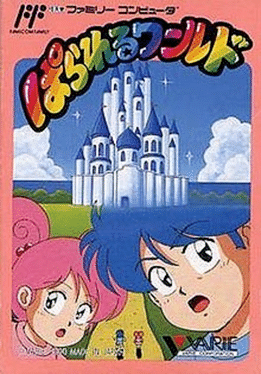
Parallel World is a puzzle video game developed by EIM and published by Varie. It was released in Japan for the Family Computer on August 10, 1990. The player and his girlfriend must find their way back home after being sucked into an alternate universe. A magnificent castle full of 25 different game worlds block their progress, however, and they are filled with enemies on every stage. The player has an overhead view to destroy the enemies for extra loot. Given a strict time limit of 100 seconds to solve each puzzle, the game rewards fast puzzle solvers. The first player controls the male while the second player controls the female. Players only start with three lives and lose them when time runs out or when a monster comes into contact with him/her. Enemies in the game include springs, rollers, witches, and zombies.Soreike! Anpanman: Minna de Hiking Game!
1992
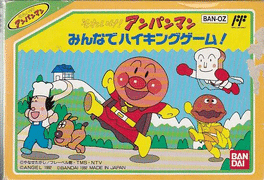
Anpanman travels around the world helping people. But what is Anpanman? He’s a superhero whose head is made out of sweet rolls filled with bean jam. Soreike! Anapanman is a fun board game for the Famicom, based on a cartoon by the same name. It is relatively straightforward and simple to play, with no complex features or obstacles to overcome. There are eight maps and a ninth to unlock, and up to three human players can participate. Join Currypanman and Shokupanman as you try to beat Baikinman!Tenchi wo Kurau II: Shokatsu Koumei-den
1991
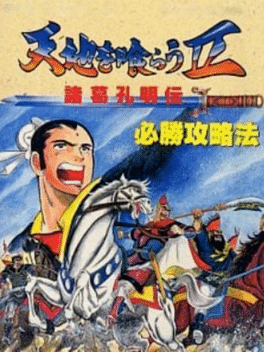
A Japanese roleplaying game published for the NES in 1991. Based on the manga Tenchi wo Kurau. Tenchi o Kurau II: Shokatsu Koumei-den ("The Devouring of Heaven and Earth II: The Story of King Ming") is a turn based roleplaying and strategy game developed and published for the Nintendo Entertainment System by Capcom on April 5th, 1991 in Japan. It is the second NES RPG produced by Capcom based upon the Tenchi wo Kurau manga series, the first being Destiny of an Emperor released in 1989. Gameplay: A traditional Japanese roleplaying game at its core, Tenchi o Kurai II puts the player in control of a party of warriors and mages as they try to take down a great foe that threatens the peace of their land. Throughout there are random encounters, boss battles, an experience system and valuable and/or useful loot. The player's party can hold up to seven members at a time, with one members acting as a "tactician". The tactician determines the list of tactics available for use by the player during battle.Otaku no Seiza: An Adventure in the Otaku Galaxy
1991
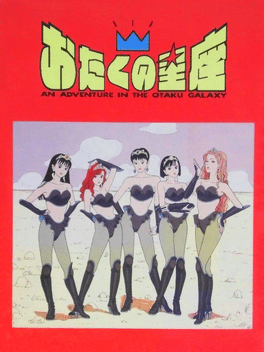
Otaku no Seiza tells the story of Fuyuu City, a place built in space far in the future. Aurora, a group of five attractive and powerful women, control the city. Men in the city are treated poorly compared to women, until the protagonist finds himself in the middle of the city with amnesia. Outraged, the protagonist decides to defeat Aurora and gain rights for the discriminated men of the city.Jumbo Ozaki no Hole in One Professional
1988
A golf sim for the NES developed by HAL Laboratory and released in 1988 in Japan only. It uses the likeness of prolific Japanese professional golfer Masashi "Jumbo" Ozaki. HAL Laboratory, after creating many of Nintendo's golf games as a second party developer, decided to develop and publish their own golf title. Jumbo Ozaki no Hole in One Professional features the likeness of Japan's most prominent golf player, Masashi "Jumbo" Ozaki - the Jumbo nickname comes from his unusual height for a Japanese male: almost 6'. Though featured on the box art and in the title, Jumbo Ozaki makes no obvious appearance in-game. The game can be played as a single player Stroke Match, which allows the player to practice on each of the game's 36 holes across two different courses. The player can also play against another human, or rate their score against CPU opponents in the 1 Day and 4 Day modes. The player can also adjust the difficulty, which makes wind speed a much more important factor.Pocket Zaurus: Juu Ouken no Nazo
1987
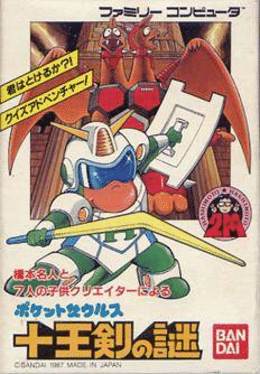
A young man is changed into a lizard and must chase his aggressor through time in this Famicom platformer from Bandai.Titan Warriors
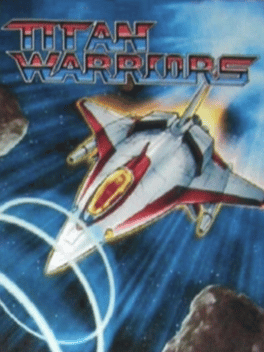
Titan Warriors is a cancelled shoot-'em-up that was developed by Capcom for the NES / Famicom, in 1988. The game was meant to be a sequel of Vulgus, an arcade shooter developed and published by Capcom in Japan in 1984.Derby Stallion Zengokuban
1992
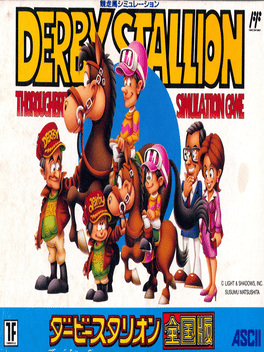
Derby Stallion Zengokuban ("Zengokuban" roughly means "National Edition") is a Sports game, developed and published by ASCII Entertainment, which was released in Japan in 1992.Magical Kids Doropie
1991
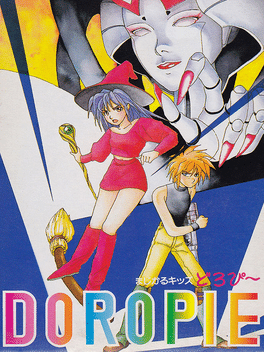
Magical Kids Doropie
1991
Magical Kids Doropie is a side-scrolling action-adventure video game for the Family Computer, developed by Vic Tokai in 1990.