New Arcade Games - Page 72

9 Ball Shootout
1994
9 Ball Shootout
1994
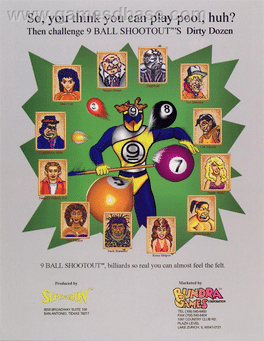
9 Ball Shootout! is a 1 or 2-player 3D pool arcade game released by E-Scape EnterMedia in 1993, licensed to Bundra for distribution. You can select from either Nine Ball, Eight Ball or Straight Pool. If you win, a better computer player steps up to challenge you.Blomby Car
1994
Blomby Car
1994
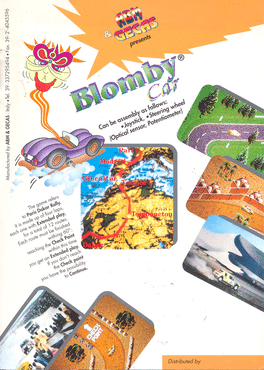
A rally driving game from ABM and Gecas. It has nicely detailed graphics and some speech announcing each course.Hyper Pac-Man
1994
Hyper Pac-Man
1994
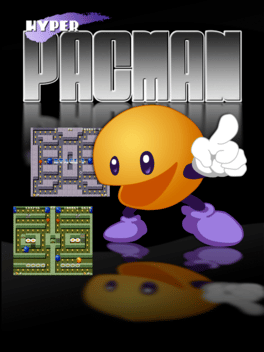
This is an updated version of Namco's "Pac-Man", featuring forced-perspective 3-D graphics that allow the players to jump over the enemy ghosts; in a similar fashion to Namco's "Pac-Mania", released in 1987. There are secret items and food to be found on each level that increases the player's power and score. For extra bonus stages, complete a level without eating any of the power dots.Steel Force
1994
Steel Force
1994
Steel Force is a 2D top down arcade shooter, similar in style to Alien Breed, but much more action-oriented. The main hero, a Federation soldier fights against space pirates - he must kill various enemies and find the exit in limited time. He can find ammunition, health packs and various power ups along the way.Stone Ball
1994
Stone Ball
1994
A stone-age soccer game. Teams of two compete against each other and use clubs to hit a rock into an empty cave (no goalie).Dungeon Magic
1994
Dungeon Magic
1994
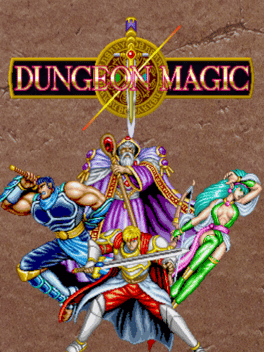
The evil magician has brought an evil spirit back to life and is plotting to seize control of the kingdom, and has kidnapped the princess for use as a sacrifice. Four warriors venture into the world of magic to save the princess of the kingdom from the wicked magician: Ash the knight, Gren the roving warrior, Cisty the elf, who whole family was destroyed by the evil spirit in the past, and the old magician Vold with the magic staff must now set off to save the princess.Light Bringer
1994
Light Bringer
1994
Light Bringer (también conocido como Dungeon Magic), es un juego de arcade de Taito Corporation, perteneciente al género Hack and Slash medieval. A diferencia de la mayoría de los beat'em ups de ambientación medieval / fantástica, el juego cuenta con una vista isométrica, algunas plataformas (por lo general, cajas apiladas, mesas o rocas para subir y saltar), grandes personajes estilizados y ajustes de variables de sangre. Un malvado mago resucita a un espíritu maligno, conspirando para tomar el control del reino, y ha secuestrado a la princesa para usarla como sacrificio. Cuatro guerreros se adentran en el mundo mágico para salvar a la princesa de las garras del mago malvado: Ash el Caballero, Gren el guerrero errante, Cisty el elfo, cuya familia entera fue destruida por el espíritu del mal en el pasado, y el viejo mago Vold, contando con la ayuda del equipo de magia, iniciaran su odisea para rescatar a la princesa.Fantasia
1994
Fantasia
1994
Fantasia is a "Qix"-style adult puzzle game modeled heavily after the Kaneko game "Gals Panic!". It features photographic images of both Japanese and western models. The objective is to reveal 80% of the silhouetted girl's image within the time limit while avoiding the enemies. To complicate things, there is a bar with a pointer at the top of the screen. If the pointer dips below a certain level (indicated by the change in color) the image will change to that of a monster. The pointer slowly creeps towards the monster side of the bar over time and moves dramatically towards the monster side whenever the player reveals a significant piece of the silhouette. Revealing the un-silhouetted part of the image moves the pointer back towards the girl side of the bar. If a round is completed while the monster's image is shown then the round must be repeated.Best Bout Boxing
1994
Best Bout Boxing
1994
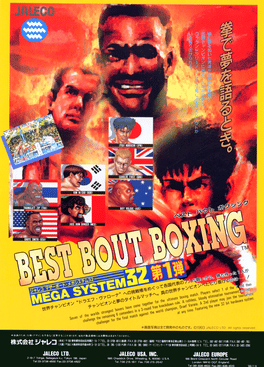
Best Bout Boxing is a boxing arcade game released by Jaleco in 1994, where boxers have to compete for the fictional "1993 World Freeweight Championship" (no weight limitation). It was never released outside Japan.Mach Breakers
1994
Mach Breakers
1994
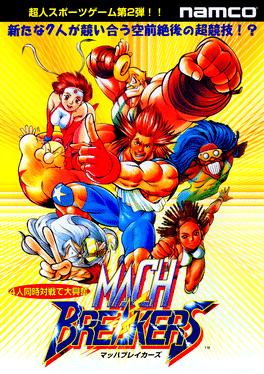
Mach Breakers: Numan Athletics 2 is a sports arcade game that was released by Namco in 1994 only in Japan; it runs on Namco NB-2 hardware and is the sequel to Numan Athletics, which was released in the previous year.Battle K-Road
1994
Battle K-Road
1994
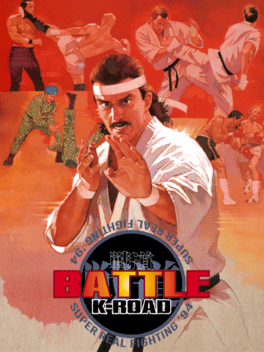
The game focuses mostly on reality fighting than fictional. At the start of the game in 1P mode, the player will face against the other fighter that uses the same fighting style as the one the player chose. After the player wins against the opponent, the player will face against other opponents that use other fighting styles in the K-Road Tournament. If the player loses, the game will only allow the player to continue fighting through it with the character he used, and will not allow the player to choose another character. The gameplay has a 6-button layout, but with command inputs different compared to ones in most fighting games released at the time. There are three punches and kicks for a few directions (weak, medium and strong). There are seven fighting styles featured in the game and two playable characters per style, for a total of 14 playable fighters.Eco Fighters
1994
Eco Fighters
1994
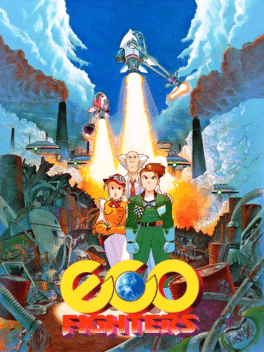
star 6.2Eco Fighters, known in Japan as Ultimate Ecology (アルティメット エコロジー?), is an arcade game released by Capcom on the CPS-2 arcade system board on December 1993. The game is a horizontal shooter, where the player controls a ship with a rotating gun. As suggested by both its titles, the game has an "eco-friendly" theme. It was also developed by the same team from two Mega Man arcade titles, The Power Battles and The Power Fighters.Risky Challenge
1993
Risky Challenge
1993
Risky Challenge is a story-based puzzle game running on Irem's M-90 arcade system. Vic and Vinnie are professional treasure hunters, who, one day went down deep into the dungeon in search of treasure belonging to an ancient kingdom. While they were exploring, an earthquake causes the dungeon to collapse, trapping them inside. Now they must reach the top by making use of falling blocks. Like Tetris, these blocks can be rotated left or right and dropped down, and a life is lost when a stack of blocks reach beyond the top of each screen. Using these blocks, guide the protagonists through each stage, being careful not to trap them. Occasionally, a bomb will fall, and this can be used to destroy unwanted blocks or any monsters on screen. The two protagonists will always be on the move, so watch where they are going. Spend too much time in each of the stages, and water will rise up from the bottom of the screen. Lives are also lost when Vic or Vinnie get crushed by a falling block, they come into contact with a monster,SD Gundam Sangokushi Rainbow Tairiku Senki
1993
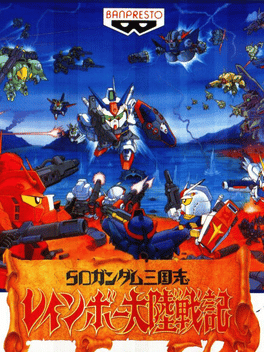
SD Gundam: Sangokushi Rainbow Tairiku Senki is an Action run-and-gun game in the style of the Contra series, developed by Bandai and published by Banpresto. Released in Japan for the arcades in 1993.Oishii Puzzle ha Irimasen ka
1993
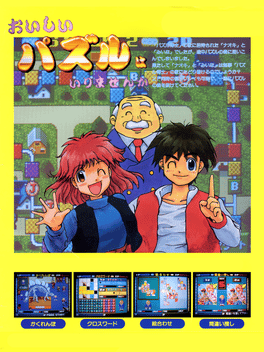
Oishii Puzzle Wa Irimasen Ka is a puzzle video game, developed by Kuusoukagaku Corp. and published by Sunsoft on September 1993 in Japan only for arcades. There are four mini-games to choose from: crossword puzzles, picture matching (jigsaw puzzles), spot the differences, and hide and seek. The game progresses in a sugoroku format, where you spin the roulette wheel, move forward by the number of squares that come up, and play the mini-games instructed on the squares that stop. It is developed by the Science Fiction Research Institute. In 1994, it was ported to the Super Famicom as Hebereke No Oishii Puzzle Ha Irimasen Ka which featured the company's mascot character, Hebereke.Grand Tour
1993
Poly-Net Warriors
1993
Polygonet Commanders
1993