New Arcade Games - Page 69

GunMaster
1994
GunMaster
1994
GunMaster is an obscure Arcade Action Game developed by Metro Corporation (creators of the latter Bust a Groove) in December 1994. The game was influenced by the earlier Gunstar Heroes from Treasure, but with some Fighting Game and Beat 'em Up mechanics included.Cruis'n USA
1994
Cruis'n USA
1994
star 6.6Cruis'n USA is an arcade racing game originally released in 1994. It was developed by Midway Games and published and distributed by Nintendo. It is the first game in the Cruis'n series and features locations around the United States.Killer Instinct
1994
Killer Instinct
1994
star 7.2Killer Instinct is a fighting game developed by Rare and published by Midway and Nintendo. It was released as an arcade game in the fall of 1994 and, the following year, ported to the Super Nintendo Entertainment System (SNES) and the Game Boy. The game's plot involves an all-powerful corporation organising a fighting tournament. The story was adapted in a limited comic book series published under the short-lived Acclaim Comics imprint. Killer Instinct features several gameplay elements unique to fighting games of the time. Instead of fighting enemies in best-of-three rounds bouts, each player has two life bars. The player that depletes the other player's life bars first wins the match. The game also introduced "auto-doubles", a feature which allows players to press a certain sequence of buttons to make characters automatically perform combos on opponents. Also featured in the game are "combo breakers", special defensive moves that can interrupt combos.Cyber Commando
1994
Cyber Commando
1994
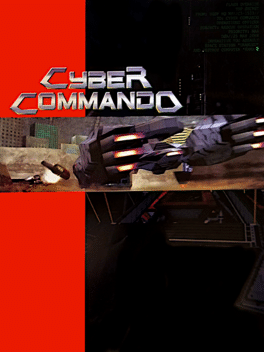
Cyber Commando is the 1994 sequel to Namco's 1993 arcade game Cyber Sled. The game ran on the Namco System 22 arcade hardware, the successor to the Namco System 21 arcade board which Cyber Sled ran on. The player pilots a futuristic tank that glides smoothly over the surface like a 'sled', searching for enemies to destroy.Ace Driver
1994
Ace Driver
1994
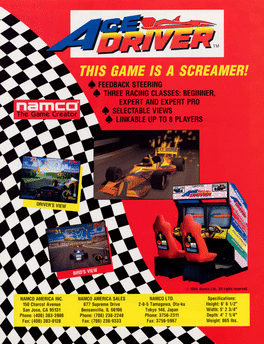
Ace Driver made extensive use of the CPU Assist technique whereby a trailing player would be given a significant speed boost to allow them to catch the leading player. However, the speed boost continued for a short while after the losing player had overtaken the leader - leading to a tactic known as boosting where a player would deliberately allow themselves to lose the lead, then during the last half of the last game lap would easily take back the lead with no hope of the opposing player catching them. Boosting also meant that straight skill races were difficult to have as CPU assist would be continually changing the losing players speed and position.Mazinger Z
1994
Mazinger Z
1994
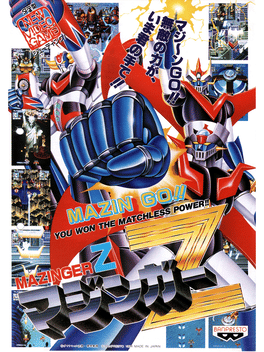
Mazinger Z is an Action game, developed by Eleven (Japan) and published by Banpresto, which was released in Japan in 1994.This is shooting game in which you will be able to pick your character between Mazinger Z, Great Mazinger and Grandizer, each of them with their own strengths and weaknesses... yep, appears that although the name of the game only has one of those robots, you can control one from the 3 of them, or 2 if you will be playing in the usual 2-player game, which requires a friend of yours to spend his own coins.Dream Soccer '94
1994
Dream Soccer '94
1994
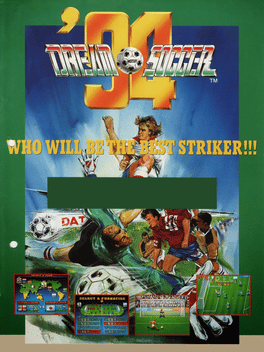
A soccer game from Irem, Japan. (Data East Corporation license for the rest of the world) Fast arcade football game released during the 1994 World Cup fever, with exaggerated physics, special shots and simplified controls for immediate handling.Blazing Tornado
1994
Blazing Tornado
1994
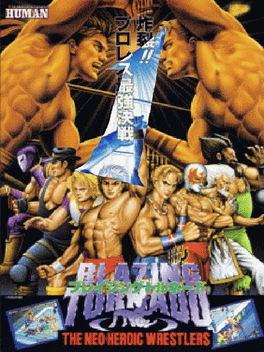
An arcade wrestling game developed by Masato Masuda and his team, most famous for their work on the Fire Pro Wrestling series.Ring of Destruction: Slam Masters II
1994
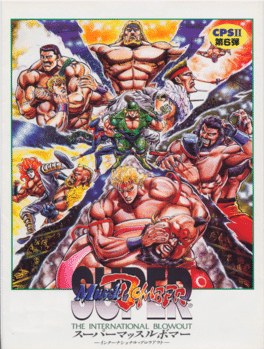
The wrestlers of the Capcom Wrestling Association gather once again, but this time the Blood Wrestling Association has joined in to wrestle with the CWA for the championship. Victor Ortega, the previous Muscle Bomber champion, as well as owner of the CWA, had left because he couldn't find anyone strong enough to give him a decent challenge. Now he's back, and is the guy to beat to earn the championship.Gun Force II
1994
Gun Force II
1994
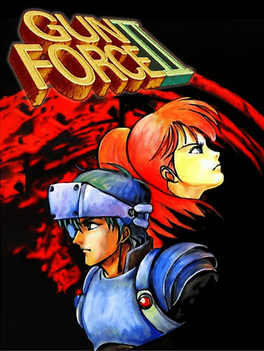
Gun Force II is a run and gun arcade video game developed and originally published by Irem on September 1994. It is the sequel to the original GunForce and one of the last arcade games released by the company.Dyna Gears
1994
Dyna Gears
1994
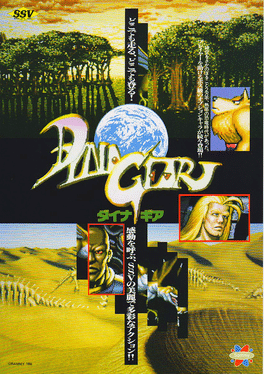
Dyna Gear: An Action Adventure On The Era Of Dinosaur is a 2D arcade platform game. The player can choose from two characters - Roger and Wolf. Gameplay is fast and simple - just run left and shoot enemies. Heroes can use various weapons, like swords, flails or arrows. The world in Dyna Gear: An Action Adventure On The Era Of Dinosaur is full of dinosaurs and various strange creatures.Blocken
1994
Global Champion
1994
Global Champion
1994
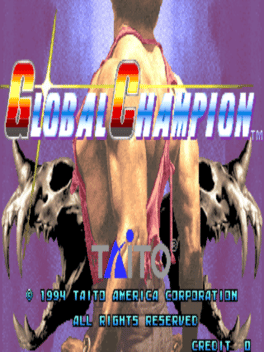
Global Champion follows the same fighting game conventions established by Street Fighter II. The player's character fights against his or her opponent in best two-out-of-three matches in a single player tournament mode with the computer or against another human player. The player has a character roster of nine fighters to choose from, and three bosses, each with their own unique fighting style and special techniques.Desert Tank
1994
Attack of the Zolgear
1994
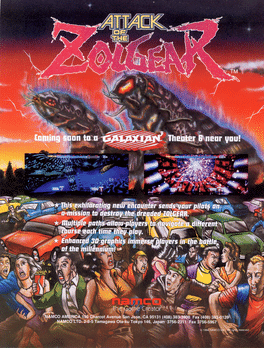
Attack of the Zolgear is an arcade game for one to six players released by Namco. It is a sequel to Galaxian3. This game used two LaserDisc players simultaneously for the outer space background, while computer generated graphics were overlaid on top. The environmental "theater" used for Galaxian 3 received this upgraded sequel in 1994.Pnickies
1994
Pnickies
1994
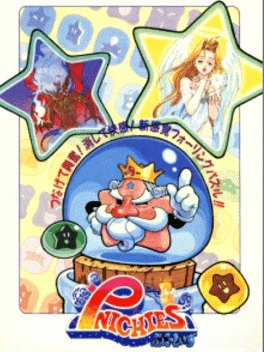
Pnickies is a Tetris-style puzzle game, where the objective is to match coloured balls of the same colour, causing them to disappear. Balls which are the same colour link together on contact to form large shapes, and must be carefully stacked to allow access to other colours. The playfield you can see consists of six columns twelves rows high. The thirteenth row which is not visible is also used for storing balls and is counted for scoring purposes. The balls drops from the top of the screen in linked pairs in the third column, and can be of two types, those with stars and plain. The plain ones simply connect with those of the same colour, but any single colour with two stars or more in it will cause the whole linked colour to disappear and award you points.1000 Miglia: Great 1000 Miles Rally
1994
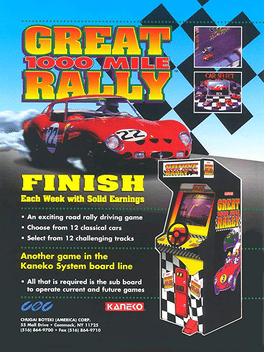
A driving game with top-down pseudo 3-D graphics. You can select one of ten cars and depending upon which vehicle has been chosen, you can select the starting point of the race. The game can be installed in a variety of cabinets using either a joystick and buttons or a steering wheel and foot pedals for control.Crazy Cross
1994
Crazy Cross
1994
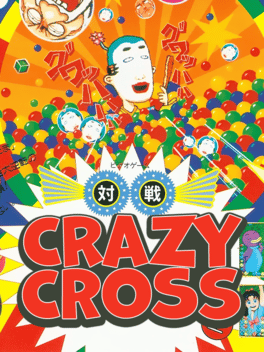
Taisen Puzzle-Dama is a puzzle video game and the first video game in the Taisen Puzzle-Dama series. It was released in July 1994 by Konami in Japanese arcades. It was released in Europe as Crazy Cross. The gameplay of the series is similar to other matching-based puzzle games, such as Puyo Puyo, being a battle game between one player and either a human or CPU opponentLas Vegas Girls
1994
Arcadia
1994