New Arcade Games - Page 50

Dancing Stage Internet Ranking
1999
Dancing Stage Internet Ranking Version is also known as "DDR Version 1.5". Konami released an upgrade to the Dancing Stage arcade cabinet known as the "Internet Ranking" version, though the name is slightly ambiguous since the machine itself does not possess the ability to connect to the internet. An interesting feature of this machine is that it contained 6 more songs than the original arcade version, as advertised by a sticker on the arcade machine's marquee. The 6 additional songs were all production's by Konami's own music composers. The Internet Ranking version of the game added an extra option to the song selection wheel which had similar functionality to the built-in nonstop mode, except the player must play a selection of songs which have already been chosen. The selection of songs on an Internet Ranking machine changes depending on the current month. Upon completing an Internet Ranking nonstop course, the machine would display the player's final score along with a code consisting of numbers and letters,HyperBowl: Arcade Edition
1999
HyperBowl scores just like conventional bowling, but the style of play is entirely unique. In this virtual bowling game, you can steer the ball all the way to the pins! Sound too easy? Not really -- you must dodge trolley cars in San Francisco 2099, leap buses on the streets of Tokyo, navigate across a pitching ship on the High Seas, and avoid whatever other obstacles are thrown your way. Players seeking more predictable play can always fine tune their skills in a Classic bowling alley or bowl through a peaceful Yosemite forest.Multi Champ
1999
Battle Gear
1999
Street Fighter III: 3rd Strike
1999
star 8.6Street Fighter III: 3rd Strike is the second follow-up to Street Fighter III. The game increased the character roster by adding five new characters and also added further refinements to the previous game's play mechanics and rules. All the returning characters from the previous Street Fighter III games were given new stages, endings, and voice actors for certain characters, continuing the overall storyline from where the first two games left off.Battle Bakraid
1999
Battle Bakraid
1999
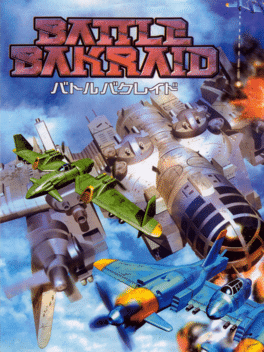
The capitalist nation of Randa has long had a history of excellence in the creation of aircraft, attracting the best of engineers in aerodynamics, artillery, and structuring from the world over. Once, even this interest had waned, until the creation of the air show Bakraid, in which the capabilities of the fighters could be demonstrated outside of simulations for all to see. Around the time of the seventh Bakraid, a nearby nation, Deneb, had attained an expansionist attitude, forcibly subjugating and annexing several of its neighbors with the assistance of the Shtarterra Security Council. Recently, Deneb has asked to participate in Bakraid. Randa's defense council, perfectly aware that this is just a pretext for Deneb to get its and the SSC's engines of war into Randan borders and more easily prosecute their war from there, give their blessing. However, the council secretly contacts the other Bakraid participants, offering even more prize money than normal if they will perform in a special version of Bakraid--genuiBeatmania 4thMix: The Beat Goes On
1999
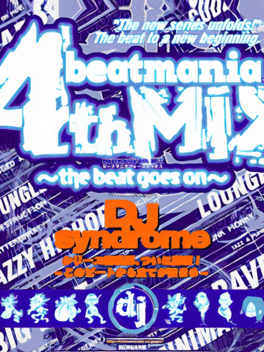
beatmania 4thMIX is a rhythm game developed by Konami. It is the fourth numbered game in the beatmania series (but 5th beatmania arcade game) and is part of the BEMANI franchise. The game is played with a controller with one turn table and 5 keys, three white and two black. On the screen you will see bars moving from the top to bottom in columns representing each of the keys and the turntable. When the bars reach the judgement line it is time to scratch. beatmania 4thMIX is the first big redesign of the series, it features a brand new interface. Difficulty is now on a scale from 1 to 7. All songs have been given a single and double mode chart. Song list shows not only genre and title, but artist as well. Although all previous beatmania songs have been removed. a brand-new set of 23 songs was added as a replacement. It is the first time that licensed songs makes an appearance in the series, as well as crossovers from other BEMANI games.Beatmania IIDX Club Version
1999
Beatmania IIDX Club Version was released on April 21, 1999 by Konami to the Japanese arcade audience. It could be linked with a Dance Dance Revolution machine for simultaneous play.Road Burners
1999
Road Burners
1999
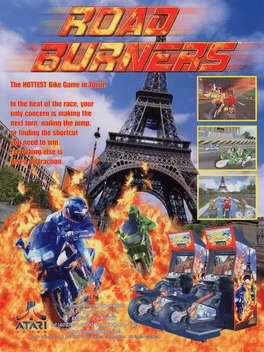
Road Burners is a 1999 motorcycle racing arcade game developed and released by Atari Games. It features a tilting motorcycle and the ability to be hooked to other like machines for up to 8 simultaneous players.Flame Gunner
1999
Flame Gunner
1999
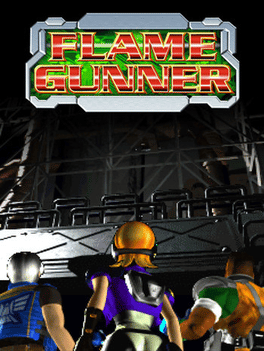
Flame Gunner is a 3D arcade shooter. The game is very simple - the player (or players) must perform a specific task, usually something around destroying or killing the right amount of enemies. If a player does the job, he will go to the next arena (or on the current arena, a new task will appear). 3 heroes are in the game - Falcon, Talia (she is only female in game) and Kai.Crisis Zone
1999
Crisis Zone
1999
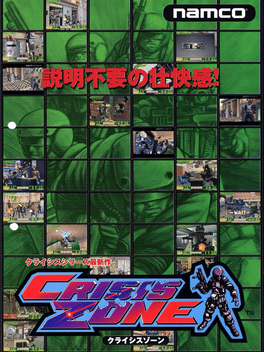
star 6.9Crisis Zone is a light gun arcade game released by Namco in 1999, a spin-off of the Time Crisis series. As a feature, it handles a large machine gun type controller instead of a handgun like the conventional work. In 2004, the Playstation2 version was released with Guncon2 support.Dancing Stage
1999
Dancing Stage
1999
Dancing Stage is a series of music video games developed and published by Konami. It is a spin-off of Dance Dance Revolution for the European market as well as a few Japanese titles. Games were released for arcade, PlayStation, PlayStation 2 and Wii. Dancing Stage is a music video game released in arcades on March 9, 1999. It includes 13 songs: nine composed by Naoki Maeda, and four licenses. It uses the Dance Dance Revolution 2ndMix engine. In North America, the game received a PlayStation port, which omits "Butterfly" and "Make It Better (So-Real Mix)". Songs in the arcade version include: "AM-3P" by kTz "Boom Boom Dollar" by King Kong & D.Jungle Girls "Brilliant 2U" by Naoki "Brilliant 2U (Orchestra-Groove)" by Naoki "Butterfly" by Smile.dk "Have You Never Been Mellow" by The Olivia Project "Make It Better" by mitsu-O! "Make It Better (So-Real Mix)" by mitsu-O! "My Fire" by X-Treme "PARANOiA" by 180 "Put Your Faith In Me" by UZI-LAY "Put Your Faith In Me (Jazzy Groove)" by UZI-LAY "Trip MachineAirline Pilots
1999
Airline Pilots
1999
Airline Pilots is a flight simulator released for Sega NAOMI arcade hardware in 1999. The game simulates flying a Boeing 777 aircraft, and was developed with the input of engineers and pilots from Japan Airlines. Two different cabinet models were manufactured. The default type is a typical sit down cabinet with one monitor, while the "DX type" cabinet features three side-by-side 29" monitors, which surround the player to create a "cockpit". The extreme difficulty of "Airline Pilots", combined with a lack of interest in realistic flight simulators, led Sega to manufacture a conversion kit which allowed owners to convert the units into the more popular Sega Strike Fighter. As a result, Airline Pilots cabinets are relatively rare.Koro Koro Quest
1999
Beatmania IIDX
1999
Beatmania IIDX
1999
is a music video game developed by Konami's music video game division, Bemani, released in Japan on February 26, 1999. The objective is to perform songs using a controller with seven keys and a turntable. Its cabinet contains a widescreen monitor, massive speakers, and eight spotlights. Bemani later developed several updated versions of IIDX to increased success. The game retrospectively received a positive reception from video game publications for its gameplay and increased difficulty.Gradius IV: Revival
1999
Gradius IV: Revival
1999
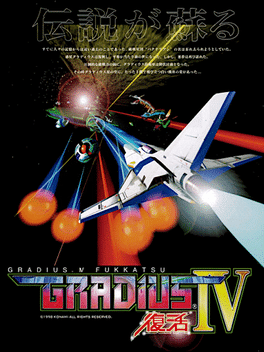
star 5.1Gradius IV is the fourth arcade installment in a series of scrolling shooter video games developed by Konami Computer Entertainment Tokyo. It was preceded by Gradius III, released in 1989, although spinoffs had been released prior to it such as Gradius Gaiden. This title brings a considerable graphical upgrade, particularly with the use of colored lighting. In addition, there have been several additions and removals to the vaulted weapons system; specifically, the edit mode has been removed and an online ranking system was added.Angler King
1999
500 GP
1999
Jyangokushi - Haoh No Saihai
1999
A Mah Jong game based on the story of the romance of the three kingdoms.MoreMore
1999
MoreMore
1999
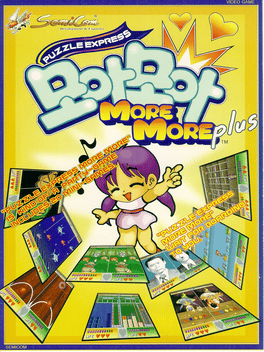
Semicom's second pure mini game collection relies on quick and simple challenges in the same vein as Bishi Bashi, borrowing its input scheme of three colored buttons. Seventeen games in four tears wait for their completion, ranging from boring stuff like "find the differing image" or "choose the right exit from the labyrinth", to more inventive tasks where the player evades Gozilla's stomping feet or performs magic tricks in form of button combinations. The presentation is nothing to write home about. Everything looks distinctively low budget, especially the narrow color range leaves a rather weird impression.