New Arcade Games - Page 147

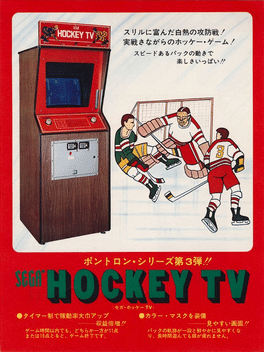
Hockey TV
1973
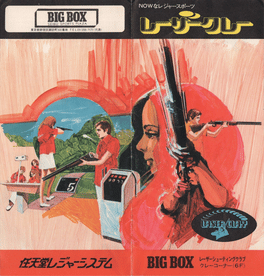
Laser Clay Shooting System
1973
The Laser Clay Shooting System is a light gun shooting simulation game created by Nintendo in 1973. The game consisted of an overhead projector which displayed moving targets behind a background; players would fire at the targets with a rifle, in which a mechanism of reflections would determine whether or not the "laser shot" from the rifle hit the target.Davis Cup
1973
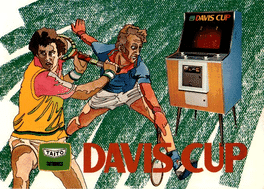
Davis Cup
1973
Taito's fifth game and the second developed in house. The game is another ball-and-paddle variation, like three of Taito's previous four releases, but with the added functionality of four players being able to play doubles. This was an important innovation during the 1973-1974 Pong craze first introduced in Allied Leisure's Tennis Tourney.Leader
1973
Asteroid
1973
Asteroid
1973
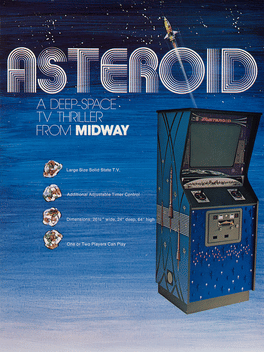
Asteroid was originally developed by Atari for Midway in fulfillment of a contract to supply one video game and one pinball machine. Atari had initially offered Pong during its development to fulfill the contract, but had been rejected. After finishing Asteroid Atari developed a near identical version of the game and released it themselves under the title "Space Race".Pong-Tron II
1973
Super Soccer
1973
Soccer
1973
Soccer
1973
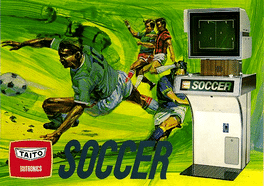
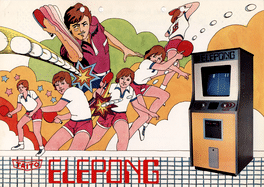
Soccer is Taito's third ever video game release and the first developed internally. The game was designed by the highly influential Tomohiro Nishikado, who would later go on to create Space Invaders. Soccer is a ball-and-paddle game like Pong, but with a green background to simulate a playfield, allowing each player to control both a forward and a goalkeeper. The players can adjust the size of the players, who are represented as paddles on screen. It also has a goal on each side. Soccer is likely to be Japan's first original domestically produced video game, in comparison to Japanese Pong clones released earlier, including Sega's Pong Tron and Taito's Elepong. Since it was exported to Europe in 1973 it may also be the first Japanese video game to be released on the European continent.Astro Race
1973
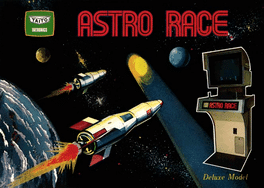
Astro Race
1973
Taito's second ever video game. It is based on Atari's Space Race and, like Elepong, uses imported PC Boards in a Taito-constructed cabinet.Pro Hockey
1973
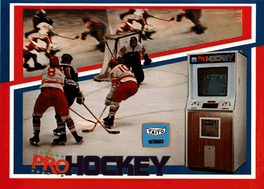
Hockey
1973
Hockey
1973
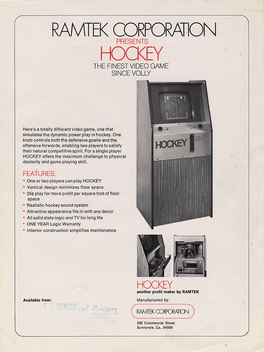
Hockey was a PONG-clone by RamTeK featuring a somewhat different gameplay by introducing "forward" paddles which were moved simultaneously with the "goalie" paddles. Just like PONG ot got ported to various 1st generation consoles and was also one of the two build-in games for the Fairchild Channel F - the world's first 2nd generation console.Gotcha
1973
Gotcha
1973
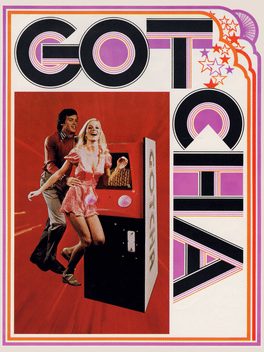
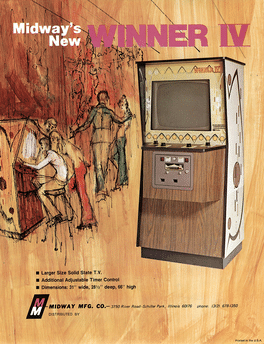
Gotcha is a two-player maze game where the objective is to catch the other player. A maze is displayed on the screen. The first player controls the Pursuer which is represented by a square and the second player controls the Pursued which is represented by a plus sign. As the Pursuer moves closer and closer to the Pursued, an electronic beep sound increases in frequency to a feverish pitch until the Pursuer catches the Pursued. Each time, the Pursuer catches the Pursued, a point is scored and the chase starts over again.Winner IV
1973
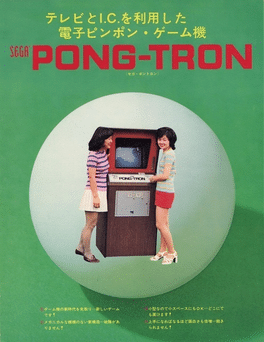
Pong-Tron
1973
Space Race
1973
Space Race
1973
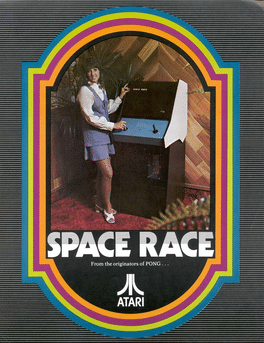
star 6.7Space Race is the second arcade game created by Atari and was released in July, 1973. The two players each control a rocket ship; the object of the game is to make it from the bottom of the screen to the top, while avoiding obstacles such as asteroids. Score is kept electronically and the background consists of a simple starfield.Tennis Tourney
1973
Tennis Tourney
1973
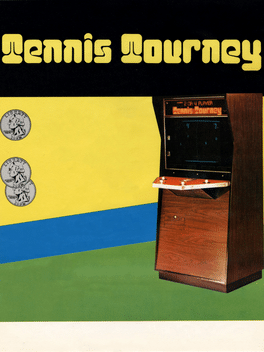
Allied Leisure's second game was a four-player version of Paddle Battle. It was the first four-player Pong-style game, predating Atari's own Quadrapong by two months.Elepong
1973
Winner
1973
Paddle Battle
1973
Paddle Battle
1973
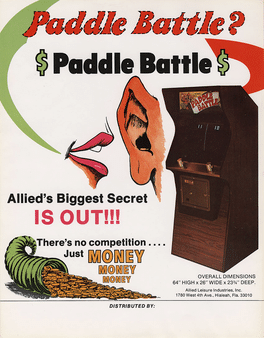
The first video game produced by Allied Leisure. It is a clone of Atari's pong, and was created by electronics firm Universal Research Laboratories more-or-less copying the board from a Pong machine Allied had purchased from a distrubutor.Volly
1973