New Arcade Games - Page 146

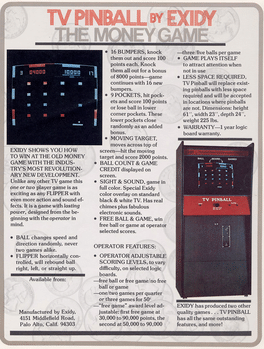
TV Pinball
1974
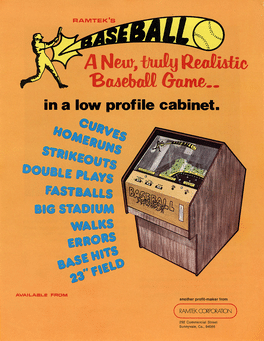
Baseball
1974
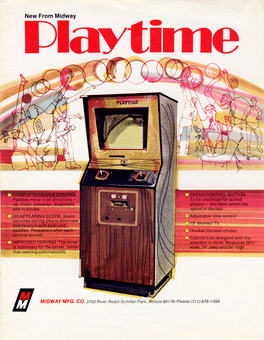
Playtime
1974
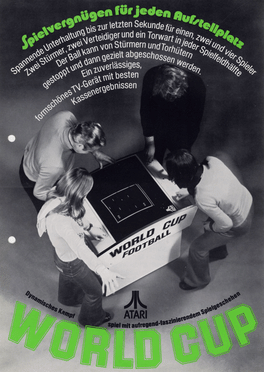
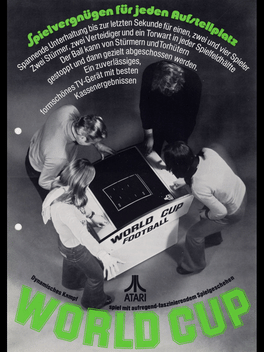
World Cup Football
1974
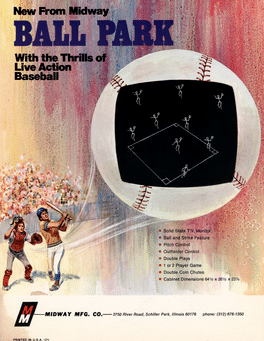
Ball Park
1974
Balloon Gun
1974
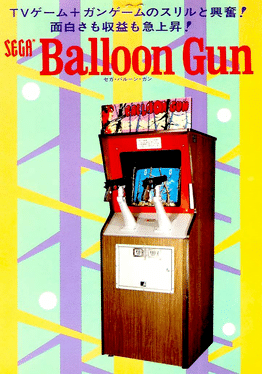
Balloon Gun
1974
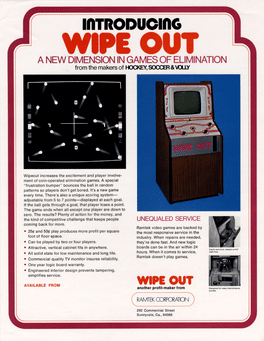
Released by Sega in 1974, it was an early first-person light-gun shooter video game, featuring both single-player and multi-player modes.Wipe Out
1974
Wild Gunman
1974
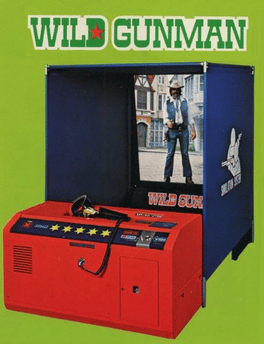
Wild Gunman
1974
Wild Gunman is a game that was first released in arcades in 1974 by Nintendo. The original version of the game featured a 16mm-projection screen that had the player shoot the gunman when his eyes blinked. If he or she did so at the right moment, the gunman would be shot down and killed. If they didn't, the player would be shot (in the in-game). The arcade was large and was part of the Simulation System that also included Shooting Trainer, which was much less exciting than its dueling counterpart.Tank
1974
Tank
1974
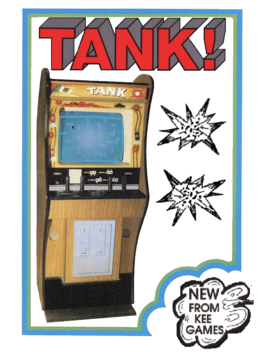
star 5.8Players move their tanks through a maze on screen, avoiding mines and shooting each other. The tanks are controlled by two joysticks in a dual configuration. Pushing both joysticks will move the player's tank forward, and pulling them both back causes the tank to stop. Moving the right joystick forward while pulling the left joystick back will cause the tank to turn right, while reversing the motion will cause the tank to turn left. The players are represented by one black and one white tank sprite, and mines are denoted by an "X". Points are scored by shooting the opponent or when a player runs over a mine; the player with the highest score at the end of the time limit wins the game. Tank was also one of very few games to be ported onto 1st generation consoles, usually under the title "Tank Battle".Wheels
1974
Wheels
1974
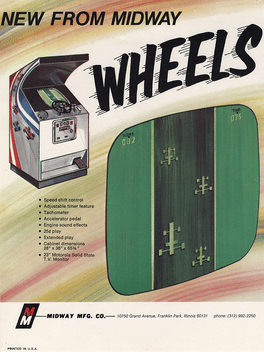
Speed Race is a 1974 arcade racing video game developed and manufactured by Taito and released under the titles "Racer" and "Wheels" in North America by distributor Midway Manufacturing in 1975. Designed by Tomohiro Nishikado, the gameplay involves the player using the attached steering wheel to maneuver a car alongside a fast vertical scrolling road. The objective is to score points by driving past other cars without colliding with them; more points are awarded for driving faster. Players must do this under a 90-second time limit, which ends the game when it runs out. The gameplay concepts were adapted from two earlier driving electro-mechanical games: Kasco's Mini Drive (1958) and Taito's Super Road 7 (1970). The original Speed Race and Wheels had an upright arcade cabinet, while Midway's Racer introduced a sit-down cabinet. Taito released an updated version of Speed Race called Speed Race DX in 1975. Two-player versions followed with Midway's Wheels II and Taito's Speed Race Twin. The game was a worldwide commPin Pong
1974
Gran Trak 20
1974
Gran Trak 20
1974
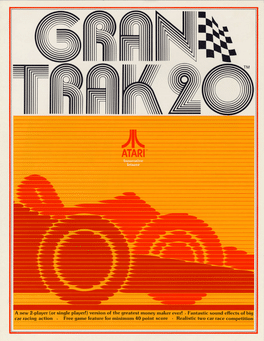
Gran Trak 20 is the follow-up to Gran Trak 10. Unlike the original game it allows two people to race each other, a significant innovation since neither game features computer-controlled cars.Touch Me
1974
Touch Me
1974
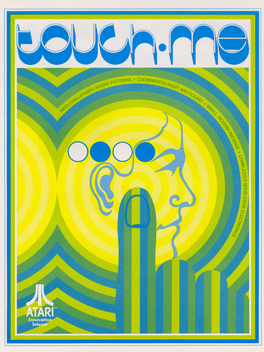
Touch me challenges the player to remember the sequence of sight and sound, and correctly repeat the pattern. The drop of the quarter in the top-mounted acceptor activates the computer to present a single-tone sound. When the sound occurs, the corresponding button lights to give a visual clue. Then the game pauses long enough for the player to "confirm" the sound to the computer by pressing the same button that lit. Oops! Wrong button? ERROR number one… and a lighted window tells the player he's goofed. Then another chance… the sound and lighted button are repeated by the computer. Another pause … right! You've hit the right button(s) in the right sequence, and the game goes on to another sound sequence. Every correct player response adds an additional sound/note to the sequence. "Beep – beep – bloop – beep – bloop" … Did you correctly repeat those sounds when the buttons lit? Sorry, only three errors per game. You'll have to insert another 25¢ and try again!World Cup
1974
TV Basketball
1974
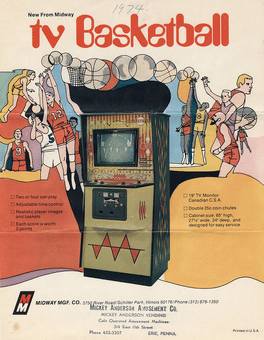
TV Basketball
1974
Released in the arcades in april 1974, Basketball was a landmark title, notable for several firsts in video gaming. It was the first basketball video game, the first video game to use sprites, and the first to represent human characters. It is also the first known Japanese-developed game to be released in North America.Gran Trak 10
1974
Gran Trak 10
1974
Gran Trak 10 was a single-player racing arcade game released by Atari in 1974. The player raced against the clock, accumulating as many points as possible. Primitive diode-based ROM was used to store the sprites for the car, score and game timer, and the race track. The game's controls — steering wheel, four-position gear shifter, and accelerator and brake foot pedals — were also all firsts for arcade games.Quadrapong
1974
Quadrapong
1974
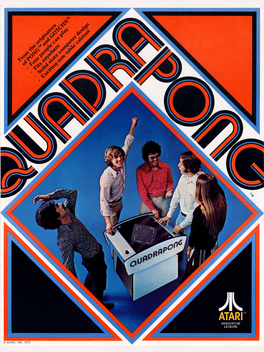
Quadrapong is a four-player version of Pong by Atari Inc. subsidiary Kee Games, and designed by Steve Bristow. Quadrapong was the first cocktail cabinet arcade video game. The cabinet consists of a woodgrain 35" x 37" cocktail cabinet. Two control paddles are mounted on each side of the cabinet, with a horizontally mounted Zenith television diagonally set in the cabinet. Two, three, or four players move their paddles to defend their goal area, consisting of openings in the players' walls. Each player starts with four points, and loses one point each time the ball penetrates their goal. If all four points are lost the player's paddle is removed and the goal "closes", creating a solid wall and removing the player from the game. The game continues until only one player is left.Qwak!
1974
Qwak!
1974
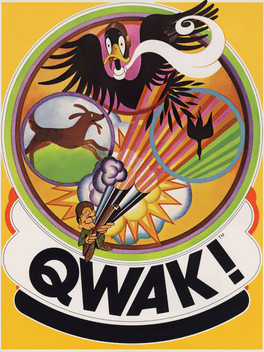
Qwak! is a duck hunting light gun shooter arcade video game developed by Atari and released in 1974. In the game, ducks fly one at a time across the screen, and the player shoots at them using a light gun attached to the game cabinet. The player gets three shots per duck; ducks change direction away from missed shots and fall to the bottom of the screen when hit. A screen overlay adds images of reeds and a tree branch, and an image of a duck is added to a row at the top of the screen whenever a duck is hit. Games continue until a time limit, set by the machine operator, is reached. Qwak! is most likely the inspiration for the 1984 Nintendo Entertainment System light gun game Duck Hunt.Spike
1974
Spike
1974
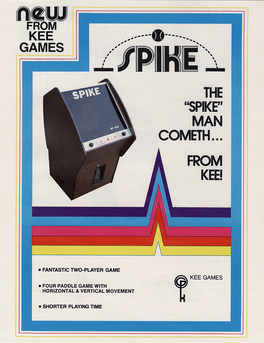
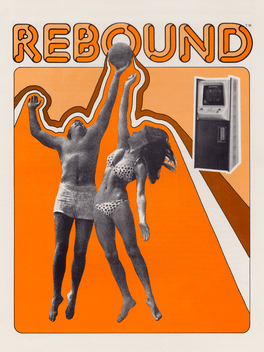
Spike is Kee Games' version of Rebound, with an added "Spike" button. Like Rebound it is a ball-and-paddle game reminiscent of volleyball. The "spike" button controls a vertical paddle close to the dividing line (the "net") which symbolizes a player jumping up and blocking the shot.Rebound
1974