New Arcade Games - Page 136

Space Launcher
1979
Space Launcher
1979
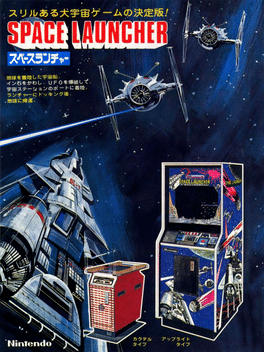
Space Launcher is an arcade video game by Nintendo that was surprisingly original (many of the games Nintendo made during the late '70s were clones of popular titles like Pong, Space Invaders and Breakout). The game is similar to Frogger, though is not a clone since it predates it by at least two years. The game takes place in space, and your goal is to maneuver around space objects and dodge oncoming enemy fire from the aliens that are stationed above. There are also treasures at the top, and your goal is to fly up, grab the treasure, and come soaring back down after which you must repeat it until all of the treasures have been scavenged. The game's poster seems to be inspired slightly by the Star Wars films, which were very successful at the time of this game's release. Even the yellow font of this game's logo could be said to be based on Star Wars' logo.Lunar Rescue
1979
Lunar Rescue
1979
star 5.3The game starts with the player's spacecraft docked inside the mothership at the top of the screen. Below the mothership is an asteroid field and below that, the surface of the moon. There are three platforms which can be landed on and six stranded astronauts that need rescuing. You control a small spacecraft. The player must press the button to release their spacecraft from the mothership and manoeuvre through the asteroid field. The craft can only move left or right or use up a finite amount of fuel by engaging the thrust (the same button again) to slow its descent. If the craft is landed successfully on one of the available platforms, one of the astronauts will run towards and board the craft. The asteroid belt now changes into a swarm of flying saucers, some of which drop bombs. The player must now guide the spacecraft back up to the mothership (the craft ascends without using up fuel), avoiding the flying saucers. The thrust button is now a fire button which can be used to shoot at enemies above (as in SpaceSpace Guerilla
1979
Space Guerilla
1979
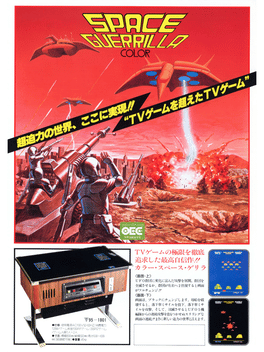
Space Guerrilla is a fixed-screen shooter in the vein of Space Invaders but with some interesting twists. The player controls their tank at the bottom of the screen and must prevent an alien invasion. Instead of the typical four bunkers, there are three pieces of scenery with buildings. The attract screen starts with a little animation of aliens landing on one of them and peeing. Another difference with the typical Space Invaders clone is that while the ships fly in a block formation, they don't go back and forth between the screen boundaries. Instead they fly past and go out of view again, before flying back. Some ships also dive down towards the bottom of the screen like in Galaxian. When the player loses all their lives the game is lost.Space Ship
1979
Space Ship
1979
Space Ship is an early arcade video game from Konami. It is a clone of Exidy's Star Fire, a first-person space combat game.Monkey Magic
1979
Monkey Magic
1979
Monkey Magic is a video game released in arcades by Nintendo in 1979. It is a Breakout clone and one of Nintendo's earliest arcade games. Some sources claim that Ikegami Tsushinki also did design work on Monkey Magic. Players control a paddle to hit the ball at a large number of blocks shaping a monkey's face. Players can also earn different numbers of points by catching blocks that fall, as well as hitting the ball in different places.Astro Fighter
1979
Astro Fighter
1979
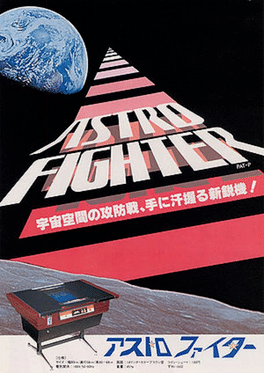
star 8The game of Astro Fighter consists of 4 waves and a refueling stage, which are then repeated with increasingly higher difficulty. The player's task is to eliminate the four successive waves of different types of attacking craft, while avoiding being hit by missiles and bombs, and then refuel by shooting the 'GS' ship before repeating the process. The player starts with 3 lives and receives a bonus life on reaching a score of 5000. 300 bonus points are received for shooting each 6 falling bombs and for 950 for hitting the GS ship accurately on the first shot. A very large bonus of 10,000 is given for getting through 4 waves and refueling by using exactly 2 shots more than the minimum needed. As the higher levels of Astro Fighter are difficult to survive consistently, even for the best players, the highest scores have been achieved by the achieving the 10,000 bonus deliberately.Warrior
1979
Warrior
1979
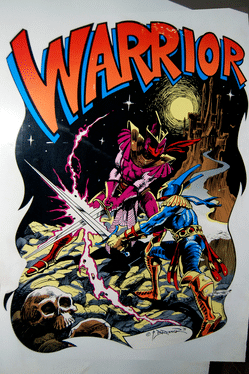
Warrior is a 1979 arcade fighting game and is considered one of the first games of its genre. Developed by Tim Skelly while working at Cinematronics, it was released under the Vectorbeam company name shortly before Cinematronics closed Vectorbeam down. The game featured two dueling knights rendered in monochrome vector graphics and based on crude motion capture techniques. Due to the limitations of the hardware used, the processor could not render the characters and gaming environment at the same time and backgrounds were printed, with the characters projected on the top.Galaxian
1979
Galaxian
1979
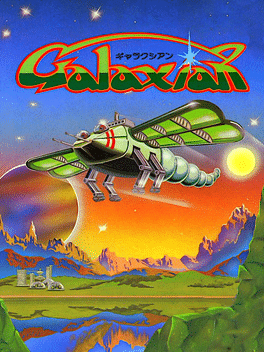
star 8.2Galaxian is a shooter arcade game developed by Namco in 1979. It was released by Namco in Japan and a few months later by Midway Games in North America. The game was developed to compete with Taito Corporation's Space Invaders, released a year earlier, and featured a similar space theme. The player controls a space ship in the bottom part of the screen and shoots at enemies descending from the top of the screen. The game was received very well by the public and has continued to be a game with a competitive community to this day. It was followed by a successful sequel called Galaga in 1981 and two less known sequels called Gaplus in 1984 and Galaga '88 in 1987. Galaxian was one of the most popular games in the golden age of arcade video games.Space Chaser
1979
Space Chaser
1979
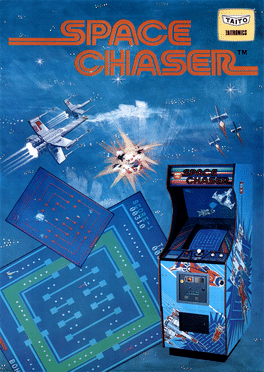
Collect all the dots in the maze without colliding with (or being collided by) the missile. You can use your speed boost as long as you have fuel left. If the missile gets behind you on a long stretch it will speed up and the only way to avoid collision then is to turn a corner.Rich Man
1979
Barrier
1979
Barrier
1979
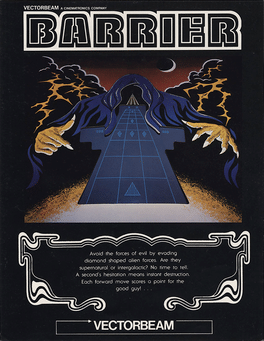
Barrier is a maze arcade game using vector graphics released by Vectorbeam in 1979. In this very basic game, players move a small triangle around on the grid, while attempting to avoid the diamonds that are also moving around on the grid. Reaching the end of the grid teleports the player back to the front of the grid to gain points. The game is played on a 3x9 grid that is displayed at angle to make it appear to be in 3-D. The game was sold to Vectorbeam by Cinematronics.Field Goal
1979
Field Goal
1979
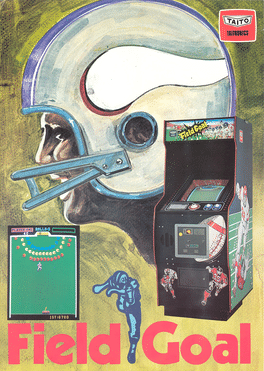
A football/Breakout-style arcade game made by Taito. Despite its name it is less of a football game and more of a Breakout variant, with the player represented by a paddle and the opposing team guarding the goal and at the top of the screen. The game is controlled with a paddle, like most Breakout variants.Deluxe Space Invaders
1979
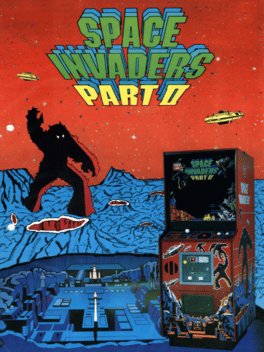
star 4.9Originally called Space Invaders Part II in Japan, this is the first sequel to the coin-munching hit Space Invaders. This game is notable for introducing the concept of a cut-scene.Bomb Bee
1979
Bomb Bee
1979
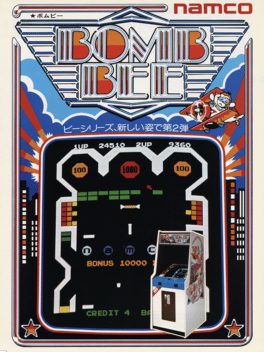
It is the sequel to Gee Bee, which was released in the previous year. The objective of the game is to use two paddles to bounce a ball which flies around and hit the colored bricks above it with the ball. When the bricks are cleared out of the side sections, it will turn that same side's pop-bumper into 100 points instead of 10.Straight Flush
1979
SOS
1979
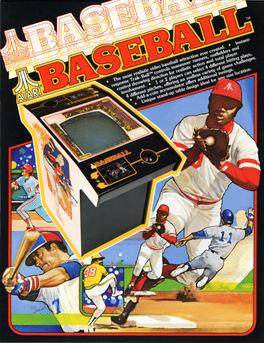
Atari Baseball
1979
Safari Rally
1979
Safari Rally
1979
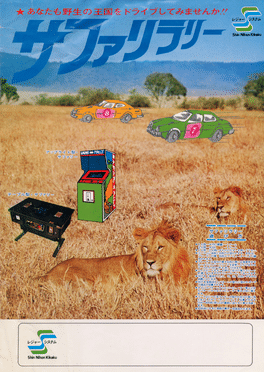
A maze game where the player guides a car through a maze-like forest collecting coins while avoiding an enemy cars and snakes.Phantom II
1979
Phantom II
1979
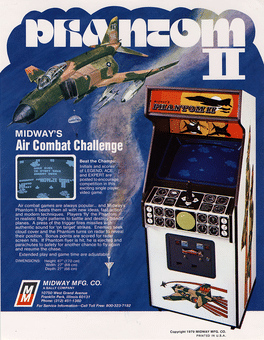
A vertical air combat game where the player controls a jet fighter and battles enemy aircrafts in the sky.Dodgem
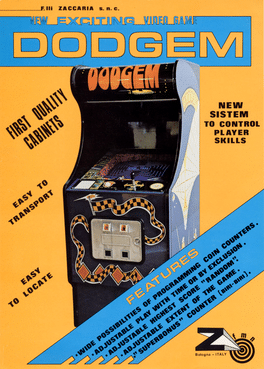
1979