New Arcade Games - Page 137

Dodgem
1979
4 Player Bowling Alley
1979
A black and white bowling game for up to four people. Players roll a multi-colored trackball to simulate throwing a bowling ball down the alley. Attempt to knock down all the pins.Star Fire
1979
Star Fire
1979
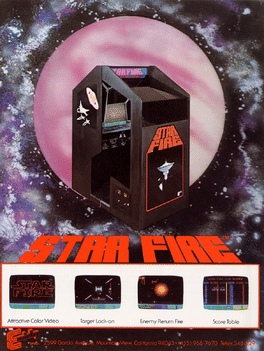
Star Fire is an early color game programmed by David Rolfe with graphics designed by Ted Michon and Susan Ogg. It was released by Exidy in 1979. Star Fire is a first-person space shooter where your mission is to seek out and destroy enemy spacecraft while avoiding incoming missiles. If a number of elements of Star Fire seem similar to Star Wars, your eyes are not deceiving you. Star Fire was originally designed as a Star Wars game, with the eventual hope that either a license would be purchased or that they would change enough of the elements to avoid any legal entanglements. Originally, the authors had hoped that Midway would pick up the game for distribution, but they passed and instead Exidy purchased the game and released it. Star Fire was the first game to come in an environmental cabinet, designed by Michael Cooper-Hart. Even more importantly from a historical perspective, Star Fire was the first game to keep a high score list where the player could enter his or her initials. Prior games had tracked the conAtari Basketball
1979
ZunZun Block
1979
ZunZun Block
1979
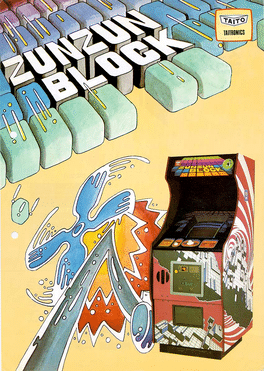
ZunZun Block is the third game in Taito's Block series. Again, the gameplay is similiar to Breakout's ball-and-paddle block breaking.Head On
1979
Head On
1979
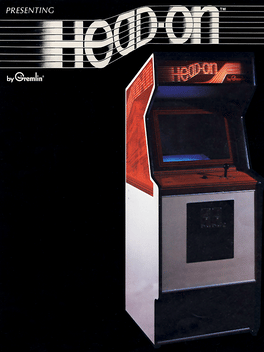
Head On is an arcade game developed in 1979 by Sega. In this game, players control their cars through the maze where the goal is to collect the dots while avoiding collisions with the computer-controlled car that is also collecting dots. It was an early maze game revolved around collecting dots and is considered a precursor to Namco's 1980 hit Pac-Man.Fortress
1979
Speed Freak
1979
Speed Freak
1979
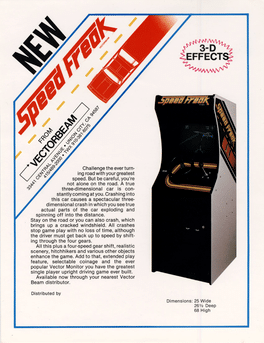
Speed Freak is a monochrome vector arcade game created by Vectorbeam in 1979. It is a behind-the-wheel driving simulation where the driver speeds down the computer generated road past other cars, hitchikers, trees, cows and cacti. Occasionally a plane will fly overhead towards the screen. One must avoid crashing into these objects and complete the race in the alloted time. The player can crash as many times as he wants before the time runs out and players were treated to two different crash animations. The first was a simple cracked windshield effect, the second was a crash where the car explodes into car parts that fly through the air.SF-HiSplitter
1979
SF-HiSplitter
1979
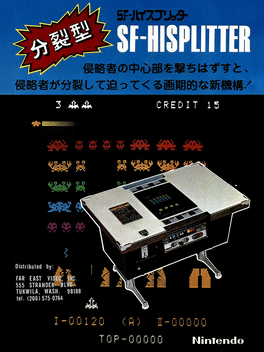
A special version of Space Fever called SF-Hisplitter was released the same year and features aliens that are double the width of the standard variety, which can either be destroyed completely or split into two smaller aliens depending on where they are shot. This version is in color, and the shelter blocks are visually distinct from the monochrome version.Heiankyo Alien
1979
Heiankyo Alien
1979
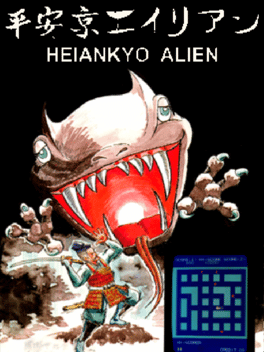
The player controls a Heian period police officer who must defend the capital city from an alien invasion by digging holes in the ground and filling them back up after an alien falls inside. The player scores points for every alien trapped, and the quicker the hole is filled up after the alien falls in, the higher the number of points are scored. The aliens increase in number as the levels progress, and they can escape from holes after a certain period of time elapses or if another alien passes above their hole. The player loses if he comes in contact with an alien. There is a time limit for each level, and the number of aliens increases drastically when this limit is reached, essentially preventing the player from completing the level.Space Fever
1979
Space Fever
1979
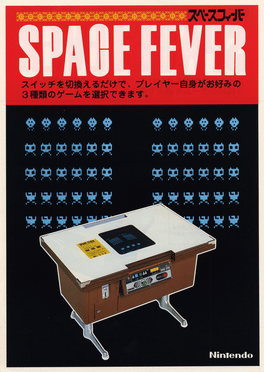
Shoot aliens as they move across the screen. Shoot the spaceship for extra points. Choose one of three games. Space Fever is a 1979 arcade game by Nintendo R&D2. Some sources claim that Ikegami Tsushinki also did design work on Space Fever. It was released in both monochrome and color versions. The gameplay is similar to Space Invaders, which had been released by Taito in 1978. It was distributed by Far East Video. The gameplay of Space Fever is reminiscent of Space Invaders (1978), where the player controls a laser cannon situated at the bottom of the screen and must defeat waves of enemy aliens. The aliens are arranged in rows and slowly move to the edge of the screen, before descending and continuing in the opposite direction. As more aliens are defeated, they increase in speed. A UFO will occasionally appear towards the top of the screen, which can be shot down for bonus points. There are three game modes that change the way the aliens move; the first presents two formations of enemies that move in opposite dSpace Attack
1979
Space Attack
1979
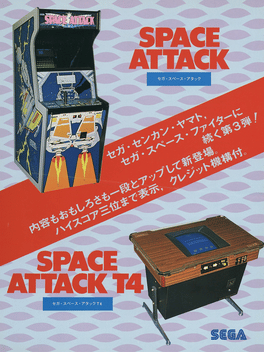
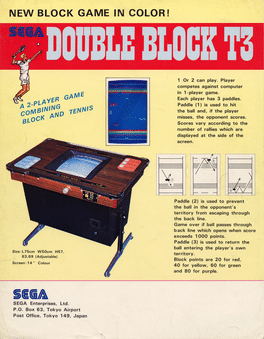
Space Attack is an arcade shooting game, released by Sega for VIC Dual hardware in 1979. In the US it is thought to have been renamed Super Space Attack - whether there are in fact two separate games is currently unknown, but the two are extremely similar and "Super" is often dropped in internal Super Space Attack documents. It's a Space Invaders clone and is almost identical to Taito's classic. It is completely identical to another VIC Dual Space Invaders clone, Alpha Fighter, sharing full color graphics and a "bonus" round (in which the saucer briefly descends from the top of the screen after clearing the rest of usual set of invaders). Space Attack has a different set of graphics to Alpha Fighter, however. Similar to versions of Space Invaders, the upright cabinets for Space Attack use a mirror to project the image onto a textured surface (in this case, a starfield), giving the illusion that there is a background while playing.Double Block
1979
Space King
1979
Space King
1979
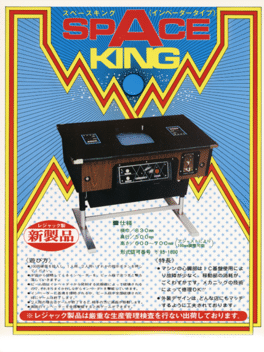
Space King is an early arcade game from Konami. It is the first non-Breakout clone the company produced, instead being a clone of Taito's Space Invaders.Game Tree
1978
Video Pinball
1978
Video Pinball
1978
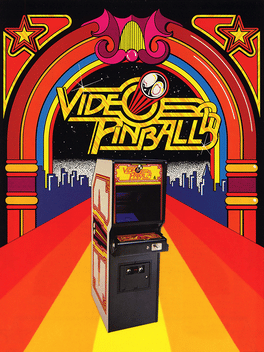
It's the world's first video game to simulate the action and color of pinball... in a compact cabinet size. Through the magic of mirrors, video images of the ball, flippers and drop targets are superimposed on an actual 3-dimensional blacklight playfield.Space Stranger
1978
Space Stranger
1978
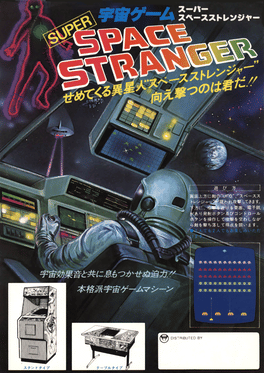
A modification of Space Invaders, by Yachiyo Electronics, Ltd. there is name entry after the first wave of aliens, the invaders change shapes and the spaceship has different design. The game also has different colors than the original Space Invaders.Space War
1978
Space War
1978
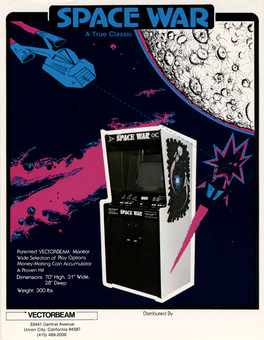
Space War is the first game released by Vectorbeam after its founders left Cinematronics. It is essentially a very close version of Cinematronic's Space Wars, which had in turn been brought to Cinematronics by Vectorbeam founder Larry Rosenthal as a prototype inspired by the 1962 PDP-1 game Spacewar.Galaxy War
1978
Galaxy War
1978
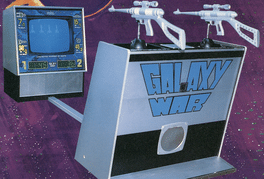
Galaxy War is a discrete logic arcade game released by Sega in 1978. It is a shooting game which is very similar to Bullet Mark—four types of targets, such as spacecraft and disks, are aimed at by one or two players. There is a bullet indicator and you can fire the trigger while squeezing the trigger.