New Sport Games - Page 197

Super Pachinko
1994
Super Pachinko
1994
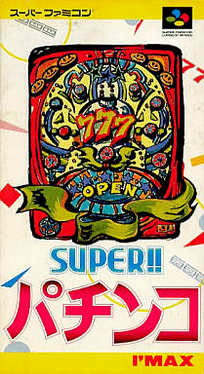
Super Pachinko is a Miscellaneous game, developed by Betop and published by I'Max, which was released in Japan in 1994.Hat Trick Hero 2
1994
Hat Trick Hero 2
1994
Hat Trick Hero 2 is a Japan-exclusive video game for the Super Famicom. A North American release Super Soccer Champ 2 was scheduled, however it was canceled. The game permits players to play soccer on an international level with all the national teams that took part in the 1994 FIFA World Cup, except the inclusion of Japan instead of South Korea. Most of the text is in Japanese; including the players' surnames. Eight different players can become the captain of the player's team and the team can use one of five different formations (4-4-2, 4-3-3, 3-5-2, WM and libero). All of the formations are used in modern day soccer except for the WM formation (which saw common use in England during the 1930s). The star player (captain) chosen kicks a shot (super shot or hyper shot) that pushes the goalkeeper into the stands, just like in Hat Trick Hero. Exhibition, world league (similar to a World Cup tournament) and Taito Cup (24 teams to beat) are the three possible variations in the game. After beating all the 23 nationalKoushien 3
1994
Koushien 3
1994
Koushien 3 is a Sports game, developed and published by Magical Company (Mahou), which was released in Japan in 1994.Pachi-Slot Monogatari: Universal Special
1994
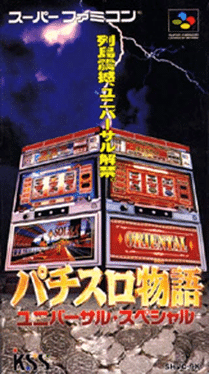
Pachi-Slot Monogatari: Universal Special is a Miscellaneous game, developed by Kaze and published by KSS, which was released in Japan in 1994.Super Ultra Baseball 2
1994
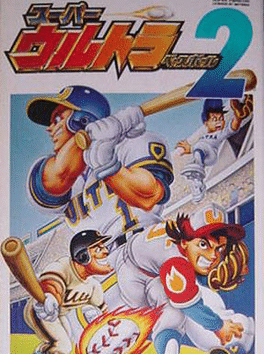
Super Ultra Baseball 2 was released in Japan only, as the fourth game in the Ultra Baseball series (known as the Baseball Simulator series in North America) These baseball titles included some form of "Super League" where pitchers and batters would have special abilities. Baseball Simulator 1.000 (1989, NES), also known as Choujin Ultra Baseball Super Baseball Simulator 1.000 (1991, Super NES), also known as Super Ultra Baseball Ultra Baseball Jitsumeiban (1992, SNES) NPB licensed. Super Ultra Baseball 2 (1994, SNES) Ultra Baseball Jitsumeiban 2 (1994, SNES) NPB licensed. Ultra Baseball Jitsumeiban 3 (1995, SNES) NPB licensed.Fire Pro Joshi: All Star Dream Slam
1994
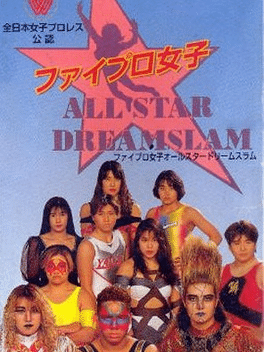
Fire Pro Joshi All-Star Dream Slam (also known as Zen-Nippon Joshi Pro Wrestling Kounin: Fire Pro Joshi All-Star Dream Slam) is an all-female wrestling game from Human Entertainment and uses their 16-bit isometric Fire Pro Wrestling engine. The wrestlers are all taken from the Zen-Nippon Joshi Pro Wrestling ("All Japan Women's Pro Wrestling") circuit, an exclusively female wrestling promotion that lasted for many years in Japan. As with prior Fire Pro Wrestling games, the mechanics behind the moves, pins and submissions rely more on timing and rhythm than button-mashing. Each bout is depicted with an isometric perspective, and various configurations of single-player and two-player controls are available for one-on-one matches and tag teams. The game features 18 pre-generated wrestlers and six create-a-wrestler slots.J.League Pro Striker 2
1994
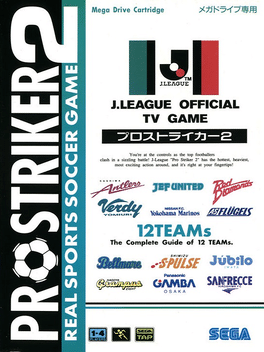
J.League Pro Striker 2 (Jリーグプロストライカー2) is the sequel to the football game J.League Pro Striker, created by Sega in 1994 for the Sega Mega Drive.Kabuki-chou Reach Mahjong: Toupuusen
1994
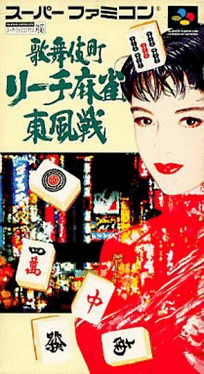
Kabuki-chou Reach Mahjong: Toupuusen is a Miscellaneous game, developed by Studio Softmov and published by Pony Canyon, which was released in Japan in 1994.Pachi-Slot Kenkyuu
1994
Pachi-Slot Kenkyuu
1994
Pachi-Slot Kenkyuu is a Miscellaneous game, published by Magical Company (Mahou), which was released in Japan in 1994.Dolucky no A.League Soccer
1994
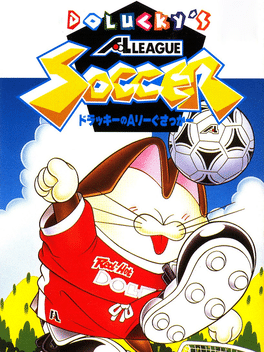
The Wild Bears have issued at challenge, and the whole town is down with soccer. Neco Dolucky isn't about to lay in the sun and sit this one out. He assembles his friends and enters his team, The Red Hot Doluckies, to challenge all on-comers to a heated battle.Tsuri Tarou
1994
Tsuri Tarou
1994
Tsuri Tarou is a Sports game, published by Pack-In-Video, which was released in Japan in 1994.Tecmo Super NBA Basketball
1994
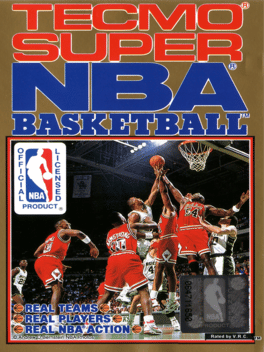
star 6.9Tecmo Super NBA features real teams (all 27 contemporary teams) and a roster of real players (over 320). One or two players can compete in regular, reduced, or short seasons, or play an exhibition game. Though primarily horizontal scrolling, digitized speech and cinemas, along with a free throw point of view, add drama to the proceedings. Besides the expected elements of basketball (substitutions, penalties, steals and blocks, time-outs, overtime), Super NBA gives you the chance to call offensive plays and to program win/loss records. Has a battery to back-up season play.Tommy Moe's Winter Extreme: Skiing & Snowboarding
1994
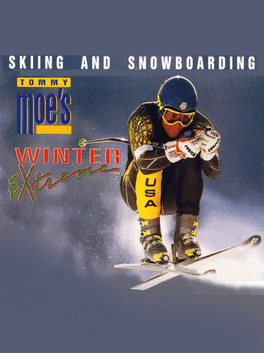
In Winter Extreme, the player can partake in a series of skiing and snowboarding events including the Downhill where the player speeds down a course in order to finish the course as fast as possible in an allotted time by speeding through checkpoints. The Slalom has the same set-up where the player has to finish the course in an allotted time by passing through gates, but also has to contend with twists, turns and various other obstacles in the players path. The Giant Slalom is similar except for more obstacles and a longer path.J.League Winning Goal
1994
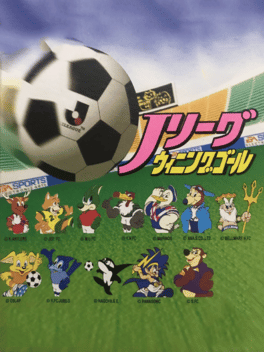
J.League Winning Goal is a soccer game released for the Game Boy and Family Computer that revolves around the J-League. There is an exhibition, a season mode, a playoff mode, and a practice mode. The object in the game is to win the championship so that the player's chosen team can be called the greatest team in all of Japan.International Sensible Soccer
1994
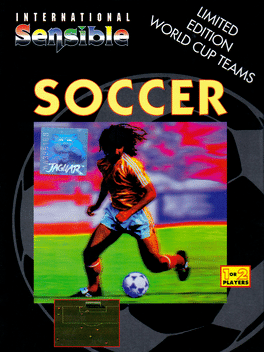
star 7Released to coincide with the 1994 World Cup, this version of Sensible Soccer was the first in the series to include national teams from outside Europe. The full World Cup tournament is featured, with players able to modify the selection of 24 participating teams—a notable option for English and French fans, as neither nation qualified for the tournament. This edition also introduced an on-screen referee for the first time in the series. Club team data was updated to reflect recent transfers and kit changes since the previous version. Gameplay remains consistent with earlier editions, using a top-down perspective, small player sprites, and a loose ball control system.Greatest Heavyweights
1994
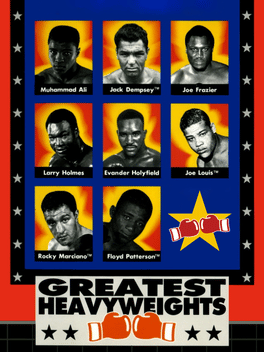
Eight World Heavyweight Champs Answer the Bell in this ultimate showdown to decide who's #1! Muhammad Ali, Jack Dempsey, Joe Frazier, Larry Holmes, Evander Holyfield, Joe Louis, Rocky Marciano, and Floyd Patterson - all in their prime and looking for knockouts! Each Champion looks and boxes in their signature styles. It's Ali's speed against Marciano's power, Holmes' stinging jab versus Frazier's devastating hook!IMG International Tour Tennis
1994
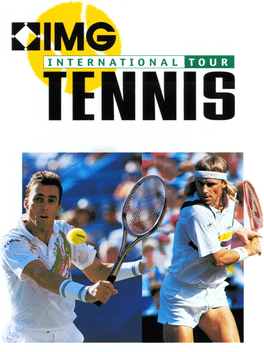
Licensed by the International Management Group (IMG), this rare Electronic Arts venture into Tennis features 32 professional players (all male and licensed by the IMG) including Bjorn Borg, Marcelo Rios, Patrick Rafter and Yevgeni Kafelnikov in 15 tournaments with different surfaces. Game modes include exhibition, tour and tournament for both singles and doubles. Along the usual offering of lobs, volleys, passing shots, top spins and slashes, the player can leave player movement to the console, and just focus on hitting the ball with the right shot with the correct timing (the player can also set the playing style, from all-court, baseline, or rush net). For those needing a boost of confidence before entering competitive play, Vic Braden, one of the most well known tennis coaches, has a court with special lines, a ball machine and some hints to help them improve their play.The Pro Yakyuu Super '94
1994
The Pro Yakyū Super '94 is a follow-up to The Pro Yakyuu Super. With the exception of a new mode, different music, commentary, and slight interface changes, the gameplay is largely identical to that of the previous entry. Rosters of the licensed professional Japanese baseball teams have been updated to the current season. The new mode is called "Home Run Contest"; the player controls a batter against a computer-controlled pitcher, trying to score a home run.Super Formation Soccer 94: World Cup Edition
1994
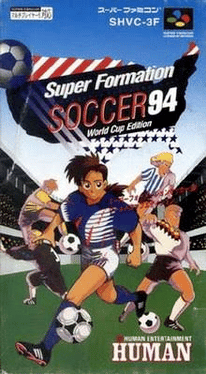
Super Formation Soccer 94 is a Sports game, developed and published by Human Entertainment, which was released in Japan in 1994. It's the third game of the Super Formation Soccer series and has been released for the FIFA World cup 1994.Slap Shot
1994