New Games - Page 13828

Tennis
1981
Tennis
1981
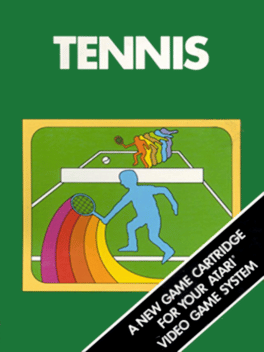
star 4.5Tennis offers singles matches for one or two players; one player is colored pink, the other blue. The game has two user-selectable speed levels. When serving and returning shots, the tennis players automatically swing forehand or backhand as the situation demands, and all shots automatically clear the net and land in bounds. The first player to win one six-game set is declared the winner of the match (if the set ends in a 6-6 tie, the set restarts from 0-0). This differs from professional tennis, in which player must win at least two out of three six-game sets.Jelly Monsters
1981
Jelly Monsters
1981
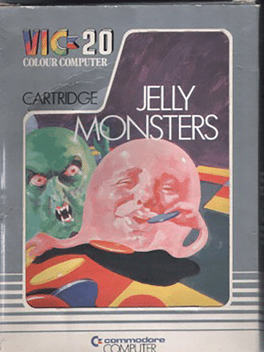
Jelly Monsters was originally developed as a port of Pac-Man by HAL Laboratory for Commodore Japan, who held the home computer rights for Pac-Man in Japan at the time. When Commodore released it internationally the title was changed to Jelly Monsters, since Atari held the home computer rights for North America. Commodore’s Jelly Monsters was released in 1981, a year before Atari would release Pac-Man for the 2600. Atari quickly sued Commodore to have the title removed from shelves and won.County Fair
1981
County Fair
1981
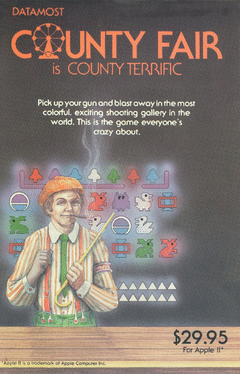
A shooting gallery game similar to Sega's Carnival written by Dan Illowsky and published by Datamost for Apple II.Computer Foosball
1981
Computer Foosball
1981
A table-soccer simulation game published by Sirius Software for the Apple II computers.Copts & Robbers
1981
Copts & Robbers
1981
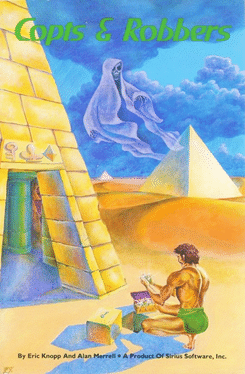
A action-adventure game similar to the Atari 2600 game "Adventure". The player, in form of a small block that can move around, must escape from the maze beneath the pyramids of the Pharao Tuttut.Gamma Goblins
1981
Gamma Goblins
1981
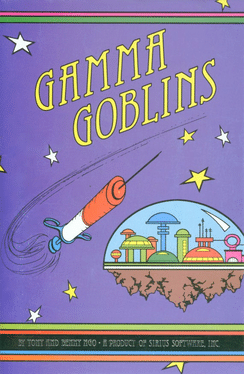
A shoot'em up taking place in the circulatory system of a human body where the player has to destroy the infectious gamma goblins. Written by Tony and Benny Ngo and published by Sirius Software for the Apple II computers.Hadron
1981
Orbitron
1981
Pulsar II
1981
Pulsar II
1981
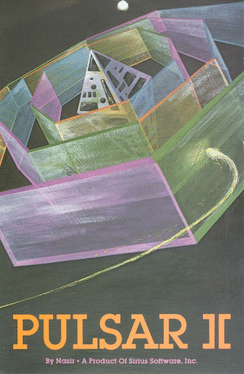
A single screen shoot'em up written by Nasir Gebelli and published by Sirius Software for the Apple II computers. The player controls a flying saucer, that can rotate clockwise or anticlockwise around a pulsar, with the aim to destroy the shields around the pulsar and finally the pulsar itself.Mars Mission II
1981
Mars Mission II
1981
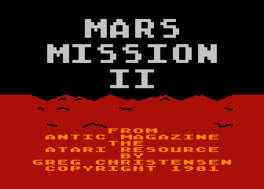
Originally developed as Caverns of Mars II, this Atari 400/800 game was released years later as Mars Mission II.Ice Hockey
1981
Ice Hockey
1981
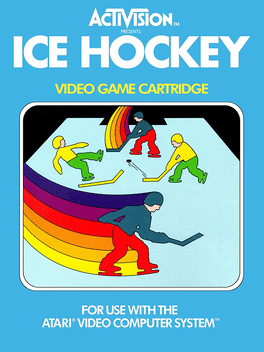
star 4.8Ice Hockey is a game of two-on-two ice hockey. One player on each team is the goalie, and the other plays offensive (although, the goalie is not confined to the goal). As in the real sport, the object of the game is to take control of the puck and shoot it into the opposing goal to score points. When the puck is in player control, it moves left and right along the blade of the hockey stick. The puck can be shot at any of 32 angles, depending on the position of the puck when it's shot. Human players take control of the skater in control of (or closest to) the puck. The puck can be stolen from its holder; shots can also be blocked by the blade of the hockey stick.Commbat
1981
Commbat
1981
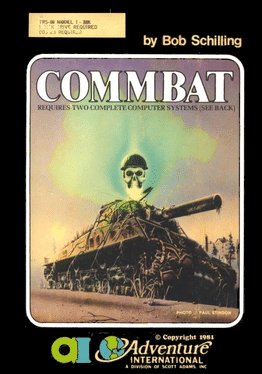
A strategic and tactical game for two players(two computers connected via the RS232 connection) written by Bob Schilling and published by Adventure International.Morton's Fork
1981
Morton's Fork
1981
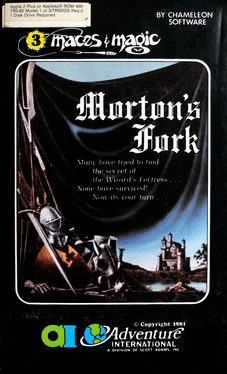
The third text-adventure game in the "Maces and Magic" series developed by Chameleon Software.Pinball
1981
Pinball
1981
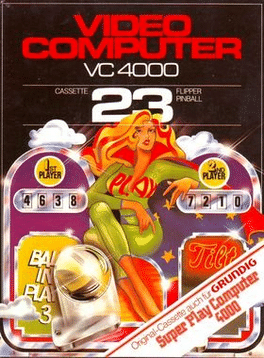
This cartridge contains eight exciting variations of the pinball game for either one or two to play. As in the case of the biggest versions in the amusement centres, the idea is to use the flippers to keep the ball in play for as long as possible and score a maximum in the way of points.Armored Patrol
1981
Armored Patrol
1981
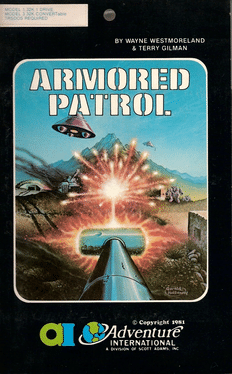
A 3-D tank battle simulation written by Wayne Westmoreland and Terry Gilman and published by Adventure International.Starfighter
1981
Starfighter
1981
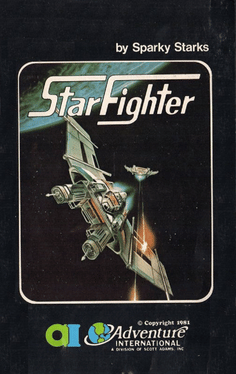
A mix of an arcade and simulation game written by Sparky Starks in which the player pilots a spacecraft, the SC-78503 Starfighter, with the goal to destroy hostile enemy spacecraft.Dragons of Hong Kong
1981
Dragons of Hong Kong
1981
The fifth and final game in the Interactive Fiction series written by Robert Lafore.Mountain Shoot
1981
Mountain Shoot
1981
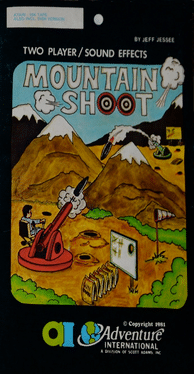
A two player shoot'em up game by Jeff Jessee in which each player must shoot at their opponent over a randomly plotted mountain.Othello
1981
Othello
1981
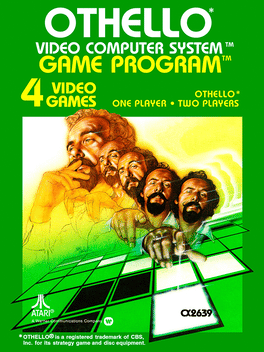
Othello is a conversion of the board game. Each player tries to fill the game board with as many discs of his color as possible. On each turn the player places a disc on the board by selecting a location where the opponents discs will become trapped between two of his discs. The trapped discs are flipped over to the players color. The game ends when the board is filled or time runs out, and the player with the greatest number of his color discs on the board wins. Two players can play against each other, or one player against the computer.Conquest of the World
1981
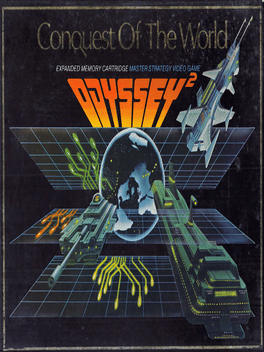
CONQUEST OF THE WORLD represents a significant departure from traditional game design. The components have been designed to provide you with a very realistic model of the real world to both electronically and graphically simulate strategic and tactical confrontation between world powers. Electronic land, sea and air forces can be deployed against each other in any combination and are totally dependent on supplies which are represented by energy units. The game board is a true-to-life model of the relationships between countries of the real world in the early 1980's. Forty-three countries have been divided into eleven "politectonic" or geo-political zones. Each country has been weighted with a power base figure that reflects its capability to persuade other nations to conform to its wishes - by diplomatic coercion or by direct military force. These figures are based on the formula created by Ray S. Cline, formerly Deputy Director of Intelligence for the C.I.A. Pp = (C+E+M)x(S+W) PERCEIVED POWER = (Critical Mas