New Games - Page 13773

G.I. Joe: Cobra Strike
1983
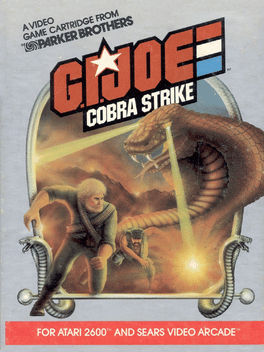
In the single-player mode, the player controls a G.I. Joe training camp on the bottom of the screen protected by a barrier and armed with two laser cannons. In this mode the goal is to keep the giant Cobra-operated robot snake from destroying the shield and thus the training camp by hitting it eight times. The Cobra robot shoots venom and laser beams. In two-player cooperative mode control of the G.I. Joe training game is split between two players as they work to destroy the Cobra robot. In the two-player competition mode one player controls the Cobra robot and another player controls the training camp. Cobra Strike was the first video game to use the G.I. Joe license. The U.K. version of the game was renamed Action Man: Action Force.Sinistar
1983
Sinistar
1983
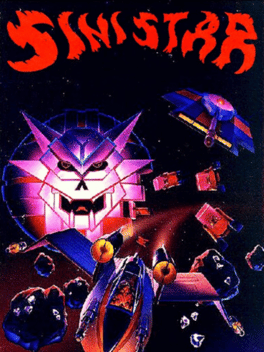
star 6.8The player pilots a lone spacecraft, and must create "Sinibombs" by shooting at drifting planetoids and catching the crystals that are thereby released. Sinibombs are needed to defeat the game boss, Sinistar, an animated spacecraft with a demonic skull face. Sinistar does not exist at the start of the game, and is continuously under construction by enemy worker ships. Though time is crucial, attempting to mine too quickly will destroy a planetoid without releasing any crystals. Enemy worker ships are also gathering crystals (often stealing them from the player) which they use to construct the Sinistar. Enemy warrior ships can directly attack the player's ship. The player is given a head-start before the enemy ships have enough crystals to begin construction. Game ends when the player's ships are all destroyed. Once the Sinistar is completely formed, a digitized voice makes various threatening pronouncements, including "Beware, I live!," "I hunger, coward!," "I am Sinistar!," "Run! Run! Run!," "Beware, coward!", "ISwords & Serpents
1983
Swords & Serpents
1983
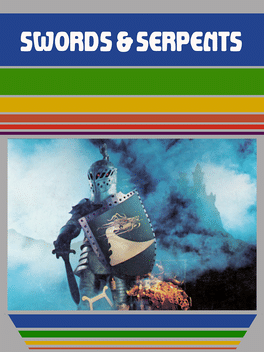
An early console action RPG with a top-down Gauntlet look. One of the first co-op console titles.Black Widow
1983
Black Widow
1983
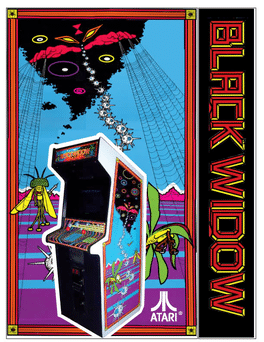
star 4.8Black Widow is a vector arcade game developed by Atari released in 1982. The player takes the role of a Black widow spider defending a web from invading bugs. The player must move the spider around the web while simultaneously shooting/avoiding various bugs and collecting the bonuses that appear after the enemies are eliminated. The spider is controlled through two joysticks: the left one is used to move the spider, and the right one to control the shot direction.Swordquest: Fireworld
1983
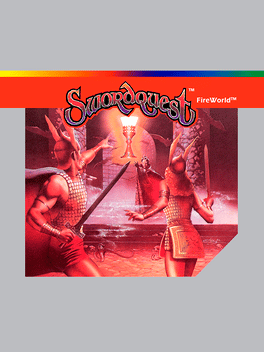
Swordquest is an unfinished series of video games produced by Atari, Inc. in the 1980s as part of a contest, consisting of three finished games and a planned but never released fourth game. All of the games came with a comic book that explained the plot, as well as containing part of the solution to a major puzzle that had to be solved to win the contest. Fireworld was the second of the four games. Its room structure was based on the tree of life.Asteroid Belt
1983
Asteroid Belt
1983
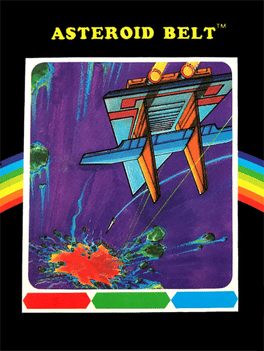
Classical Atari 2600 game! In Asteroid Belt you are flying - guess what - through an asteroid belt. Typical for Atari is the lack of and ending, so you´re shooting asteroids for points. You can fly and also shoot in four different directions and even control your speed. Sometimes there is a giant UFO trying to catch and kill you, so the fast speed is comming in handy, although you have to avoid the asteroids and flee from the giant UFO. This is one of the few non-popular Atari games amongst the universe of Atari Space-games that is really good.Countermeasure
1983
Countermeasure
1983
We've just received word that terrorists have seized one of our missile silo complexes and are threatening to blow up Washington, D.C. These lunatics aren't fooling! They've wired the missiles to a silo computer and started the launch sequence timer. In just 10 minutes the missiles will lift off for Washington... unless YOU stop them. Destroy all the silos in the complex with your long-range turret gun before the timer runs out. If you complete this mission, you'll win the Congressional Medal of Honor... along with 10,000 bonus points and a bonus life. If the timer runs out before you destroy all the silos, you still have a chance to prevent disaster. In the seconds before impact, dock your supertank at a silo, enter the War Room, and guess the fail-safe code that disarms the missiles: The code is some combination of the letters L, E, and O... for example, ELL, OOO, or OLE. Succeed and you win 10,000 bonus points and a bonus life. Fail and... well, you'll find out.Star Wars: Jedi Arena
1983
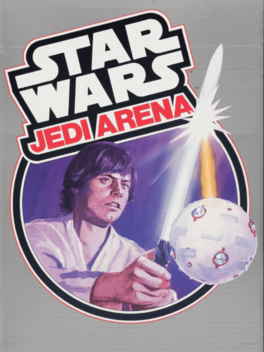
star 5.9In Jedi Arena, you have to face an opponent in the arena to see who is the true Jedi master. Wandering throughout the arena is a seeker which is capable of firing laser bolts. To be victorious you need to destroy your opponents shield by having the seeker fire laser bolts at it. You are armed only with a light saber which is used to control the direction of the laser bolts you fire, as well as block incoming fire from your opponent. The first player to break through the other players shield wins a point, and the first player to 3 points wins the match! Several game options are included which control the speed of the seeker, or even make the seeker invisible.Yamato
1983
Space Slalom
1983
Space Slalom
1983
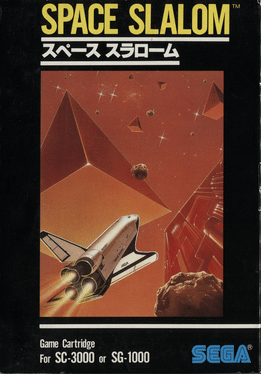
Space Slalom is a video game developed by Orca and published by Sega for the SG-1000 in 1983. Though on the surface it appears to be a space-themed vertical shoot-'em-up, there is actually no shooting involved. The player controls a shuttle and must navigate it through a course defined by colored stars, similar to ski slaloms. The player must also avoid obstacles, and will be awarded with extra points depending on on his/her speed across the course. At a mere 8kB, the game is one of the smallest SG-1000 games, and was only sold in Japan.Sega Flipper
1983
Sega Flipper
1983
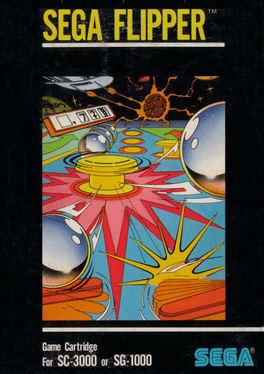
Sega Flipper is a pinball game released for the SG-1000 in 1983. In New Zealand it is known as Video Flipper. It was one of the first pinball video games to be released, being released one year earlier than attempts from Jaleco and Nintendo but four years after Atari's Video Pinball. Unlike Video Pinball, however, Sega Flipper makes use of color.Champion Boxing
1983
Champion Baseball
1983
Champion Baseball
1983
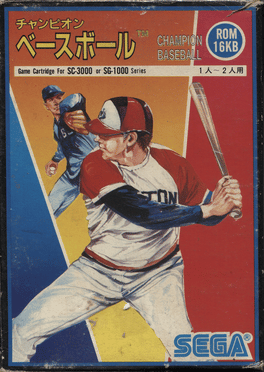
Player chooses team and plays baseball against computer. Game ends when player is tied or losing at the end of an inning or nine innings have been played.Nightraiders
1983
Nightraiders
1983
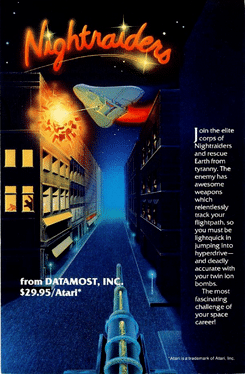
A vertical scrolling shoot'em up written by Peter Filiberti and published by Datamost for the Atari 8-bit home computers.Circus
1983
Horse Racing
1983
Horse Racing
1983
Horse Racing is a sports game, developed and published by Emerson Radio Corp., which was released in 1983. Place your bets and hope to win some $ in this horse racing simulation.Funky Fish
1983
Funky Fish
1983
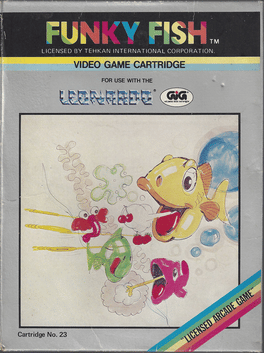
You are the Funky Fish. The object of the game, here, is to attack the sea creatures who are guarding the monster. You shoot them with your bubbles and they turn into fruit. You must then eat the fruit to maintain energy. If you take to long getting the fruit, it will turn back into the sea creature it was before and continue to chase you. If you are touched by a sea creature or you touch the monster, you lose a life and become bones, sinking to the sea bottom. If you lose all your lives, the game is over.Hobo
1983
Hobo
1983
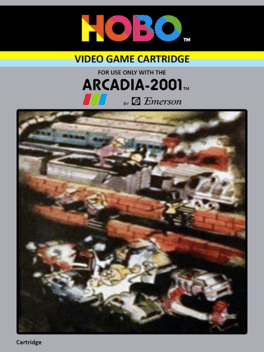
Hobo was developed and published by Emerson Radio Corp., which was released in 1983. This is essentially a Frogger clone, albeit the road is diagonal and you play a bum/hobo instead of a frog.Pleiades
1983
Doraemon
1983
Doraemon
1983
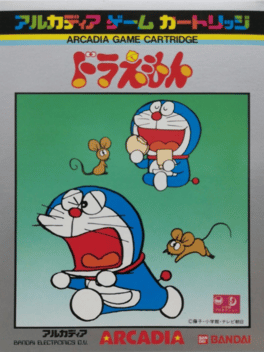
Doraemon is a Pac-Man style game, developed and published by Bandai, which was released in 1983 in Japan. It was the first Doraemon video game ever produced.