New Games - Page 13070

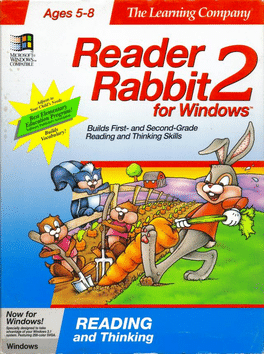
Reader Rabbit 2
1991
Reader Rabbit 2
1991
An entry in The Learning Company's popular series of educational games for Windows.Bolo Adventures II
1991
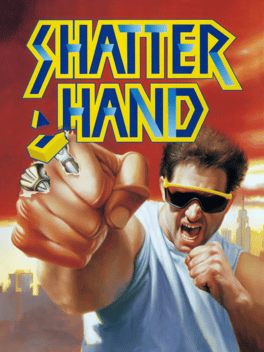
Shatterhand
1991
Shatterhand
1991
star 7.9Imagine packing the power of 100 strategic missiles in every punch. Imagine needing every single megaton just to hold your own against a cybernetic army of metallic monstrosities. That's the guts of Shatterhand, the game that redefines hand-to-hand combat in the 21st century... along with all the standards for single-player action games for the NES. Seven levels of programmed adventure - you choose the action! State-of-the-art graphics featuring 8-direction scrolling! "Anti-gravity" levels force you to fight upside-down! Armed "satellite robots" assist you in battle. No arms on Earth can withstand the power in your hands! This port is a localized version with differences such as different graphics for characters and items, different story and opening, and the most substantial change is Area C which is a carnival stage in the original but here it was replaced with a nuclear-submarine stage.Space Shuttle Project
1991
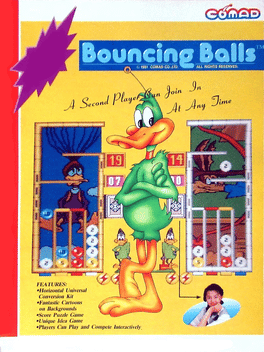
The object of this video game is to successfully launch and fly one of NASA's historic Space Shuttles. Gameplay is composed of several different types of missions, each broken up into short mini-games. The first part of the game requires the player to activate oxygen and hydrogen pumps as well as get additional crew members into the shuttle within a strict time limit by moving an elevator up and down and avoiding moving bumpers. Then, the player must successfully launch the shuttle into space by performing quick time events that correspond to particular shuttle launch maneuvers such as booster rocket separation. Once in space, one of several missions will be played where the player must control the astronaut by maneuvering him around hazards, replenish his air supply before the timer runs out, and deliver components for the International Space Station to their correct locations. A cosmonaut from the Soviet Union must also be rescued in the game. Finally, the player must land the shuttle by again performing Quick TiBouncing Ball
1991
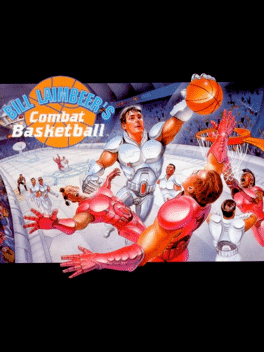
Bill Laimbeer's Combat Basketball
1991
star 4.9The game predicts a science-fiction version of the year 2030 in which there are only robot basketball players (excluding Bill Laimbeer). Basketball teams play in gruelling league matches where new players are bought and sold. Within this future, basketball uses a dedicated robot to perform the toss up at the start of each match as referees had been fired by Bill Laimbeer sometime prior to the year 2030. As a result, players now wear armor to their games and weapons are thrown from the audience.Shogi no Hoshi
1991
Shogi no Hoshi
1991
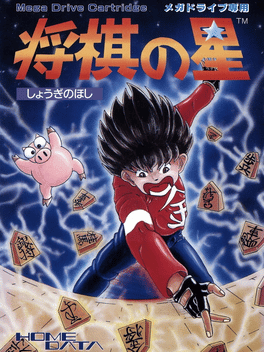
Shogi no Hoshi is a 1991 game for the Sega Mega Drive by Home Data. The game is an implementation of the Japanese board game Shogi.D-Force
1991
D-Force
1991
Gameplay involves being the pilot of an Apache Helicopter, and shooting enemies down in the style of a vertical scrolling shooter. Large red gunships can be shot down to gain power-ups for the helicopter in order to upgrade the guns and have it fire homing missiles. Each level features a midboss and a boss, and both must be destroyed in order to advance to the next level. The style of the levels as the player advances alternates between "Shooting Mode" and "Exploration Mode," where the latter involves levels set in a fantasy-like setting and are the only level types that provide no power-ups to the player and give the player the ability to switch their altitude.Solvalou
1991
Solvalou
1991
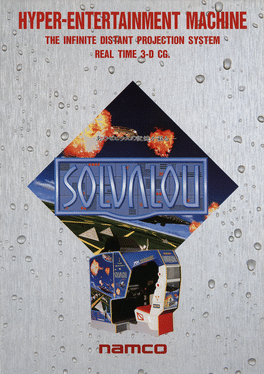
Solvalou is a 1991 first-person rail shooter arcade game developed and published in Japan by Namco. The sixth entry in the Xevious series, the player takes control of the Solvalou starship from a first-person perspective as it must destroy the Xevious forces before they take control of Earth. The Solvalou has two weapon types: an air zapper to destroy air-based enemies, and a blaster bomb to destroy ground-stationed enemies. It runs on the Namco System 21 arcade board.Pu Li Ru La
1991
Pu Li Ru La
1991
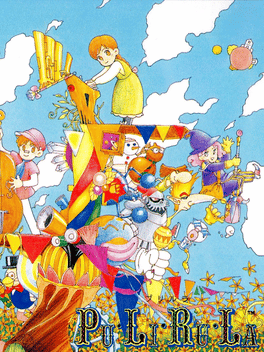
star 6.9Pu·Li·Ru·La is a surreal arcade beat 'em up created by Taito, first released in 1991. Pu·Li·Ru·La takes place in Radishland, a land where time is kept correctly flowing with a time key. However, "a bad man appeared and stole the time key to stop the time flow. The towns were attacked one by one, the time flow was stopped and they received damage", as the English translation explains. Zac and Mel, the playable characters, are requested by an old man to defend their town. The old man also gives the children a "magic stick" to fight withRad Rally
1991
China Town
1991
China Town
1991
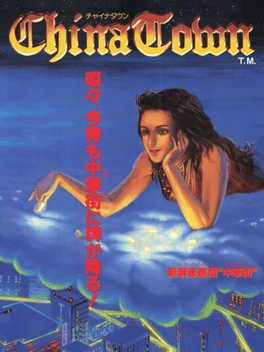
A Japan-exclusive falling-block tile-matching puzzle arcade game by Data East, where players form melds of mahjong tiles and attempt to form high-scoring mahjong hands.Sel Feena
1991
Sel Feena
1991
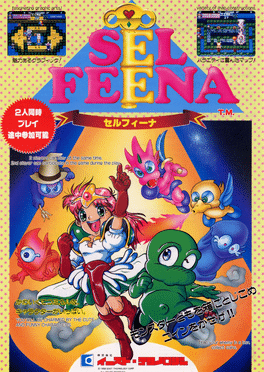
At a time when people were being terrorized by monsters, Selfeena, a little witch, wizard, and magic creature and her little dragon Rich Rich embarked on an adventure to reclaim the treasure stolen from the people by the monsters. Their weapon was the power to put the monsters in boxes. How much treasure can Selfeena recover?Astérix
1991
Astérix
1991
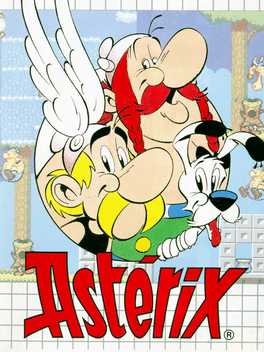
star 7.9The Romans have kidnapped Getafix, who is the only one that can brew the magic potion the Gauls need to stand against the Romans. Asterix and Obelix embark on a journey to free him. You can play as either Asterix or Obelix which play slightly differently (Obelix is slower, but can manipulate objects, Asterix moves faster).The Flintstones: The Rescue of Dino & Hoppy
1991
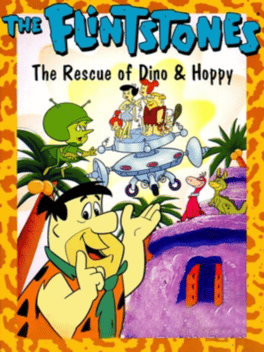
star 5.2It's prehistoric pandemonium as your favorite cave family, the Flintstones, get a visit from the 30th century. The clever scientist, Dr. Butler, needs some dinosaurs for the Orbit City Zoo, and he's invented a time machine to capture Dino and Hoppy. Can Fred find all the pieces that the Great Gazoo needs to build a time machine of his own? Can he make a jump into the future with the help of Wilma, Barney and Betty and rescue his prehistoric pals? Who says history has to be boring?Tecmo Super Bowl
1991
Tecmo Super Bowl
1991
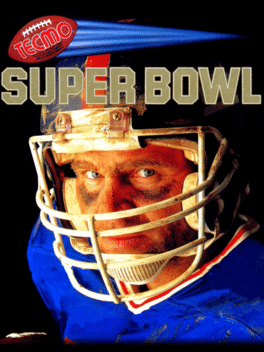
star 6.7The teams, the players, and the halftime shows are ready for the ultimate football season, and you're in control. From the first pre-season game to the playoffs, it's your call, your skill, and your team. Can you get to and win the Super Bowl? Tecmo Super Bowl is the only football game to feature onside kicks, blocked passes and kicks, fumbles, pitchout to the running back, player injuries, time-outs, and much, much more! For 1 or 2 players. All 28 NFL teams! Four running plays, four passing plays. Team stats and data. Create your own Pro Bowl. Coach Mode, where you call the plays!Mad TV
1991
Mad TV
1991
star 8.4Mad TV is a television station management simulation computer game produced in 1991 by Rainbow Arts. It is loosely based on Mad Magazine, and the game's introduction animation features the magazine's mascot, Alfred E. Neuman, smiling on a television. The game puts the player in the role of a new program director for a TV station. The player is in charge of selecting programming and earning advertising for the station, while simultaneously trying to marry Betty, an attractive woman working in the building.Mônica no Castelo do Dragão
1991
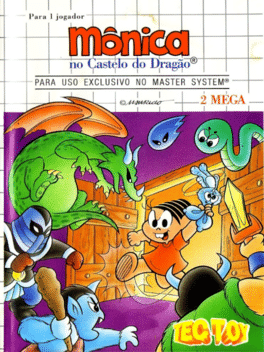
star 6.5Monica at the Castle of the Dragon is a Sega Master System game released by Tec Toy in 1991, starring the character of comics, Monica. The game is an official graphical and textual reprogramming made by Tectoy in partnership with Maurício de Sousa Productions and authorized by Sega of the original game Wonder Boy in Monster Land. The game is a Platformer in which the player controls Mônica, armed with her stuffed rabbit, Samson. Monica has to go through twelve stages, each with monsters, items and its own scenarios.Tom and Jerry
1991
Tom and Jerry
1991
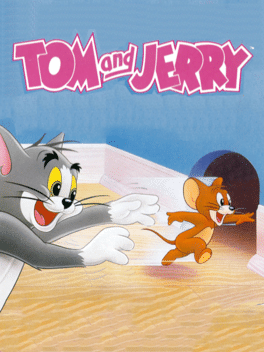
star 6.2Based on MGM's world-known cartoon, the player controls Jerry, the Mouse (in 2-Player Mode, P2 will control Jerry's nephew, Tuffy) as he explores four different worlds (movie theater, junkyard, a toy-based stage and the house inner). Game controls are simple: B Button makes Jerry/Tuffy to jump (tapping it again lightly upon landing will activate their Super Jumps), while A/Y/X Buttons will make them to throw marbles upward (Y Button) and downward (X/Y Buttons) in the enemies. To earn extra lives throughout the game, players have two available options: the rarest and, sometimes, hardest way is to find a 1-Up icon; however, the easiest mode is to collect 100 of small balls of cheese scattered throughout the levels (Cheese Bits). Also, Jerry and Tuffy's health meters are displayed in the form of four hearts, that can be replenished through collectible larger cheese wedges (Cheese Chunks). At the end of each world, Jerry and Tuffy will take a confrontation with Tom, the Cat.