New Games - Page 12080

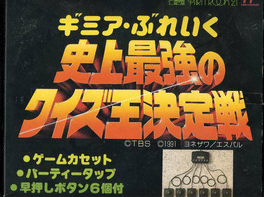
Gimme a Break: Shijou Saikyou no Quiz-ou Ketteisen
1991
Gimme a Break: Shijou Saikyou no Quiz-ou Ketteisen is a quiz game released for the Famicom (NES) in Japan, and is based on an actual Japanese game show that aired from 1989 to 1992. Players can answer trivia questions against AI or human opponents, with the ultimate goal of challenging the game's Quiz King.Tetris 2
1991
Tetris 2
1991
The original version of Tetris 2 (not to confuse with the Western version of Tetris Flash, also called Tetris 2).BomBliss
1991
Apple Sauce X mas
1991
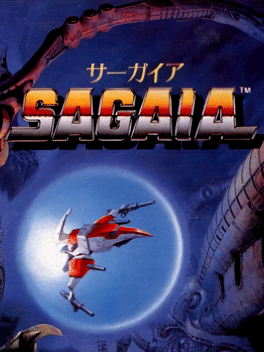
Sagaia
1991
Sagaia
1991
Sagaia for Game Boy (commonly known as Darius II) is a shoot 'em up video game originally released in 1991 for the Game Boy in Japan only. This game is a original title for the handheld console, mixing elements from the first two games while featuring its own unique levels. This game is single player only, not featuring formation bonuses and zone selection at the end of the levels, but the ending is divided into three depending on the difficulty. Since the game is on a monochrome system, items are identified by different symbols instead of colors.Minesweeper
1991
Treasure Master
1991
Treasure Master
1991
Treasure Master is an NES platformer notable for the contest surrounding it which allowed players to win actual prizes.Tetris 2 + BomBliss
1991
Tetris 2 + BomBliss
1991
A regular tetris game with simultaneous 2-player action and a more puzzle oriented Tetris variant, Bombliss, for the Famicom.Super Soccer
1991
Super Soccer
1991
star 5.9Let's play soccer - the world's favorite sport! In Super Soccer you can choose between an Exhibition mode and a Tournament mode. While the first mode lasts a single game only the Tournament mode challenges you with 16 consecutive games, facing the Nintendo Allstar Team in the final round. The field is shown in a top-down perspective. Scrolling is done by Mode 7 chip. Difficulty varies with the opponent team, ranging from easy to hard in later games in the tournament. After winning a match in the tournament mode, you will be rewarded witch a code in order to pick up the game in the same round of the tournament later on.Super Wagyan Land
1991
Super Wagyan Land
1991
Super Wagyan Land is an Action game, developed by Nova Games Ltd. and published by Namco, which was released in Japan in 1991.Genji Tsuushin Agedama
1991
Agedama Genji is a 4th grader boy in elementary school, and a hero on the training from 'Hero Planet.' Though the cheerful kid is no one special in appearance, he can transforms into a superhero called "Agedaman" by combining himself with his computer friend called Wapuro. He believes in Kiai power and he tries to handle all the problems that he encounters with that, so his father decided to let him go training on the earth accompanied by only Wapuro on summer vacation. After his arrival to Morisoba city, where an enormously wealthy clan rules arbitrarily, he joined East-Morisoba elementary school, then met a diva girl of the clan named Rei Kuki who has an ambition to conquer the world and, as a first step, attacks the city with a variety of chimera monsters that she and her grandfather create with the Monster-Cooker, which the rich old man invented. When they plot to attack the city she transforms into a super-villainess called "Onyomiko". The battles of Agedaman and Onyomiko began!Niko Niko Pun
1991
Niko Niko Pun
1991
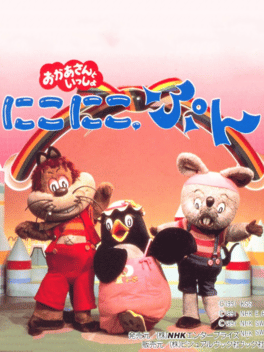
Jajamaru, Pikkoro and Porori one day arrive on an island where they find a cute little pink dragon. The poor thing is starving and they all decide to help him and escort the animal through several stages to collect his favorite food (displayed at the bottom of the screen).Spiral Wave
1991
Teenage Mutant Ninja Turtles III: The Manhattan Project
1991
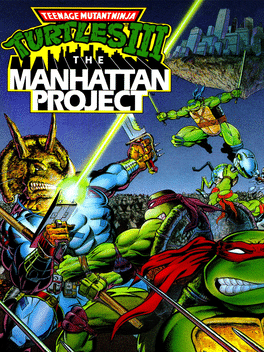
star 7.9Teenage Mutant Ninja Turtles III: The Manhattan Project is a side-scrolling beat-'em-up. The game features play mechanics similar to the previous game, Teenage Mutant Ninja Turtles II: The Arcade Game, but it is an original title for the NES without any preceding arcade version.Crystal Warriors
1991
Crystal Warriors
1991
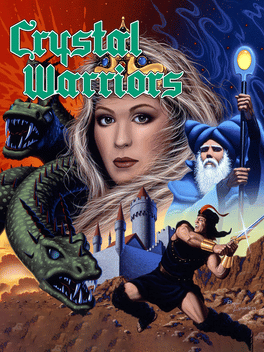
star 8.9The continent of Tyramus has lived in peace for almost a century, thanks to the four elemental crystals of the kingdom of Arliel. However, peace is threatened by the invading armies of the Jyn Empire, led by Emperor Grym, who wants to use the four crystals to rule over Tyramus. Fortunately, Princess Iris can escape with one of the crystals and now the player has to protect her and the crystal and somehow find a way to drive back the hordes of Jyn. Gameplay in Crystal Warriors is quite similar to Shining Force. The player fights in turn-based battles controlling different characters like fighters, healers, rangers and mages, all with different strengths and skills. Whenever two units engage in battle, they enter a duel mode lasting for up to two turns. In this mode the player can choose between four commands: "battle" (attack), "retreat", "spell" and "monster". While the first three commands are quite self-explanatory, the "monster" command is interesting. Whenever a non-human enemy is defeated, it can be tamed andBattle of Kingdom
1991
Battle of Kingdom
1991
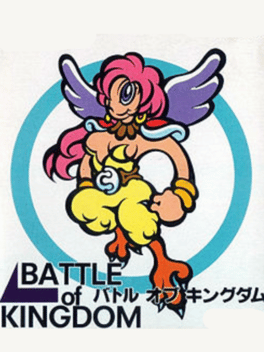
Battle of Kingdom is a 1991 Game Boy video game that was jointly created by the Meldac, Live Planning, and the Lenar companies. It was only released for a Japanese market. The object is to lead a kingdom through various battles using the format of a traditional board game. In order to advance to the next battle, players must destroy at least 92% of the monsters on the battlefield. Each stage represents a battle in a high fantasy campaign to save the world from an unknown evil force (that resides in a skull castle).Taiheiki
1991
Taiheiki
1991
Taiheiki is a turn-based strategy game, based on the television drama of the same name, which in turn is based on a famous 14th-century historical epic which chronicles the fall of the Hōjō clan during the Kamakura period of Japanese history. The game is a grid-based strategy game in the tradition of Fire Emblem or Langrisser. Each side has multiple units, which can move depending upon the terrain. Conflicts between units are shown as animated sequences, and the player can determine formations, as well as issue and change orders to different troops at any time. Battles between enemy commanders take the form of a side-scrolling 1-on-1 action sword battle. There are two scenarios available. The first casts the player as Takauji Ashikaga as he attempts to oust Godaigo and establish a new government, while the second follows Masashige Kusunoki and Yoshisada Nitta, who must try to protect Emperor Godaigo and his imperial rule. The two scenarios intertwine at various points, and graphical story sequences between eachFinal Fantasy Legend III
1991
star 7.8Millennia ago, a fierce battle was waged for control of an idyllic world known as Pureland. After much fighting, the brave warriors of Pureland were protectively sealed in their own dimension, away from the rest of the universe. This was done by means of Talon, a powerful space craft capable of traveling through both time and space. Centuries have passed and the would-be master of Pureland have managed to create a rift in the galaxy, sending the Pureland Water Entity to devour all that stands in its path. You must journey through past, present, and future to find the 13 pieces of the now-divided Talon. Only then can you save the universe from total destruction.