Most Popular Family Computer Games - Page 48

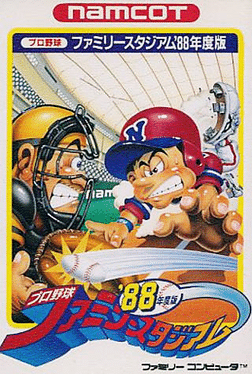
Pro Yakyuu Family Stadium '88: Nendo-ban
1988
Pro Yakyuu Family Stadium '88 is the third in Namco's Pro Yakyuu Family Stadium series. As with its immediate predecessor, Pro Yakyuu Family Stadium '87, it is a slightly revamped version of the original with updated rosters. As with EA Sports's present-day practice, Namco released these games annually with little to distinguish each new iteration. Most notable of the smattering of minor new additions is allowing the player to choose their venue from four options, ranging from a fully-packed stadium to a park. Though this is the second sequel to Pro Yakyuu Family Stadium, which was released in the US by Tengen as R.B.I. Baseball, Pro Yakyuu Family Stadium '88 is not to be confused with R.B.I. Baseball 3. Though the first R.B.I. Baseball was a direct localization, subsequent R.B.I. Baseball games were created in the US and are entirely independent from Namco's series.Nakajima Satoru: F-1 Hero
1988
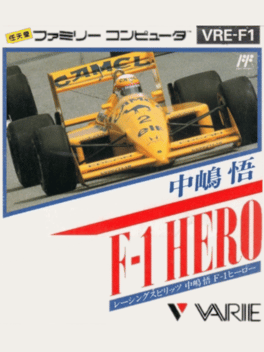
Superstar Nakajima Satoru (Michael Andretti in Western versions) personally guides you through the perilous and exciting world of Grand Prix Racing! Four of the most powerful racing machines are your to command on 16 famous international Grand Prix courses from around the globe! Hone your driving skills or challenge the best - it's all up to you in this amazing simulation of Formula One racing!Nakajima Satoru: F-1 Hero 2
1991
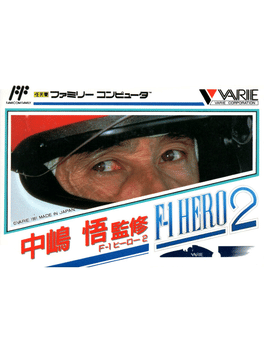
Nakajima Satoru F-1 Hero 2 is a 1991 Japan-exclusive Family Computer Formula One video game developed by Human Entertainment and published by Varie. It is the sequel to Nakajima Satoru: F-1 Hero, and is based on the 1991 Formula One season. There are 16 rounds and only four cars to choose from.SD Battle Oozumou: Heisei Hero Basho
1990
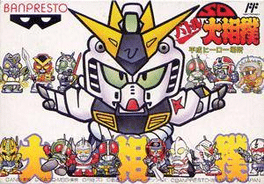
SD Battle Oozumou: Heisei Hero Basho is a sumo wrestling game starring characters from Gundam, Kamen Rider, and Ultraman.Sanguozhi: Chibi zhi Zhan
1993
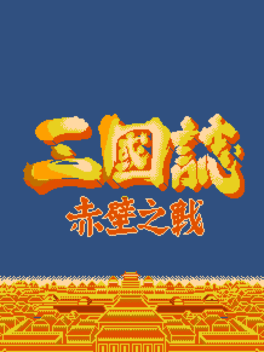
An Unlicensed version of Capcom's 'Warriors of Fate', developed and released by NTDEC in TaiwanMagic Block
1991
Magic Block
1991
Magic Block is a Puzzle game, developed by Mega Soft and published by NTDEC, which was released in Asia in 1991.Magic Jewelry 2
1990
Magic Jewelry 2
1990
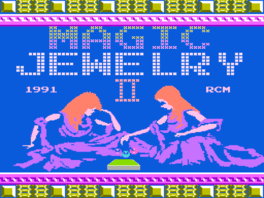
Magic Jewelry is a Puzzle game, developed by Hwang Shinwei and published by RCM, which was released in Asia in 1990.Super Dyna'mix Badminton
1988
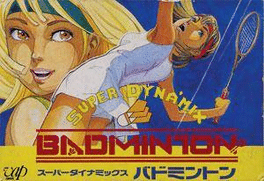
Super Dyna'mix Badminton is the first game for the Famicom to cover the sport of badminton. It was created by the developer/publisher team Pax Softnica and Vap Inc., previously behind Super Real Baseball '88. The game is depicted by a side-view, more commonly associated with volleyball video games than tennis video games, the latter favoring a viewpoint from behind one of the competitors. This comparison is also true for the sport of badminton itself, which has a similar focus on performing hard-to-counter spike attacks close to the net in order to score points. Because of the irregular flight path of a shuttlecock, the player needs to focus more on its shadow than the projectile itself in order to play effectively. Though the game has options for both male and female characters every character sprite is the same androgynous black-haired person. The only real change is that games are shorter for female competitors as they would be in real life. The game also allows for four different "coats" on the main menu - asJovial Race
1989
Jovial Race
1989
It was an ordinary bright and sunny day, then something out of the ordinary happened, since, with that "Jovial Car," anything can happen! I'm not going to tell you everything. You better come with me to experience this once-in-a-lifetime trip. If you collect all the flags in a round, then you will advance to the next world. You can drive to the shopping mall for shopping, but don't forget to press your "Start" button before you make your purchase! Asia releaseHyaku no Sekai no Monogatari: The Tales on a Watery Wilderness
1991
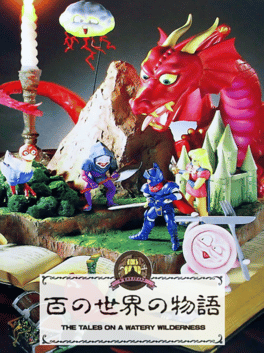
This Famicom title by ASK combines the mechanics of a tabletop board game with the battle style and character progression of a role-playing game to create an interesting hybrid. One to two players can embark on a great adventure to explore the realm of Yukiria and complete quests for its inhabitants, with multiple endings possible!Hokuto no Ken
1986
Hokuto no Ken
1986
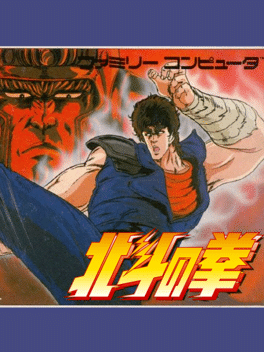
Hokuto no Ken for the Family Computer (Famicom for short) is a side-scrolling action video game published by Toei Animation and developed by Shouei Systems. It was released on August 10, 1986 exclusively in Japan and was the first of four Hokuto no Ken video games released for the Famicom. While it features gameplay similar to Sega's earlier Mark III version of Hokuto no Ken, it is an unrelated game made by a different developer.Somari
1994
Somari
1994
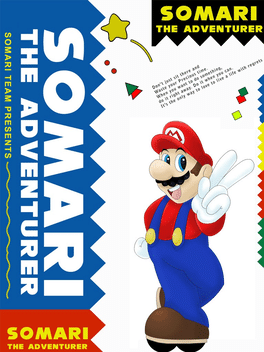
Somari is a side-scrolling platform video game, originally released in 1994 for the Famicom. An unlicensed port of Sega's 1991 Sega Genesis game Sonic the Hedgehog, the game was sold primarily around Asia, Russia, and other regions where pirate NES cartridges were distributed. Like the original, players venture to defeat the mad scientist Doctor Robotnik, who plots to turn the animal population of the fictional South Island into evil robots. Unlike the original, the game features Nintendo's mascot Mario as the main character rather than Sonic. The title is a portmanteau of "Sonic" and "Mario".Devilman
1989
Devilman
1989
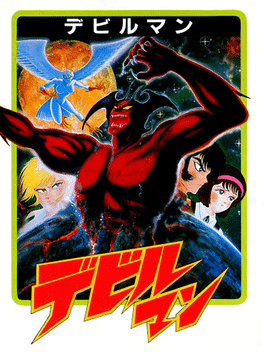
Devilman is a side scrolling platform action/adventure game based on Go Nagai's Devilman.Computer Board Game: Genpei Touma-den
1988
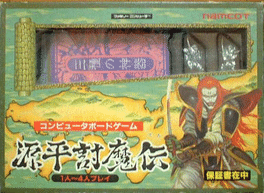
In October 1988, Namco released a version of Genpei Tōma Den for the Family Computer titled Genpei Tōma Den Computer Board Game. Packaged with a physical cloth game board, cards, and metallic player figures molded after Kagekiyo, it takes the form of a virtual board game where players compete against each other to conqueror all of Japan. Where as Genpei Tōma Den was a side-scrolling action game, Computer Board Game is instead a role-playing game, where players engage in battles with enemies and purchase items and equipment from stores. The idea for the game came from Namco designer Yuichiro Shinozaki wanting to further expand on the lore and world of the original game.Final Fantasy I & II
1994
Final Fantasy I & II
1994
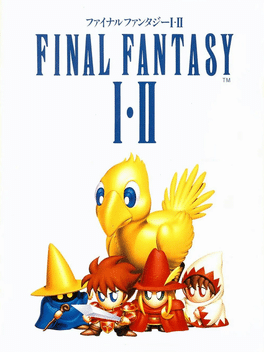
Final Fantasy I & II is a compilation of the first two Final Fantasy games, released in Japan only for the Nintendo Famicom. Both games are almost identical to their original counterpart, although some of the changes from the English release of Final Fantasy were kept. This limited edition box also contains a handbook and maps for both games.Bishojou Mahjong Club
Bishoujo Mahjong Club is a Board / Tabletop - Adult game, developed by Super PIG and published by Mimi-Pro, which was released in Japan in 1988 for the Nintendo Famicom Disk System.Fighting Golf
1988
Fighting Golf
1988
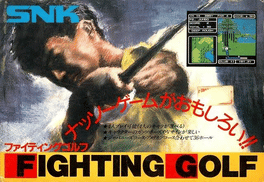
The player can choose between four different golfers, of which each Character has his or her own advantages and disadvantages. Lee Trevino is playable as a character named Super Mex (an actual nickname of his); other characters include Pretty Amy, Miracle Chosuke and Big Jumbo. Pretty Amy has limited range, but the easiest control ("control" refers to the length of the aiming guide). Miracle Chosuke and Super Mex have average attributes. Big Jumbo has the best range, but the worst control. Despite the title, no fighting is involved in the game, the title is Asian "Engrish." The player has to avoid sand traps, water hazards, rough ground and trees. The courses range from relatively straightforward fairways to elaborate arrangements of sand traps. The two courses available for play are the United States, which consists of mostly bunkers and super rough and the Japan course, consisting of water and tight boundaries. At the end of the game, the player is greeted with a photorealistic shot of the country club lodge agGyrodine
1986
Gyrodine
1986
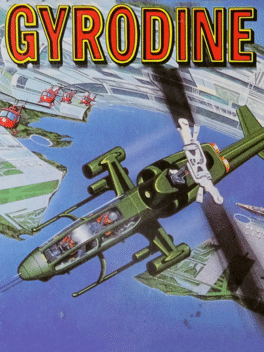
Gyrodine is a top-down vertical helicopter scrolling shooter for the Nintendo Entertainment System/Family Computer, MSX and arcade developed by Crux and published by Taito in 1984.SD Gundam Gaiden: Knight Gundam Monogatari
1990
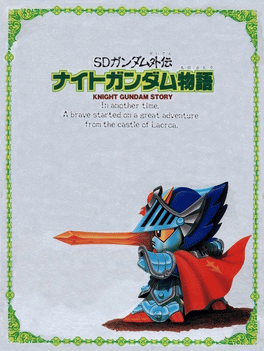
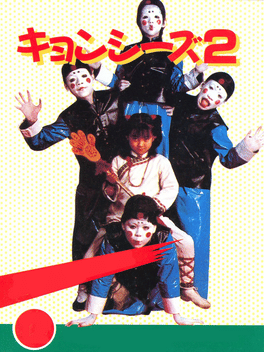
SD Gundam Gaiden: Knight Gundam Monogatari is a Role-Playing game, developed by TOSE and published by Angel (Bandai), which was released in Japan in 1991.Kyonshies 2
1987
Kyonshies 2
1987
A Famicom adventure game developed by Taito and based on an obscure Japanese movie of the same name. Kyonshiizu is the Japanese name for Jiang Shi, the Chinese hopping vampire.