Most Popular Famicom Games - Page 34

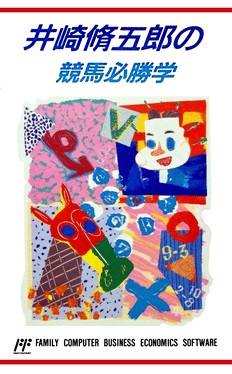
Isaki Shuugorou no Keiba Hisshou Gaku
1990
Isaki Shuugorou no Keiba Hisshou Gaku is a Sports game, developed by C-Lab and published by Imagineer, which was released in Japan in 1990.Itadaki Street: Watashi no Oten ni Yottette
1991
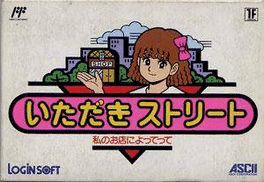
Itadaki Street: Watashi no Oten ni Yottette is a Miscellaneous game, developed by Game Studio and published by ASCII Entertainment, which was released in Japan in 1991. A board game, similar to monopoly, with a large cast of characters released for the Famicom on March 21, 1991 in Japan.The Stock Speculation
1989
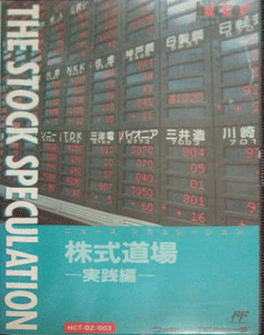
A stock market simulation game from Hect for the NES. Like most, but not all, NES stock market simulators it was never released outside of Japan. Kabushiki Doujou: The Stock Speculation ("Kabushiki" is the Japanese stock market, and "doujou" is, of course, dojo) is a stock trading simulation game, where the aim is to invest wisely in the stock market and develop a bountiful portfolio. The player is given regular money goals to reach before the next target is due and can buy, sell and manage their stocks to achieve as much wealth as possible. The game uses a lot of public domain classical music, such as the title screen's 8-bit rendition of Bach's Air on a G String.Kaettekita! Gunjin Shogi: Nanya Sore!?
1989
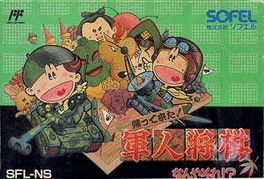
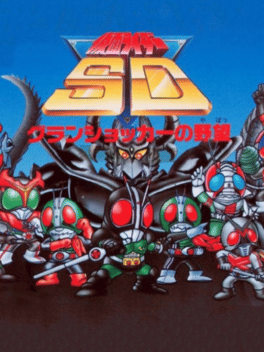
Kaettekita! Gunjin Shogi: Nanya Sore!? is a shogi game that uses the gunjin shogi, or military shogi, variant of the classic eastern chess-like board game. The player starts by selecting one of five opponents: A pumpkin-headed ghost, a werewolf Al Capone, an alien, Adolf Hitler or a sumo wrestler. The player is then given an assortment of pieces while the opponent appears to have the same number of instances of the same piece, though in truth their real forms are concealed from the human player. The player must use their wits to defeat the enemy's force of shogi pieces, which have different themes depending on the opponent the player has chosen (for instance, when fighting the pumpkin ghost both sides have vegetable-themed pieces).Kamen Rider SD: GranShocker no Yabou
1993
Kamen Rider SD is a tokusatsu-themed board game., developed and published by Angel (Bandai), which was released in Japan in 1993.Keiba Simulation: Honmei
1989
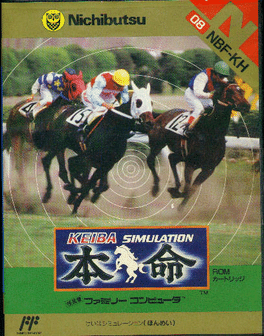
A horse racing simulation game from Nichibutsu, developed for the NES in Japan only. Keiba Simulation: Honmei ("keiba" is the Japanese word for horse-racing, and "honmei" is a term meaning a favorite to win) is a Famicom horse-racing simulation game from Nichibutsu, often known as Nihon Bussan. In fact, the box art states the former as developer and the title screen states the latter. As a true simulation game, there is no racing (at least that the player can control) or gambling. The player instead can fiddle with the parameters for each race and the horses competing, changing their stats such as fatigue, age and the weight of the jockey. Then players can watch a race with these settings play out and observe the winner. It is possible the goal of this game is to recreate the likely output of an actual race based on as much information as the player is able to muster in order to assist them with their gambling, though its more likely the game is for racing enthusiasts.Kiteretsu Daihyakka
1990
Kiteretsu Daihyakka
1990
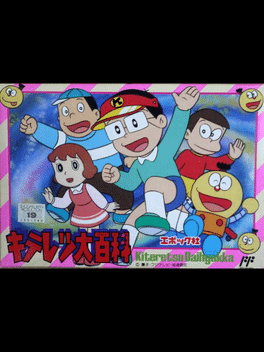
Kiteretsu Daihyakka is an Action game, published by Epoch, which was released in Japan in 1990.Koushien
1989
Koushien
1989
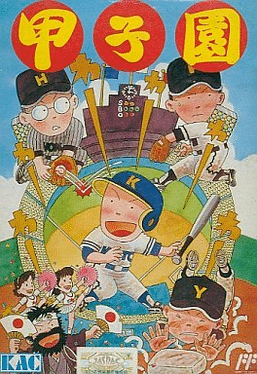
A Famicom baseball game based on Japanese highschool baseball. It saw multiple sequels for the Super Famicom. Koushien is the first game in K Amusement's Koushien series of baseball games that focuses on the highschool level of competition. Koushien refers to the stadium where the final of the national highschool league takes place. It takes a leaf from the book of many other NES/Famicom baseball games, like Namco's Family Stadium, by depicting the batsman at the bottom of the screen and the pitcher at the top. Though it has realistically proportioned athletes, the presentation and idle animations are somewhat comical and the game overall leans on an arcade experience rather than being super realistic. Koushien was followed by multiple sequels, however the first game was the only one in its series to be released on the original Famicom. Future games would appear on the Super Famicom and PlayStation as well as other, newer consoles. This game would go on to be the basis of SNK's Little League Baseball: ChampionshiFamicom Yakyuuban
1990
Famicom Yakyuuban
1990
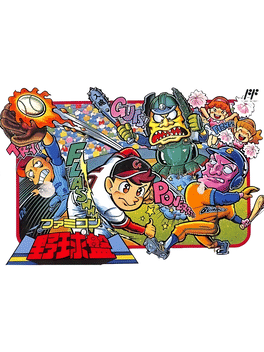
Famicom Yakyuuban is a Sports game, developed by SAS Sakata and published by Epoch, which was released in Japan in 1989.Silver Eagle
1990
Silver Eagle
1990
Silver Eagle is an Action Adventure game, developed by Thin Chen Enterprises and published by Sachen, which was released in Asia in 1994.Baken Hisshou Gaku: Gate In
1990
Baken Hisshou Gaku: Gate In is a Sports game, developed by Graphic Research and published by K Amusement Leasing, which was released in Japan in 1990.Bakushou!! Ai no Gekijou
1990
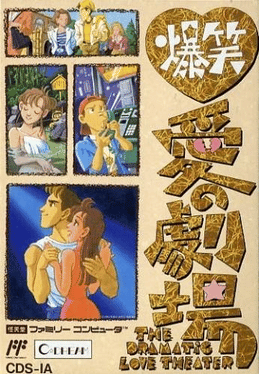
Bakushou!! Ai no Gekijou is a virtual life board game developed and published for the Nintendo Entertainment System by Coconuts Japan Entertainment on Dec 29th, 1990 in Japan. Capitalizing on the popularity of simulation and dating games from the late eighties, specifically the Bakushou!! Jinsei Gekijou series developed by Taito, this game follows many of the genre's tropes from chance rolls dictating life events, to gathering money and physical traits that benefit the player's life. Unlike the Jinsei Gekijou series however, Ai no Gekijou opts to focus on teenage life and romance in particular, rather than the wider scope seen in other life-simulation titles.Bakushou!! Jinsei Gekijoh 2
1991
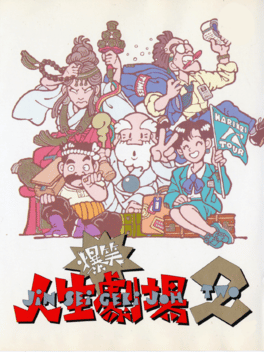
Bakushou!! Jinsei Gekijoh 2 ("Burst of Laughter!! Theater of Life 2") is a virtual life board game developed and published for the Nintendo Entertainment System by Taito on May 22nd, 1991 in Japan. It is the second installment in the Bakushou!! Jinsei Gekijou series and similarly follows the previous game by allowing up to four players to take part and travel around a virtual board through chance rolls, playing out a virtual life in its entirety from childhood to senior citizenship making important decisions along the way. Introduced in this version was the concept of going to prison for crimes, and gambling in a casino.Bakushou!! Jinsei Gekijoh 3
1991
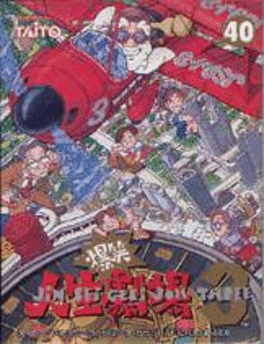
Bakushou!! Jinsei Gekijoh 3 ("Burst of Laughter!! Theater of Life 3") is a virtual life board game developed and published for the Nintendo Entertainment System by Taito on December 20th, 1991 in Japan. It is the third installment in the Bakushou!! Jinsei Gekijou series and follows in the same tradition by allowing up to four players to take part and travel around a virtual board through chance rolls, playing out a virtual life in its entirety from childhood to senior citizenship making important decisions along the way.Barcode World
1992
Barcode World
1992
A strategy game released in Japan on December 18th, 1992. Used in conjunction with the Barcode Battler II peripheral, Barcode World made a strategy game out of scanning a large number of Japanese consumer products.Best Keiba Derby Stallion
1991
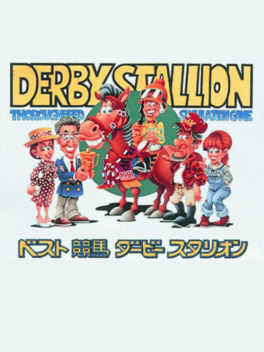
Best Keiba Derby Stallion ("Best Race Derby Stallion") is a simulation game where the player has a stable and starting money and must raise champion racehorses. As well as training horses, they can breed them and, eventually, sell them once they grow too old to race. The player can also hire jockeys to ride their horses for races, and can gamble on races to earn a little extra funds. Best Keiba Derby Stallion began a long-running Derby Stallion franchise that persists to the present. It was only released in Japan.Business Wars
1992
Business Wars
1992
Business Wars is an Adventure game, developed and published by Hect, which was released in Japan in 1992.King of Kings
1988
King of Kings
1988
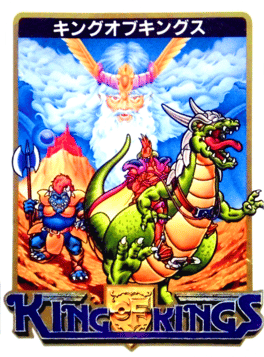
A NES strategy game developed by Atlus and published by Namco. It was only released in Japan. The goal is to quickly conquer locations by producing a lot of units each turn and sending them against enemy forces. As with those games, there is also a little close-up graphic of the two units whenever they meet for battle, which shows how the two sides are faring in the conflict.Casino Derby
1993
Chibi Maruko-chan: Uki Uki Shopping
1991
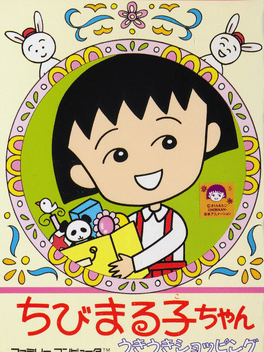
Chibi Maruko-chan: Uki Uki Shopping is a Miscellaneous game, developed and published by Namco, which was released in Japan in 1991.