Most Popular Famicom Games - Page 32

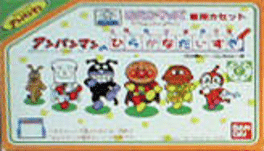
Oeka Kids: Anpanman no Hiragana Daisuki
1991
An educational game to teach children Hiragana. Oeka Kids: Anpanman no Hiragana Daisuki is a Miscellaneous game, developed by TOSE and published by Bandai, which was released in Japan in 1991.Oeka Kids: Anpanman to Oekaki Shiyou!!
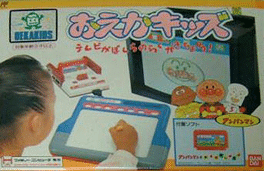
1990
Tablet-based drawing game. Oeka Kids: Anpanman to Oekaki Shiyou!! is a Miscellaneous game, developed by TOSE and published by Bandai, which was released in Japan in 1990.Ochin ni Toshi Puzzle Tonjan!?
1989
A block moving puzzle game similar to Sokoban. Okkotoshi Puzzle Tonjan!? ("Drop Down Puzzle Tonjan?!", sometimes known as simply Tonjan) is a puzzle game from NMK that features anthropomorphic pigs pushing mahjong tiles around in a maze, attempting to push entire stacks down one of the many holes in the area. Bonus points are awarded for pushing certain specified tiles into holes first, and there's one tile in particular that will complete the level once pushed down a hole and is the only compulsory target. Future levels increase the number of tiles and the difficulty, adding fish tiles that cause the player to lose a life if they are pushed down a hole. Okkotoshi Puzzle Tonjan!? appears to a sequel to NMK's earlier Arcade multiplayer action game Butasan, which features similar looking pigs. The rights to the Arcade version of Tonjan were sold to a Korean company, Dooyong, which turned it into a game named Yam! Yam?! featuring a tanooki wearing an apron.Osomatsu-kun: Back to the Me no Deppa no Maki
1989
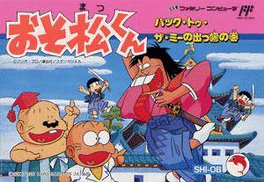
The second game based on the Osomatsu-kun anime and manga, released in 1989 for Famicom. Osomatsu-kun: Back to the Me no Deppa no Maki is an Adventure game, developed by TOSE and published by Bandai Shinsei, which was released in Japan in 1989.Pachi-Slot Adventure 2
1993
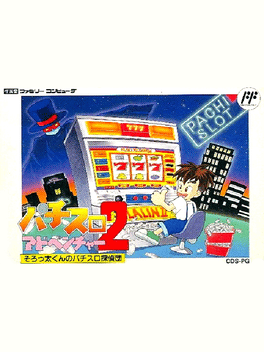
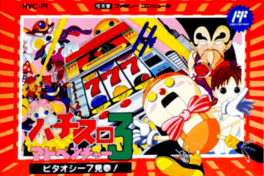
Pachi-Slot Adventure 2: Sorotta-kun no Pachi-Slot Tanteidan is a Miscellaneous game, developed and published by Coconuts Japan, which was released in Japan in 1993.Pachi-Slot Adventure 3: Bitaoshii 7 Kenzan!
1994
Pachi-Slot Adventure 3: Bitaoshii 7 Kenzan! is a Miscellaneous game, developed by Aisystem Tokyo and published by Coconuts Japan, which was released in Japan in 1994.Kurogane Hiroshi no Yosou Daisuki! Kachiuma Densetsu
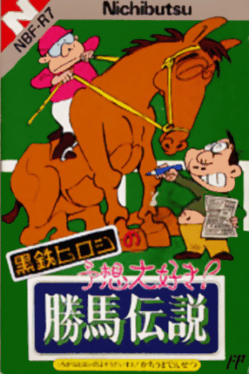
1990
Kurogane Hiroshi no Yosou Daisuki! Kachiuma Densetsu is a Sports game, developed by Make and published by Nihon Bussan, which was released in Japan in 1990.LaSalle Ishii no Child's Quest
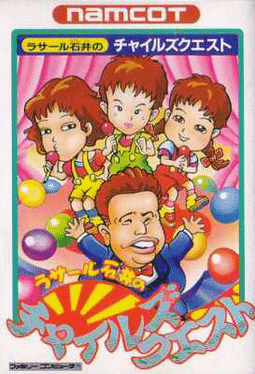
1989
LaSalle Ishii no Child's Quest is a Role-Playing game, developed and published by Namco, which was released in Japan in 1989.Ripple Island
1988
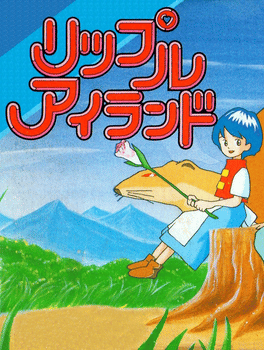
Ripple Island
1988
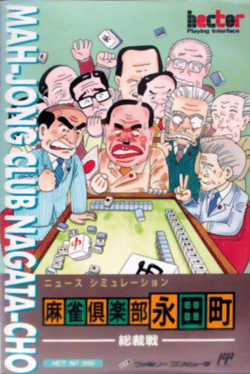
An adventure game for the NES published by Sunsoft. A boy named Kyle must rescue the princess of a kingdom where very small humans and animals peacefully co-exist. Ripple Island (occasionally seen translated as "Lipple Island") is a graphic adventure game where the player interacts with the world using a series of commands, such as "pick up", "walk" or "use". Rather than the usual murder mystery games which were the trend at the time, Ripple Island instead adopts a fantasy storybook setting where smaller humans and friendly animals, such as raccoons and rabbits, co-exist peacefully. The kingdom is threatened by the arrival of Gerogeru, a self-styled Emperor of Darkness and giant frog, after he kidnaps the princess. Kyle, a young boy and the game's protagonist, is attempting to rescue her. The game was never released outside of Japan. It was, however, re-released as part of a Japan-only PS2 compilation based on Sunsoft's works. It also received a manga adaptation.Mah-Jong Club Nagata-cho: Sousaisen
1991
Mah-Jong Club Nagata-cho: Sousaisen is a Miscellaneous game, published by Hect, which was released in Japan in 1991.Koufuku wo Yobu Game: Dora Dora Dora
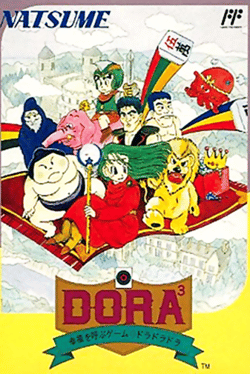
1991
Koufuku wo Yobu Game: Dora Dora Dora is a Mahjong video game released on the Nintendo Famicom in 1991. This game allows you to play traditional Mahjong games against a computer or to play an RPG adventure in which you fight enemies by playing rounds of Mahjong.Mahjong Taikai
1989
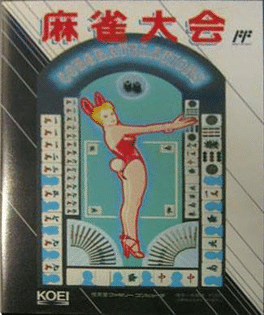
Mahjong Taikai
1989
The first installment in Koei's mahjong series. Mahjong Taikai ("Mahjong Tournament") is a 1989 Famicom mahjong game from Koei and an unknown developer. It features multiple historical figures as possible CPU opponents, including Masamune Date and Napoleon Bonapart. As with any mahjong game, the goal is to complete a winning hand before any of the other players can, and the player earns an amount of points dependent on the "strength" of their winning hand. They might also lose points depending on who won and how. Koei would continue making Mahjong Taikai games for other platforms, including Super Mahjong Taikai for the Super Famicom in 1992.Mahjong Taisen
1992
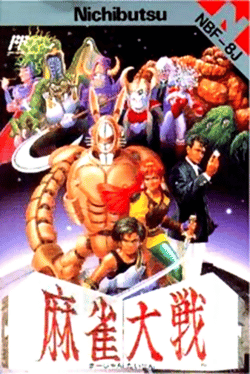
Mahjong Taisen
1992
Mahjong Taisen is a Miscellaneous game, developed by Nihon Bussan and published by Nichibutsu, which was released in Japan in 1992.Majaventure: Mahjong Senki
1990
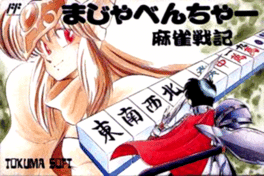
Majaventure: Mahjong Senki is a Miscellaneous game, published by Tokuma Shoten, which was released in Japan in 1990.Masuzoe Youichi: Asa made Famicom
1992
Masuzoe Youichi: Asa made Famicom is an Adventure game, published by Coconuts Japan, which was released in Japan in 1992.Matsumoto Toru no Kabushiki Hisshougaku
1988
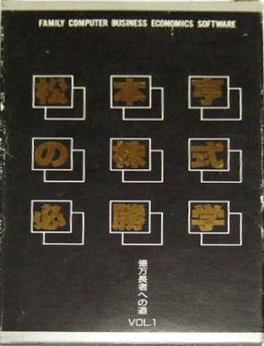
A stock-trading simulator for the NES that uses the name of famed Japanese financial adviser Matsumoto Tooru. It was developed by Imagineer and was never released outside of Japan. Matsumoto Tooru no Kabushiki Hisshou Gaku ("Matsumoto Tooru's Stock Success Knowledge") is a stock exchange simulation developed and published by Imagineer. The goal of the game is to make 100 million yen (approximately $1.3mil) in the stock market in the span of a single year via a series of shrewd financial decisions and listening to advice about which way a certain type of stock might turn. The game is fronted by Matsumoto Tooru, a nationally well-known financial adviser who is often considered to have an expansive knowledge of the Japanese stock market. The game also features the song "The Entertainer" by Scott Joplin. Though it focused on unusually complex subject matter for a video game, it sold enough copies to inspire a sequel that was released the following year.Matsumoto Toru no Kabushiki Hisshougaku II
1989
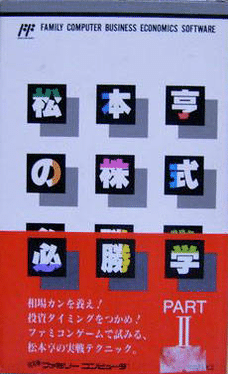
A stock-trading simulation game for the NES and the sequel to Matsumoto Tooru no Kabushiki Hisshou Gaku. Matsumoto Tooru no Kabushiki Hisshou Gaku 2 is the sequel to the original Matsumoto Tooru no Kabushiki Hisshou Gaku and like that game is a stock trading simulator akin to something like Wall Street Kid. The player needs to keep track of which stocks are rising and falling, identify trends and invest wisely to ensure a wealthy and happy life.Meiji Ishin
1989
Meiji Ishin
1989
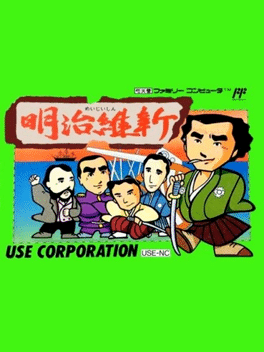
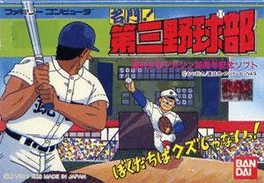
A Famicom adventure game set during the Meiji Restoration era. It features strategy and action elements as well. Meiji Ishin ("Meiji Restoration") is an adventure game for the Nintendo Famicom that allows the player to take an active role in one of the most important historical movements in Japanese history: the Meiji Restoration era of the late 19th century, which wrested control of the country from the Shogunate and back to the Emperor. The first half of the game is spent gathering allies which involves moving from region to region, conversing with leaders and samurai, and occasionally fighting enemies in duels. The second half gives way to a tactical strategy sim similar to Nobunaga's Ambition, as the player's recruited forces march on Edo (Tokyo) to take on the Shogun.Meimon! Daisan Yakyuu-bu
1989
A Famicom baseball game developed by Human and published by Bandai. It superficially resembles Namco's Famista series. Meimon! Daisan Yakyuubu ("Meimon! The Third Baseball Club") is a baseball sim for the Famicom that is based on a manga and anime of the same name about an underdog highschool baseball team and the drama that surrounds them. The player can access the game's story mode, which depicts scenes from the manga, by selecting "Dramatic Mode" from the title screen menu. This also adds character portraits to the main game mode. The game itself is a fairly standard NES baseball game. The pitching/batting perspective is from directly behind the batter, and the player moves the entire group of fielders simultaneously whenever the ball is hit. Graphically, the many super-deformed athletes resemble those of Namco's Famista (the series upon which RBI Baseball was based), which was very much the leading baseball franchise at the time.Meimon! Tako Nishi Ouendan
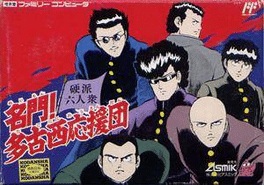
1990
Meimon! Tako Nishi Ouendan is a strategy game released exclusively in Japan for the NES (Famicom) in 1989, and is based on Juzo Tokoro's 1984 manga series of the same name (which was also adapted into a anime motion picture in 1987). Players control a gang of "ouedan" who must battle their way back to their turf after being ambushed on an island.