Most Popular Arcade Games - Page 8

The Lost World: Jurassic Park
1997
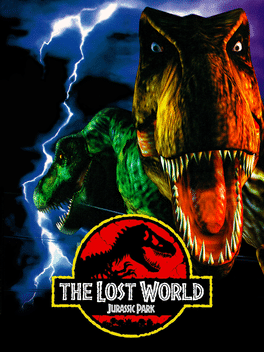
star 8.9The Lost World: Jurassic Park is a light gun arcade game from Sega. It was released in 1997, and is based on the film of the same name. It is also a sequel to Sega's 1994 Jurassic Park arcade game. The game features five levels based on environments from the film, including a laboratory and a workers' village. Four of the levels feature a boss battle that must be won to advance the game. Boss enemies include Tyrannosaurus, Deinosuchus and Carnotaurus. Velociraptors are also featured as enemies throughout the game. Pachycephalosaurus, Compsognathus and venom-spitting Dilophosaurus are also encountered throughout the game. At times, the game presents the player with an opportunity to rescue a human who is being attacked by one or multiple dinosaurs. Saving the human results in the human rewarding the player with either a temporary weapon upgrade or additional health.Vs. Super Mario Bros.
1986
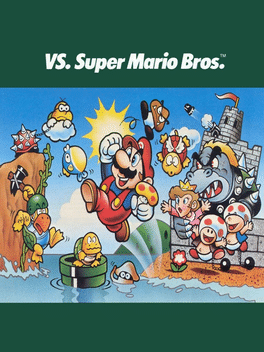
star 5.2Vs. Super Mario Bros. is a two-player VS. System version of Super Mario Bros. This game has higher gameplay difficulty than the original Super Mario Bros., with fewer warp zones and power-ups, and more enemies. Six new levels were created for the game, all of which were reused in Super Mario Bros.: The Lost Levels.Cobra Command
1988
Cobra Command
1988
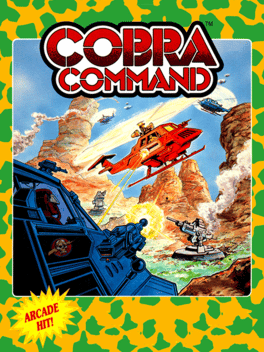
star 6.9A horizontal helicopter shoot 'em up for Arcade and NES, where the player is tasked with both eliminating enemy forces as well as rescuing hostages.Star Wars: Racer Arcade
2000
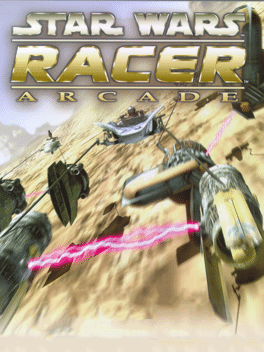
star 4.3Star Wars Racer Arcade is a podracing arcade game produced by Sega and released in 2000. There are four tracks in the game, each with their own level of difficulty: Bantha Tracks (Easy), Smuggler's Cove (Normal), Pixelito Challenge (Hard) and Boonta Eve Classic (Expert). The player can assume the role of either Anakin Skywalker, Ben Quadinaros, Gasgano or Sebulba.Deluxe Space Invaders
1979
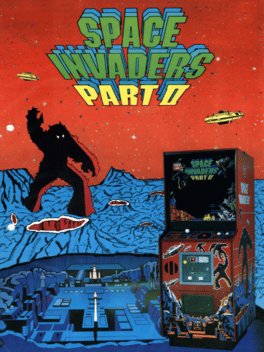
star 4.9Originally called Space Invaders Part II in Japan, this is the first sequel to the coin-munching hit Space Invaders. This game is notable for introducing the concept of a cut-scene.World Rally
1993
World Rally
1993
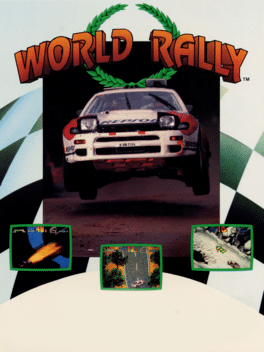
star 7.8World Rally is a road rally-themed driving game. Licensed by Gaelco of Barcelona, Spain, it is suitable for both street and arcade locations. World Rally is a 1- or 2-player alternating driving game. Controls include a steering wheel on a mounting pod, a high/low gear shifter assembly, and an accelerator pedal. Players select 1 of 4 rallies to start, each progressively more difficult than the one before. A rally is composed of three stages, offering a variety of different track layouts and road surfaces. Asphalt, dirt, night driving and snow-covered roads require players to adjust their driving skills accordingly. Players maneuver their way through hairpin curves, jumps, bridges, puddles, and other obstacles. Completing each stage within the 60-second time limit allows players to advance to the next stage for free. After the finish of each stage, and at the completion of all 12 stages, players' times are displayed and compared with other top drivers. It became notable in recent years due to being extremely diffiJoJo's Venture
1998
JoJo's Venture
1998
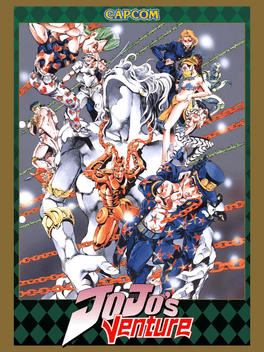
star 6.9JoJo's Bizarre Adventure is a fighting game developed by Capcom based on Hirohiko Araki's Japanese manga of the same title. The games were developed by the same team who are responsible for the Street Fighter III series. It was originally released in the arcade in 1998 on the CPS-3 arcade system; this version was known outside Japan as JoJo's Venture. An updated version of the game was released in 1999 as JoJo's Bizarre Adventure: Heritage for the Future (ジョジョの奇妙な冒険 未来への遺産 JoJo no Kimyō na Bōken Mirai e no Isan?), becoming the sixth and last game released for the CPS-3 board. Console ports for the PlayStation and Dreamcast were also released that year. A high-definition version of the game was released on PlayStation Network and Xbox Live Arcade in August 2012.[1] The game combines Capcom's trademark anime-inspired graphics, as seen in the Darkstalkers series, with the colorful characters and events of Hirohiko Araki's creation, resulting in a highly stylized and detailed visualAlpine Ski
1982
Alpine Ski
1982
star 3.2Maneuver a skier through a downhill ski course, a slalom course, and a ski jumping competition.Lunar Rescue
1979
Lunar Rescue
1979
star 5.3The game starts with the player's spacecraft docked inside the mothership at the top of the screen. Below the mothership is an asteroid field and below that, the surface of the moon. There are three platforms which can be landed on and six stranded astronauts that need rescuing. You control a small spacecraft. The player must press the button to release their spacecraft from the mothership and manoeuvre through the asteroid field. The craft can only move left or right or use up a finite amount of fuel by engaging the thrust (the same button again) to slow its descent. If the craft is landed successfully on one of the available platforms, one of the astronauts will run towards and board the craft. The asteroid belt now changes into a swarm of flying saucers, some of which drop bombs. The player must now guide the spacecraft back up to the mothership (the craft ascends without using up fuel), avoiding the flying saucers. The thrust button is now a fire button which can be used to shoot at enemies above (as in SpaceDead Connection
1992
Dead Connection
1992
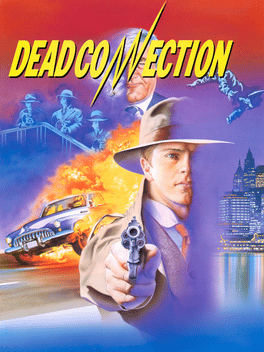
star 6.9Dead Connection is an arcade game released by Taito in 1992. The game takes place on September 5, 1953 "in a big city somewhere". It features a group of detectives who set out to fight a crime family. The game has a strong Film noir vibe, shown through the appearance of the detectives and the featuring of a female protagonist. Each stage is preceded by a short cinematic interlude that explains the transition between the game's different locales.Tattoo Assassins
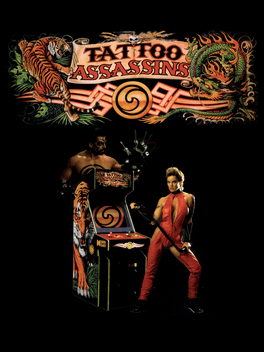
star 2.1Tattoo Assassins was a Mortal Kombat "clone" which never got officially fully released due to the waning popularity of Arcades in the late 90s. The game was essentially completed before it was cancelled, though it has some minor gameplay and sound glitches, and prototype cabinets were released to test markets in 1994.Fighting Vipers
1995
Fighting Vipers
1995
star 6.6Fighting Vipers is a 3D fighting video game created by Sega AM2. While it shares the game engine with AM2's Virtua Fighter 2, it distinguishes itself with enclosed arenas and an armour mechanic. The game is primarily designed for Western audiences, incorporating a U.S. setting and embracing more freeform styles of martial arts.Major Havoc
1983
Major Havoc
1983
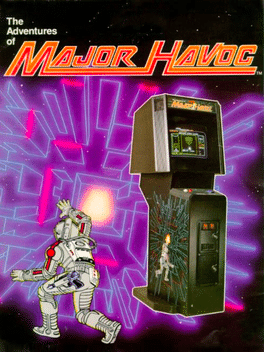
star 3.6Long ago the evil Vaxxian Empire overran the galaxy. Most of humanity was enslaved and abducted to the Vaxxian homeworld. A few humans, who were scientists, managed to escape. At the current moment (according to the timeline of the game), the Empire has since collapsed. However, numerous Vaxxian space stations, all blindly controlled and defended by robots, still remain in the galaxy, mindlessly pursuing their original orders. The small band of scientists who initially escaped managed to clone the great human hero Major Havoc, in order to fly his Catastrofighter through a wormhole in space, so that he may lead a clone army against the dreaded Vaxxian robots, and to liberate the remnants of humanity by destroying the enemy reactors. The player controls Major Havoc, the leader of this very band of clones.005
1981
005
1981
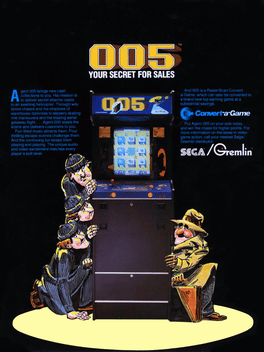
star 4.5005 is a 1981 arcade game by Sega, in which the player's mission is to take a briefcase of secret documents to a waiting helicopter. It is one of the first examples of a stealth game. The player controls a spy who must avoid the enemies as he makes his way through buildings and warehouses, where he will have to dodge the enemies' flashlights and use boxes as hiding spots.Bagman
1982
Bagman
1982
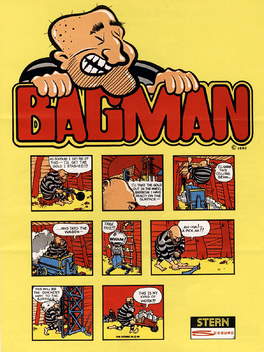
star 5.1The objective of the game is to maneuver the bagman through various mine shafts, picking up money bags and placing them in a wheelbarrow at the surface of the mine. The player must avoid pursuing guards, moving ore carts, and descending elevators. The player may temporarily stun the guards by striking them with a pickaxe or by dropping money bags on them when they are below the player on the same ladder. The player may move between the three screens which make up the level via shafts and on the surface.I, Robot
1984
I, Robot
1984
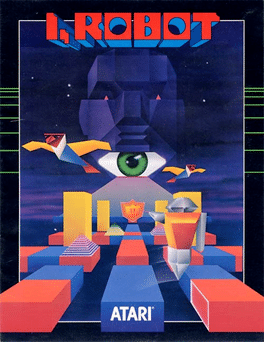
star 7.2The game play consists of moving robot1984 over all of the red tiles while avoiding objects flying at you from the back of the screen. Eliminating the red tiles diminishes the shield at the back of the playfield which prevents you from flying to the next level. To get to all the red tiles, players sometimes need to leap across empty space which creates a permanent bridge between the two points. Leaps across empty space have to be timed so that the "eye" of Big Brother in the back of the playfield, which randomly opens and closes, does not see robot1984 and destroy him.Cloak & Dagger
1983
Cloak & Dagger
1983
star 5.6Agent X must progress through a series of floors to retrieve a set of stolen plans and destroy Dr. Boom's underground bomb factory. Avoid the explosives, bomb converters, forklifts, robot guards, acid pits, and death-ray shooting eyeballs. The game was featured in the motion picture of the same name.Liberator
1982
Liberator
1982
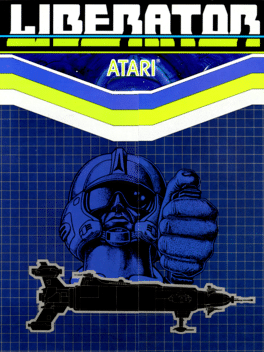
star 5.5Liberator is commonly described as the opposite of Missile Command. The objective of Missile Command is to defend your bases from a space-based attack. Liberator's objective is the exact opposite, destroy enemy bases as you orbit their planet. Liberator was released by Atari in 1982. The arcade game was not very popular and only 762 arcade machines were ever made.Food Fight
1983
Food Fight
1983
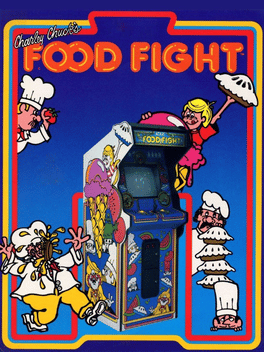
star 6.2Food Fight (also styled as Charley Chuck's Food Fight) is an arcade game released by Atari, Inc. in March 1983. The player guides Charley Chuck, who is trying to eat an ice cream cone before it melts, while avoiding four chefs bent on stopping him. The game sold 1,951 video game arcade cabinets.Computer Space
1971
Computer Space
1971
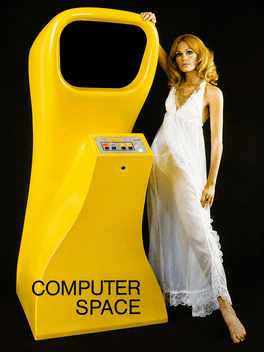
star 3.9Computer Space is a video arcade game released in 1971 by Nutting Associates. Created by Nolan Bushnell and Ted Dabney, who would both later found Atari, Inc., it is generally accepted that it was the world's first commercially sold coin-operated video game of any kind, predating the Magnavox Odyssey's release by six months, and Atari's Pong by one year. It was first location tested at The Dutch Goose in August 1971, then debuted at the MOA show on October 15, 1971, and then officially released in November 1971. Though not commercially sold, the coin operated minicomputer-driven Galaxy Game appeared around the same time, located solely at Stanford University.