Most Popular Arcade Games - Page 13

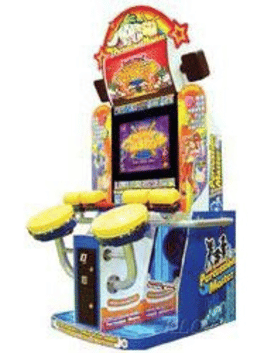
Percussion Master
2004
Percussion Master
2004
Percussion Master is set up a lot like games such as Dance Dance Revolution or Guitar Hero, in the sense that you have symbols moving vertically telling you when to do a specific move. In Percussion Master, there are three lines, with the symbols moving from the top to the bottom, towards you. The left line is the top-left drum. The only move you do on this one is a simple hit. The middle line is the big, middle drum. There are 5 different moves that can be indicated here. A single hit in the middle, hit with both sticks in the middle, a single hit on the outside rim, hit the outside rim with both sticks, or roll in the middle. And finally, the right line is the top-right drum. Again, the only move here is a simple hit.Asuka 120% Burning Fest. Exallent
2025
The original anime fighter finally returns! Working with the series’ original designer, Masatoshi Imaizumi, Asuka 120% BURNING Fest. EXALLENT brings back the whole cast from every title in the series. Each character has all of their special moves from past games and also newly added animated special moves as well as the devastating new super moves called EXALLENT NOVA. Background characters are now animated and each stage is accompanied by a new soundtrack by returning series composer, Keishi Yonao. 5 soundtracks are included so you can choose your favorite arrangement before each match. Series vocalist, Reika, is also back singing the new theme song, Do Not. Renowned illustrator and animator from the Urusei Yatsura and Ranma 1/2 reboots, Yo-co brings her stylish 90’s style to the classic Asuka 120% character designs. The story mode is also now fully translated into English for the first time ever! Based upon the fan favorites, utilize clashes and evades to gain an advantage. Move through the air using variousSpectrum 2000
2000
Spectrum 2000
2000
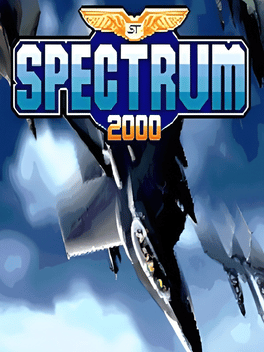
A vertical scrolling jet shoot them up, featuring both single & co-operative gameplay as well as a myriad of power ups. The players get to choose from 5 different jets each with it's own unique attributes & weapons. By collecting varies power ups during the missions the player's jet with be transformed into a stronger, more powerful version.Best video game consolesPuckman Pockimon Genie 2000
2000
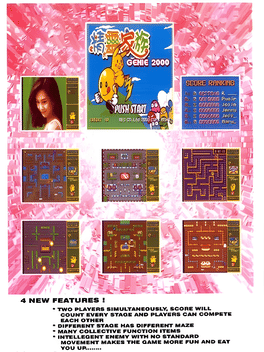
The game plays similarly to a standard Pac-Man game with sound effects from Ms. Pac-Man. The game can be played cooperatively, with the first and second players controlling Pac-Man and Pikachu respectively. As with Pac-Man, the goal is to collect all the pellets in the level while avoiding enemies that patrol the level. They can take on the appearance of the traditional ghosts Blinky, Pinky, Inky, and Clyde, and two "Pokémon", a blue rabbit creature (which resembles the first enemy in Gamtec's Pocket Monster) and a green caterpillar resembling Caterpie. None of the enemies seem to follow any player-tracking system like most Pac-Man games and the enemies simply switch between tracking the player(s) or taking detours. Once the player reaches Stage 11, every stage thereafter uses a consistent enemy selection: Blinky > Rabbit > Pinky > Inky. There are a total of eight worlds with four levels each, divided by timed bonus levels which give chances for extra points and lives. During these bonus stages, the player can taKart Duel
2000
Kart Duel
2000
To increase the competition levels in 2 player mode, Namco has introduced the new "continue system" where the losing driver has to pay for the next continuing play. In addition, 1 free game is given per 4 continuous rounds of 2 player play. The competition is also increased with players competing each lap time. When a player marks his or her best lap, their position in the top 100 rankings will be displayed on screen during the race. When a player finishes the race within the regulation position, they can go on to the next circuit. When all the circuits are cleared, the player can challenge the best racer from Namco's R&D staff. There are a choice of 4 circuits (3 of the circuits are based on actual tracks) to suit the individual's skill level and players can select their kart to suit each circuit, strategy and driving style. The DX cabinet has a motion base which moves from side to side responding quickly to handling and road service conditions.Knights of Valour Super Heroes Plus
2004
This is an upgrade to the Knights Of Valour Super Heroes. Knights of Valour Superheroes Plus 2004 IGS.Sound Voltex Nabla
2025
Sound Voltex Nabla
2025
The seventh game in the rhythm game Sound Voltex, part of Konami's BEMANI franchise.Taiko no Tatsujin: VR Festival!
2019
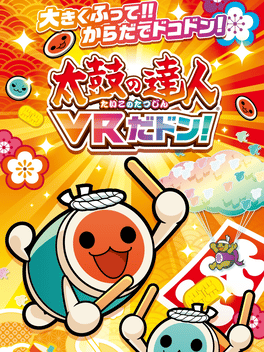
A VR rhythm attraction game developed for theme parks set within the world of Taiko no Tatsujin. By wearing the VR goggles, players are instantly immersed in an exciting matsuri festival alongside the colorful cast of Taiko no Tatsujin characters. Up to 4 players will need to move their entire bodies and kick up a good sweat to hit floating notes that fly towards them from the sky in this unique VR performance experience.Heat of Eleven '98
1998
Ganbare Untenshi!!
2000
Ganbare Untenshi!!
2000
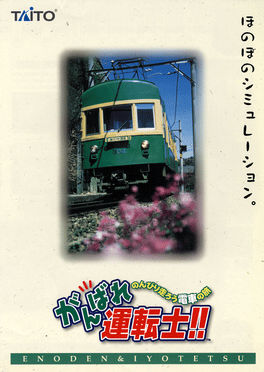
Ganbare Untenshi!! (loosely translated to "Good Luck, Driver!!") is an electric train driving simulation game developed and released by Taito for arcades in Japan on October 2000. A spin-off of the Densha de Go! series (and using the same engine as Densha de Go! 3 Tsuukin-hen), Ganbare Unten-shi!! focuses on light rail transit with two routes: the Enoshima Electric Railway and the Iyo Railway. While much of the game is the same as the main series, it modifies the braking and throttling controls for added precision and adds controls for operating the vehicle's doors. Due to street traffic, maintaining a timetable is not as strict as previous entries and the time-based penalty system is replaced with a "lives"-based one.World Combat
2002
World Combat
2002
World Combat is an arcade light gun game developed and published by Konami released to Japan in 2002, and worldwide in 2003. It was produced by Shigenobu Matsuyama. A sequel, Wartran Troopers, was released in 2004. A mysterious Undead Army that suddenly appeared. The Undead Army with modern weapons and quickly conquered the world. The player becomes an army soldier and throws himself into the battlefield with a rifle in hand to protect what he loves and protects.Nirin
2009
Nirin
2009
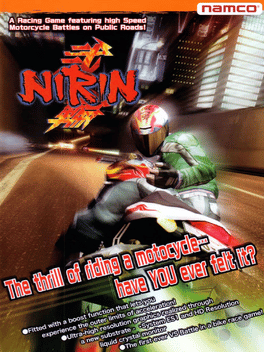
Hop on your choice of five bikes and race through crowded city streets in Bandai Namco’s Nirin! Five courses offer tons of compelling scenery and a range of difficulties. The gameplay is easy for first time users, but there is a definite advantage to the experienced rider who has mastered the boost feature. Bank hard through turns to build the boost meter, and then straighten the bike out to blast past your rivals! For even more speed, draft behind cars, trucks, and other motorcycles.Chunithm X-Verse-X
2025
Chunithm X-Verse-X
2025
Chunithm's 10th anniversary celebration continues with the Chunithm New series coming to Linked Verse.Worldcup Volleyball '95
1995
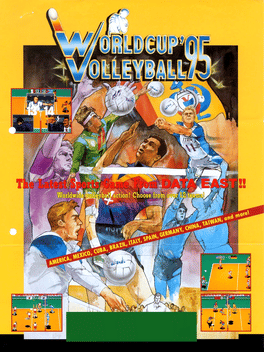
World Cup Volleyball '95 is a volleyball simulation game developed by Data East and released in 1995 for arcades. World Cup Volleyball '95 is a simple volleyball game. The game utilizes a top-down side view of the field and a two button scheme, with 12 countries for the player to choose.The Destroyer from Jail
1991
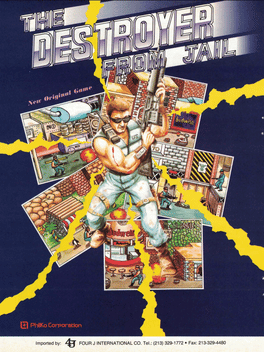
The Destroyer from Jail is a Korean arcade game that uses the "belt-scrolling" perspective typical of beat 'em ups. but features gun based combat. Control a convict shooting down a criminal boss and his goons across five levels to gain his freedom.Wolf Fang: Kuhga 2001
1991
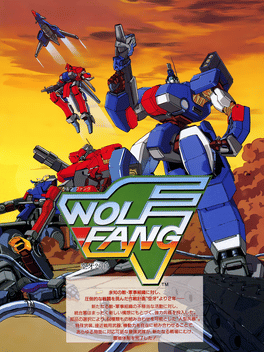
Wolf Fang: Kuuga 2001 was released in Japanese arcades in 1991. It was released in arcades outside Japan and re-titled Rohga: Armor Force. The arcade versions outside Japan however, have a number of things cut. There is no story intermissions between the stages and there is no stage selection leading to 4 different endings found on the Japanese version, but the game cycles through all 12 stages like in the Japanese version's expert mode.